A discreet buyer’s comparison of Delano Residences & Hotel Miami and Setai Residences Miami Beach, focused on heritage narrative, operational maturity, beachfront rituals, and the daily realities of luxury resort-residential ownership.

Delano Residences & Hotel Miami and Setai Residences Miami Beach speak to two distinct instincts in the South Florida luxury market. One asks the buyer to consider the romance of restored hotel heritage: the idea that a hospitality name can be revived into a new residential chapter. The other offers something more settled: beachfront rituals with an existing service culture, physical setting, and recognizable rhythm.
For a buyer studying Delano Residences & Hotel Miami, the appeal is less about comparing an amenity checklist and more about deciding whether a revived hotel narrative feels personally compelling. For a buyer studying Setai Residences Miami Beach, the proposition is rooted in an established resort-residential environment, where the lifestyle is not hypothetical.
This is not a simple Downtown-versus-sand decision, nor is it only a condo-hotel conversation. It is a question of temperament. Do you want the emotional lift of a hospitality revival, or the confidence of a mature beachfront ecosystem?
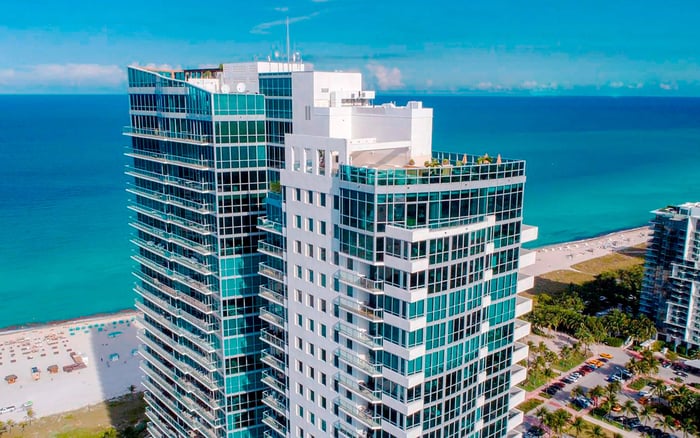
Setai Residences Miami Beach is strongest for buyers who want a luxury environment that already knows itself. Its identity is tied to beachfront living, resort-style services, and the amenities associated with the Setai name. In practical terms, the property is not merely selling a future lifestyle narrative. It is associated with an operationally mature resort setting that has already shaped expectations around service, privacy, and daily ease.
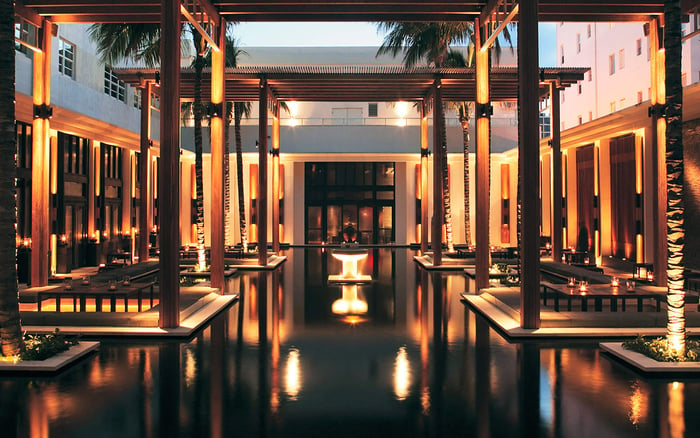
The Setai also carries a design identity distinct from Miami modernist hotel preservation. Its atmosphere reads as a composed resort retreat rather than a pure preservation story. That matters because design here is not only visual. It supports a slower ritual of arrival, residence, dining, pool time, and oceanfront living.
For the buyer who values continuity, this is the core advantage. Setai Residences are positioned as an extension of a functioning luxury hospitality brand into residential ownership. The owner is buying into a service culture and lifestyle infrastructure that already exists around the broader resort environment. Oceanfront prestige is part of the value, but the deeper differentiator is the cadence of a place that feels practiced.
The Delano side of the comparison is more narrative-driven. The title itself frames Delano through restored hotel heritage, placing the buyer in a different psychological lane. Instead of asking, “Does this lifestyle already function exactly as I want it to?” the buyer asks, “Do I want to participate in the next chapter of a hospitality story?”
That can be powerful for collectors of real estate who respond to cultural memory, brand revival, and the layered character of a hotel name. Yet the prudent luxury buyer separates romance from execution. A restored-hotel thesis can be compelling, but it should be evaluated through governance, service delivery, finish quality, hospitality operations, and how the private residential experience is protected from the public energy of a hotel environment.
This is where the comparison becomes useful. Setai represents a mature answer to those questions. Delano represents the attraction of a proposition that may be judged by how elegantly it converts heritage into ownership. Neither instinct is inherently superior. The right answer depends on whether a buyer wants proof of routine or the anticipation of reinvention.
Miami Beach luxury ownership has its own grammar: morning light, pool rituals, beach-access convenience, and the ability to live near the Atlantic without turning every day into an event. Setai is especially persuasive for those who want those rituals embedded in the property’s identity. Its beachfront setting is central to the value proposition, and its broader resort environment supports the idea of residential life with a refined hospitality backbone.
By contrast, a hotel-heritage revival can draw buyers who are more energized by cultural positioning, arrival sequence, and the prestige of a name reinterpreted for a new cycle. That buyer may also be comparing nearby hospitality-led residences, including Shore Club Private Collections Miami Beach, where the conversation also tilts toward legacy, privacy, and the careful transformation of resort identity into residence.
The relevant buyer vocabulary may include Miami Beach, oceanfront, and service culture, but the decision is more intimate than a tag. It is about how a home will feel on a Tuesday morning, during peak season, and when guests arrive expecting the best of South Florida without theatrical excess.
Setai’s maturity becomes clearer when viewed beside the broader Miami Beach luxury field. Projects such as The Perigon Miami Beach and 57 Ocean Miami Beach help illustrate how varied the oceanfront and near-ocean residential market has become. Some buyers prioritize architectural newness, some prioritize wellness, and others prioritize a smaller sense of ceremony around the beach.
Setai’s advantage is not that it tries to be every version of luxury at once. Its strength is that it already has a defined mood. The property’s resort influence and composed ambiance create a recognizable stage for daily life. For owners who dislike uncertainty, that clarity is valuable.
Delano, viewed through the restored-heritage lens, belongs to a different form of desirability. Its buyer may be less concerned with immediate ritual and more focused on the emotional and cultural charge of a renewed hospitality address. That is a sophisticated motive, but it requires patience and a careful reading of how private ownership will coexist with hotel energy.
Begin with use pattern. If the residence will be a frequent personal retreat, Setai’s established routines may carry significant weight. Mature service, beachfront continuity, and a functioning luxury community reduce friction. For a second-home buyer who wants to arrive and immediately resume a familiar rhythm, that can be more valuable than novelty.
If the purchase is also about identity, collecting, and the allure of hotel heritage, Delano may deserve closer attention. The question is whether the restored narrative translates into residential calm, not merely brand recognition. Sophisticated buyers should study the ownership experience behind the name: privacy, service boundaries, building operations, arrival experience, and how residents are distinguished from hotel guests.
The best comparison is therefore not “which is more luxurious?” Both occupy the upper tier of the market conversation. The better question is, “Which form of luxury do I trust more?” Setai offers the confidence of established beachfront rituals. Delano offers the intrigue of restored hotel heritage. The right choice is the one that matches the buyer’s appetite for certainty, story, and daily use.
Is Setai Residences Miami Beach the more established option? Yes. Setai is positioned around an already mature beachfront resort-residential environment with an existing service culture.
What is the core appeal of Setai Residences Miami Beach? Its appeal centers on beachfront living, resort-style amenities, and the lifestyle infrastructure associated with the Setai name.
How is Setai different from a restored hotel-heritage concept? Setai is less about revival and more about continuity, established rituals, and a functioning luxury hospitality ecosystem.
What type of buyer may prefer Delano Residences & Hotel Miami? A buyer drawn to hotel heritage, cultural memory, and the potential of a revived hospitality narrative may find Delano compelling.
Does Setai have a specific design mood? Yes. Its identity reads as a composed resort environment rather than a pure restored-hotel heritage concept.
Is beachfront setting central to Setai’s value? Yes. The Miami Beach beachfront setting is fundamental to its lifestyle proposition and ownership appeal.
Is this mainly an amenity comparison? No. The more important distinction is between established resort routine and the narrative appeal of restored hotel heritage.
Which option may suit frequent personal use better? Setai may suit buyers who want a familiar, mature environment where service expectations and daily rituals already feel defined.
What should buyers examine in a hotel-residence setting? They should focus on privacy, service boundaries, arrival experience, governance, and how residential life is separated from hotel activity.
Can both options appeal to luxury second-home buyers? Yes. The difference is whether the buyer values an existing beachfront community or the emotional pull of a renewed hospitality address.
For a tailored shortlist and next-step guidance, connect with MILLION.
If branded residences are on your mind — as a home or as an allocation — we would be glad to share what we are seeing, privately.
Begin a quiet conversation