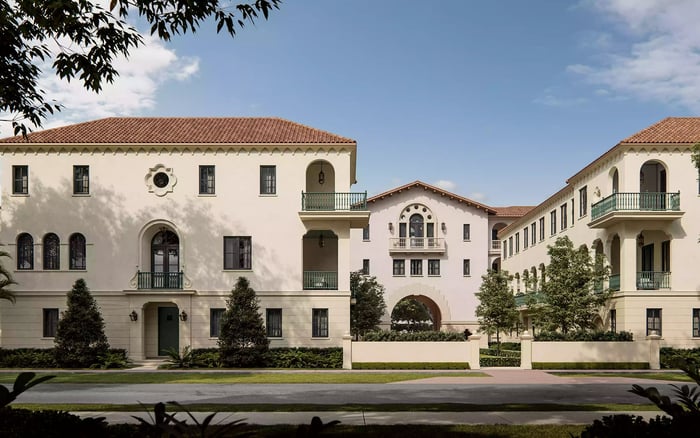
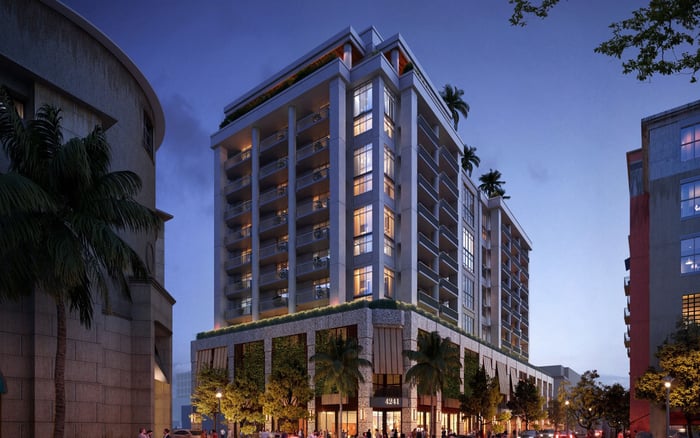
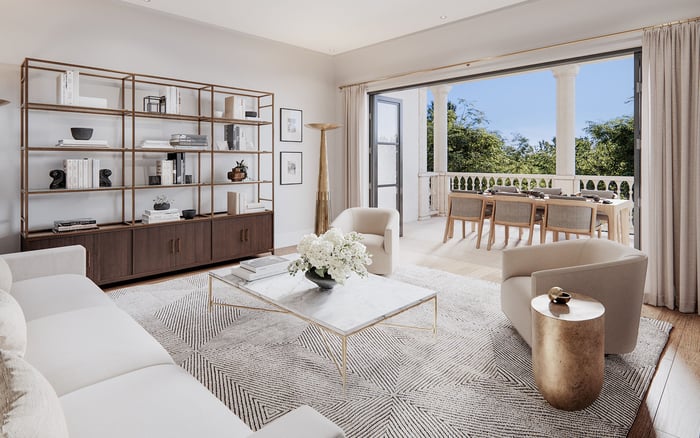
A buyer-oriented comparison of two distinct luxury residential expressions in South Florida: the composed, neighborhood-led sensibility of The Village at Coral Gables and the sculptural, design-forward identity of Ziggurat Coconut Grove. MILLION Luxury examines how traditional masterplanning and statement architecture shape privacy, walkability, resale positioning, and long-term lifestyle appeal across Coral Gables and Coconut Grove.
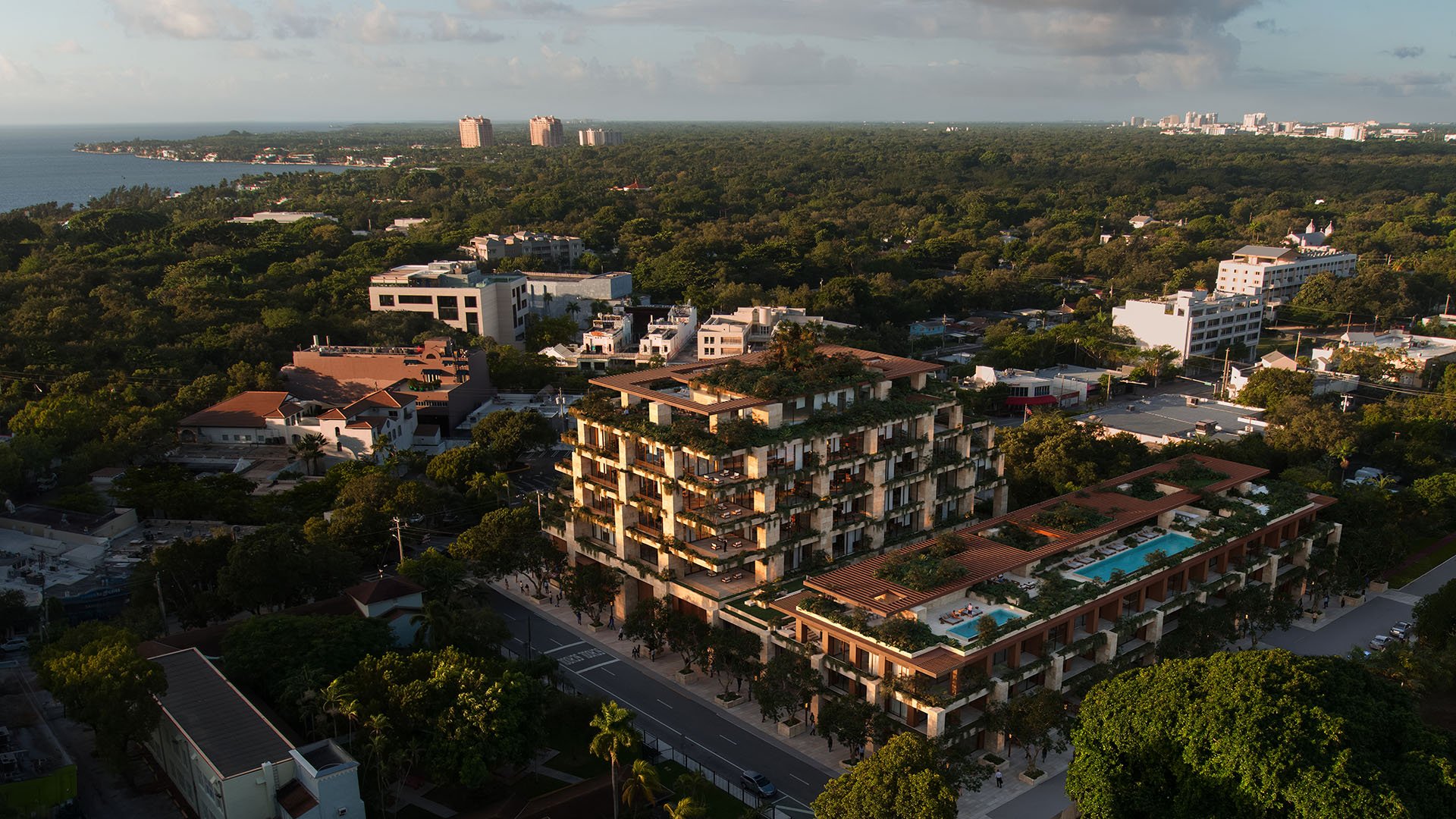
In South Florida luxury real estate, value is rarely defined by square footage alone. The most discerning buyers are often choosing between two distinct expressions of prestige: one rooted in continuity, context, and an established sense of place, and another shaped by architecture that conveys individuality from the moment of arrival. That distinction comes into focus in the conversation around The Village at Coral Gables and Ziggurat Coconut Grove.
These two addresses represent more than separate projects. They embody two luxury instincts. In Coral Gables, the appeal is often tied to a composed streetscape, a sense of permanence, and a residential environment that appears to have matured gracefully over time. In Coconut Grove, the attraction is often more design-led, with architecture serving as a statement of taste, confidence, and contemporary sensibility.
For a buyer, the real question is not which philosophy is universally better. It is which one aligns more precisely with the life they intend to lead.
A traditional community masterplan succeeds by making the overall experience feel coherent. The architecture, pedestrian rhythm, landscaping, and circulation work together to create a sense of order. In a market where many luxury offerings compete through spectacle, that quieter discipline can be a powerful differentiator.
That is the lens through which The Village at Coral Gables is best understood. Its appeal is not merely visual. It is civic in tone. Buyers drawn to this kind of environment tend to value discretion over display. They want beauty, but they want it woven into daily life rather than isolated as an object.
In practice, this can translate into a lifestyle defined by gentler transitions between home, street, and neighborhood. The experience tends to feel settled from the moment of arrival. This is especially important for purchasers who are not simply acquiring an asset, but establishing a long-term residential pattern around family, routines, and social continuity.
That same instinct helps explain interest in other refined Coral Gables offerings such as Ponce Park Coral Gables and Cora Merrick Park, where the broader district remains part of the luxury proposition. Here, prestige is often reinforced by context rather than detached from it.
Statement architecture begins from a different premise. Instead of blending seamlessly into an inherited setting, it seeks to establish a new visual and experiential hierarchy. For some buyers, that is precisely the point. The home is not simply a retreat. It is a declaration.
Ziggurat Coconut Grove belongs to this design-forward category. In a market increasingly attentive to architectural authorship and visual identity, projects of this kind appeal to buyers who want a residence with immediate presence. The building itself carries emotional value. It becomes part of how owners express discernment.
This is not superficial. In the upper tier of the market, design can directly shape desirability. A residence that feels singular may command attention from buyers who have already seen conventional luxury in abundance. For these purchasers, memorable form, sculptural massing, and a sharply edited material palette can matter as much as location.
Coconut Grove has become fertile ground for this approach. The neighborhood’s layered character supports both intimacy and experimentation, which is one reason buyers also study developments such as Opus Coconut Grove and The Lincoln Coconut Grove when considering the area’s evolving luxury profile. In this setting, architecture often operates as a primary amenity.
The deeper comparison is not building against building, but place against place. Coral Gables and Coconut Grove signal distinct cultural codes within Miami’s luxury hierarchy.
Coral Gables tends to attract buyers who prioritize formality, structure, and an enduring residential narrative. The environment often feels composed, with prestige expressed through urban order, established identity, and a polished domestic atmosphere. This can be especially compelling to those seeking a full-time home or a legacy-minded purchase with a classic social frame.
Coconut Grove, by contrast, often appeals to buyers who want luxury with looseness. The neighborhood’s character supports creativity, walkability, and a more relaxed visual rhythm. Prestige here can feel less ceremonial and more personal. A standout building can therefore resonate strongly, because it reflects the Grove’s willingness to embrace design personality.
For some, The Village at Coral Gables will feel reassuring in the best sense of the word. For others, Ziggurat Coconut Grove will feel like the more exact expression of contemporary taste. Neither response is accidental. Each reflects a different definition of belonging.
The buyer drawn to The Village at Coral Gables is often seeking continuity. This purchaser values the idea that a home should age well aesthetically and socially. They may be especially attentive to neighborhood prestige, traditional proportions, and a residential setting that feels cultivated rather than performative. Their lens is typically long term.
The buyer drawn to Ziggurat Coconut Grove may be equally discerning, but more interested in distinction than continuity. This purchaser is often motivated by rarity, visual impact, and the pleasure of living inside a design concept that feels intentional from every angle. They are less concerned with convention and more interested in authorship.
These are not rigid categories, but they help explain market behavior. In luxury real estate, the strongest assets are often those that know exactly whom they are for.
From a resale standpoint, traditional masterplanned environments and statement buildings offer different strengths. A traditional setting can benefit from broader buyer comfort. Its value proposition is easier to understand because it is anchored in recognized neighborhood cues: harmony, permanence, and familiar prestige. This can support resilience across changing style cycles.
Statement architecture often trades on scarcity. When executed convincingly, it may attract a particularly committed buyer pool that values singularity over universality. The advantage is memorability. The risk is that design-led properties can depend more heavily on emotional alignment. In the top end of the market, however, emotional alignment is often exactly what drives premium interest.
For this reason, the better investment question is not which model is safer in the abstract. It is whether a buyer believes future demand will lean more toward timeless, contextual luxury or toward highly distinctive residences with strong visual identity.
MILLION Luxury sees The Village at Coral Gables and Ziggurat Coconut Grove as two persuasive answers to the same modern question: what should elite residential living communicate today?
If the answer is heritage, continuity, and a neighborhood experience that feels composed at every scale, The Village at Coral Gables makes a compelling case. If the answer is design confidence, architectural authorship, and a residence that reads as a signature, Ziggurat Coconut Grove becomes especially persuasive.
The wisest buyers will look beyond simple aesthetics. They will consider how they entertain, how they move through a neighborhood, how much they value contextual elegance versus visual distinction, and whether their purchase is meant to blend into a legacy setting or stand apart from it.
In that sense, this is not just a comparison between two developments. It is a choice between two enduring luxury archetypes, each with legitimate power in South Florida’s uppermost tier.
What is the core difference between The Village at Coral Gables and Ziggurat Coconut Grove? The Village at Coral Gables suggests a traditional, neighborhood-led luxury experience, while Ziggurat Coconut Grove represents architecture as a defining statement.
Which project better suits a buyer seeking timelessness? Buyers focused on continuity, context, and a classic residential atmosphere may feel more aligned with The Village at Coral Gables.
Which project is more appealing for design-driven buyers? Ziggurat Coconut Grove is the clearer fit for purchasers who value visual identity and architectural distinction.
Is Coral Gables different from Coconut Grove in buyer psychology? Yes. Coral Gables often attracts buyers seeking structured elegance, while Coconut Grove tends to attract those who prefer a more expressive lifestyle setting.
Does statement architecture help resale? It can, particularly when rarity and strong design create memorable market positioning for future buyers.
Are traditional masterplans less exclusive than bold architecture? Not at all. They simply express exclusivity through coherence, privacy, and long-established neighborhood value.
Why do some luxury buyers prefer context over spectacle? Because daily livability, social continuity, and a sense of permanence can matter more than visual drama over time.
Why is Coconut Grove attractive for contemporary projects? The area’s character accommodates design experimentation while still delivering prestige, intimacy, and strong lifestyle appeal.
Can Coral Gables still appeal to modern buyers? Absolutely. Many modern buyers value refined traditionalism when it is paired with quality execution and a strong residential setting.
How should a buyer decide between these two approaches? The decision should come down to whether one values timeless neighborhood composition or architecture that feels unmistakably individual.
To compare the best-fit options with clarity, connect with MILLION Luxury.
If branded residences are on your mind — as a home or as an allocation — we would be glad to share what we are seeing, privately.
Begin a quiet conversation