A buyer-focused comparison of Coconut Grove and Coral Gables through the lens of privacy in 2026, separating lush visual seclusion from the more durable privacy that comes from zoning, setbacks, architectural controls, and neighborhood-wide consistency.
For luxury buyers, privacy rarely means simple isolation. In practice, it is a blend of visual screening, distance between homes, protection from incompatible development, reduced through-traffic, and confidence that the character of a street will not change abruptly a year after closing. That distinction matters in the 2026 comparison between Coconut Grove and Coral Gables.
Both neighborhoods remain deeply desirable. Both are green, established, and closely tied to a refined version of Miami living. Both also contain pockets that feel exceptionally secluded. Yet when privacy is evaluated at the neighborhood level rather than through the lens of a single trophy property, the answer becomes clearer: Coral Gables feels more private overall in 2026.
That does not mean Coconut Grove lacks privacy. It means its privacy is more situational. In the Grove, seclusion often comes from mature tropical canopy, irregular lots, lush hedging, and the charm of streets that feel discovered rather than imposed. In Coral Gables, privacy is more often the product of citywide planning, architectural review, standardized setbacks, and long-standing controls that create consistency block after block.
For buyers weighing Coconut Grove against Coral Gables, the real question is not which neighborhood can produce a private home. Both can. The better question is which one makes privacy feel more reliably built into the broader environment.
Coral Gables benefits from being its own incorporated city, with centralized planning and zoning oversight that shapes residential form citywide. That matters because privacy is often preserved not by a single wall or gate, but by repeatable rules: spacing between homes, development review, architectural controls, and a more coherent separation between residential streets and commercial activity.
This is why Coral Gables tends to feel composed in a way affluent buyers immediately recognize. The neighborhood experience is less dependent on whether one particular block has mature landscaping or whether a nearby parcel is likely to change character. Formal entrances, estate clusters, deed restrictions in certain areas, and municipal oversight do not make the city universally gated, but they do create a stronger sense of protection.
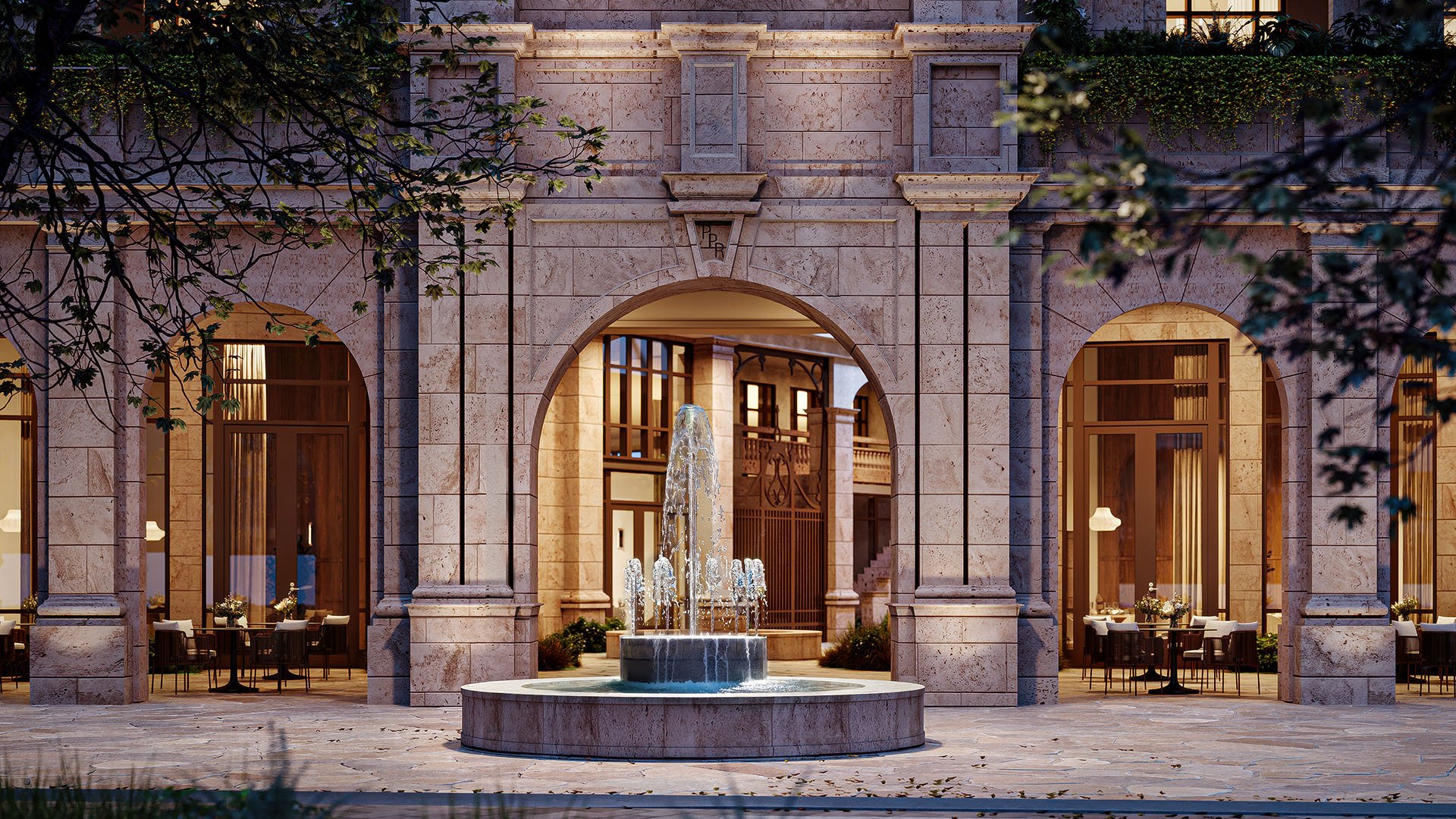
That same logic also explains the appeal of projects such as Ponce Park Coral Gables, The Village at Coral Gables, and Cora Merrick Park. Even when a buyer is considering a condominium or curated residential enclave rather than a classic estate, the surrounding civic framework still contributes to the feeling of order, screening, and long-term residential stability.
In plain terms, Coral Gables tends to offer privacy by structure. The result is not necessarily more dramatic than Coconut Grove on its best streets, but it is more consistent from one residential pocket to the next.
Coconut Grove’s great advantage is atmosphere. The area is leafy, low-scale, and richly shaded, with a residential character that often feels hidden in plain sight. On the right street, the combination of mature canopy, layered tropical landscaping, and irregular built form can deliver extraordinary visual privacy. A home may be only minutes from the village core and still feel veiled from the outside world.
That is why buyers are often drawn to projects like The Well Coconut Grove and Vita at Grove Isle. They reflect the Grove’s enduring appeal: tropical calm, a softer streetscape, and an almost resort-like relationship with landscape.
But the Grove’s privacy is less uniform. It is an unincorporated Miami-Dade neighborhood rather than a separate city, and its residential experience can vary more noticeably by block. Lot sizes and built form are more variable. Some streets feel deeply tucked away, while others are more exposed to redevelopment pressure, subdivision activity, or spillover movement from commercial areas and waterfront routes.
So while Coconut Grove can absolutely outperform Coral Gables on visual seclusion at the property level, it is less dependable as a neighborhood-wide privacy proposition. Buyers who value romance, canopy, and a sense of discovery may still prefer it. Buyers who want predictability usually do not.
This comparison becomes clearer when framed properly.
Coconut Grove excels at natural screening. Tall trees, dense foliage, and varied residential forms can make a property feel almost invisible from the street. Privacy here is experiential. It is what you feel when landscaping softens sightlines and the road network bends away from the city.
Coral Gables excels at rule-based privacy. Its stronger sense of seclusion comes from planning, development review, more standardized lot and setback controls, and residential areas that are generally buffered from heavier commercial intrusion. Privacy here is systemic. It is not just how a home looks today, but how confidently a buyer can expect the surrounding environment to retain its order.
That distinction matters to high-net-worth households, second-home owners, and families prioritizing single-family homes in legacy neighborhoods. A buyer who entertains often but dislikes visual exposure may love Coconut Grove’s vegetation. A buyer who is equally concerned about future adjacency, street consistency, and enforceable residential character will typically lean toward Coral Gables.
Privacy is also shaped by movement. Coconut Grove remains open-access at the neighborhood level, and its proximity to Bayshore corridors and the village core can increase pedestrian presence and through-traffic near some residential areas. That energy is part of the neighborhood’s charm, but it can slightly dilute the sense of retreat.
Coral Gables is not wholly insulated, yet many of its residential sections are better buffered from major commercial corridors by zoning and layout. This creates a quieter rhythm. You feel it in the transition from main roads into interior streets, where the visual language becomes more residential and less mixed in character.
For some buyers, that distinction is decisive. If private means serene but socially connected, Coconut Grove remains compelling. If private means protected, orderly, and less vulnerable to sudden shifts in surroundings, Coral Gables usually reads as the stronger answer in 2026.
The smartest buyers do not ask whether a neighborhood has prestige. Both do. They ask what kind of privacy they are actually purchasing.
If you are comparing a Grove residence with a Gables alternative, look beyond finishes and amenities. Study the street behind the building, the intensity of nearby activity, the likelihood of future change, and whether privacy comes mainly from landscaping or from a more durable regulatory framework.
This is also where exclusive-area appeal becomes more nuanced. A private-feeling address is not always the one with the grandest entrance. Often, it is the one where spacing, review standards, and neighborhood governance quietly support discretion year after year. In that respect, Coral Gables has the advantage.
If the question is which neighborhood can deliver a magical private residence, the answer is both.
If the question is which neighborhood actually feels more private overall in 2026, the stronger conclusion is Coral Gables.
Coconut Grove remains one of Miami’s most seductive residential environments, particularly for buyers who value botanical screening, character, and a less formal kind of seclusion. But its privacy is uneven by design, because the neighborhood itself is varied, open, and increasingly influenced by redevelopment on selected blocks.
Coral Gables, by contrast, turns privacy into a more dependable neighborhood condition. Through centralized planning, architectural controls, steadier low-density character, and better buffering of residential sections, it offers the more consistent version of what affluent buyers usually mean when they say they want privacy.
For 2026, the refined answer is simple: Coconut Grove may look more hidden on certain streets, but Coral Gables feels more privately protected overall.
Which neighborhood feels more private overall in 2026? Coral Gables feels more private overall because its privacy is reinforced by citywide planning, review, and spacing controls.
Does Coconut Grove offer strong privacy too? Yes. Its best streets can feel exceptionally secluded thanks to heavy canopy, lush landscaping, and irregular lot patterns.
Is Coral Gables a gated city? No. It is not universally gated, but some enclaves feel more protected because of formal entrances, controls, and oversight.
What kind of privacy is Coconut Grove best at? Coconut Grove is strongest at visual and atmospheric privacy created by vegetation and softer residential streetscapes.
What kind of privacy is Coral Gables best at? Coral Gables is strongest at consistent, rule-based privacy supported by planning, setbacks, and architectural review.
Does traffic affect the privacy feel? Yes. Areas closer to active corridors or commercial cores can feel less secluded even when the homes themselves are substantial.
Why do some buyers still prefer Coconut Grove? Many buyers value its organic character, tropical screening, and a more relaxed sense of retreat near the bay.
Why do families often favor Coral Gables for privacy? Families often appreciate the neighborhood’s stable residential pattern and the predictability of its surrounding built environment.
Can a single Coconut Grove property feel more private than one in Coral Gables? Absolutely. At the individual property level, a heavily landscaped Grove home can feel more hidden than many homes in the Gables.
What is the best next step for a buyer deciding between them? Tour each area at different times of day and compare not just the residence, but the street, adjacency, and long-term sense of protection.
For a tailored shortlist and next-step guidance, connect with MILLION Luxury.
If branded residences are on your mind — as a home or as an allocation — we would be glad to share what we are seeing, privately.
Begin a quiet conversation