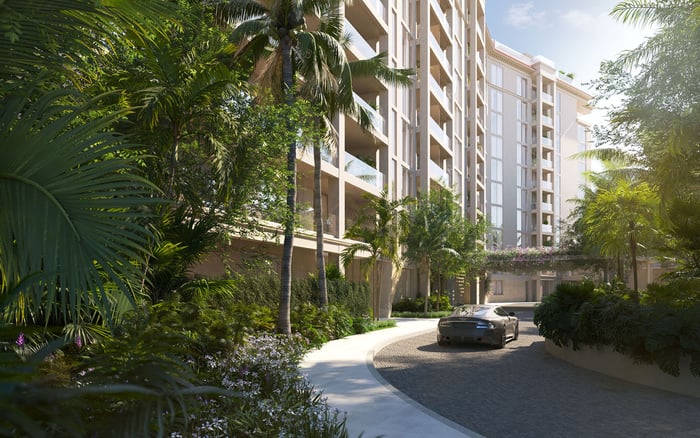
A discreet buyer’s guide to evaluating guest parking before choosing a South Florida luxury condominium where dinners, events, and weekend hosting are part of daily life.
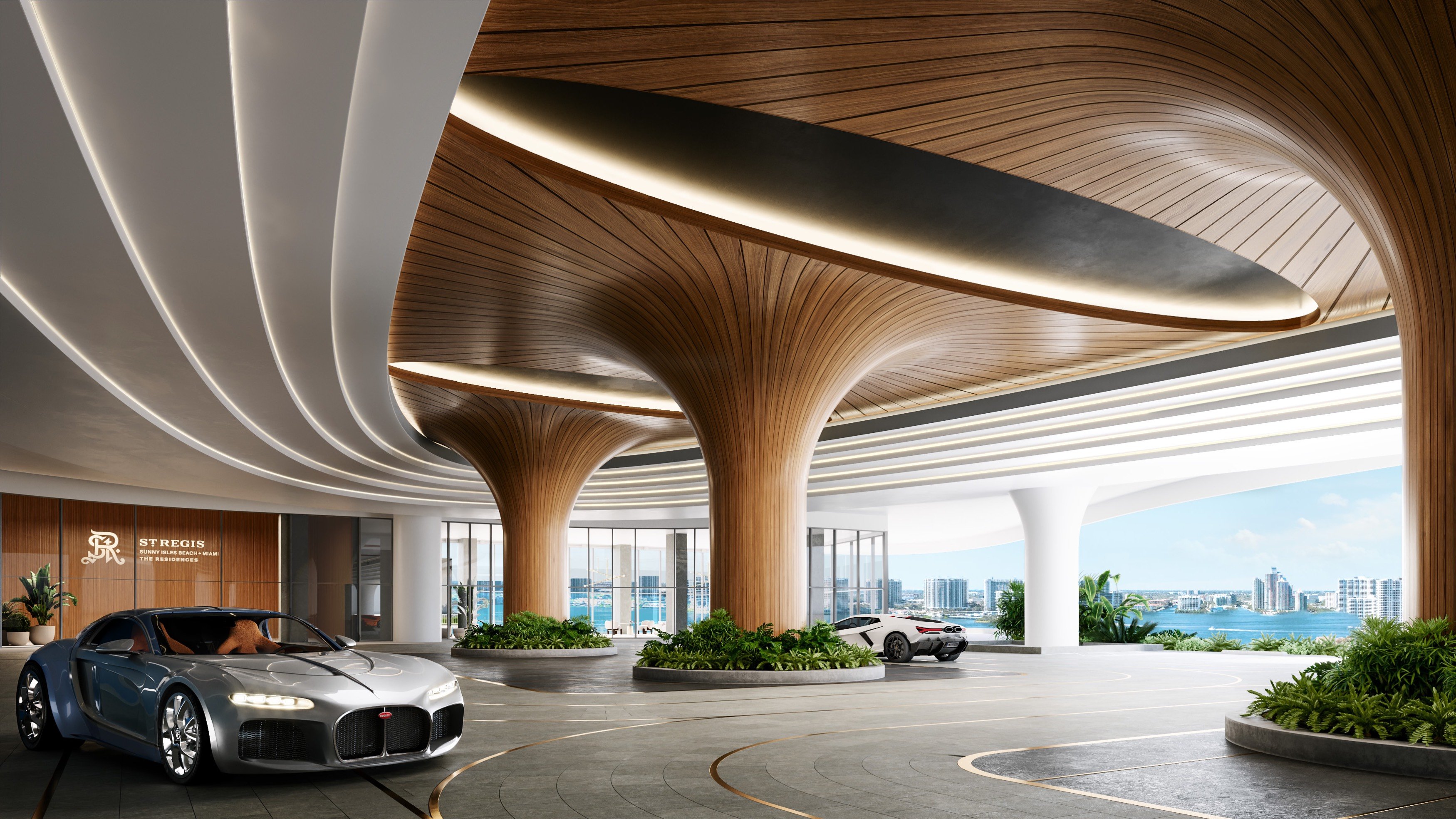
In South Florida’s luxury condominium market, entertaining is often presented through candlelit terraces, private dining rooms, club rooms, wine lounges, and cinematic arrival courts. Yet the first experience many guests have is not the view. It is the moment they ask where to park, how to check in, and whether someone will still retrieve the car after dessert.
For buyers who expect to host constantly, guest parking deserves the same scrutiny as ceiling heights, elevator access, service corridors, and terrace depth. A building can feel effortless on a private tour at noon and strained at 8 p.m. on a Saturday. The question is not simply whether guest parking exists. The question is whether the building’s parking system can absorb your real social calendar without friction.
This applies across the region, from Brickell towers such as The Residences at 1428 Brickell to coastal residences, waterfront enclaves, and boutique buildings where fewer homes can still mean fewer visitor spaces. The more often you host, the more parking becomes part of the property’s operating culture.
Ask for the exact number of guest spaces and the guest-space-to-unit ratio. Do not rely on broad amenity language, polished renderings, or a verbal assurance that “there is usually plenty.” Condo parking policies vary by building, and luxury branding does not guarantee generous visitor capacity.
Then test the answer against a realistic evening. If you plan to host 12 dinner guests, four ride-share arrivals, two valet arrivals, and one catering vehicle, ask management exactly how that scenario would be handled. Which guests can self-park? Which must use valet? Can spaces be reserved? Is overflow available? Would any vehicle be turned away?
The most important answer is often operational rather than numerical. A modest number of spaces in a well-managed building with reservations, digital permits, and overflow arrangements may outperform a larger garage governed by first-come, first-served rules. Conversely, a building with abundant-looking parking can disappoint if per-unit guest caps, short time limits, or narrow registration procedures restrict actual use.
Ask whether the building is self-park, valet-only, or hybrid. Valet can be elegant when properly staffed, but valet-only systems can create arrival and departure bottlenecks during parties. The question is not merely whether valet is offered. It is whether valet is staffed and managed for peak hosting hours.
Confirm whether the valet desk and guest-parking access operate 24/7. This matters for late dinners, holiday gatherings, weekend visitors, and evenings that move from the residence to a private club or restaurant and back again. If retrievals slow after midnight or staffing changes after a certain hour, the host may be left managing guest frustration at the end of an otherwise flawless evening.
In Miami Beach evaluations, including residences such as The Perigon Miami Beach, buyers should consider the complete guest journey: curb arrival, check-in, elevator access, vehicle retrieval, and any restrictions on where visitors may enter. The more ceremonial the building’s arrival, the more precisely the backstage logistics should be documented.
Confirm whether guest parking is free, validated, hourly, overnight, or available through monthly-pass arrangements. For a household that entertains frequently, guest parking fees can become a recurring lifestyle expense rather than an occasional convenience.
Ask about maximum duration for guests, including overnight limits, repeat-visitor rules, and long-stay guest approvals. This is particularly important for family members, visiting friends, seasonal guests, and households that host private chefs, assistants, trainers, stylists, or caregivers. A policy that works for a two-hour cocktail visit may not work for a long weekend.
Also ask whether the building caps the number of guest vehicles per unit at one time. A cap can make larger gatherings difficult even when spaces appear physically available. If the rules allow only one or two guest vehicles per residence without advance approval, the building may be better suited to quiet dinners than active entertaining.
Ask whether guests must be pre-registered, entered through an app, approved by the front desk, or checked in manually. Technology can improve the experience when it is intuitive, current, and supported by staff. Digital permits, license-plate recognition, visitor apps, and front-desk logs can speed arrivals and reduce confusion, but only if residents understand the process and guests receive clear instructions.
For last-minute hosting, rigid pre-registration can be inconvenient. A spontaneous dinner after Art Week, a family visit after a school event, or an unplanned stop after a yacht day can become awkward if the system requires advance approvals that are unavailable after hours.
In markets such as Sunny Isles, where residences like St. Regis® Residences Sunny Isles attract buyers who may host both local and international guests, clarity matters. Ask whether owner guests, renters, short-term occupants, and other permitted occupants receive the same parking access terms. Mixed-use access rules can affect congestion, fairness, and the everyday feel of the property.
A sophisticated host rarely entertains with guest cars alone. There may be catering vans, florists, musicians, private chefs, ride-share drivers, event setup teams, and service vehicles arriving within the same window. Ask whether these vehicles may use guest parking, loading zones, valet areas, or service entrances. Ask where they wait, how long they may remain, and whether advance coordination is required.
Overflow parking is equally important. Does the building have arrangements with nearby garages, or does it rely on limited street parking? Are overflow spaces reservable, validated, or informal? If the answer is vague, treat it as a practical red flag. A residence marketed for entertaining should be able to explain how event parking works without improvisation.
This is especially relevant in Fort Lauderdale, where waterfront living and hospitality-driven ownership often intersect. When comparing buildings such as Four Seasons Hotel & Private Residences Fort Lauderdale, the buyer’s due diligence should include not only amenity programming, but also arrival management, loading access, and after-hours coordination.
Before committing, request the guest-parking rules from the declaration, bylaws, house rules, and parking addenda. Written condominium documents control over casual assurances, and parking rules are often more nuanced than a sales conversation suggests.
Review the association budget and fee schedule for valet, parking operations, staffing, and guest-parking charges that may be passed through to owners. Ask whether guest parking rights can be changed by board rule, owner vote, or management policy, and how much notice residents receive before changes take effect. A generous current practice may not be permanent if the board has authority to revise procedures.
Ask the property manager whether parking has appeared in recent board discussions or resident complaints. Recurring disputes can reveal a mismatch between policy and real-world demand. In Coconut Grove, where boutique privacy and residential calm are often part of the appeal, evaluating homes such as The Well Coconut Grove should include asking whether the building’s hospitality expectations align with its parking capacity.
Before signing, ask these questions plainly: How many guest spaces exist? Are they reservable? Who controls them at peak hours? What does it cost to use them? What happens overnight? How many guest vehicles may one unit have at once? Where do caterers and event staff park? What is the towing and fine policy? Can rules change, and by what process?
Then ask management to walk through your most demanding evening, not your most modest one. If the building can answer in writing, with confidence, the parking system is likely aligned with an entertainment-heavy lifestyle. If the answer depends on luck, personal relationships, or “we will figure it out,” the residence may be magnificent but operationally miscast.
How many guest spaces should a luxury building have? There is no universal number, so ask for the exact count and the guest-space-to-unit ratio before relying on marketing language.
Is valet always better for entertaining? Not always. Valet can feel seamless, but valet-only buildings can create bottlenecks if staffing is thin during peak party hours.
Should guest parking be free in a luxury condo? It depends on the building’s rules. Confirm whether parking is free, validated, hourly, overnight, or handled through passes.
Can guest spaces usually be reserved in advance? Some buildings allow reservations, while others are first-come, first-served. For frequent hosting, reservability is a major advantage.
What should I ask about overnight guests? Ask about maximum duration, overnight limits, repeat-visitor rules, and whether long-stay guests need written approval.
Do catering and event vehicles count as guest parking? Not necessarily. Ask whether caterers, florists, musicians, private chefs, and setup teams use guest spaces, loading zones, or service entrances.
Why do board minutes and complaints matter? Parking disputes can reveal that written policies do not match real demand, especially during evenings, weekends, or seasonal peaks.
Can a board change guest parking rules after I buy? It may be possible depending on the governing documents. Ask how changes are approved and how much notice residents receive.
Are renters and owner guests treated the same? Not always. Confirm whether renters, short-term occupants, and owner guests receive the same guest-parking access.
What is the biggest red flag for an entertainment-focused buyer? Vague answers about overflow parking, valet staffing, registration, or service vehicles suggest the building may not support frequent hosting well.
For a discreet conversation and a curated building-by-building shortlist, connect with MILLION.
If branded residences are on your mind — as a home or as an allocation — we would be glad to share what we are seeing, privately.
Begin a quiet conversation