A buyer-focused editorial on how The Well Bay Harbor Islands frames wellness as the central residential proposition within a quieter Biscayne Bay island setting.

For a certain South Florida buyer, luxury is no longer measured only by frontage, finish level, or a recognized design name. It is measured by how a residence supports the body, the schedule, and the quieter rituals that make daily life feel composed. That is the sharper lens for The Well Bay Harbor Islands, a residential development positioned around wellness-centric living in an island setting.
The premise is specific. This is not simply a condominium with a fitness room and a spa menu appended to the amenity list. The project’s appeal lies in the pairing of Bay Harbor Islands living with health, fitness, spa, recovery, and lifestyle programming as primary residential amenities. For buyers who have grown skeptical of generic amenity decks, that distinction matters.
Bay Harbor Islands sits within the broader Biscayne Bay and Greater Miami luxury market, but it reads differently from denser mainland neighborhoods. Its island character supports a more private, water-oriented way of life, especially for high-net-worth buyers who want access to Miami without living inside its busiest urban corridors. In that sense, the wellness narrative and the setting reinforce each other.
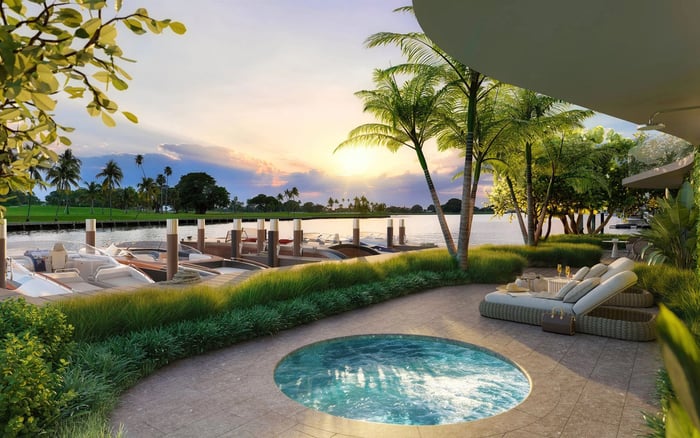
Wellness real estate can feel abstract when it is separated from place. At The Well Bay Harbor Islands, the island context gives the concept a more tangible frame. Water, lower-intensity surroundings, privacy, and a resort-style residential environment all support the emotional proposition: a home that feels like a retreat, yet remains connected to Miami’s broader luxury ecosystem.
That is why Bay Harbor is increasingly relevant to buyers who are not chasing the most visible address, but the most livable one. The neighborhood offers an alternative to the vertical pace of Brickell, while still allowing access to the culture, dining, schools, healthcare, and private services that define the region. For buyers comparing island and bayfront living, nearby projects such as Onda Bay Harbor and La Maré Bay Harbor Islands help show how this pocket has become a serious luxury residential conversation rather than a quiet afterthought.
The Well’s distinction is that it leans into wellness as the organizing idea. Privacy and water-oriented surroundings are not merely aesthetic benefits. They become part of the buyer’s mental model for restoration, routine, and long-term comfort.
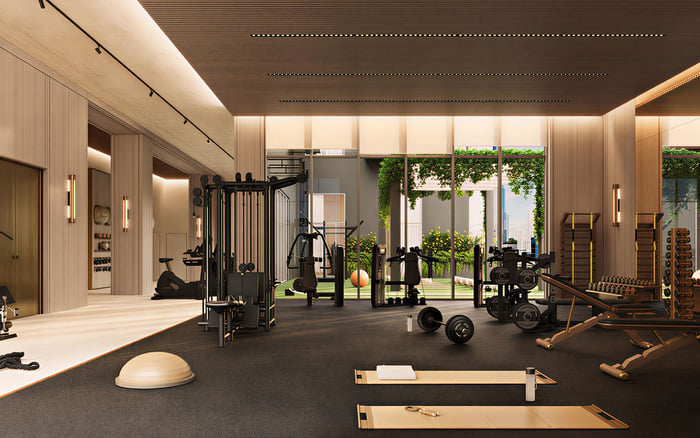
In practical terms, wellness credibility begins with the amenities buyers can use consistently. The Well Bay Harbor Islands is positioned around spa facilities, fitness offerings, recovery spaces, water-based amenities, and lifestyle services that bring wellness into the daily residential program. A pool is not merely a leisure feature in this context. It belongs to a broader pattern of movement, recovery, and resort-style living.
Concierge and wellness coordination also matter. Buyers at this level often have the means to access elite trainers, nutrition specialists, bodywork, and recovery experiences elsewhere. The value of a wellness-driven residence is not that it replaces those relationships, but that it reduces friction around them. When a building helps coordinate fitness, nutrition, recovery, and lifestyle services on-site or nearby, the residence becomes more than a private apartment. It becomes an operating system for a more deliberate life.
This is where the project’s positioning is strongest. The most persuasive version of the story is not luxury condo with amenities. It is wellness-branded island living in Bay Harbor Islands, with the home, services, and setting aligned around the same idea.
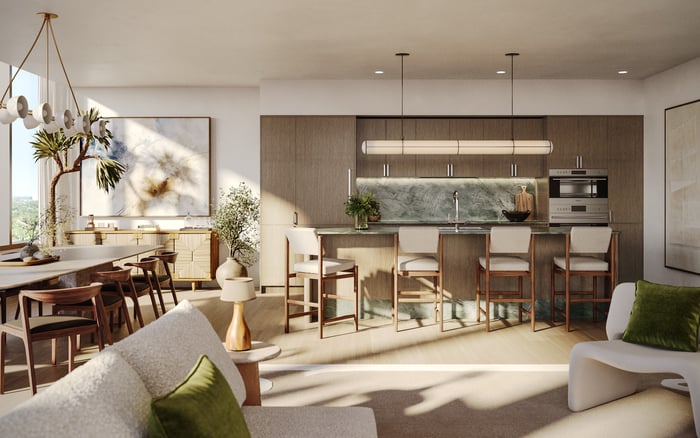
A credible wellness residence needs more than a program. It needs architecture and interior planning that make the concept visible in daily life. The Well Bay Harbor Islands is described around biophilic design ideas, including natural light, outdoor space, water views, and greenery. Those cues are central because they translate wellness from a claim into an atmosphere.
Large windows, private outdoor areas, and indoor-outdoor living features support the island-resort pitch. In South Florida, this is not decorative language. Light, air, shade, water, and terrace life are essential components of how affluent buyers judge comfort. A waterview can be an aesthetic asset, but it can also shape the rhythm of a morning, the decompression of an evening, and the way a home separates itself from the pace outside.
This is also why The Well Coconut Grove may appear in the same buyer conversation. It reflects a related appetite for branded wellness living, but in a very different neighborhood fabric. Coconut Grove has its own canopy, marina culture, and village character. Bay Harbor Islands offers a more island-oriented proposition, with privacy and water proximity closer to the center of the value story.
Sophisticated buyers should separate wellness branding from formal building certification. The WELL Building Standard is a recognized framework that addresses health, comfort, light, air, nourishment, movement, and mental well-being in the built environment. Fitwel is another wellness-focused framework that evaluates how design and operations can support occupant health.
Those frameworks are useful because they give buyers a vocabulary for evaluating wellness claims. They also raise the bar for what should count as credible. Does the residence support movement? Does it emphasize natural light and comfort? Are recovery, nutrition, air, and mental well-being part of the residential experience rather than marketing language?
The key point is restraint. Available project information should not be treated as confirmation that the entire development has achieved WELL or Fitwel certification. For buyers, that does not weaken the wellness story; it clarifies how to evaluate it. The more precise question is not whether a label appears in a brochure, but whether the building’s amenities, services, and design genuinely support a wellness-first lifestyle.
South Florida’s luxury market is increasingly specialized. Some buyers want a resort branded by hospitality. Others want a supertall skyline address, a private island enclave, a Surfside beachfront environment, or a low-density bayfront setting. The Well Bay Harbor Islands belongs to the new-construction category of buyers who want lifestyle specificity, not just size or spectacle.
That is an important distinction from Brickell, where the strongest appeal is often urban energy, financial-district convenience, and vertical city living. A buyer considering The Residences at 1428 Brickell may be prioritizing a different daily rhythm than a buyer considering Bay Harbor Islands. Neither approach is inherently superior. They simply answer different questions.
The same is true for Surfside, Bal Harbour, and North Bay Village comparisons. Some buyers want the ceremonial quality of a beachfront address. Others want the discretion of an island neighborhood with access to water, privacy, and calmer residential pacing. The Well Bay Harbor Islands is most compelling for the latter buyer, especially one who wants wellness to be visible in the amenity program and legible in the design language.
The likely buyer is affluent, health-conscious, and highly intentional about time. This may be a primary resident seeking a more restorative Miami base, a second-home buyer who wants a managed wellness environment, or a downsizer who prefers services and privacy over estate maintenance. Bay Harbor shoppers in this category are not simply asking what the building has. They are asking how the building helps them live.
That is why The Well Bay Harbor Islands should be evaluated through the lens of daily use. How often will the buyer use the spa, fitness, recovery, and water-based amenities? Does the island setting create the desired separation from busier corridors? Do the private outdoor areas, light, and greenery support the lifestyle being promised? The strongest projects in this segment are not those with the longest amenity lists. They are the ones where the amenities, architecture, and address feel coherent.
What makes The Well Bay Harbor Islands different from a conventional luxury condo? Its wellness positioning is central to the residential concept, with spa, fitness, recovery, lifestyle services, and island living forming the core appeal.
Is The Well Bay Harbor Islands in a dense urban setting? No. It is positioned in Bay Harbor Islands, offering an island alternative to denser mainland Miami neighborhoods.
Does the project emphasize privacy? Yes. The island setting supports a privacy and quality-of-life narrative for buyers seeking separation from busier corridors.
Are wellness services part of the buyer proposition? Yes. Concierge and wellness coordination are part of the lifestyle proposition, helping residents access fitness, nutrition, recovery, and related services.
Does The Well Bay Harbor Islands have WELL or Fitwel certification? Available information should not be read as confirmation that the entire development has achieved either certification.
Why do WELL and Fitwel matter to buyers? They provide recognized wellness frameworks for thinking about health, comfort, movement, light, air, and operations in the built environment.
Is the design connected to wellness? Yes. The project is described around biophilic ideas such as natural light, outdoor space, water views, and greenery.
Who is the best-fit buyer for this project? It suits buyers who want a luxury residence where wellness programming, privacy, and an island setting are central rather than secondary.
How does Bay Harbor Islands compare with Brickell? Bay Harbor Islands offers a quieter, water-oriented residential setting, while Brickell is more urban, vertical, and business-district driven.
Is this mainly a second-home product? It may appeal to second-home buyers, but the wellness and privacy proposition can also suit primary residents seeking a more restorative Miami base.
When you're ready to tour or underwrite the options, connect with MILLION.
If branded residences are on your mind — as a home or as an allocation — we would be glad to share what we are seeing, privately.
Begin a quiet conversation