A buyer-oriented comparison of two distinct luxury residential propositions in Miami-Dade: the private, courtyard-centered townhomes of The Village at Coral Gables and the walkable boutique condominium lifestyle at The Lincoln Coconut Grove.
In Miami-Dade’s upper tier, buyers often assume the choice is between a house and a condominium. The more nuanced reality is that many of the most compelling decisions happen within luxury formats that sit between those categories. That is exactly the case with The Village at Coral Gables and The Lincoln Coconut Grove.
Both appeal to affluent buyers seeking design, prestige, and a refined South Florida address. Yet the proposition behind each is materially different. The Village at Coral Gables is a gated townhome community defined by private courtyards, multi-level living, and a lower-rise residential atmosphere. The Lincoln Coconut Grove is a boutique condominium concept centered on walkability, shared amenities, and the ease many lock-and-leave owners prioritize.
For MILLION Luxury readers, the distinction is less about which project is more luxurious and more about which expression of luxury aligns more closely with daily life. One emphasizes enclosure, private outdoor space, and architectural tradition. The other leans into contemporary lines, service-oriented common spaces, and a more immediate connection to restaurants, marinas, and bayfront activity.
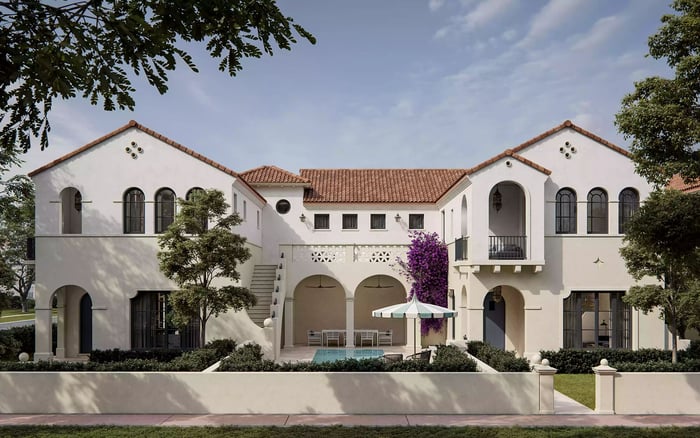
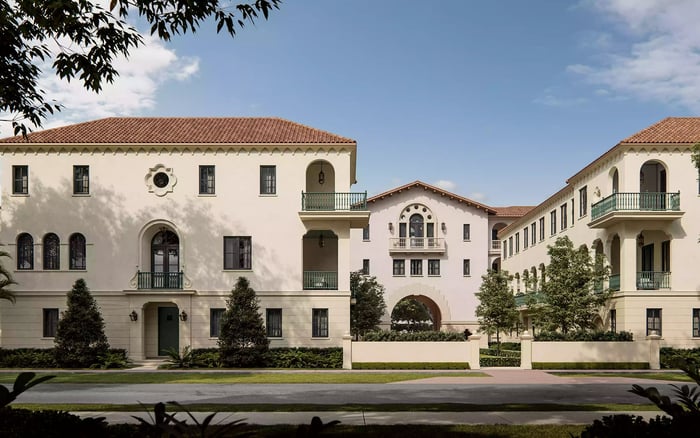
The Village at Coral Gables belongs to a very specific residential tradition. It is a gated townhome community developed by Shoma Group, and its identity is inseparable from controlled access and private courtyard living. That framework gives it a sense of retreat that resonates with buyers who want the privacy of a more house-like environment without moving into a conventional single-family estate.
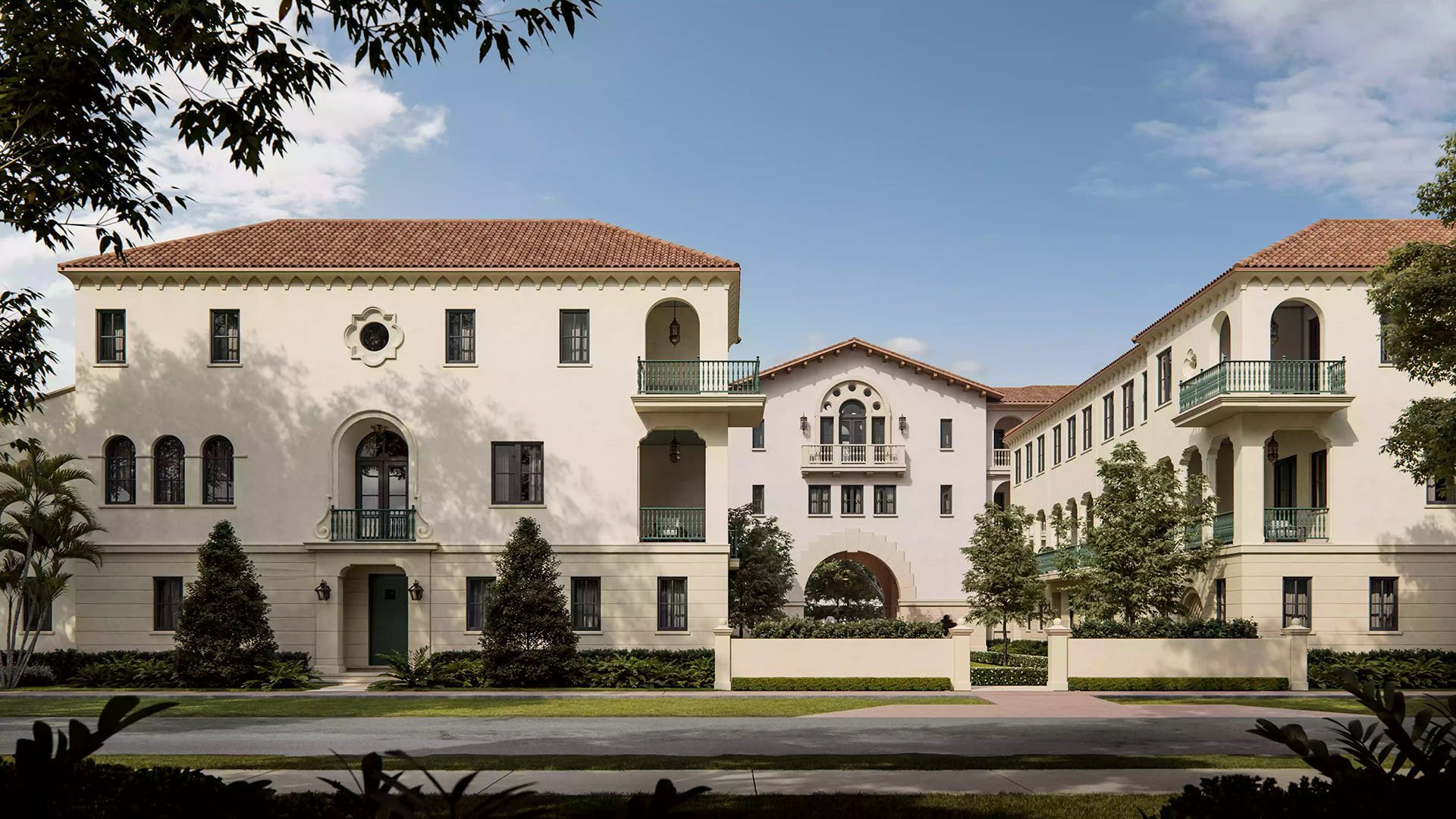
Its architecture follows a Mediterranean Revival and Spanish Colonial-inspired language that feels consistent with the city’s longstanding design ethos. In Coral Gables, that matters. The municipality’s formal planning and zoning framework has helped preserve a coherent architectural character, and projects that succeed here generally do so by feeling native to the place rather than imposed upon it.
The residences are described as generous multi-level homes, generally ranging from about 3,500 to 5,500-plus square feet. That scale shifts the experience away from condo-style living and toward something closer to a private urban villa. The defining feature remains the attached gated courtyard, which creates a rare indoor-outdoor threshold: more intimate than a common terrace, more secure than an exposed front garden, and more personal than the amenity decks associated with vertical living.
For buyers also considering Ponce Park Coral Gables or Cora Merrick Park, The Village at Coral Gables stands apart because its luxury proposition is not primarily about a condominium amenity stack. It is about enclosure, scale, and the emotional comfort of arriving home through a gate into one’s own private outdoor room.
The Lincoln Coconut Grove, developed by Terra Group, approaches luxury from the opposite direction. It is a boutique condominium project in Coconut Grove, and its appeal begins with the neighborhood itself: leafy yet urban, walkable, and closely tied to the energy of shops, restaurants, marinas, and waterfront recreation.
Where The Village at Coral Gables draws from historicist references, The Lincoln Coconut Grove takes a contemporary luxury design approach. The residences are described as generally ranging from about 1,500 to 3,000-plus square feet depending on plan, making them substantial by condo standards while still more streamlined than the multi-level scale seen at The Village. The project is described as having roughly 150 units, with shared amenity spaces that align with boutique condominium living, including wellness, service, and common-area offerings.
This positions The Lincoln squarely within the modern preference for convenience. Buyers who split time between cities, travel often, or simply want less day-to-day responsibility may find the building format more compelling than a townhome community, even at similar levels of finish and prestige. That logic also explains why Coconut Grove buyers often cross-shop with Arbor Coconut Grove, Opus Coconut Grove, or The Well Coconut Grove. The neighborhood attracts owners who value a cultivated, walkable lifestyle as much as they value the residence itself.
If these two projects can be distilled to a single deciding factor, it is the feeling of arrival.
At The Village at Coral Gables, arrival is ceremonial and inward-facing. The gated courtyard concept makes the home feel buffered from the city. Privacy is not simply a security measure here; it is part of the design language. The lower-rise environment, private outdoor space, and traditional architecture all reinforce a residential calm many buyers associate with permanence.
At The Lincoln Coconut Grove, arrival is more urban and outward-facing. The project is tailored to the rhythm of Coconut Grove, where daily life can extend beyond the lobby and into the neighborhood. The setting favors movement: coffee, dinner, the marina, a waterfront walk, then home again without the sense of isolation some secluded communities intentionally cultivate.
Neither is inherently superior. Rather, Coral Gables tends to attract buyers who want their residence to feel like a private enclave, while Coconut Grove appeals to those who prefer a residence embedded in an active district with easy access to bayfront culture.
Space is one of the clearest practical distinctions. The Village at Coral Gables has been associated with residences historically positioned in roughly the $3 million to $5 million-plus range, with larger square footage that better suits those who want expansive entertaining areas, multiple levels, and a stronger sense of separation between living zones.
The Lincoln Coconut Grove has been associated with a historically broader range of roughly $1.5 million to $4 million-plus depending on unit size and elevation. That range can create an easier entry into prime Coconut Grove ownership while still giving buyers access to a high-design condominium environment.
The ownership style is equally important. The Village at Coral Gables is better suited to those prioritizing private outdoor space, seclusion, and a lower-rise built environment. It is especially compelling for buyers who might otherwise search among single-family homes but prefer a more curated community framework.
The Lincoln Coconut Grove is better suited to buyers who want condo amenities, lock-and-leave ease, and immediate proximity to dining and bayfront activity. For second-home purchasers, frequent travelers, or those who prefer service and common-area support over the responsibilities of a townhouse-like residence, that difference can be decisive.
One subtle but important distinction is the role of the water. The Village at Coral Gables does not offer direct waterfront access. Its appeal is grounded in architecture, privacy, and the disciplined residential character of Coral Gables.
Coconut Grove, by contrast, benefits from proximity to Biscayne Bay marinas and waterfront parks. While The Lincoln is not defined here as a direct waterfront tower, its neighborhood lifestyle is unmistakably connected to the bay. For buyers who want marina adjacency, boating culture, and a more fluid relationship with the outdoors, Coconut Grove can feel more kinetic.
That said, buyers who equate luxury with quiet control rather than movement may find Coral Gables more enduring. The Village at Coral Gables is not trying to replicate a bayfront condominium experience. It offers something rarer: a composed, highly private, courtyard-centered alternative.
Choose The Village at Coral Gables if your ideal luxury residence feels almost like a house in a finely managed enclave. It is the stronger fit for those who value private outdoor space, architectural tradition, larger floorplans, and a sense of retreat.
Choose The Lincoln Coconut Grove if you want a polished condominium lifestyle in one of Miami’s most appealing walkable districts. It is the stronger fit for buyers who prioritize convenience, shared amenities, contemporary design, and immediate access to the social life of Coconut Grove.
In truth, these two projects are less direct competitors than parallel answers to the same question: how should luxury feel in South Florida today? One answers with gates, courtyards, and residential intimacy. The other answers with boutique density, amenitized ease, and neighborhood immersion.
Is The Village at Coral Gables a condominium? No. It is a gated townhome community with a more private, house-like ownership experience.
Is The Lincoln Coconut Grove a boutique condo project? Yes. It is positioned as a boutique condominium development in Coconut Grove.
Which project offers more interior space? The Village at Coral Gables is described as having larger residences overall, generally exceeding the typical size range at The Lincoln.
Which project is better for lock-and-leave ownership? The Lincoln Coconut Grove is generally the better fit for buyers who prioritize convenience and shared services.
Which project is better for private outdoor space? The Village at Coral Gables stands out for its attached private gated courtyards.
Does either project offer direct waterfront access? The Village at Coral Gables does not, while The Lincoln benefits more from Coconut Grove’s proximity to bayfront amenities and marinas.
How do the architectural styles differ? The Village at Coral Gables leans Mediterranean Revival and Spanish Colonial, while The Lincoln Coconut Grove follows a contemporary luxury design approach.
Are both projects in the same tax and regional code environment? Broadly yes, as both sit within Miami-Dade County, although Coral Gables has its own municipal planning framework.
Which project suits buyers considering a townhouse alternative to single-family homes? The Village at Coral Gables is typically the more natural fit for that buyer profile.
Which project is better for walkability to dining and lifestyle amenities? The Lincoln Coconut Grove is better aligned with buyers who want immediate access to Coconut Grove’s restaurants, shops, and bayfront activity.
To compare the best-fit options with clarity, connect with MILLION Luxury.
If branded residences are on your mind — as a home or as an allocation — we would be glad to share what we are seeing, privately.
Begin a quiet conversation