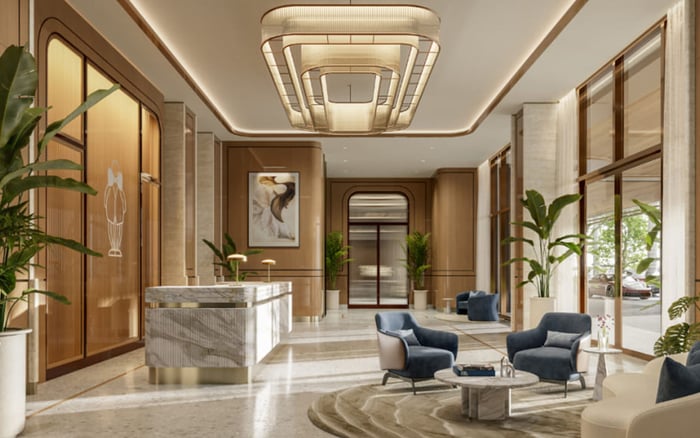
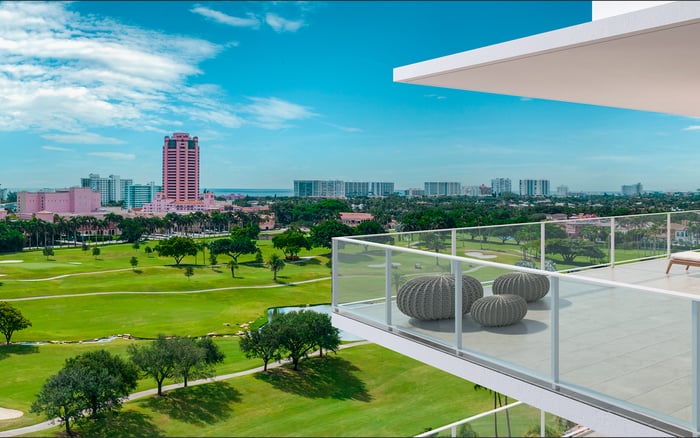
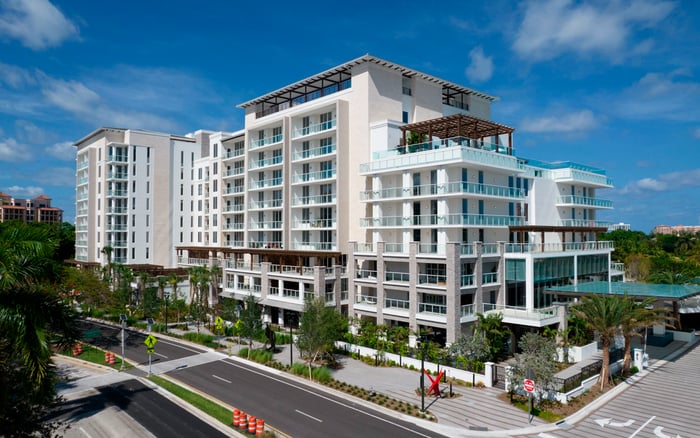
A buyer-focused comparison of two distinct luxury residential propositions in Boca Raton: the resort-integrated, service-rich Residences at Mandarin Oriental Boca Raton and the quieter, more private Alina Residences Boca Raton.
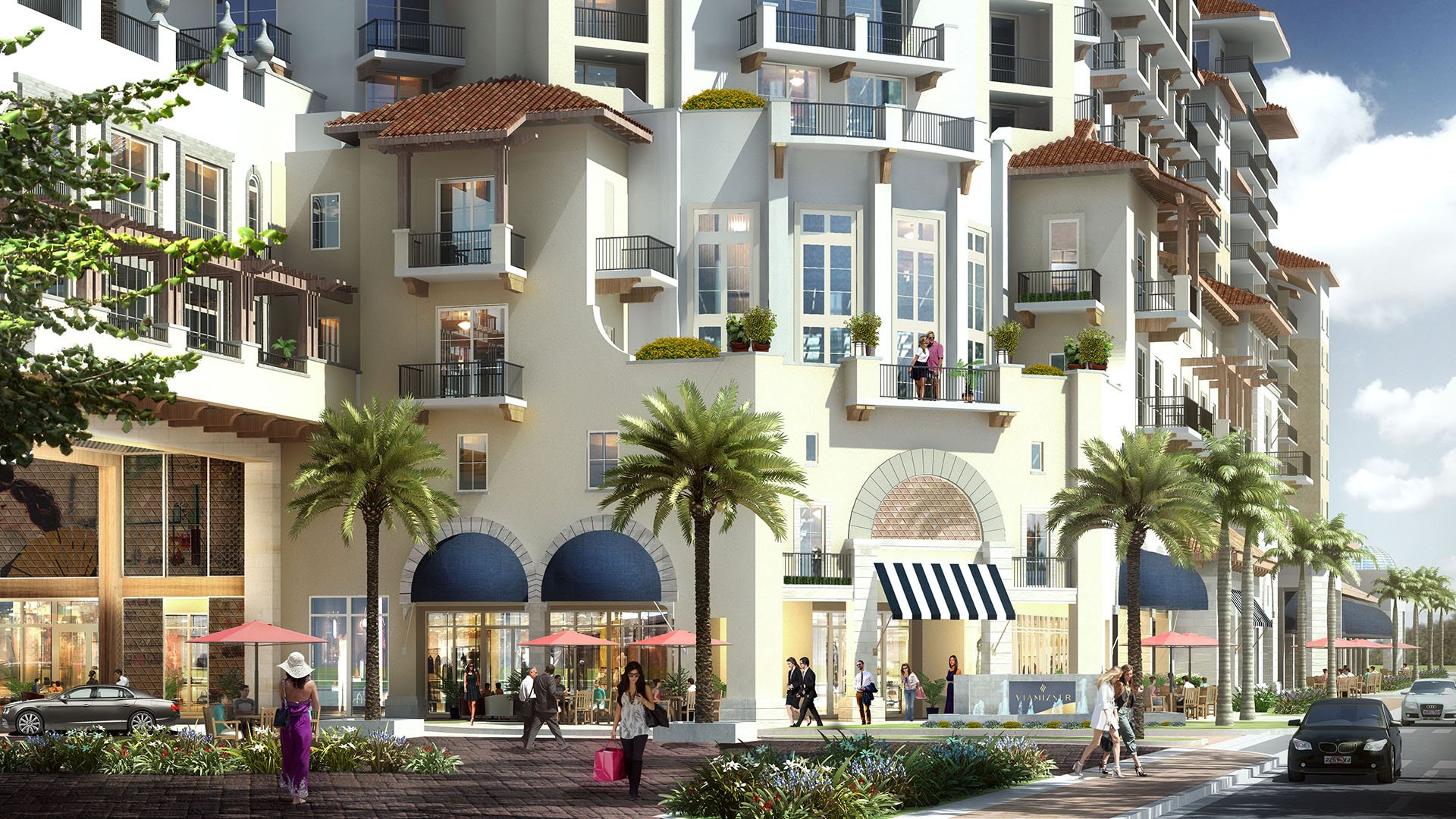
In Boca Raton, the most compelling new residential decisions are often less about finishes than about atmosphere. The contrast between The Residences at Mandarin Oriental Boca Raton and Alina Residences Boca Raton illustrates that clearly. Each speaks to the same affluent buyer base, yet each defines luxury through a different lens.
The Residences at Mandarin Oriental Boca Raton are structured around a branded hotel-and-residences model. The proposition is straightforward: ownership paired with hospitality-driven services, expansive amenity access, and the reassurance of a globally recognized flag.
Alina Residences Boca Raton, by contrast, is better understood as a private residential enclave. Its appeal is less about resort theater and more about controlled calm. It occupies Boca Raton's ultra-luxury conversation as a boutique, residence-first address where privacy, discretion, and owner autonomy carry more weight than hotel-linked programming.
This is not simply a matter of one being more luxurious than the other. It is a question of what kind of daily life a buyer wants to own.
At Mandarin Oriental, the center of gravity is service density. The project is associated with spa access, dining, concierge, resort-style pools, fitness, lounges, valet, and optional hospitality-style offerings such as housekeeping and room service. For a certain buyer, these are not extras. They are the entire proposition.
That makes the ownership experience especially compelling for second-home buyers, international owners, and busy households that prefer a highly managed environment. When arrival should feel effortless, entertaining should require minimal coordination, and time is valued above all else, the branded-residence model becomes highly persuasive.
The broader setting also matters. Residents are buying into a fuller lifestyle infrastructure, not just a private apartment.
Buyers exploring hospitality-driven ownership elsewhere in South Florida often compare similar branded concepts such as The Residences at Mandarin Oriental, Miami and The Ritz-Carlton Residences® West Palm Beach for the same blend of service, prestige, and convenience.
Alina speaks to a different instinct. Rather than integrating residential life with hotel operations, it emphasizes a more controlled, purely residential experience. The amenity offering is commonly framed through private fitness, resident lounge areas, concierge, and security-oriented design, but without the same dependence on food-and-beverage operations, transient guest activity, or hospitality circulation.
That distinction matters more than brochures sometimes suggest. For many ultra-luxury buyers, privacy is not merely a preference. It is an operational requirement. They want common areas that remain quiet, movement patterns that feel predictable, and a building culture oriented toward owners rather than visitors.
Alina's premium, then, is not spectacle. It is restraint. The development targets buyers who value a residential identity that feels curated and discreet. In this model, luxury is defined by the absence of interruption.
That private-enclave philosophy has analogues elsewhere in South Florida. Buyers drawn to that mood often also study communities such as Glass House Boca Raton, where intimacy and a quieter cadence can matter more than a large hospitality platform.
The simplest reading of this comparison is that Mandarin Oriental has more hospitality integration and Alina offers more privacy. That is directionally true, but it understates the difference.
At Mandarin Oriental, amenities are part of an outward-facing lifestyle. There is a built-in sense of activity: dining venues, service touchpoints, resort-style gathering spaces, and a hospitality layer that can make the property feel socially alive. For some owners, that energy is aspirational. It gives the building a destination character.
At Alina, the amenity profile supports an inward-facing lifestyle. The goal is not to simulate a private hotel. It is to preserve an owner-oriented environment with quieter common areas and reduced transient flow. The result is a more serene tone that many full-time residents may find preferable.
In other words, the central question is not whether you want a pool, concierge, or fitness center. The real question is whether you want those features delivered inside a branded resort ecosystem or within a more insulated residential setting.
This is where the decision becomes highly personal.
Mandarin Oriental is best understood as hospitality integrated into ownership. If a buyer values housekeeping support, room service-style convenience, valet, and a strong service culture, the proposition is unusually coherent. It offers a hotel-like ownership experience without sacrificing the permanence of a private residence.
Alina offers a different form of comfort: fewer layers, more autonomy. Concierge remains part of the experience, but the building is not organized around hotel-style service integration. For many owners, that creates a more natural daily rhythm. They can come and go without the subtle sense of being inside an active resort campus.
This distinction often separates second-home psychology from primary-residence psychology. A buyer using Boca Raton as a seasonal base may welcome high-touch support. A buyer living there year-round may place a higher premium on consistency, discretion, and limited foot traffic.
One of the clearest practical differences is circulation. In a resort-linked environment, there may be hotel guests, restaurant patrons, and a broader stream of activity connected to the property ecosystem. That does not diminish quality, but it does shape the feel of arrival, lobby energy, and common-area tempo.
Alina is positioned as strictly residential, which changes the experience materially. Owners who prefer a calmer threshold, fewer non-resident interactions, and a more insulated sense of home will likely see that as a major advantage.
In luxury real estate, tranquility is often treated as an abstract virtue. In reality, it is highly physical. It lives in elevator waits, lobby encounters, noise patterns, and how many people move through shared spaces on an ordinary afternoon. That is why this comparison deserves more than a superficial amenities checklist.
The Residences at Mandarin Oriental Boca Raton suit the buyer who wants branded assurance, broad amenity access, and service-rich convenience embedded in everyday life. It is particularly well aligned with those who enjoy being connected to a larger resort setting and who view hospitality as an extension of residential luxury.
Alina Residences Boca Raton suit the buyer who values privacy over programming, tranquility over activity, and a residence-first identity over brand theater. It is especially compelling for owners who want exclusivity expressed through calm, discretion, and a lower-traffic environment.
Both approaches are credible at the top end of Boca Raton. The difference is philosophical. One sells an abundance of service. The other sells control of atmosphere.
For sophisticated buyers, that may be the most useful way to frame the choice: not which building is more prestigious, but which form of prestige feels more livable.
What is the main difference between The Residences at Mandarin Oriental Boca Raton and Alina Residences Boca Raton? Mandarin Oriental emphasizes a branded resort lifestyle with hotel-style services, while Alina emphasizes a quieter, strictly residential enclave.
Is Mandarin Oriental Boca Raton more service-oriented than Alina? Yes. Its model centers more heavily on hospitality-style convenience, including concierge and service-driven daily support.
Is Alina better for buyers who want privacy? Generally, yes. Alina is positioned around discretion, lower foot traffic, and calmer shared spaces.
Are both projects considered luxury in Boca Raton? Yes. Both sit within Boca Raton's high-end market, but they express luxury through different lifestyles.
Does Mandarin Oriental Boca Raton function like a hotel residence? In many respects, yes. The concept is tied to a hotel-and-residences ecosystem with resort amenities and service integration.
Does Alina offer the same kind of hotel-style environment? No. It is presented as a residence-first setting rather than a hospitality-led living experience.
Who is the stronger fit for a second-home buyer? Mandarin Oriental may appeal more to second-home owners who want convenience and high-touch support built into ownership.
Who is the stronger fit for a full-time resident? Alina may appeal more to full-time residents who prioritize a steady, quieter, residence-first atmosphere.
Why does foot traffic matter in this comparison? It shapes lobby energy, common-area calm, and the overall sense of privacy that owners experience day to day.
What is the best way to shortlist comparable options for touring? Start with location fit, delivery status, and daily lifestyle priorities, then compare stacks and elevations to validate views and privacy.
For a confidential assessment and a building-by-building shortlist, connect with MILLION Luxury.
If branded residences are on your mind — as a home or as an allocation — we would be glad to share what we are seeing, privately.
Begin a quiet conversation