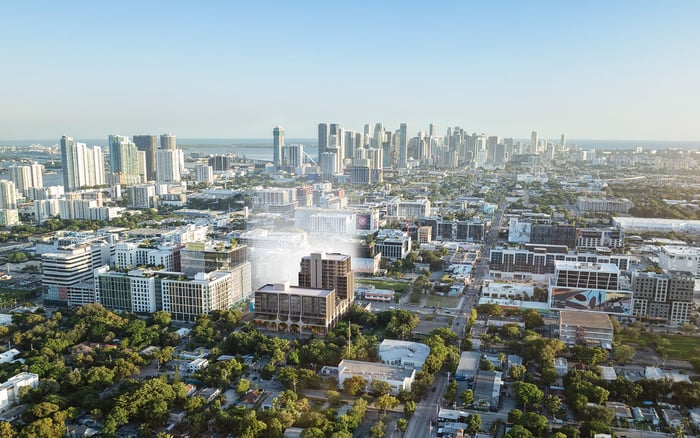
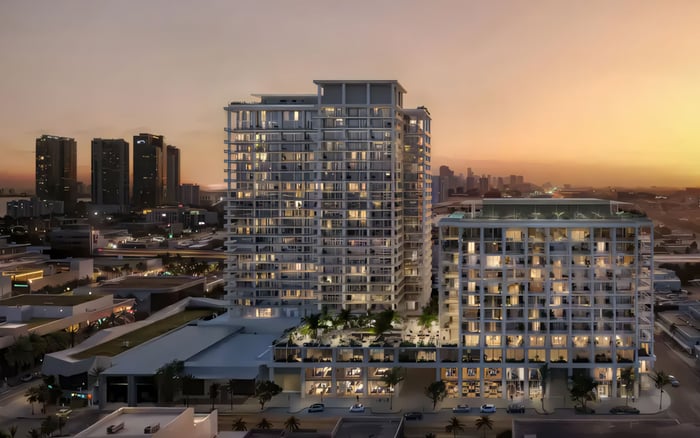
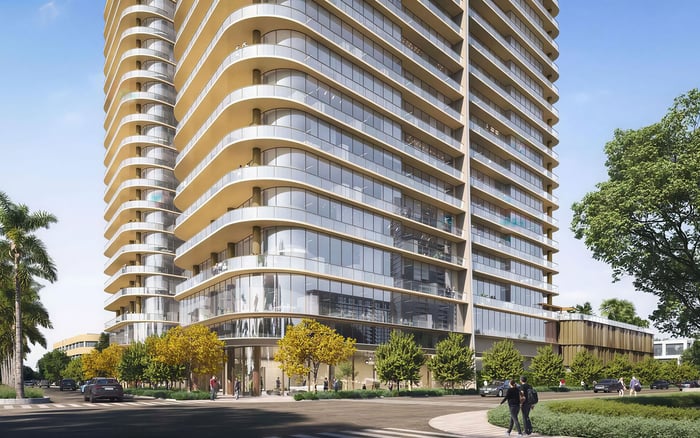
A discreet buyer’s guide to choosing between Midtown Miami and Wynwood for design-led living, with emphasis on daily rhythm, comfort, privacy, creative energy, and long-term residential fit.
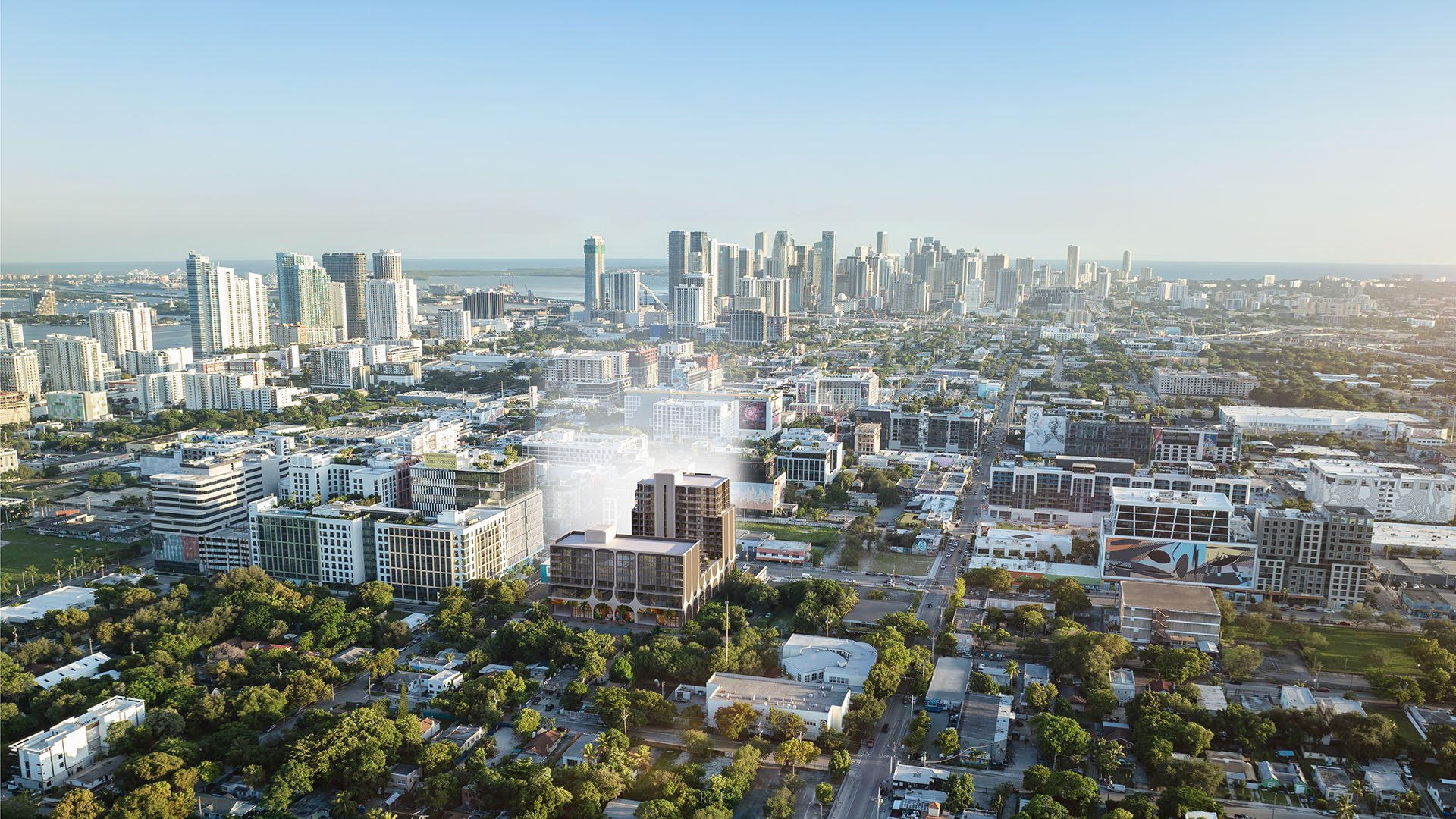
Midtown Miami and Wynwood can both satisfy a buyer who wants a home with a clear design point of view. The more useful question is not which neighborhood feels more fashionable. It is which one makes ordinary days easier, calmer, and more intuitive.
For the South Florida buyer considering a primary residence, pied-à-terre, or flexible city base, design-led living should not be reduced to finishes, lobby drama, or a recognizable name on a brochure. It should be measured in smaller, more revealing moments: how it feels to return home after dinner, whether a weekend morning has friction, how much sensory energy surrounds the building, and whether the neighborhood supports the Miami you actually live, not the one you occasionally visit.
That is where Midtown Miami and Wynwood begin to separate. Midtown often reads as the more composed choice for those who want design within a residential rhythm. Wynwood appeals to buyers who want creativity closer to the front door and are comfortable with a more expressive daily atmosphere.
Midtown Miami tends to suit buyers who want urbanity without feeling that every day must become an event. Its strongest residential argument is emotional rather than statistical: it can feel easier to imagine a repeatable routine there. The design-minded buyer may still want architecture, light, proportion, and a sense of newness, but the daily priority is often smoother movement between home, errands, dining, wellness, and quiet recovery.
That is why a project such as Miami Design Residences Midtown Miami belongs in the conversation. For buyers comparing Midtown Miami with Wynwood, the name itself signals the relevant tension: a residence can be design-forward without asking its owner to live in a constant state of spectacle.
Comfort, in this context, is not blandness. It is the luxury of predictability. A comfortable design-led home allows the owner to enjoy visual interest while preserving a sense of retreat. It offers enough neighborhood energy to feel connected, but not so much that the residence becomes a recovery chamber from its surroundings.
Wynwood attracts a different kind of design buyer: one who wants the neighborhood to participate in the experience of living there. For that buyer, comfort may not mean quiet in the traditional sense. It may mean stimulation, walkable discovery, artful contrast, and a daily sense that the city is still being interpreted in real time.
The appeal of Frida Kahlo Wynwood Residences is not simply that it sits within a recognizable creative district. It is that the residential decision becomes part of a broader lifestyle thesis: home as a point of connection to cultural texture. For some owners, that is precisely what makes a residence feel alive.
The caution is equally important. Wynwood rewards those who enjoy immediacy. Buyers who are happiest when restaurants, galleries, street life, and visual energy are part of the ambient environment may find it compelling. Buyers who need a more muted buffer between public life and private life may prefer to admire Wynwood often rather than anchor themselves there every night.
The cleanest way to compare Midtown Miami and Wynwood is to imagine the unglamorous parts of the week. Where do you want to land after a late flight? How much neighborhood animation feels enriching on a Tuesday night? Do you want your building to serve as a quiet counterpoint to the city, or as an extension of it?
Midtown Miami is likely to feel more comfortable for buyers who put routine first. That includes people who work from home, entertain selectively, and prefer their residence to have a measured relationship with the street. They still want design, but they want design to calm the nervous system as much as impress the eye.
Wynwood may feel more comfortable for buyers who draw energy from proximity. These residents are less concerned with a conventional idea of serenity and more interested in immediacy, identity, and creative atmosphere. For them, the neighborhood is not background. It is part of the reason to buy.
In South Florida, design-led living can mean several things. It can mean branded hospitality, sculptural architecture, restrained interiors, wellness programming, or a building that feels intensely local. The right interpretation depends on the buyer.
For a Midtown-leaning client, design may be most successful when it is edited. The architecture should feel current, but not performative. Amenity spaces should support routine rather than become another social obligation. Residences should prioritize light, storage, circulation, and privacy, because those qualities compound over time.
For a Wynwood-leaning client, design may be more expressive. A bolder lobby, a more graphic identity, or a stronger sense of place may feel like assets rather than distractions. The home is still private, but it is chosen with awareness that the neighborhood has its own voice.
That is why the surrounding design ecosystem matters. A buyer considering the broader urban-design conversation may also compare options such as Kempinski Residences Miami Design District or Miami Tropic Residences, not because they answer the Midtown versus Wynwood question directly, but because they help clarify how much polish, hospitality, and neighborhood identity the buyer wants in daily life.
Ultra-prime buyers often talk about views, materials, and amenity decks, but the invisible luxuries are more decisive. Arrival sequence matters. Elevator experience matters. The quality of the threshold between public street and private residence matters. So does the ability to choose when to be social and when to disappear.
Midtown Miami generally suits the buyer who values a more legible residential script. The day has a beginning, middle, and end. The home is a base that supports the calendar. Wynwood suits the buyer who wants more porousness between private life and city life. The day may feel less scripted, but also more charged with possibility.
Neither is inherently superior. The mistake is choosing the neighborhood for its reputation rather than its rhythm. A home can be visually excellent and still be wrong for the owner if its surroundings ask for a mood the owner does not want to sustain.
For design-led buyers, investment should not be separated from livability. A residence that fits the owner’s true behavior is easier to hold, easier to enjoy, and easier to understand over time. A buyer who loves a neighborhood only on weekends may not love living there through every weekday obligation.
This is also where search language can become misleading. New Project, New-construction, Boutique, and Ultra-modern may all sound attractive on a screen, but they do not answer the deeper question: will the home make Monday morning feel better? For the buyer choosing between Midtown Miami and Wynwood, that question is more revealing than any aesthetic label.
If comfort is the priority, Midtown Miami has the more natural advantage for many design-led residents. It offers a framework that can make daily life feel composed while still keeping the buyer connected to Miami’s contemporary design conversation.
If creative immediacy is the priority, Wynwood may be the more emotionally honest choice. It is not trying to be neutral, and that is exactly the point. The right Wynwood buyer wants the address to carry personality, not just convenience.
The most refined answer is not universal. Midtown Miami feels more comfortable for buyers who define luxury as ease. Wynwood feels more comfortable for buyers who define luxury as access to creative energy. The correct choice is the one that best protects your private life while enlarging the life you want to have outside the door.
Is Midtown Miami more comfortable than Wynwood? It can be, especially for buyers who value routine, residential calm, and a softer transition between city life and home.
Who is Wynwood best suited for? Wynwood suits buyers who want creative atmosphere, visual energy, and a stronger sense of neighborhood identity in daily life.
Is this mainly a design decision? No. Design matters, but the more important question is how the neighborhood supports ordinary routines.
Should investors choose Midtown Miami or Wynwood? Investment logic should follow lifestyle fit, because a residence that suits real behavior is usually easier to understand and hold.
Does Wynwood feel too active for full-time living? It depends on the buyer’s tolerance for energy and immediacy. Some residents find that activity inspiring rather than intrusive.
Does Midtown Miami feel too quiet for design-focused buyers? Not necessarily. For many buyers, a calmer setting can make design feel more livable and enduring.
What should buyers test before choosing? Visit both areas at different times of day and imagine a normal workweek, not just a dinner or weekend outing.
Are new residences changing the decision? New residences can sharpen the choice, but the core issue remains the same: routine in Midtown Miami versus creative immediacy in Wynwood.
Which area is better for a pied-à-terre? Wynwood may suit an owner seeking a more animated Miami base, while Midtown Miami may suit one seeking an easier residential rhythm.
What is the simplest way to decide? Ask whether you want the neighborhood to energize you every day or quietly support you when you come home.
For a confidential assessment and a building-by-building shortlist, connect with MILLION.
If branded residences are on your mind — as a home or as an allocation — we would be glad to share what we are seeing, privately.
Begin a quiet conversation