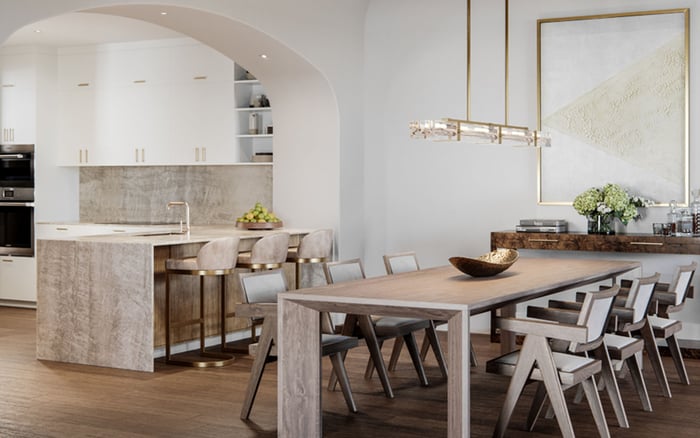
After one full academic year, some South Florida family buyers discover that school access, commute rhythm, after-school logistics, and tuition exposure can outweigh the symbolic pull of island prestige.
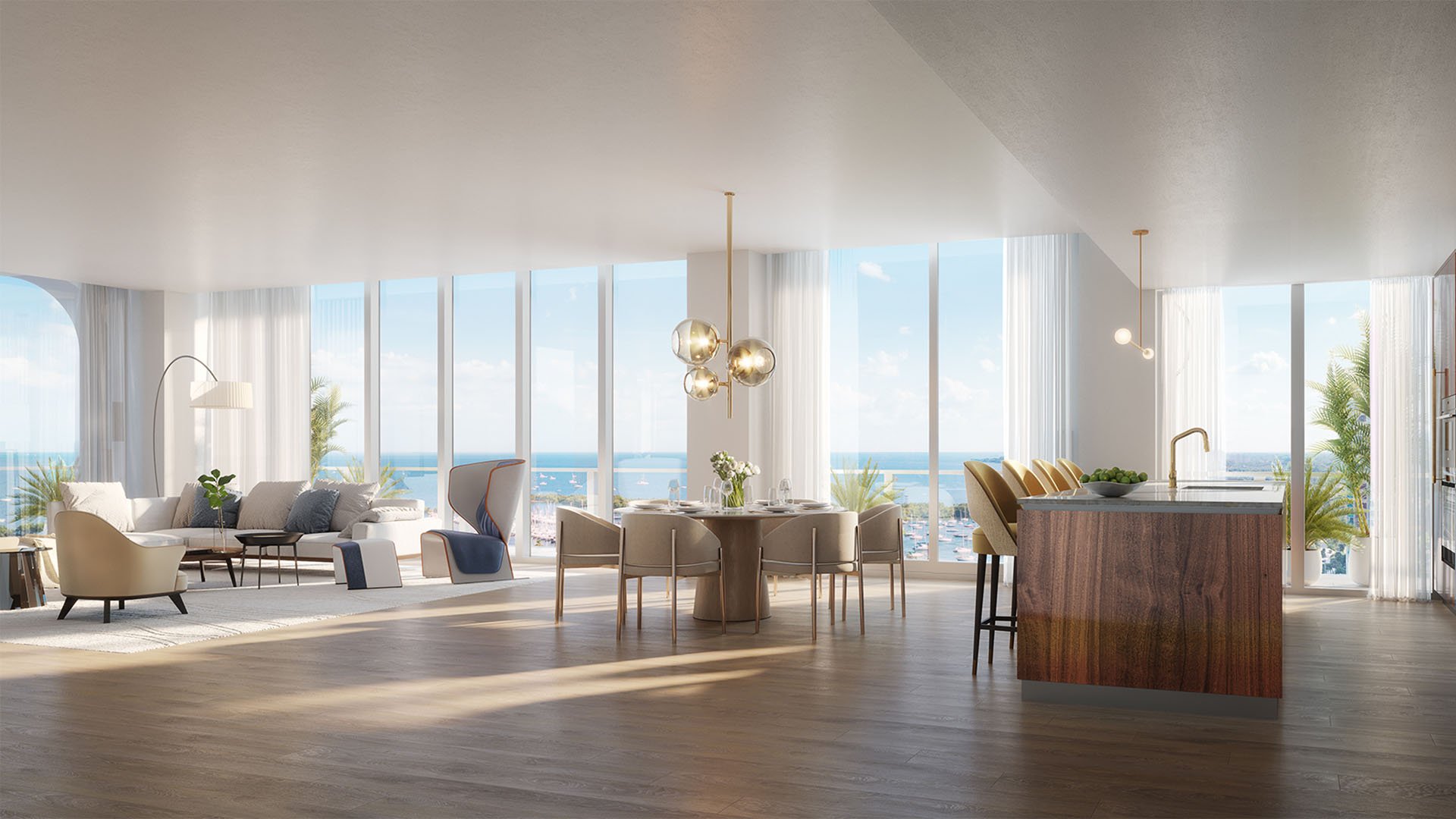
In South Florida, prestige often has a shoreline. An island address can suggest privacy, scarcity, and a quieter separation from the mainland pace. Yet for families with school-age children, the first full academic year can redefine what luxury actually means. A route that feels graceful in theory can feel very different once drop-off, pickup, activities, weather, and work calls all compete for the same narrow window.
That is why some buyers begin with island aspiration and later lean toward mainland convenience. The decision is rarely a rejection of prestige. It is a recalibration. After one school season, families understand the difference between a beautiful weekend address and a weekday address that preserves energy, time, and control.
For family buyers, school access belongs in the same conversation as architecture, privacy, outdoor space, waterfront exposure, and resale depth. The school run is not a side issue. It is a recurring test of whether the home supports the household’s actual week.
Mainland convenience is not simply about being close to a campus. It is about reducing the variables that can disrupt a school day. A mainland home may offer a shorter route to class, easier access to enrichment, simpler movement between siblings’ schedules, and more flexibility when one parent is traveling. The luxury is not theatrical. It is operational.
School choice adds another layer for buyers who are comparing multiple education paths. A family may focus less on a single boundary and more on whether the preferred school plan is truly workable five mornings a week. The best address is not always the most secluded address. For some households, it is the one that makes the school week feel calm.
That is where Coral Gables gains power in the conversation. Education access, civic structure, and daily convenience are all part of its appeal to many family buyers. A family comparing a gated island setting with The Village at Coral Gables is not only comparing architecture. It is comparing the rhythm of breakfast, drop-off, grocery stops, sports practice, and dinner.
For some buyers, the search categories become blunt: Coral-gables for civic convenience, Coconut-grove for village-scale routine, Key-biscayne for island calm, and Private-school when tuition and transport enter the second-year budget. Those labels may look informal, but they describe how family buyers often think after the first school season.
The first year often reveals whether a public-school plan, a choice-program plan, or a private-school plan is sustainable for the household. Private-school costs can become a major second-year decision point when families discover that the logistics around their original plan are harder than expected. Tuition is only one line item. Transportation, after-school coverage, tutoring routes, sports travel, and parent time all belong in the same recurring lifestyle budget.
This is where mainland neighborhoods can feel more composed. A residence near established services and multiple school-route possibilities may support a polished lifestyle without making every weekday feel over-engineered. In that context, Cora Merrick Park becomes part of a broader practical luxury conversation, especially for buyers who want condominium ease without surrendering access to Coral Gables’ residential network.
The important point is not that every island family moves. Many do not. The point is that the second year is often when recurring friction becomes legible. If a family is spending heavily on education and still losing hours to transport, the mainland begins to compete not by being less glamorous, but by being more coherent.
Island living retains a powerful appeal. Privacy, water, security, and calm are real values, particularly for buyers who prize separation from the city. A family may decide that the serenity of Key Biscayne, Fisher Island, Miami Beach, or Bay Harbor is worth the daily choreography. For some households, flexible schedules, support staff, or a nearby school plan can make the prestige equation work beautifully.
Still, the buyer who compares a Miami Beach lifestyle with The Ritz-Carlton Residences® Miami Beach against a mainland school-week routine is evaluating more than a view. The question becomes whether the address supports Monday through Friday as elegantly as it supports Saturday evening.
This is also why certain mainland luxury nodes have gained credibility with family buyers who once would have defaulted to the islands. Coconut Grove offers canopy, walkability, and village energy while remaining connected to mainland school and activity routes. The Well Coconut Grove speaks to buyers who want wellness, discretion, and neighborhood texture in a setting that can still function during the school year.
The most sophisticated family buyers now underwrite the school week with the same seriousness they bring to financing, insurance, and association documents. They test the morning route during the academic year, not only during a quiet week. They ask how many times a week they will cross a bridge or causeway. They map the distance between school, clubs, doctors, tutors, sports fields, grandparents, and the airport. They consider whether a nanny, driver, or parent must absorb the friction every day.
They also examine the resilience of the plan. What happens when one child changes schools? What happens when an extracurricular moves across town? What happens when a parent’s office schedule becomes less flexible? A home that depends on every variable cooperating may not feel luxurious after the novelty wears off.
This is where mainland single-family inventory and refined low-density condominiums can both play a role. The buyer who wants a house may pursue established streets near preferred school corridors. The buyer who wants lock-and-leave simplicity may look to projects like Ponce Park Coral Gables, where the larger appeal is not only residence design, but the ability to inhabit Coral Gables as a daily-life platform.
For years, the status symbol was often the most difficult address to access. Increasingly, for families, the sharper status symbol may be the address that makes life feel effortless. The school run becomes a truth serum. It reveals whether a home is aligned with the family’s actual week or only with its imagined lifestyle.
That does not diminish island prestige. It clarifies it. Buyers who choose the islands after one school season are often doing so with fuller knowledge. Buyers who move or pivot to the mainland are not necessarily trading down. They may be trading toward control, educational optionality, and a cleaner family operating system.
In the ultra-premium South Florida market, convenience is no longer a compromise word. For the right buyer, it is the luxury of fewer negotiations with time.
Why do some families reconsider island living after one school season? A full academic year exposes the real rhythm of drop-offs, pickups, activities, and transportation. Some families decide that a mainland base better protects the weekday schedule.
Does school choice make home location less important? It can reduce dependence on a single assigned-school idea, but it can make commute feasibility more important. A chosen school still has to work every morning.
Is Coral Gables attractive to education-focused buyers? Yes. Coral Gables often appeals to families balancing prestige, services, and a more manageable weekday routine.
Do private-school costs influence second-year housing decisions? Often, yes. Tuition, transportation, after-school care, and route complexity can all become recurring lifestyle costs.
Are island homes still desirable for families? Absolutely. Islands can offer privacy, water, security, and calm, but the school-week logistics need to be tested honestly.
What should buyers test before choosing an island home? They should drive the school route during the academic year and evaluate pickup timing, activities, weather, and backup plans.
Why does mainland convenience feel luxurious to some buyers? It can reduce daily friction and give families more control over time. For busy households, predictability is a premium amenity.
Can condominium living work for school-age families? Yes, especially when the building is near schools, services, parks, and reliable routes. The key is whether the location supports weekday life.
Is there data proving exact relocation rates after one school year? This article describes a qualitative buyer pattern, not a precise relocation statistic. Buyers should focus on their own school-week reality.
What is the best way to shortlist comparable options for touring? Start with location fit, delivery status, and daily lifestyle priorities, then compare stacks and elevations to validate views and privacy.
To compare the best-fit options with clarity, connect with MILLION.
If branded residences are on your mind — as a home or as an allocation — we would be glad to share what we are seeing, privately.
Begin a quiet conversation