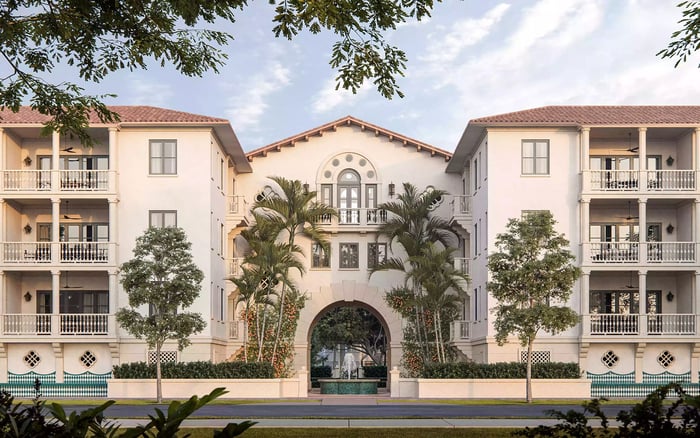
A buyer-focused 2026 due-diligence guide to evaluating valet flow at The Village at Coral Gables, from arrival-zone geometry and staffing assumptions to technology, EV logistics, governance, costs, and contingency planning.

At The Village at Coral Gables, the valet conversation should begin before a car ever reaches the front door. For a discerning buyer, valet is not simply a hospitality gesture or a polished arrival moment. It is a technical due-diligence item that can shape daily convenience, perceived privacy, resident satisfaction, and the practical rhythm of life in a high-end residential setting.
That distinction matters. A beautiful arrival area may photograph well, but an effective mobility system must perform when residents, guests, delivery vehicles, ride-share drivers, service providers, and staff converge within the same compressed window. The buyer’s task is not to presume a flaw. It is to verify that the operating model is as considered as the architecture.
For a Coral Gables luxury residence, arrival experience is inseparable from broader residential character. In that context, valet flow should be analyzed alongside design, privacy, staffing, association governance, and long-term operating costs. It is part of the residence’s daily choreography, not a secondary parking function.
The first checklist item is the arrival zone itself. Buyers should ask how vehicles enter the property, where they queue, how passengers unload, how luggage or packages are handled, and where cars exit after handoff. The goal is to understand the full movement sequence, not merely the visual impression of a porte cochère or entry court.
A strong review looks for potential bottlenecks during peak use. Morning departures, evening returns, dinner-hour guests, weekend entertaining, deliveries, maintenance visits, and ride-share pickups can compete for the same frontage. If the arrival zone is expected to serve every category of vehicle at once, capacity becomes a luxury issue.
The question is not whether the entry feels gracious in a rendering. It is whether the site geometry can absorb real resident behavior. Where can a car pause without blocking another? Can a guest arrive while a resident vehicle is being retrieved? Is there room for a delivery driver to stop without disrupting valet operations? These are practical questions, but they shape the emotional quality of the property.
The second area is staffing. Valet performance depends on people as much as pavement. Buyers should ask what staffing assumptions support the service standard, how those assumptions change during evenings or weekends, and whether the plan has been stress-tested for periods of high demand.
A defined operating model is essential. That means clarity on how vehicles are requested, who receives the request, where keys are managed, how retrieval is sequenced, how guest vehicles are prioritized, and how staff adapt when several residents need service at the same time. Without that operational detail, valet remains an architectural promise rather than a managed residential system.
For The Village at Coral Gables, the right question is not simply whether valet is described as an amenity. It is whether the service can remain smooth, discreet, and predictable under pressure. In the luxury market, the most important services are often the ones residents stop noticing because they work consistently.
The 2026 checklist should include technology. Buyers should ask whether residents can request vehicles efficiently, whether requests are timestamped, and whether the system can track wait times over time. A simple interface can materially change the resident experience, particularly when valet supports daily commuting, school runs, evening plans, or airport departures.
Technology should not be treated as decoration. It should provide operational visibility. If wait times can be monitored, management can identify recurring friction and adjust staffing or procedures. If requests are handled informally, service quality may rely too heavily on individual staff memory and moment-to-moment judgment.
This is especially relevant for buyers who expect seamless access rather than occasional valet convenience. The most useful question is direct: how does the resident know when the vehicle will be ready, and how does management know whether the system is meeting expectations?
Valet flow cannot be isolated from other forms of arrival. Delivery activity, ride-share pickups, guest vehicles, resident cars, service vehicles, and package handling all draw from the same limited arrival-zone capacity. Buyers should ask how each category is routed, staged, or separated.
Electric-vehicle adoption adds another layer. If valet operations coordinate charging access or EV-ready parking logistics, buyers should understand how those responsibilities are assigned. Can a resident request charging through the valet system? How are charging spaces allocated? What happens if several EV owners require access at the same time? The answers may affect both convenience and operating cost.
For a Coral Gables buyer comparing South Florida luxury residences, these questions are no longer peripheral. Boutique scale can feel intimate and refined, but it can also make shared circulation more sensitive to operational discipline. A residence often succeeds when every arrival, retrieval, and service interaction feels calmly managed.
The next layer is governance. Buyers should know who controls service standards, staffing levels, operating procedures, and future changes. If valet is part of the association’s ongoing responsibilities, its quality may depend on budgets, contracts, insurance requirements, technology fees, and the willingness of residents to fund a certain service level.
Financial due diligence should therefore include recurring association costs tied to valet operations. Staffing, insurance, software, training, supervision, and expanded service expectations can all affect the long-term cost structure. A service that feels effortless to the resident still requires a funded operating platform behind the scenes.
Buyers should also ask how performance will be measured. Are there service standards? Are wait times reviewed? Who handles complaints or recurring delays? How are staffing changes approved? These are governance questions, but they translate directly into lifestyle confidence.
A luxury valet system should also have contingency planning. Buyers should request clarity on storms, flooding, special events, street closures, temporary access changes, and other disruptions that could affect arrival or retrieval. South Florida living rewards properties that plan for ordinary elegance and occasional complexity.
The best systems distinguish between the ideal day and the difficult day. Where do vehicles go if an entry point is constrained? How are residents notified of changes? Who directs traffic if multiple vehicles arrive during a disruption? What is the protocol when weather affects exterior movement or staffing schedules?
The Village at Coral Gables should be evaluated through that lens: not as a property presumed to have an issue, but as a luxury address whose mobility system deserves the same scrutiny as finishes, floor plans, privacy, and service culture.
Before contract, a buyer should request a clear explanation of entry, queuing, unloading, parking, retrieval, and exit. The review should include peak-hour assumptions, staffing plans, guest handling, delivery management, ride-share procedures, EV logistics, resident request technology, wait-time tracking, association cost exposure, and contingency planning.
The goal is to separate an attractive arrival concept from a resilient mobility system. At the upper end of the market, convenience is not an abstraction. It is the ability to leave for dinner without friction, receive guests without confusion, accept deliveries without congestion, and return home to an arrival sequence that feels composed.
For The Village at Coral Gables, valet flow belongs in the same due-diligence folder as legal documents, budgets, design specifications, and association governance. It is part of what the residence will feel like after the tour is over.
Why should valet flow matter at The Village at Coral Gables? Valet flow can shape daily convenience, resident satisfaction, and the quality of the arrival experience. It should be reviewed as infrastructure, not just an amenity.
Is this article saying there is a valet problem at the property? No. The point is buyer due diligence: verifying how the system is designed, staffed, governed, and operated before relying on it.
What is the first thing a buyer should ask? Ask how vehicles enter, queue, unload, get parked, and exit. The full sequence matters more than a single image of the arrival court.
Why is the porte cochère important? It is often where resident cars, guest arrivals, ride-share vehicles, and deliveries converge. Its design and management can determine whether arrival feels calm or congested.
How should buyers evaluate staffing? Ask what staffing levels are assumed during peak periods and whether the service model has been stress-tested. Smooth valet service depends on both design and personnel.
What technology questions belong in the checklist? Buyers should ask whether residents can request vehicles efficiently and whether wait times are tracked. Operational data can help maintain service standards.
Should EV charging be part of valet due diligence? Yes. If valet staff coordinate EV-ready parking or charging access, buyers should understand allocation, responsibility, and potential cost implications.
How do deliveries and ride-share affect valet flow? They compete for the same arrival-zone capacity unless carefully managed. A strong plan separates or sequences those activities to protect resident convenience.
What governance issues should buyers review? Buyers should clarify who controls service standards, staffing, vendor relationships, costs, and future operating changes. These decisions affect long-term experience.
What contingency plans should be requested? Ask how the property handles storms, flooding, special events, street closures, and temporary access disruptions. A resilient system plans for more than ideal conditions.
To compare the best-fit options with clarity, connect with MILLION.
If branded residences are on your mind — as a home or as an allocation — we would be glad to share what we are seeing, privately.
Begin a quiet conversation