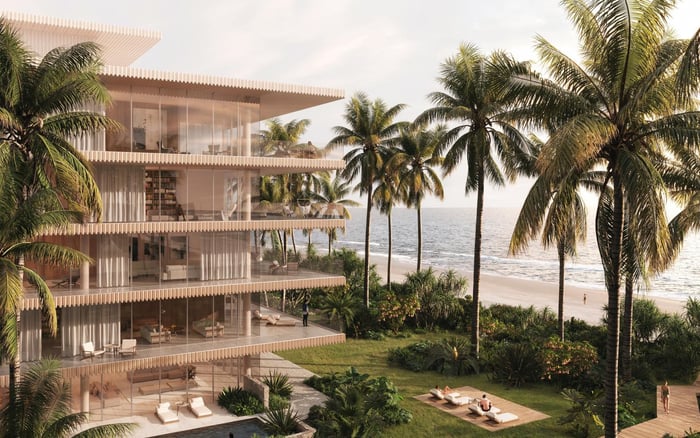
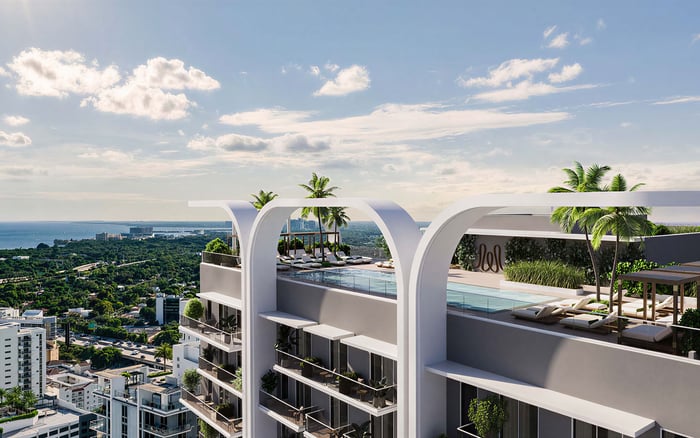
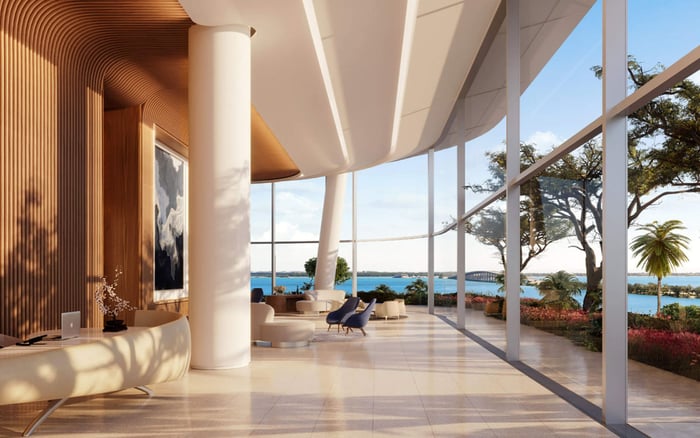
A buyer-oriented look at how amenity decks can change the lived privacy of a luxury residence through sightlines, sound, circulation, and floor-plan positioning.
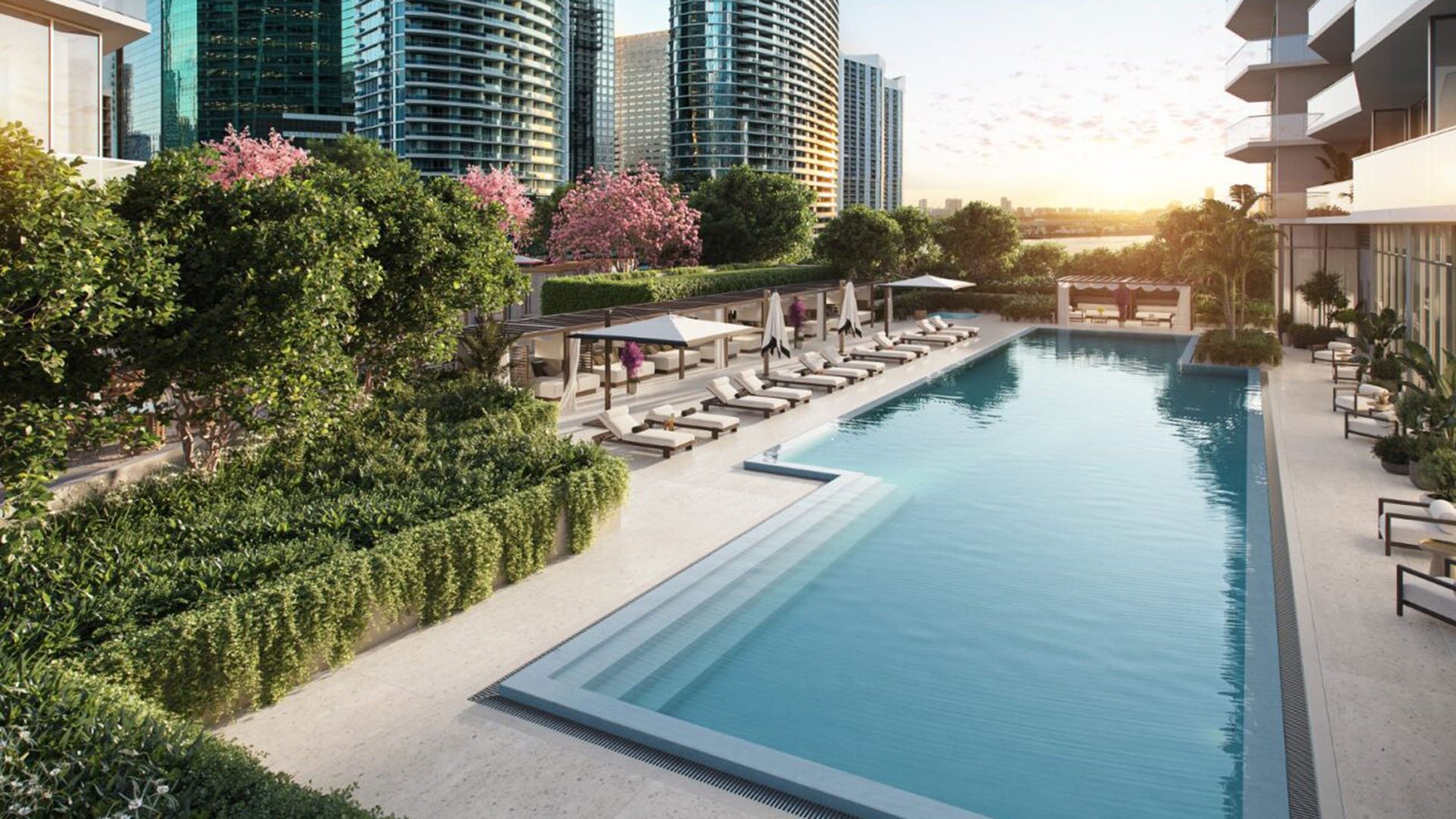
In South Florida luxury real estate, privacy is often described through the language of arrival: a private elevator, a guarded lobby, a discreet porte cochère, a residence entered without corridor traffic. Yet the privacy that matters most after closing is often quieter and more architectural. It is how a living room sits above a Pool deck. It is the angle from a cabana to a primary bedroom window. It is whether a Terrace feels suspended over the water or visually connected to a shared social floor.
An amenity deck can be one of a condominium’s great pleasures. It can deliver resort ease without leaving home, create a sense of ceremony, and give residents a daily extension of private space. But when the deck is too close, too active, or too visually aligned with residences, even a beautifully finished home can feel less secluded than expected.
For buyers comparing buildings in Brickell, Miami Beach, Edgewater, Sunny Isles, Fort Lauderdale, and the Palm Beaches, the question is not whether amenities are desirable. The question is where they sit in relation to the residence, and how that relationship feels at breakfast, at sunset, and on a quiet Sunday morning.
The first pressure is visual exposure. A residence may be high enough to command a view, yet still low enough to sit within the sightline of a pool deck, lounge terrace, or outdoor fitness area. Glass can amplify the effect. A floor-to-ceiling wall that feels cinematic during a tour may feel more performative when residents on a shared deck can look across into daily life.
The second pressure is sound. Even elegant amenity spaces generate movement: doors opening, furniture shifting, conversations carrying across hard surfaces, water features, music, service activity, and children moving between areas. The issue is not volume alone. It is rhythm. A space that is calm at noon may become animated before dinner.
The third pressure is circulation. Shared amenities draw foot traffic, staff movement, deliveries, guests, and service routines. A residence positioned near the path to a deck may experience a subtle loss of exclusivity, even if the interior remains physically secure. Luxury buyers often sense this immediately, even when they cannot name it.
Marketing often emphasizes the presence of amenities. Buyers should go further and study the building section. Is the amenity deck below the residence, beside it, or above it? Are private homes separated by service floors, landscaped buffers, walls, or meaningful setbacks? Do lower residences look onto the deck, over it, or directly into it?
In dense urban settings, especially Brickell, the vertical stacking of lifestyle spaces and homes deserves close attention. A buyer studying The Residences at 1428 Brickell or St. Regis® Residences Brickell should not only compare views and finishes. The more refined exercise is to examine how the residence is buffered from the building’s social life.
This is where high floors can carry a privacy premium beyond view. Height can reduce the feeling of being observed, soften deck noise, and create greater distance from shared circulation. But height is not a universal solution. Orientation, setbacks, balcony depth, glazing, and neighboring tower conditions all matter.
A Balcony can be the most revealing part of a residence tour. Step outside and pause. Do you feel alone with the view, or aware of other residents below? Can you hear deck activity clearly? Does the railing expose the seating area, or does the architecture provide a sense of enclosure?
Private-feeling outdoor space is rarely just large. It is composed. The best balconies and terraces create layers between the resident and the shared world: depth, planting, solid sidewalls, angled views, and spatial separation. A shallow balcony overlooking an active deck can feel less private than a smaller outdoor area with better orientation.
In Miami Beach, where indoor-outdoor living is central to the ownership experience, this distinction becomes especially important. A buyer considering Five Park Miami Beach may be drawn to the skyline, bay, and coastal context, but long-term comfort still depends on how outdoor space frames privacy as well as scenery.
Waterview does not automatically mean private. A residence can look toward bay, river, ocean, or Intracoastal water and still be exposed to an amenity deck, marina walk, neighboring balcony stack, or adjacent building. The view may be expansive while the immediate foreground remains social.
This is especially relevant in waterfront and bayfront neighborhoods where amenity decks are designed to celebrate the view. The same orientation that makes the pool deck spectacular may also align it with select residences. Buyers should study not only the horizon, but the first 100 feet of visual field.
In Edgewater, towers often compete on view, light, and height. At Aria Reserve Miami, as with any view-driven high-rise, the buyer’s discipline should be simple: evaluate the line between private enjoyment and shared spectacle. A beautiful view should not require performing one’s domestic life for a social deck.
The most private-feeling buildings often understand that luxury is not the maximum number of shared spaces. It is the successful separation of shared and private rituals. Fitness, pool, spa, dining, lounges, guest arrivals, and children’s spaces can be magnificent when planned with acoustic, visual, and operational discretion.
Separation can take many forms. It may be vertical distance. It may be a landscaped buffer. It may be a podium configuration that angles activity away from residences. It may be private elevator access that keeps residential circulation distinct from amenity movement. The point is not isolation. The point is choreography.
This is why two residences in the same building can live very differently. One line may float above the amenity layer with a serene sense of remove. Another may face directly into the most active portion of the deck. The difference may not be obvious in a brochure. It is often obvious in person.
Before falling in love with a floor plan, ask where the amenity deck sits and which parts of it are closest to the residence. Ask what spaces are intended to be active and which are intended to be quiet. Ask how guests access the deck, where service staff move, and whether event use is expected.
Tour at different times if possible. Morning reveals maintenance and fitness patterns. Afternoon reveals pool use and sun exposure. Evening reveals lighting, sound, and the social character of the building. Weekend visits can be especially informative because they show how the building behaves when residents are most likely to use shared spaces.
Also compare the private outdoor area with the shared one. If a residence has a Terrace, does it feel like an extension of the home, or does it compete with the amenity deck below? The best layouts allow owners to enjoy the building’s amenities without sacrificing the intimacy of their own residence.
An amenity deck should enhance a residence, not visually annex it. The most successful luxury buildings allow owners to participate in resort-style living by choice, then withdraw fully into private space. That distinction is central to value, comfort, and long-term satisfaction.
For South Florida buyers, the lesson is clear: do not evaluate amenities only by beauty, branding, or quantity. Evaluate adjacency. Evaluate sound. Evaluate sightlines. Evaluate the choreography between public pleasure and private life. A spectacular amenity deck can be an asset. A poorly positioned one can become the reason a residence never feels fully its own.
Can an amenity deck make a luxury residence feel less private? Yes. If shared spaces face directly into windows, balconies, or terraces, the residence can feel more exposed than expected.
Is a higher floor always more private? Not always. High floors often help, but orientation, neighboring buildings, glazing, and deck placement can matter just as much.
What is the most common privacy issue near amenity decks? Visual exposure is often the first concern, especially when pool seating or lounges align with living rooms or bedrooms.
Should buyers avoid residences near the Pool? Not necessarily. The key is whether the Pool area is acoustically and visually separated from the private residence.
How should I evaluate a Balcony near an amenity level? Stand outside, listen, and look in every direction. If the space feels observed during a tour, it may feel more exposed after move-in.
Does Waterview guarantee privacy? No. A Waterview can be magnificent while the immediate foreground still includes shared decks, neighboring balconies, or active circulation.
Are corner residences usually better for privacy? They can be, but only if their orientation avoids direct exposure to amenity areas and adjacent towers.
What time of day is best for a privacy-focused tour? Visit at more than one time when possible. Evening and weekend tours can reveal sound, lighting, and social patterns.
Can design features improve privacy near shared amenities? Yes. Setbacks, landscaping, angled views, deeper terraces, and solid sidewalls can all improve the sense of separation.
What should I prioritize if I value discretion most? Prioritize residence lines with clear separation from amenity traffic, strong orientation, controlled sightlines, and calm outdoor space.
For a discreet conversation and a curated building-by-building shortlist, connect with MILLION.
If branded residences are on your mind — as a home or as an allocation — we would be glad to share what we are seeing, privately.
Begin a quiet conversation