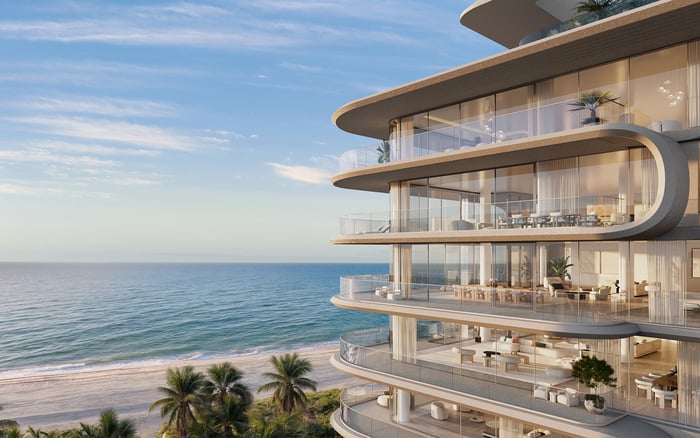
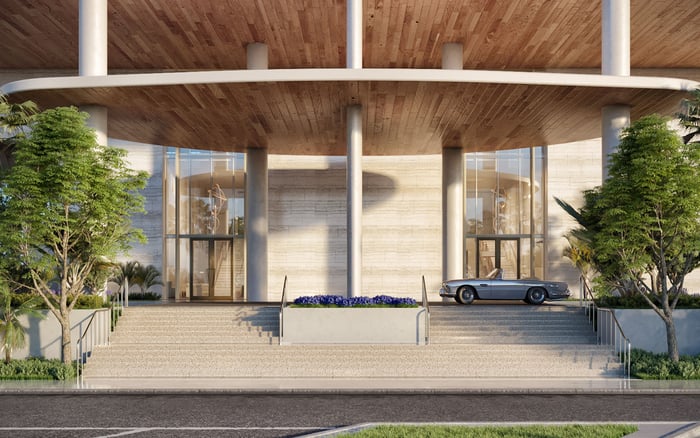
A buyer-oriented framework for evaluating a Surfside new-development purchase with sharper attention to exit quality, governance, deposits, and long-term ownership discipline.

For a certain South Florida buyer, Surfside has an appeal quieter than spectacle. The draw is not only the beach, the architecture, or the privacy of a well-run building. It is the possibility of owning something refined that does not require constant explanation. That is precisely why a new-development purchase here deserves a stricter test than a purely emotional acquisition.
The question is not whether a residence is beautiful. At this level, beauty is assumed. The better question is whether the purchase carries enough downside discipline to remain sensible if the buyer’s timeline changes, financing conditions shift, competing inventory appears, or the family’s lifestyle requirements evolve before closing.
In a private buyer brief, the relevant filters may read Surfside, Oceanfront, Boutique, New-construction, Pre-construction, and Investment. Yet the more important filter is harder to place in a search field: can the asset hold its composure under stress? A serious buyer should evaluate the purchase as both a place to live and a position to own.
The most elegant mistake in new development is falling in love with the entry narrative while ignoring the exit audience. Sales galleries are designed to make the present feel inevitable. Ownership discipline asks a different question: who is the next buyer, and why would that person prefer this residence over the alternatives available at the time?
That next buyer may value privacy, building scale, service quality, floor plan clarity, beach proximity, or the rarity of new construction in a compact market. The hierarchy will vary. The exercise should not. Before signing, a buyer should be able to describe the future resale case in plain language, without relying on fashion, scarcity slogans, or the assumption that every new building automatically becomes a trophy.
This is especially important for buyers choosing between a larger residence with a less compelling stack and a smaller residence with stronger view logic, flow, or outdoor usability. In a high-end market, square footage is not the only measure of liquidity. Some layouts travel better across buyer profiles. Some residences photograph well but live awkwardly. Some are dazzling for a weekend and less persuasive as a primary home.
The Surfside ownership test begins when the buyer can say: this is not only the residence I want, but also the residence another disciplined buyer can understand quickly.
A new-development purchase is not a single decision. It is a sequence of commitments. Deposit timing, contract obligations, closing readiness, and the buyer’s broader balance sheet all matter. A residence can be the right property and still be the wrong liquidity event.
The disciplined buyer studies the deposit schedule with the same seriousness applied to the floor plan. How much capital is committed before completion? What is the opportunity cost of that capital? How does the commitment interact with other real estate, business, portfolio, or family obligations? If market tone changes, will the buyer still be comfortable closing without needing to renegotiate from weakness?
This is not pessimism. It is composure. The best buyers enter a contract with enough margin that they do not have to convert a lifestyle purchase into a forced financial decision. They understand that the most powerful negotiating position is not always the loudest offer. It is the offer supported by calm, prepared capital.
A buyer who can close without drama, hold without strain, and resell without desperation has already improved the downside profile of the acquisition.
In Surfside, as in every ultra-prime coastal market, the building matters as much as the residence. The ownership experience is shaped by governance, maintenance culture, service expectations, privacy norms, amenity restraint, and the way residents actually use the property. New development can look pristine at delivery, but the long-term character of the building is formed after closings begin.
A buyer should ask whether the building concept is likely to age gracefully. Does the amenity program support daily life, or depend on novelty? Does the architecture feel overly trend-driven, or does it have enough restraint to remain appealing beyond the first sales cycle? Does the plan privilege livability, storage, arrival, and privacy, or does it over-index on visual impact?
The most resilient luxury buildings often have a clear point of view. They do not try to be everything to everyone. That selectivity can be valuable, provided the buyer’s own lifestyle aligns with it. A quiet building may be excellent for one owner and frustrating for another. A more service-intensive environment may be ideal for a lock-and-leave buyer and excessive for someone seeking simplicity.
Downside discipline means matching building character to real use, not imagined use.
Many buyers assume downside protection begins and ends with negotiating the lowest possible price. Price matters, but it is only one part of the equation. A poorly chosen residence at a modest discount can be less intelligent than a superior residence acquired at a firmer number.
More complete discipline includes line selection, view quality, interior adaptability, terrace usability, parking practicality, storage, maintenance expectations, and the likely depth of future demand. It also includes the buyer’s patience. A rushed decision in a limited-inventory environment can turn scarcity into pressure. A slow decision can become its own risk if the strongest floor plans disappear.
The right posture is neither passive nor impulsive. It is prepared. The buyer should know the preferred line, the acceptable alternates, the walk-away conditions, and the premium that can be justified for a materially better residence. That framework keeps taste from becoming overpayment and caution from becoming indecision.
For sophisticated buyers, Surfside is less about chasing the newest address and more about acquiring with proportion. The residence should feel personal, but the underwriting should remain impersonal. The design may stir emotion, but the ownership case should survive a sober review.
A disciplined new-development purchase does not reject aspiration. It refines it. The goal is to own a residence that feels rare without being fragile, luxurious without being overcomplicated, and desirable without requiring perfect market conditions to make sense.
The Surfside ownership test is simple in form and demanding in practice: if the buyer had to explain the purchase to a future buyer, lender, advisor, or family office, would the case still sound clear? If the answer is yes, the acquisition has moved beyond attraction and into disciplined ownership.
What is the Surfside ownership test? It is a buyer framework for evaluating whether a new-development purchase remains sensible under changing market, liquidity, and lifestyle conditions.
Why should buyers think about resale before closing? Resale thinking clarifies which residence features are broadly legible, durable, and likely to matter beyond the first emotional impression.
Does downside discipline mean avoiding premium residences? No. It means paying for qualities that improve livability, future demand, and ownership flexibility rather than paying only for novelty.
How important is the deposit structure? It is central because deposits affect liquidity, opportunity cost, and the buyer’s ability to remain composed through the development timeline.
Should a buyer prioritize size or floor plan quality? Floor plan quality often deserves equal or greater scrutiny because awkward space can weaken both daily enjoyment and future marketability.
What building qualities deserve close review? Governance, service culture, maintenance expectations, privacy, amenity logic, and architectural restraint should all be part of the review.
Can a boutique building offer better discipline? It can, if the concept aligns with the buyer’s lifestyle and the residence has a clear audience for future resale.
Is new construction automatically safer than resale? No. New construction offers freshness, but each purchase still depends on price, line selection, contract terms, and building fundamentals.
When should a buyer walk away? A buyer should walk away when the acquisition requires too many optimistic assumptions to justify the price, timing, or future exit.
What is the best way to shortlist comparable options for touring? Start with location fit, delivery status, and daily lifestyle priorities, then compare stacks and elevations to validate views and privacy.
If you'd like a private walkthrough and a curated shortlist, connect with MILLION.
If branded residences are on your mind — as a home or as an allocation — we would be glad to share what we are seeing, privately.
Begin a quiet conversation