A buyer-oriented comparison of The Surf Club Four Seasons Surfside and Rivage Bal Harbour through the lens of proven hospitality, heritage, privacy, design ambition, and primary-versus-secondary market timing.
For South Florida buyers shopping at the very top of the market, the comparison between The Surf Club Four Seasons Surfside and Rivage Bal Harbour is not a simple one. It comes down to what kind of certainty matters more.
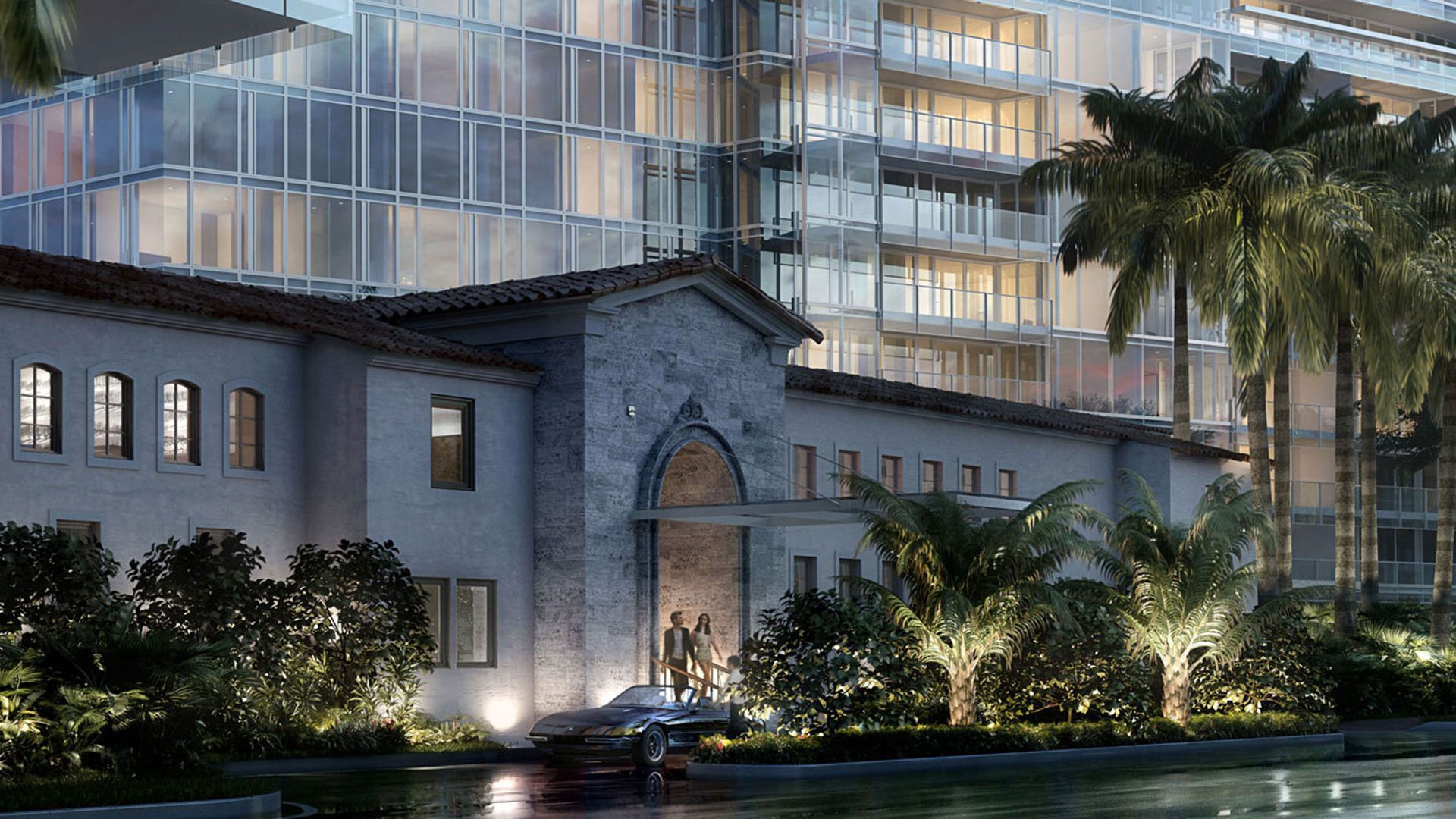
At The Surf Club Four Seasons Surfside, certainty comes from an operating environment. The address traces its origins to 1930 and now pairs the restored historic club with Four Seasons Hotel and Private Residences in Surfside. That combination creates a rare advantage in contemporary luxury real estate: buyers are not imagining a future service culture; they are stepping into one that already exists.
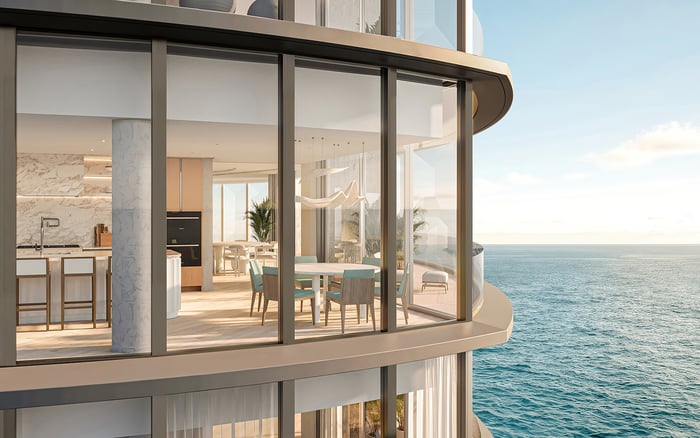
At Rivage Bal Harbour, certainty takes a different form. The project is positioned as a new ultra-luxury waterfront condominium in Bal Harbour, with just 55 residences and a highly curated modern pitch. Its appeal is not inherited ritual or legacy social memory. It is precision, freshness, contemporary design, smart-home integration, and the promise of a newly defined standard.
For MILLION Luxury readers, this is the real divide: old-guard service culture versus new-construction ambition.
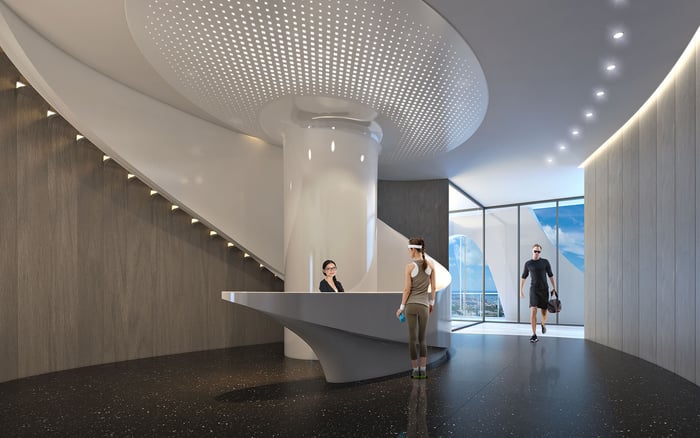
The Surf Club's appeal begins with character, but it endures because that character is reinforced by operations. In the branded residential-hotel model, residents are buying into concierge support, housekeeping, spa access, dining, and beach service within a functioning hospitality system. For buyers who value consistency, there is real comfort in seeing how the machinery of service works before committing capital.
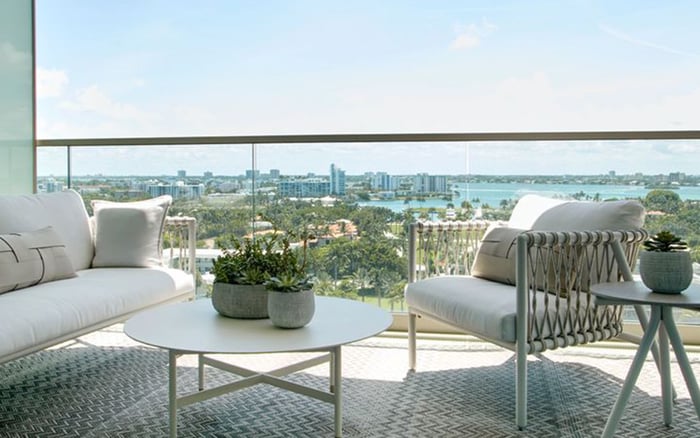
That matters in Surfside, where the atmosphere is quieter, more residential, and more privacy-oriented than many neighboring beachfront enclaves. The lifestyle is less performative. It favors continuity over novelty, discretion over spectacle, and a sense that the building's identity extends beyond the current sales cycle.
This is also why The Surf Club feels distinct from other luxury coastal addresses that place design first. Even among polished nearby options such as Arte Surfside or Ocean House Surfside, The Surf Club remains closely associated with preservation, hospitality, and the social codes of a storied club culture. It is not merely a branded residence. It is an established ecosystem.
That does not automatically make it the better buy. It does, however, make its proposition unusually clear.
Rivage enters the conversation from the opposite direction. Rather than building on a legacy institution, it is creating one. The project is tied to Terra and presented as Bal Harbour's first new luxury residential tower in years, a distinction that gives it strategic relevance in a market where true new inventory at the ultra-prime level remains limited.
Its boutique count of 55 residences matters. The scale suggests exclusivity, but the tone is unmistakably contemporary. Rivage is framed around architecture, modern interiors, curated amenities, and integrated technology, all calibrated for buyers who want a turnkey experience without the slight friction that can accompany older, even beautifully restored, environments.
In lifestyle terms, Bal Harbour offers a more visible luxury setting than Surfside. Retail, movement, and social circulation are more present in the daily rhythm. Buyers who want to be near that energy may find Rivage's proposition more intuitive than a heritage-driven Surfside address. In this sense, Rivage belongs in a broader conversation with new-generation South Florida statements such as The Delmore Surfside and Oceana Bal Harbour, where architecture and current-market positioning are part of the lifestyle story.
Still, Rivage asks buyers for a different kind of faith. Its service culture is being marketed and designed into existence, not yet demonstrated over time through a mature operating record. That is not a flaw. It is simply the core distinction.
This is where the comparison becomes clearest.
The Surf Club benefits from institutional hospitality backing and from the accumulated habits of an established property. Buyers can assess staffing tone, service rhythms, common-area upkeep, and the lived atmosphere of the building in real time. In practical terms, that lowers one category of uncertainty.
Rivage, by contrast, is a service promise today. The hospitality programming may prove excellent. The finished product may fully justify the ambition. But buyers are necessarily underwriting execution: the developer's ability to deliver finish level, operating sophistication, and the subtler qualities that turn amenities into a coherent residential culture.
For some, that underwriting is precisely the opportunity. New-construction buyers often want the cleanest systems, the most current floor plans, and the satisfaction of entering a building at the beginning of its life cycle. They may happily trade historical depth for contemporary clarity.
For others, especially those purchasing a second home or resale-positioned asset where daily ease matters, a proven operating environment is the more luxurious answer.
An honest comparison must acknowledge that these are not direct peers in market timing. The Surf Club is an established, operating asset with secondary-market inventory. Rivage is a primary-market development story.
That affects everything from decision speed to risk tolerance. At The Surf Club, a buyer can evaluate what exists now: the atmosphere, service cadence, and how the property performs as a place to live. At Rivage, the upside includes the appeal of entering a fresh building with new systems and an ambitious vision, but the assessment is necessarily more forward-looking.
Pricing discussions should also be handled with restraint. Figures around both projects have circulated publicly, but current pricing, availability, and absorption are best treated as fluid rather than definitive. At this tier, the lived proposition matters more than headline ranges.
The buyer most likely to prefer The Surf Club Four Seasons Surfside is not merely purchasing oceanfront real estate in Surfside. That buyer is choosing a cultural environment. Heritage matters. Service tone matters. Brand stewardship matters. So does the ability to move into a place whose identity has already settled.
The buyer most likely to prefer Rivage Bal Harbour is often pursuing a different expression of luxury. New construction matters. Technology matters. Bal Harbour visibility matters. So does the idea of being part of a project that defines the next era rather than preserves an earlier one.
Neither impulse is more sophisticated than the other. They simply prioritize different luxuries. One values continuity and proof. The other values possibility and design authorship.
For a buyer deciding between these two addresses, the right question is not which one is objectively superior. It is which kind of confidence feels more persuasive.
If your standard of luxury begins with demonstrated service, institutional hospitality, and the rare social depth that only time can create, The Surf Club remains one of South Florida's most persuasive answers.
If your standard begins with a clean-sheet vision, a boutique collection of residences, contemporary systems, and the energy of a fresh Bal Harbour landmark, Rivage is the more compelling story.
In other words, this is not old versus new in any simplistic sense. It is proven culture versus emerging ambition. In South Florida's top residential tier, both can command serious attention. The sharper buyer simply knows which one they are actually paying for.
What is the main difference between The Surf Club and Rivage Bal Harbour? The Surf Club offers an established hospitality-driven environment, while Rivage Bal Harbour represents a forward-looking new-construction proposition.
Is The Surf Club Four Seasons Surfside an operating property? Yes. Buyers are evaluating a functioning residence and hotel ecosystem rather than a presale concept.
Is Rivage Bal Harbour a boutique project? Yes. Rivage is planned with 55 residences, giving it a more intimate scale despite its ultra-luxury positioning.
Which address is better for privacy, Surfside or Bal Harbour? Surfside generally reads as quieter and more discreet, while Bal Harbour offers a more visible lifestyle environment.
Does The Surf Club emphasize hotel-style services? Yes. Its residential model includes concierge support, housekeeping, spa access, dining, and beach service.
Does Rivage focus more on contemporary systems and design? Yes. Its appeal is closely tied to modern interiors, smart-home integration, and a newly built experience.
Is this an apples-to-apples comparison? Not entirely. One is a mature operating asset and the other is a primary-market development with future delivery expectations.
Which project may appeal more to second-home buyers? Buyers seeking ease and proven operations may lean toward The Surf Club, though preferences vary by lifestyle priorities.
Which project is more connected to Bal Harbour's retail and social energy? Rivage is more closely aligned with the visible, mixed luxury lifestyle associated with Bal Harbour.
How should buyers compare pricing between the two? With caution. Availability and pricing can shift, so the more meaningful comparison is service model, timing, and lifestyle fit.
For a tailored shortlist and next-step guidance, connect with MILLION Luxury.
If branded residences are on your mind — as a home or as an allocation — we would be glad to share what we are seeing, privately.
Begin a quiet conversation