A buyer-focused guide to evaluating emergency-generator fuel planning at The Surf Club Four Seasons Surfside, with emphasis on backed loads, fuel autonomy, privacy, service continuity, and resale relevance.

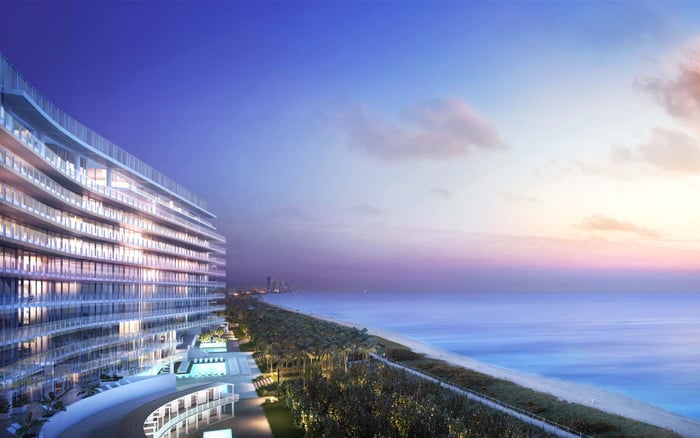
The Surf Club Four Seasons Surfside occupies a rare tier of South Florida luxury: historic name recognition, oceanfront presence, and a service culture buyers associate with privacy and ease. Yet in a coastal market shaped by summer storms, utility interruptions, and increasingly sophisticated buyer expectations, resilience is no longer a back-of-house concern. It belongs in the same conversation as views, finishes, staff discretion, valet flow, and terrace privacy.
For buyers evaluating The Surf Club Four Seasons Surfside, the prudent question is not simply whether emergency power exists. The sharper question is which functions are backed up, for how long, under what fuel plan, and at what level of service. That distinction matters because emergency systems can range from basic life-safety support to a broader service envelope that helps a building remain orderly during a multi-day outage.
This is not a claim of any deficiency. The available project context does not establish generator make, capacity, location, fuel type, tank size, or rated runtime. Those details should be treated as document-driven diligence, not assumed from luxury positioning.
A serious review begins by separating life-safety backup from comfort and service backup. Life-safety systems may address code-required functions, while an expanded luxury resilience plan may support selected elevators, water pressure, access control, security systems, lighting in key areas, limited cooling, communications, and hotel-style operations.
For a buyer, the practical distinction is felt in the lived experience. Can residents move easily between residence, lobby, garage, and amenities? Can staff maintain controlled access and discreet circulation? Does water pressure remain stable? Are critical common areas cooled or merely illuminated? Does the property preserve a composed service rhythm, or does it shift into a visibly constrained emergency mode?
At a property where beach access, staffed arrival, and amenity choreography are part of the lifestyle, service continuity has a privacy dimension. A backup system that supports only minimum requirements may be legally sufficient, but it may not deliver the experience an ultra-premium owner expects during an extended interruption.
Fuel planning should be discussed in defined hour ranges, not vague assurances. A buyer may hear that a building has emergency power, but the more important question is whether the fuel plan supports 48 hours, 96 hours, or another defined period under specified loads.
The comparison is not academic. A 48-hour planning horizon may be adequate for short interruptions. A 96-hour planning horizon may better address the friction of storm aftermath, delayed deliveries, road access constraints, and competing fuel demand across the region. The key is not to assume either standard applies. The buyer should ask for the rated runtime, the assumed load profile, and whether that runtime is calculated for code-required functions only or for a broader service package.
Fuel autonomy also depends on operational readiness. Tank size tells only part of the story. Fuel quality, testing schedules, maintenance records, vendor commitments, and refueling protocols are equally important. In luxury due diligence, the question is not merely what equipment exists, but how reliably the building can operate that equipment when the market around it is stressed.
At the highest end of the Surfside market, privacy is not limited to sightlines from neighboring terraces. Mechanical systems can influence perceived privacy through noise, vibration, exhaust, odor, temporary lighting, and visible service activity. During normal conditions, these factors may be minimal. During outage operations, they can become more noticeable.
Unit-level review should consider proximity to generator exhaust paths, mechanical rooms, service corridors, refueling routes, loading zones, cabanas, terraces, pool decks, and ground-level amenities. A residence that feels serene during a standard tour may perform differently if emergency equipment is running or fuel trucks require access.
This is especially relevant for low-floor residences, cabana-adjacent ownership, and homes oriented toward service areas or internal circulation routes. For a second-home owner, the concern may be less about daily inconvenience and more about confidence that the residence will remain discreet, secure, and easy to occupy after a disruption.
Resale analysis in the ultra-luxury segment increasingly rewards buildings that can explain resilience with precision. Buyers do not merely purchase square footage. They purchase confidence in stewardship, operational competence, and continuity of service. In a Surfside oceanfront setting, that confidence can become part of value preservation.
The most sophisticated purchasers will not necessarily demand a perfect answer. They will demand a clear answer. If a building can document which loads are backed, how fuel is maintained, how often systems are tested, and how emergency vendors are engaged, it gives future buyers a more complete basis for trust.
Resale conversations may therefore include generator and fuel planning alongside reserves, insurance posture, façade maintenance, elevator condition, and association governance. A well-understood emergency-power strategy can help distinguish a building as thoughtfully managed. An unclear strategy may create avoidable friction in negotiation, even where no actual defect exists.
The buyer’s team should request engineering reports, generator maintenance records, testing schedules, fuel-quality logs, reserve studies, and any refueling or emergency vendor agreements. These materials can clarify whether backup planning is reactive or institutionalized.
Questions should be precise. Which loads are connected to emergency power? Are all elevators supported, selected elevators, or only life-safety systems? Is domestic water pressure included? Are access control, cameras, garage systems, and communications backed? Is any limited cooling available in common areas? What assumptions are used for fuel runtime? How quickly can fuel be replenished after a regional event?
The answers should be reviewed with a qualified engineer or building-systems consultant, particularly when a buyer is considering a major residence, penthouse, combined unit, or long-hold family acquisition. In this tier, the cost of deeper diligence is modest compared with the value of avoiding ambiguity.
Not every building is designed to operate as if nothing happened during a multi-day outage. That is not automatically a problem. The key is alignment between buyer expectations and documented capability.
A buyer who expects only safe egress and essential functionality may be satisfied with a narrower plan. A buyer who expects near-normal luxury service, continued privacy, staff support, and discreet access during regional disruption should ask for a broader explanation. The evaluation should remain factual, not emotional: loads, runtime, maintenance, refueling, staffing, and resident communication.
At The Surf Club Four Seasons Surfside, emergency-generator fuel planning should be understood as a diligence lens. It does not replace the property’s design appeal or lifestyle stature. It sharpens the buyer’s understanding of how the asset may perform when conditions are least convenient.
Does The Surf Club Four Seasons Surfside disclose generator specifications publicly? The provided project context does not establish generator make, capacity, fuel type, tank size, location, or rated runtime. Buyers should request building documents before relying on any assumption.
What is the first generator question a buyer should ask? Ask which loads are backed up, for how long, and at what service level. This is more useful than asking only whether a generator exists.
Why does fuel autonomy matter? Fuel autonomy indicates how long backed systems may operate under defined loads. Buyers can compare planning ranges such as 48 hours and 96 hours.
Is life-safety backup the same as luxury service backup? No. Life-safety backup may cover required functions, while luxury service backup may include elevators, water pressure, security, limited cooling, and operational continuity.
Can generator planning affect privacy? Yes. Noise, vibration, exhaust, odor, lighting, and visible refueling activity can influence perceived privacy during outage operations.
Which residences should review mechanical proximity most carefully? Low-floor homes, cabana-adjacent residences, and units near service zones, loading areas, or mechanical pathways deserve especially careful review.
What documents should a buyer request? Request engineering reports, maintenance records, fuel-quality logs, testing schedules, reserve studies, and refueling or emergency vendor agreements.
Does unclear generator information mean there is a problem? Not necessarily. It means the buyer should verify details through documents and qualified professional review before making assumptions.
How can generator planning affect resale value? Clear resilience planning can support buyer confidence and value preservation. Ambiguity may create negotiation friction for sophisticated purchasers.
Should this diligence change how a buyer views the property? It should refine the buyer’s understanding, not replace the lifestyle analysis. The goal is to align expectations with documented building capability.
To compare the best-fit options with clarity, connect with MILLION.
If branded residences are on your mind — as a home or as an allocation — we would be glad to share what we are seeing, privately.
Begin a quiet conversation