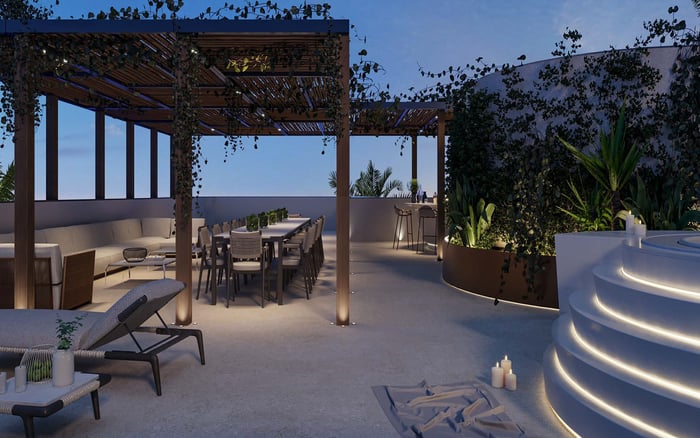
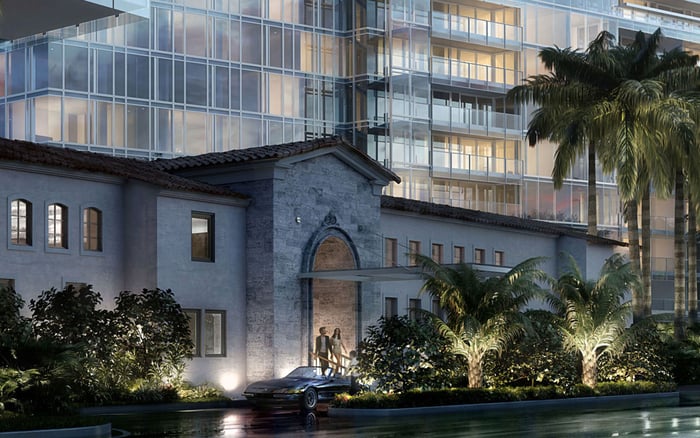
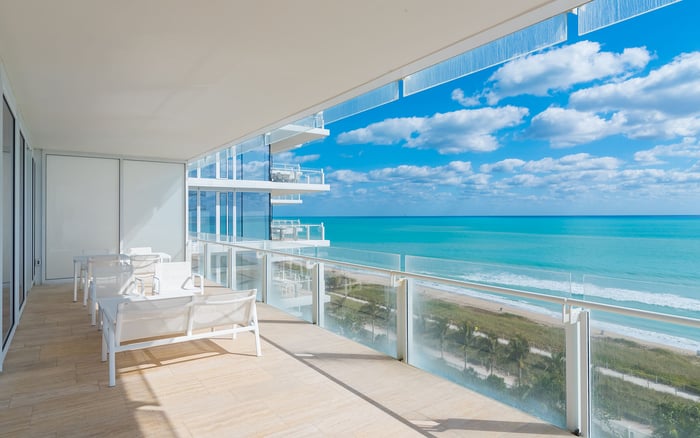
A buyer-oriented guide to terrace use, balcony rules, outdoor-kitchen due diligence, and climate tolerance at The Surf Club Four Seasons Surfside and The Residences at Six Fisher Island.
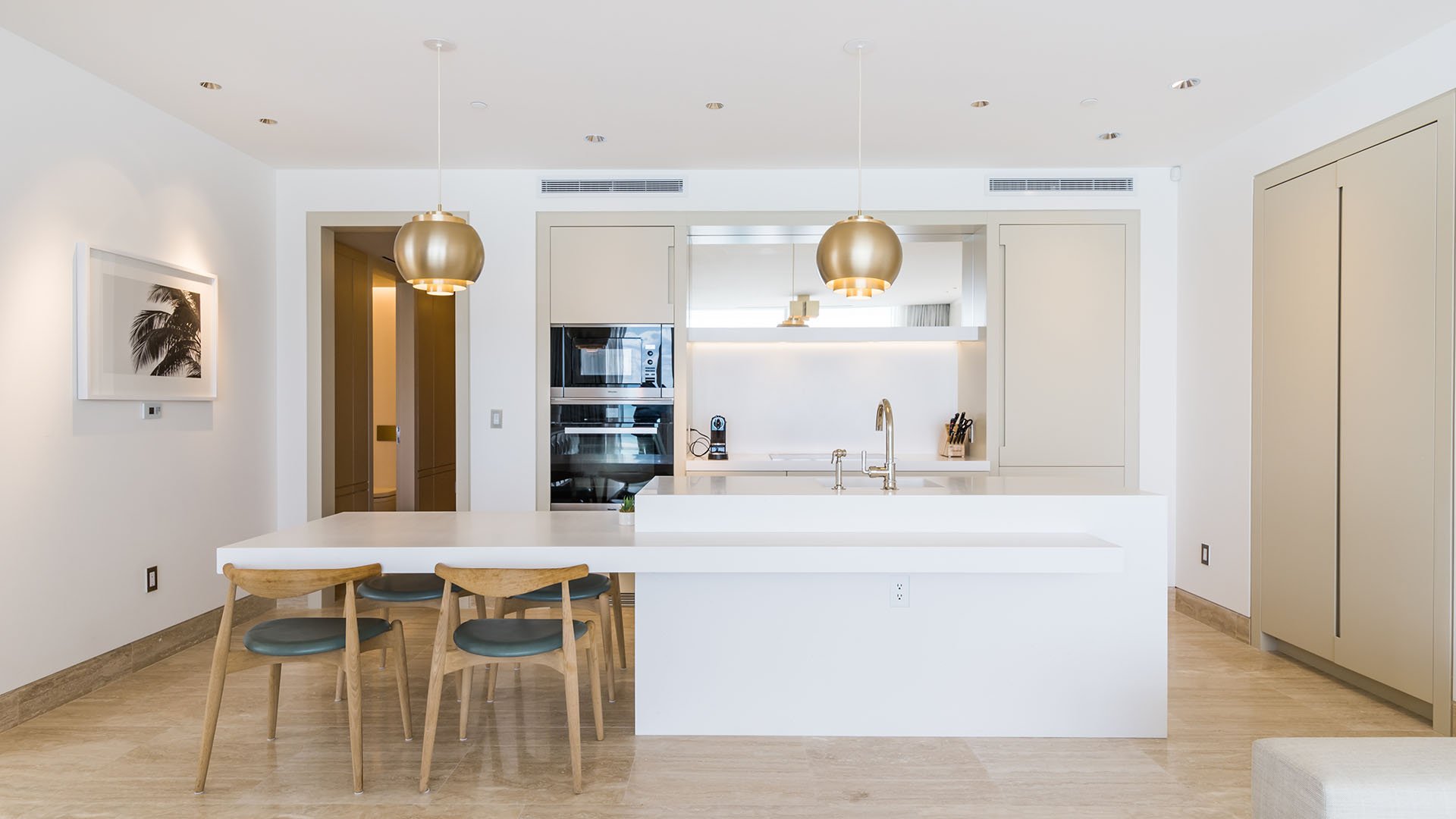
For full-time owners, a South Florida terrace is not simply a place for sunrise coffee or a weekend aperitif. It is an extension of the residence, exposed daily to salt air, wind, humidity, intense sun, and the operating culture of the building. Buyers comparing The Surf Club Four Seasons Surfside with The Residences at Six Fisher Island should therefore treat balcony use, outdoor kitchens, and weather tolerance as core ownership issues, not decorative afterthoughts.
The two settings are distinct. The Surf Club Four Seasons Surfside sits within a hotel-branded residential environment, where daily life may be shaped by condominium documents as well as hospitality-style operating standards. The Residences at Six Fisher Island belongs to a private-island residential context, where condominium governance and broader community standards may influence how owners use visible outdoor spaces.
In both cases, the question is not whether a terrace appears suited for entertaining. The question is whether the documents, management protocols, safety rules, and alteration process permit the exact use an owner has in mind.
Balcony rules can be more consequential than they appear during a showing. A beautifully furnished outdoor room may still be subject to limits on furniture type, visible storage, planters, umbrellas, lighting, noise, and storm-season clearing. Owners should review the condominium declaration, association rules, architectural-control procedures, and any alteration guidelines before assuming a preferred layout will be allowed.
At The Surf Club Four Seasons Surfside, full-time buyers should ask how residence management handles terrace furniture, planters, umbrellas, sound, and items visible from other areas of the property. A hotel-branded setting often places a premium on visual consistency and quiet enjoyment, so the practical issue is how those standards are enforced day to day.
At The Residences at Six Fisher Island, the inquiry shifts toward private-island governance. Owners should ask whether association rules or community standards restrict balcony furniture, grill types, terrace storage, outdoor equipment, or visible accessories. Discreet ownership often depends on written expectations.
Outdoor cooking is where buyers should be most precise. A terrace may be marketed as an outdoor living space, but that does not automatically mean it is legally approved for cooking, a fixed grill, plumbing, electrical additions, or a gas line. Full-time owners should distinguish carefully between movable furniture and permanent alterations.
For both properties, the essential questions are specific: Are grills permitted? If so, what type? Are gas lines allowed or already included in the original approved design? Is an outdoor kitchen part of the developer-approved terrace plan, or would it require board, management, engineering, and permitting approval? Are there fire-safety restrictions tied to fuel type, ventilation, or proximity to openings?
The current fact pattern does not support a universal statement that gas grills or outdoor kitchens are permitted at either property. That should not be read negatively. It simply means a buyer should verify the rule in the building documents and in writing before treating outdoor cooking as part of the lifestyle package.
Terrace weather tolerance in South Florida is not a luxury upgrade. It is part of responsible ownership. Oceanfront and island terraces can be extraordinary daily living spaces, but they also demand marine-grade materials, secured furnishings, corrosion-resistant finishes, and cushions or fabrics that can be replaced without turning maintenance into a major renovation.
Oceanfront exposure may bring stronger salt spray and wind. A more sheltered position may feel calmer, but it can still face humidity, UV exposure, and seasonal storm procedures. Owners should evaluate the actual exposure of the specific residence, not just the prestige of the address.
At Surfside, a residence with broad water exposure may require more aggressive maintenance of metal finishes, tracks, outdoor lighting, and furniture frames. At Fisher Island, the rhythm may feel more private and protected, but the climate is still marine. The atmosphere is elegant, not gentle.
A second-home owner may accept occasional inconvenience. A full-time owner lives with the rules every day. If cushions must be brought in frequently, if umbrellas are restricted, if storage boxes are prohibited, or if furniture must be cleared on short notice during storm season, those details shape the real experience of ownership.
That is especially true for families, hosts, and owners who expect the terrace to function as an outdoor dining room. A full-time owner should ask how rules operate during ordinary weeks, holiday periods, high-wind advisories, and hurricane season. The best terrace is not the one that photographs beautifully once. It is the one that performs gracefully across a full year.
The smartest buyers also ask whether prior owners have received approvals for comparable terrace improvements, while remembering that one approval does not guarantee another. Building standards can evolve, and each residence may have different structural, mechanical, or visibility constraints.
The Surf Club Four Seasons Surfside offers the atmosphere of a hotel-branded coastal environment, which can be highly appealing for owners who value service, polish, and a managed sense of place. The likely tradeoff is that outdoor spaces may be reviewed through both residential governance and hospitality standards.
The Residences at Six Fisher Island offers a private-island frame, where the terrace becomes part of a broader culture of privacy, residential calm, and controlled access. The tradeoff is that island and condominium standards may shape what can be seen, stored, installed, or used outdoors.
Neither structure is inherently more permissive. The right fit depends on the owner’s intended use. A buyer who wants lounge seating, breakfast outdoors, and low-maintenance sunset views may have different concerns from one who wants a built-in outdoor kitchen and frequent terrace entertaining.
Before treating any terrace feature as part of the purchase value, buyers should request the current rules governing balcony use, outdoor furniture, grills, storage, planters, umbrellas, lighting, audio, and storm clearing. They should also confirm the alteration process for anything fixed, powered, plumbed, connected to gas, or attached to the structure.
Ask for clarity in writing. Ask whether management, the association, architectural control, engineering consultants, or municipal permitting could be involved. Ask whether the seller’s existing terrace setup is compliant, grandfathered, removable, or merely tolerated.
Balcony freedom in a luxury condominium is rarely absolute. Terrace enjoyment is strongest when design ambition, climate reality, and documented permissions are aligned before closing.
Are outdoor kitchens automatically allowed at The Surf Club Four Seasons Surfside? No. Buyers should confirm whether any outdoor kitchen is part of an approved design or would require formal review.
Are gas grills confirmed as permitted at The Residences at Six Fisher Island? No universal permission is established here. Grill type, fuel source, and placement should be verified in the governing documents.
What documents should a buyer review first? Start with the condominium declaration, association rules, alteration guidelines, and any architectural-control procedures.
Why do hotel-branded residences require extra terrace questions? Hospitality standards may influence furniture, noise, visual consistency, storage, and storm-season procedures.
Why do private-island residences require separate terrace diligence? Community standards may affect visible equipment, balcony furnishings, grill use, and exterior modifications.
Can a marketed outdoor living terrace still restrict cooking? Yes. Outdoor living space does not automatically mean approval for fixed appliances, gas, plumbing, or electrical work.
What materials perform best on oceanfront terraces? Marine-grade, corrosion-resistant materials and replaceable outdoor fabrics are practical necessities in salt air.
Is oceanfront exposure always harder on furniture? Often, ocean-facing terraces face stronger salt spray and wind, though sheltered terraces still face humidity and UV.
Should full-time owners think differently than seasonal owners? Yes. Daily use makes furniture rules, clearing procedures, and maintenance cycles far more important.
What is the safest assumption before closing? Assume every fixed terrace improvement needs written confirmation before relying on it as part of the home.
To compare the best-fit options with clarity, connect with MILLION.
If branded residences are on your mind — as a home or as an allocation — we would be glad to share what we are seeing, privately.
Begin a quiet conversation