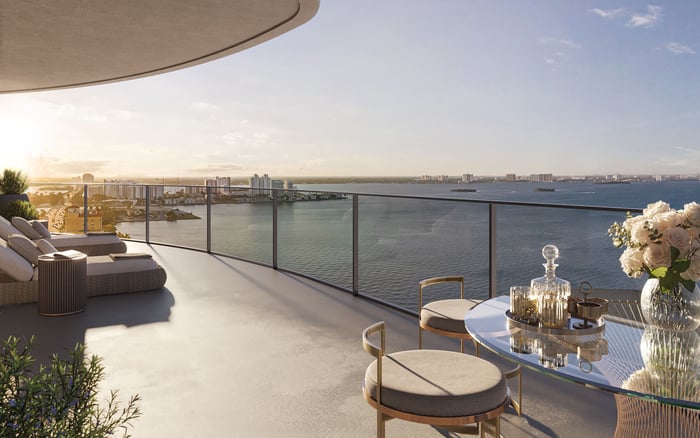
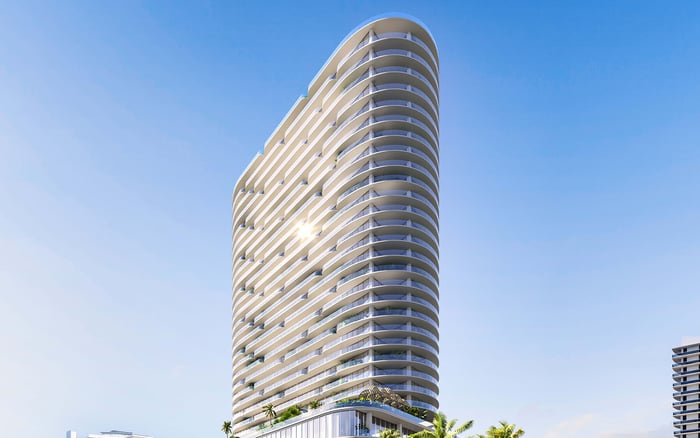
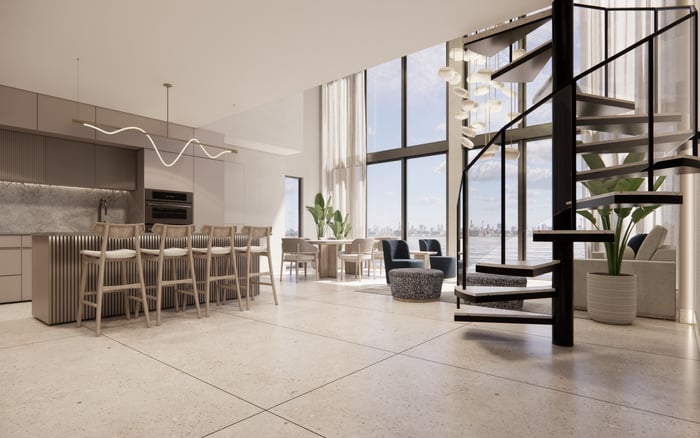
Corner residences can command a meaningful premium in ultra-luxury towers, but the real question is whether the premium is durable at resale and rational for your lifestyle. At Pagani North Bay Village, the corner-unit conversation is less about a simple price-per-square-foot bump and more about view geometry, light quality, wind exposure, privacy, and how a floorplan actually lives day to day. This editorial breaks down the practical drivers of corner value, the tradeoffs sophisticated buyers should underwrite, and how to compare corners to other trophy inventory across South Florida without leaning on generic rules of thumb.
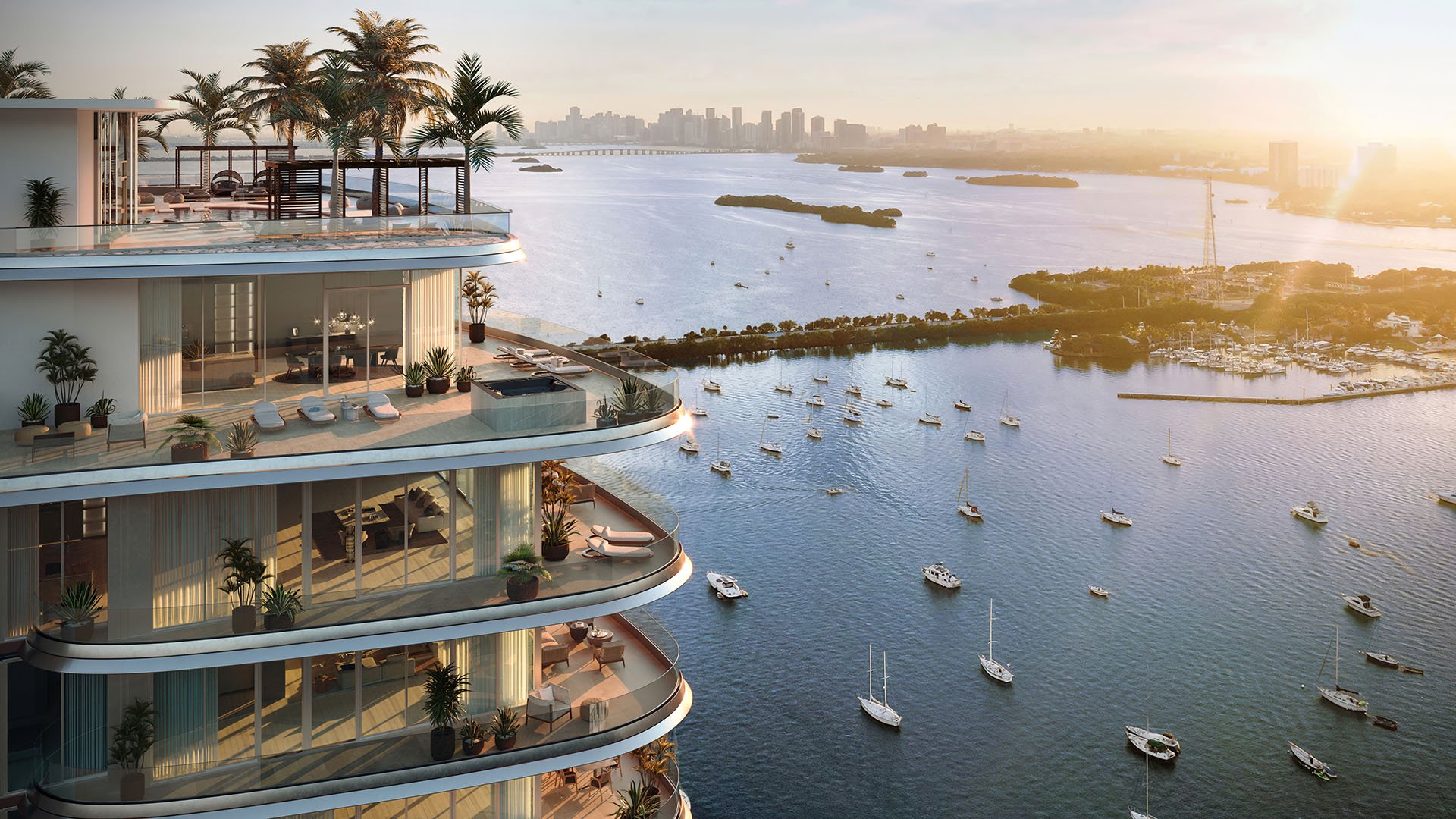
In luxury high-rise markets, corner residences are routinely positioned as the “smart money” choice: more glass, more light, broader water exposure, and a sense of arrival that feels closer to a single-family home than a typical condominium. In North-bay-village, that logic can be especially compelling because the experience of living on the water is profoundly directional. A small shift in orientation can turn a good view into a panoramic one-or a bright residence into a calmer, more protected retreat.
At Pagani North Bay Village, the value premium of a corner unit is best assessed through a buyer’s lens, not a headline metric. The corner advantage is not simply “two exposures.” It’s the precise way the building’s massing frames Biscayne Bay, the causeways, and the Miami Beach skyline-and how that framing reads from the sofa at 7:30 a.m. as much as it does from the terrace at 7:30 p.m.
The takeaway: “corner premium” behaves less like a fixed percentage and more like a layered bundle of attributes. Some corners earn the premium; others don’t. Strong underwriting separates true scarcity from pure marketing.
Corner value tends to hold when it’s tied to advantages interior lines simply cannot replicate.
A corner can deliver a wider angle of water and skyline, but the key question is whether that width is usable. A dramatic wrap of glass matters far less if key sightlines are blocked by adjacent towers-or if the “best” angle only appears when you’re standing at the far edge of the terrace.
Sophisticated buyers evaluate view corridors the way they would evaluate art: what is the primary composition, what is the negative space, and what could realistically interrupt it over time. The most defensible corners are those whose signature view is protected by geography and spacing, not wishful thinking.
Two exposures can materially change how a residence lives: mornings read cleaner, afternoons read warmer, and the home can shift hour to hour. That cinematic quality is why corners often feel like the penthouse of their tier.
But light quality isn’t purely additive. The best corner is not necessarily the brightest-it’s the one with controllable daylight. Think glazing you can comfortably live with, shading strategies that don’t turn the interior into a cave, and finishes that won’t read harsh under direct sun.
Corner units often have more perimeter, but that can cut both ways. More glass frequently means fewer continuous walls-and fewer walls can limit placement for art, media, headboards, and storage.
A corner premium is justified when the plan converts perimeter into usable rooms, not leftover circulation. Trace the day-to-day choreography: where do keys land, where does luggage stage, how do guests flow, and where does the kitchen “live” relative to the view?
Corners can feel quieter because you share fewer adjacent walls-and sometimes fewer neighboring doors. That privacy can be especially meaningful in a boutique lifestyle tower, where discretion is part of the value proposition.
The premium holds best when privacy is structural, not situational. If a corner sits beside a high-traffic amenity level, a service core, or a mechanical area, it may not deliver the tranquility the label implies.
Corner units can carry costs that don’t show up in a brochure. In a high-end purchase, it’s worth modeling these items explicitly so you don’t overpay for a lifestyle you’ll later manage around.
More exposure can mean more wind. That directly affects how often terraces are actually used-which matters in a waterfront market where outdoor living is a core part of the value.
More glass can increase cooling demand and change how rooms feel during peak sun. Even if energy cost isn’t your main concern, comfort is. A corner that requires constant shade management can feel like a home that’s always “on duty.”
Orientation changes the soundscape: causeway traffic, marina activity, and city pulse all land differently depending on exposure and height. A corner can be quieter-or it can become the building’s listening post.
Corners are coveted, but they’re also often priced at the top of their stack. If the premium stretches too far beyond the rest of the line, resale can turn into a negotiation about psychology rather than fundamentals. The most liquid corners are those that read as obviously superior without being “so special” that only one buyer profile fits.
Rather than relying on a one-size-fits-all percentage, a practical underwriting process starts with comparables of experience.
Compare the corner to the best non-corner layout that shares similar ceiling height, finish level, and amenity access. Then ask: what do you gain that can’t be replicated with better staging, better art, or a higher floor?
If only a handful of corners deliver a specific panorama, scarcity is real. If the same view is common across multiple lines, the premium should compress over time.
A corner can be ideal for a couple who entertains with a view-forward living room, and less ideal for a family that needs defined bedrooms, storage, and quiet zones. Value is personal; overpaying is universal.
Some corners have a primary view and a secondary exposure that’s materially less compelling. That’s still a corner, but it isn’t a trophy corner. Trophy corners deliver two meaningful compositions-not one and a side window.
Corner premiums aren’t unique to North Bay Village. Calibrating expectations against other high-design environments helps keep the discussion grounded.
In Brickell, the appeal often hinges on skyline drama and the energy of a true urban waterfront lifestyle. Buyers comparing a design-forward address like 2200 Brickell may find that “corner value” is as much about privacy and elevation as it is about water, because the city grid and neighboring towers can tighten view corridors quickly.
On Miami Beach, corners are frequently about horizon lines and the feeling of living inside light. A boutique oceanfront experience at 57 Ocean Miami Beach illustrates how a well-composed corner can feel serene rather than showy, especially when the plan gives the primary rooms direct ocean orientation.
Farther north along the sand, ultra-luxury oceanfront towers can push the corner conversation into resort territory, where terraces and indoor-outdoor living are central to daily life. A project such as 2000 Ocean Hallandale Beach is a reminder that the best corners aren’t just about having more glass-they’re about having outdoor space you genuinely use.
Back in the immediate neighborhood, buyers exploring new construction inventory may also compare lifestyle positioning within North-bay-village itself. Looking at Continuum Club & Residences North Bay Village can help frame how different towers package privacy, amenities, and waterfront access-which, in turn, influences how much premium a buyer is willing to pay for a corner experience.
In ultra-luxury, the corner premium is justified when the residence changes how you live-not just how it photographs.
Corners can feel expansive because the eye travels farther. That psychological “volume” matters. When the living room is oriented to the panorama and circulation stays clean, the residence can read like a private villa in the sky.
A strong corner plan can let guests enjoy the view while bedrooms remain quiet and protected. When that zoning is present, the premium becomes functional-not symbolic.
Many buyers describe corners as having a more singular identity. If you step out of the elevator and immediately understand the home’s axis, the unit feels bespoke.
In pre-construction and new development contexts, corner pricing is often anchored to a narrative. The job is to separate that narrative from the deliverables.
Anchor negotiations to specific, verifiable attributes: view corridor, terrace usability, layout efficiency, and privacy. If the corner’s second exposure is compromised, if the plan sacrifices walls, or if outdoor space is less usable due to wind, those are concrete reasons the premium should tighten.
At the same time, be prepared to pay when a corner delivers something that cannot be recreated later. In a rare waterfront line, paying for a protected panorama can be the most rational “non-financial” decision a buyer makes-because it improves daily life and tends to remain scarce.
At Pagani North Bay Village, the corner-unit premium should be evaluated as a portfolio of lifestyle advantages. The best corners earn their pricing through protected water exposure, controllable light, an efficient plan, and a quieter sense of privacy. The weaker corners rely on the word “corner” alone.
If you’re deciding between a corner and a non-corner at a similar finish level, choose the residence you’ll use most intuitively: the one where the view becomes part of your routine, the terrace becomes part of your calendar, and the plan supports your life without constant workarounds. In ultra-premium real estate, that’s where value becomes durable.
Do corner units always cost more than non-corner units? Often, yes-but the premium varies widely based on view quality, plan, and privacy.
Is a corner unit automatically a better investment? Not automatically; a corner that is overpriced relative to its advantages can underperform.
What is the biggest advantage of a corner unit in North Bay Village? Typically, it’s wider water exposure and a more panoramic, “wraparound” feel.
Can a corner unit be noisier? Yes; extra exposure can also mean more wind and a more active soundscape.
Are corner terraces always more usable? Not necessarily; wind and sun angles can reduce comfort even with more outdoor area.
How do I compare one corner to another in the same building? Prioritize protected view corridors, room orientation to the best view, and furniture walls.
Do corners have higher maintenance or operating considerations? They can, especially with more glazing that affects cooling needs and window care.
Should I choose a higher floor non-corner over a lower floor corner? It depends on whether the higher floor materially improves the view and privacy you value.
What should I look for in a corner floorplan? Efficient circulation, defined bedroom privacy, and a living area that captures the panorama.
When is paying the corner premium most justified? When the corner offers a rare, durable view plus a layout that meaningfully elevates daily life.
To compare the best-fit options with clarity, connect with MILLION Luxury.
If branded residences are on your mind — as a home or as an allocation — we would be glad to share what we are seeing, privately.
Begin a quiet conversation