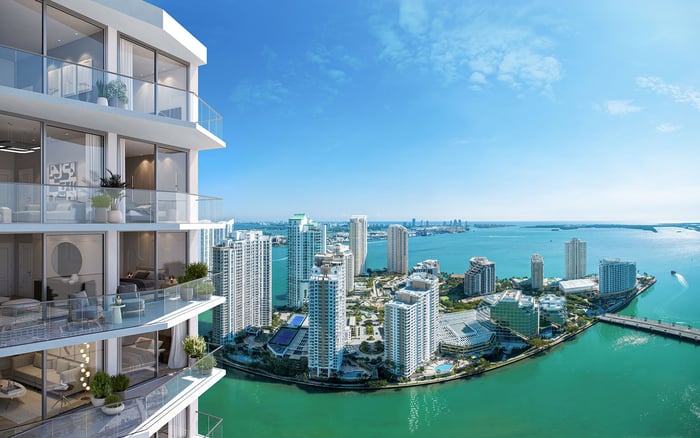
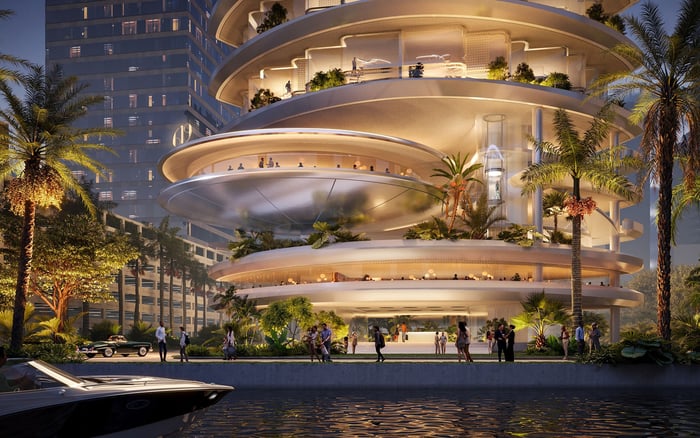
At Aria Reserve Miami, the most strategic “penthouse” purchase is not always the very top floor. For many buyers, the smarter move is targeting lower penthouse tiers where ceiling height, privacy, and sightlines feel elevated, but pricing is often less exposed to the steepest penthouse premiums. This MILLION Luxury editorial outlines how to evaluate view corridors, floor plate orientation, and resale liquidity, and how to stress-test the tradeoffs between altitude and livability.
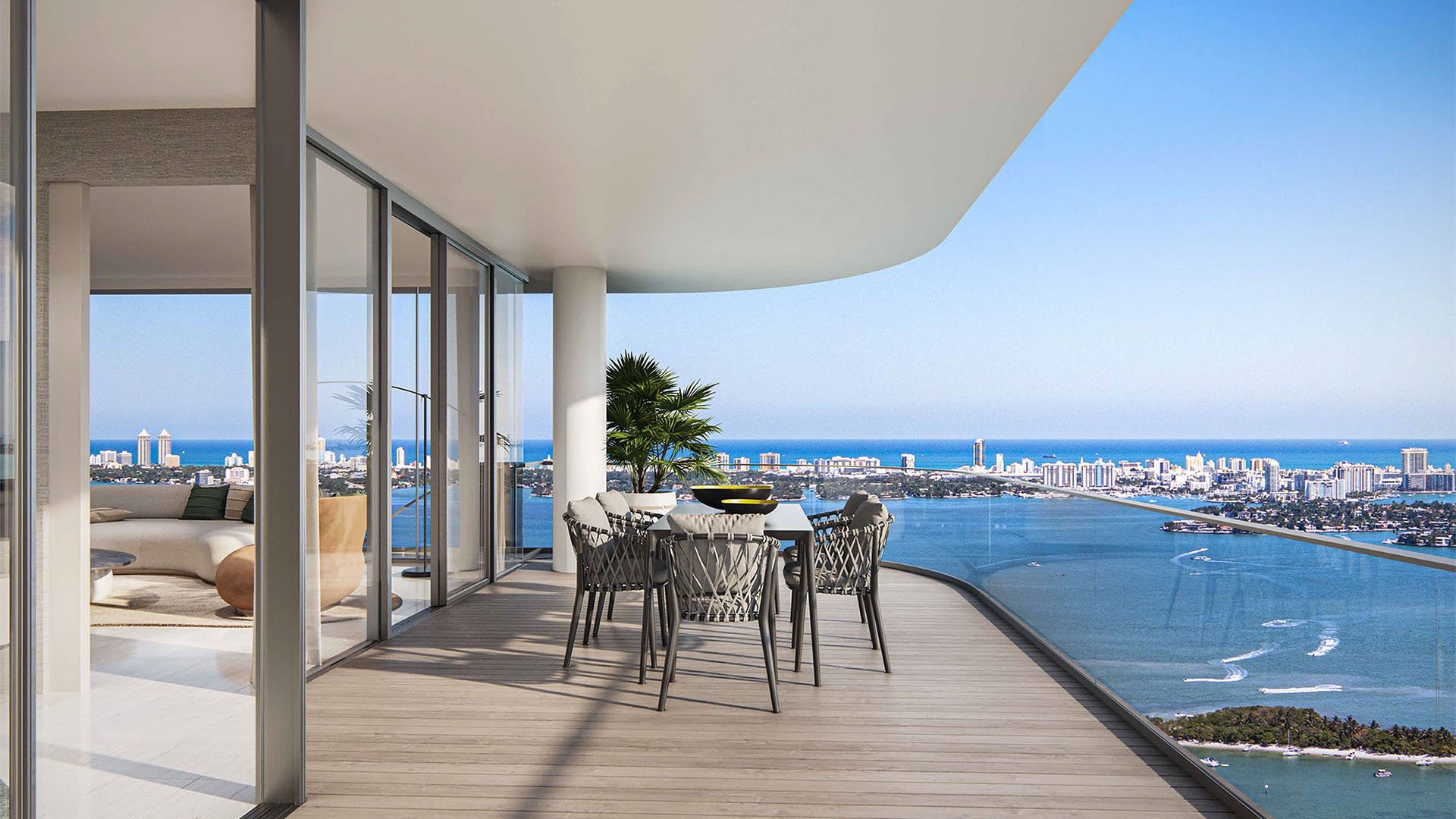
In South Florida, “penthouse” is as much psychology as it is a floor designation. The market often assigns the topmost residences an outsized premium-one only partly supported by measurable differences in view, outdoor space, or interior volume. At Aria Reserve Miami, where Biscayne Bay and the Miami skyline are the defining visual assets, the disciplined move is to separate emotional altitude from functional value.
A lower penthouse strategy targets the strata just beneath the apex. These residences often sit above surrounding obstructions, clear the most obvious view-blockers, and deliver the sensation of “being up” while holding a pricing position that can be easier to defend on a view-to-value basis. In practical terms, you’re underwriting the view corridor-not buying a superlative label.
This is not a contrarian play. It is a precise one: treat the view as a finite, tradable asset and pay for the portion that materially improves daily life-not the last increment of height that mostly enhances bragging rights.
A view-to-value ratio is less a formula than a discipline. The objective is to identify the point where incremental elevation stops producing incremental beauty.
Start with what actually changes with height in Edgewater:
Obstruction clearance: The shift from “partially blocked” to “fully open” can be dramatic. The shift from “open” to “even more open” is often subtle.
Depth of view: Higher floors can extend the horizon, but once you have a clean bay line and a skyline composition you love, added altitude may not improve the composition.
Noise and street activation: Higher can feel quieter and more removed. Yet many lower penthouse tiers already deliver that psychological separation.
Then price what the market tends to pay for:
Rarity: The very top is scarce-but so are well-positioned lower penthouses with the right orientation and terrace usability.
Buyer pool: Ultra-high trophy penthouses can attract a narrower audience. A “nearly top” residence can broaden resale demand while still feeling special.
The strategy is straightforward: buy the highest-quality view corridor you can, at the lowest premium required to secure it.
Ignore labels and focus on thresholds. In many waterfront towers, there’s a band where the experience changes fast: you clear neighboring rooftops, the bay opens, and the skyline becomes legible rather than fragmented. Above that band, improvement becomes incremental.
Your job is to find the “turning point” for the specific line and orientation you’re considering. Compare:
A high-end non-penthouse residence in the same stack.
A lower penthouse in that stack.
A top penthouse in that stack.
When the lower penthouse captures most of the sensory upside of the top penthouse-but the top penthouse carries a materially higher premium-you’ve found the value band.
This is also where Edgewater’s broader competitive set becomes relevant. Buyers who cross-shop Cove Miami or EDITION Edgewater are often weighing view quality and lifestyle execution as much as floor numbers. A lower penthouse that presents as “trophy enough” can win that comparison.
Height is not a substitute for orientation. A lower penthouse with a clean, cinematic bay-facing corridor can feel more luxurious than a higher residence that frames a busier, less composed urban scene.
In Edgewater, scrutinize:
Biscayne Bay alignment: Is the water the primary canvas, or a supporting accent?
Skyline composition: Do you get a layered city view, or a tight slice?
Sun path and glare: Morning and late-afternoon exposure can dictate how much you actually use the terrace and key living areas.
A sophisticated purchase favors a view that photographs well and lives well. If you’re paying any penthouse premium, you want the view that still reads as elevated at night, in summer humidity, and on the days you stay in.
Luxury terraces are often marketed as square footage. In reality, they’re a lifestyle decision. On very high floors, wind can limit how a terrace is furnished and used. Shade patterns can turn a generous outdoor area into something visually impressive but practically underutilized.
A lower penthouse strategy can improve terrace performance because:
Wind conditions can be more manageable.
Outdoor dining can feel less exposed.
The terrace can function as a true extension of the living room-rather than a dramatic, occasional perch.
If terrace use is central to your South Florida living plan, underwrite the outdoor microclimate as carefully as the view. In some cases, the “optimal” terrace isn’t the highest one.
The penthouse premium often comes with a promise of privacy: fewer neighbors, quieter corridors, and a calmer elevator experience. Some of that can be secured one tier down.
When evaluating lower penthouses, focus on:
Number of residences on the floor: Privacy is about density, not just altitude.
Elevator programming and vestibules: A refined arrival reads as luxury immediately.
Sightlines into your home: Entry placement, turns, and foyer depth matter.
If you’re optimizing view-to-value, pay for privacy features that change daily life-not exclusivity signals that don’t.
A true penthouse experience is often defined by volume: ceiling height, expansive glazing, and the proportions of the public rooms. Lower penthouses can sometimes deliver much of that feel-without absorbing the most extreme premium reserved for the peak residence.
In practical terms, pressure-test the basics:
Does the main living area read as a gallery-like volume?
Do the primary rooms prioritize the view, or are they compromised by layout?
Does the glazing create a continuous horizon line from key seating positions?
If the lower penthouse nails volume and composition, it can offer a more rational price-to-experience relationship than the top.
Top penthouses can be iconic, but singular products can be harder to comp. Lower penthouses are often still rare, still aspirational, and yet more comparable to the broader high-floor market-which can support liquidity when you eventually sell.
For underwriting, think in tiers:
Core luxury buyer pool: Wants high floors, views, and refined finishes.
Trophy buyer pool: Wants the top, regardless of premium.
Lower penthouses can speak to both, which can be a meaningful advantage. In a market where preferences can shift, a residence that is “trophy-adjacent” can be strategically durable.
This is where cross-neighborhood alternatives subtly shape behavior. A buyer deciding between Edgewater and Brickell may weigh lifestyle and brand cues as much as the view. Referencing options like 2200 Brickell isn’t a distraction-it clarifies the reference points your eventual resale buyer may compare against.
A lower penthouse strategy isn’t only about paying less. It’s about reallocating capital toward the components that compound enjoyment.
In negotiation terms, the disciplined buyer aims to:
Secure the best line and orientation within the lower penthouse tier.
Prioritize upgrades that are expensive to change later (stone packages, millwork quality, integrated systems).
Avoid paying for “highest floor” as a binary status marker unless the top floor truly changes the view in a way you can feel.
The goal is a home that reads as penthouse-level in experience while remaining defensible in value.
Use this as your final filter before you commit:
View corridor: Is it meaningfully different from the tier below?
Night view: Does the skyline or bay read as intentional after dark?
Terrace usability: Can you comfortably furnish, dine, and linger outside?
Privacy: How many neighbors-and how quiet is the arrival sequence?
Plan efficiency: Do the best rooms face the best views?
Resale narrative: Can you explain the value in one sentence without saying “not the top floor”?
When those answers are clean, the purchase tends to feel both indulgent and intelligent-which is exactly the point.
What is a “lower penthouse” in practical terms? It typically refers to the penthouse-designated tiers below the topmost residence, offering elevated views with a less extreme premium.
Do lower penthouses still feel like a true penthouse experience? They can, especially when ceiling height, glazing, and view corridors deliver the same sense of volume and altitude.
Is paying for the very top floor always worth it in Edgewater? Not always; once key obstructions are cleared, additional height can deliver only marginal view improvement.
What matters more: floor number or orientation? Orientation often matters more because it determines whether the bay and skyline present as a primary, composed view.
How should I evaluate a view beyond daytime showings? Confirm the night view and lighting composition since skyline clarity after dark often defines the daily luxury feel.
Are terraces on very high floors harder to use? They can be, as wind and exposure may reduce comfort, whereas slightly lower terraces can feel more livable.
Does a lower penthouse help with resale? Often yes, because it can appeal to both high-floor luxury buyers and trophy-minded buyers without being overly singular.
What is the biggest mistake buyers make with penthouse premiums? Paying for height while accepting a compromised view direction or an inefficient floor plan.
Should I cross-shop other neighborhoods when pricing Aria Reserve? Yes, understanding comparable luxury experiences in areas like Brickell can sharpen your sense of value.
What is the simplest way to define “optimal view-to-value”? It is the point where the view feels fully unlocked and further height no longer changes daily experience.
When you're ready to tour or underwrite the options, connect with MILLION Luxury.
If branded residences are on your mind — as a home or as an allocation — we would be glad to share what we are seeing, privately.
Begin a quiet conversation