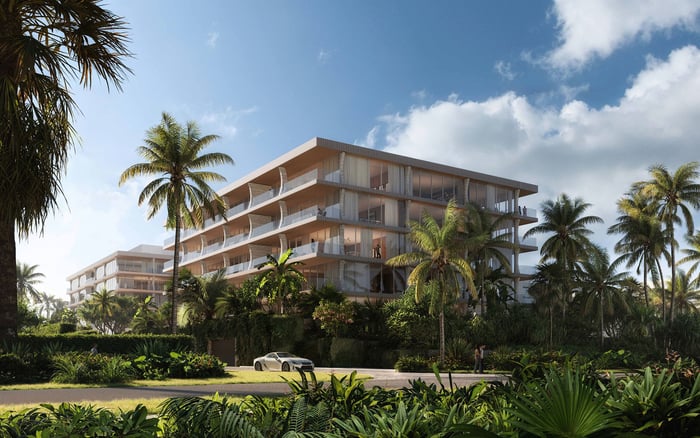
A discreet buyer’s guide to evaluating internet redundancy at The Ritz-Carlton Residences® West Palm Beach, with practical questions for affluent owners who expect business-grade continuity at home.

For many buyers considering The Ritz-Carlton Residences® West Palm Beach, the conversation naturally begins with brand, location, design, services, and the daily ease of a refined residential environment. Yet for a growing share of South Florida’s ultra-premium audience, another question now sits quietly beside views, finishes, and privacy: what happens if the internet goes down?
Internet redundancy is not a decorative amenity. It is the infrastructure logic that allows a residence to remain connected when one path, provider, device, or local service segment fails. In practice, it means having more than one independent way for data to enter and leave the home, so a single outage does not immediately interrupt work, security systems, streaming, telehealth, smart-home controls, or family communication.
At a branded residential project in West Palm Beach, the buyer’s standard should be elevated but disciplined. The property name and West Palm Beach setting are established, but confirmed technical details about the building’s internet infrastructure are not. That distinction matters. Until a buyer reviews developer-confirmed specifications, telecom documentation, association materials, or offering documents, the prudent position is simple: ask, verify, and document.
The first question is whether the building supports more than one internet service provider. A single provider may be sufficient for some households, but it is not the same as redundancy. If a buyer expects business continuity from a residence, the question should be framed more precisely: are multiple independent carriers available to residents, and can an owner subscribe to more than one at the same time?
The second question is whether those connections enter the property through physically diverse pathways. Two providers may still depend on the same conduit, street trench, building entry point, or upstream route. If that shared path is disrupted, the practical benefit of having multiple provider names can narrow quickly. Buyers should ask whether carrier entries are physically separated and whether the building’s risers and telecom rooms support true diversity.
The third question involves power. Fiber, modems, routers, network switches, and distribution equipment need electricity. A building may have robust connectivity on paper, but if telecom rooms or key network equipment are not supported by generator power or uninterruptible power supply systems, a utility interruption can still take residents offline. The question is not merely whether the building has backup power. It is whether the specific communications infrastructure serving residences is included.
The fourth question is permissions. Can residents install a secondary cellular backup device? Are window-mounted, terrace-located, or roof-dependent devices restricted? Are satellite backup options allowed under the building’s rules? In an ultra-luxury setting, aesthetics, safety, and common-element controls often shape what individual owners can and cannot add after closing.
A luxury buyer should separate four layers: building entry, building distribution, residence equipment, and owner-controlled failover. Building entry concerns how service reaches the property. Distribution concerns how it travels from the main telecom room to the individual residence. Residence equipment includes the owner’s modem, router, access points, and smart-home network. Failover is the automatic or manual switching process that keeps the household online if the primary service fails.
A buyer may hear that a building is “wired for high-speed internet.” That phrase is useful, but incomplete. Speed measures performance when the system is working. Redundancy measures resilience when part of the system is not. The distinction is especially relevant for owners who trade markets from home, conduct confidential video calls, manage enterprises remotely, or maintain a South Florida residence as a second home with systems that must be monitored from afar.
This is also where West Palm Beach’s broader luxury pipeline becomes relevant. Buyers comparing Alba West Palm Beach, Mr. C Residences West Palm Beach, and Forté on Flagler West Palm Beach may find that each sales conversation emphasizes a different lifestyle vocabulary. Digital infrastructure should be part of the same comparative discipline, not an afterthought delegated to move-in week.
Buyers do not need to become network engineers. They need clear, written answers to practical questions. Start with a concise request: identify the available internet service providers, whether the building has multiple carrier entry points, whether the telecom rooms are supported by backup power, and whether residents may maintain a secondary connection within the residence.
If the buyer’s household has specific needs, those should be disclosed early. A financier who needs low-latency video calls, a principal who manages a family office from home, a collector with cloud-based security monitoring, and a family that depends on remote schooling or telemedicine may all require different levels of resilience. The more specific the use case, the easier it becomes to evaluate whether the building’s documented infrastructure aligns with daily life.
The buyer should also ask who controls the relationship with providers. In some condominium environments, residents contract directly. In others, certain building-wide arrangements may shape options. The important point is not to assume flexibility. Ask whether an owner can maintain two subscriptions, whether wiring to the residence can accommodate secondary service, and whether any installation requires association approval.
For the Palm Beach and West Palm Beach buyer, comfort increasingly includes invisible systems. Air conditioning, elevator reliability, water pressure, security access, and connectivity all contribute to the feeling that a residence is effortless. In new-construction and pre-construction settings, this is the moment to ask questions before walls, risers, and ownership procedures become harder to modify.
The same standard applies beyond downtown West Palm Beach. Buyers looking north to The Ritz-Carlton Residences® Palm Beach Gardens may carry similar expectations: privacy, service, and infrastructure that supports a modern life without visible friction. The best due diligence does not diminish the romance of a residence. It protects it.
For The Ritz-Carlton Residences® West Palm Beach, the essential point is not to make assumptions about specific carriers, fiber routes, backup power, or in-unit failover. Those details should be confirmed directly through the appropriate project and building materials. A buyer’s representative should treat internet redundancy as a formal diligence item, particularly for owners who expect the residence to function as a primary base, seasonal retreat, or business-capable private address.
Before contract, request the building’s available provider list and ask whether residents may choose among multiple internet service providers. Ask whether each provider uses separate building entry points, separate external routes, or shared infrastructure. If the answer is technical, ask for it in plain language and in writing.
Next, ask what happens during a power interruption. Does backup power support only life-safety systems, or does it also support the telecom rooms and network distribution equipment serving residences? If telecom equipment requires separate UPS systems, who maintains them, how long are they intended to function, and what is the replacement protocol?
Then focus on the residence itself. Can a buyer install enterprise-grade networking equipment inside the unit? Are low-voltage contractors permitted before move-in? Can access points be ceiling-mounted, concealed, or integrated with the smart-home platform? If a buyer wants automatic failover from primary fiber to cellular service, the building’s rules should be reviewed before equipment is purchased.
Finally, ask about operational support after closing. If an outage occurs, does the resident contact the provider, the building, the association, or a technology concierge? Clear responsibility can save hours during an interruption. In a luxury residence, the experience should feel calm not only when systems work, but also when something needs attention.
Is The Ritz-Carlton Residences® West Palm Beach confirmed to have internet redundancy? Specific redundant carriers, dual fiber paths, telecom backup power, or in-unit failover are not confirmed. Buyers should request written technical details before relying on any redundancy assumption.
What does internet redundancy mean for a luxury residence? It means having more than one independent path or method for connectivity, so one outage does not necessarily take the home offline. True redundancy depends on provider diversity, physical routing, power, and equipment configuration.
Is having two internet providers enough? Not always. If both providers share the same physical entry path or upstream infrastructure, a single disruption may affect both services.
Should buyers ask about backup power for telecom rooms? Yes. Internet service can fail during a power event if the equipment that distributes service through the building is not supported by generator or UPS power.
Can an owner add cellular backup inside the residence? Possibly, but permissions matter. Buyers should ask whether secondary cellular devices, antennas, or related equipment are allowed under building rules.
Is satellite backup a realistic option in a condominium? It may be restricted by aesthetics, terrace rules, roof access, or association controls. The correct approach is to confirm permissions before closing.
When should these questions be asked? They should be asked during due diligence, before contract deadlines become firm. Early questions give buyers more leverage and clearer expectations.
Do high-speed internet claims prove redundancy? No. Speed describes performance when service is functioning, while redundancy describes resilience when something fails.
Who should review the answers for a technically demanding buyer? A qualified low-voltage consultant, network specialist, or smart-home professional can translate building answers into a practical home connectivity plan.
Why does this matter for West Palm Beach luxury buyers? Many owners use South Florida residences for business, security monitoring, and seasonal living. Reliable connectivity has become part of the modern luxury standard.
For a discreet conversation and a curated building-by-building shortlist, connect with MILLION.
If branded residences are on your mind — as a home or as an allocation — we would be glad to share what we are seeing, privately.
Begin a quiet conversation