A buyer-focused comparison of Banyan Tree Residences West Palm Beach and the broader Palm Beach residential market, examining wellness branding, service models, urban convenience, oceanfront prestige, pricing posture, and the distinct ownership identities shaping each address.
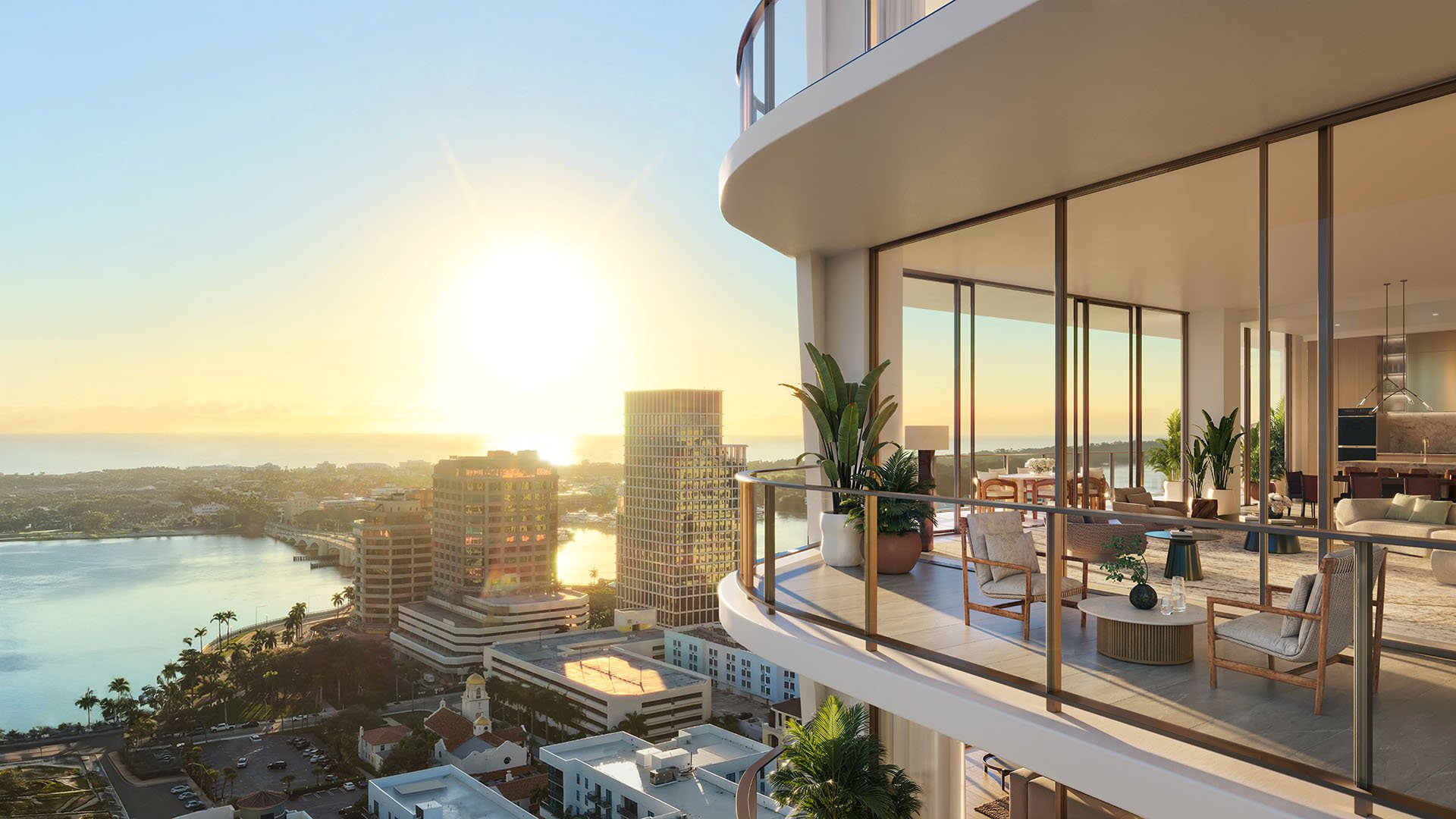
For a luxury buyer considering Palm Beach County, the comparison between Banyan Tree Residences West Palm Beach and Palm Beach Residences is less about two directly equivalent buildings and more about two distinct ideas of ownership.
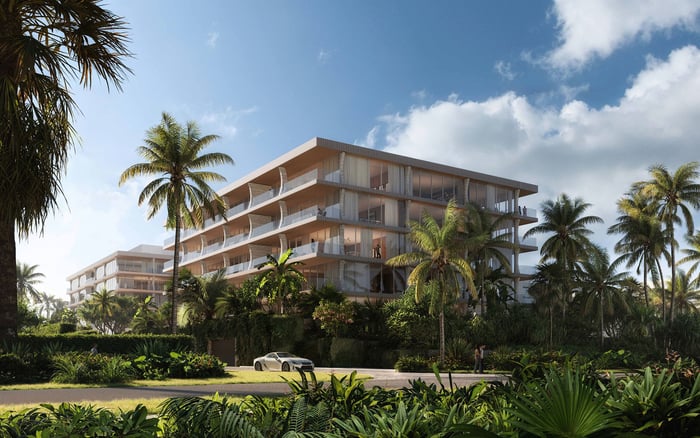
Banyan Tree presents a hospitality-led proposition in the urban core of West Palm Beach. Its appeal rests on branded service, a wellness-forward identity, and a residential format that feels closer to a refined private retreat with concierge support than to a conventional condominium. Palm Beach, by contrast, represents a mature barrier-island market where value is inseparable from geography, direct or near-direct access to the ocean, and the permanence of an address that has signaled wealth and discretion for generations.
That difference matters because sophisticated buyers are not simply choosing finishes or floor plans. They are choosing between a lifestyle organized around ease, programming, and city access, and one organized around waterfront prestige, social legacy, and the quiet force of tradition.
Banyan Tree Residences West Palm Beach enters the market as an official branded residence, and that identity shapes the entire proposition. The language of sanctuary, spa culture, and wellness is not decorative. It is central to how the project distinguishes itself from more typical luxury offerings in the county.
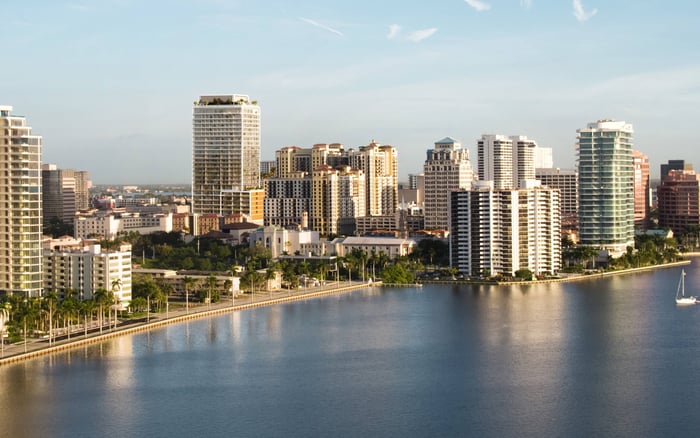
The development is positioned in downtown West Palm Beach rather than on the shoreline, which means its value proposition is urban rather than beachfront. For some buyers, that is precisely the appeal. Daily life in this setting is defined by convenience, walkable access, and a polished service environment instead of the maintenance demands and pricing premiums that often accompany an oceanfront address.
Its ownership model also feels contemporary. Integrated hospitality-style services create a hotel-meets-residential rhythm, appealing to buyers who want staff support, ease of arrival, and a more curated experience of luxury. In that sense, Banyan Tree sits comfortably within a broader South Florida movement toward branded living, seen in projects such as The Well Coconut Grove and House of Wellness Brickell, where wellness is treated as a primary organizing principle rather than a secondary amenity.
The unit mix also suggests broader access within the luxury tier. Layouts range from studios to three-bedroom residences, and pricing has generally landed well below the entry point associated with many Palm Beach oceanfront opportunities. For buyers seeking a branded foothold in Palm Beach County without stepping immediately into the highest echelon of island pricing, that distinction is meaningful.
Palm Beach remains one of the most recognizable residential enclaves in the country because it offers something branded developments cannot manufacture: a legacy setting. The town's identity is inseparable from its barrier-island geography, its oceanfront and near-oceanfront premium, and an architectural character shaped by Mediterranean Revival, Old Florida, and classically scaled estates and luxury buildings.
Ownership here tends to be more traditional. Rather than a service-heavy branded residence, Palm Beach is still largely defined by private homes, estates, and established luxury condominiums. The emotional appeal is correspondingly different. Buyers are often drawn not by programming but by continuity: clubs, family history, long-held addresses, and the sense that a residence participates in a highly selective social landscape.
That continuity is reinforced by local oversight that helps preserve the town's visual identity. The result is a market where newness alone is rarely the primary luxury signal. Instead, the enduring marker is placement: on the island, near the water, and within a setting whose prestige has compounded over decades.
For readers tracking West Palm Beach's rise, nearby projects like Forté on Flagler West Palm Beach and The Ritz-Carlton Residences® West Palm Beach illustrate how the mainland luxury conversation is becoming more sophisticated. Still, Palm Beach itself remains less about trend and more about enduring positional value.
This is the central decision point.
Banyan Tree asks the buyer to prioritize service-rich convenience in West Palm Beach. Its appeal is strongest for those who want a polished lock-and-leave residence, a wellness-inflected daily environment, and a lower threshold into upper-tier Palm Beach County living. It is especially persuasive for buyers who care more about how a home functions day to day than about whether the address sits directly on the barrier island.
Palm Beach asks the buyer to prioritize the address itself. The premium is not merely for square footage or interior quality. It is for proximity to the ocean, the social meaning of the town, and the confidence that comes with owning within one of America's most established luxury markets. Buyers who value direct beach access, old-guard prestige, and a location-first investment in identity will continue to gravitate there.
In practical terms, Banyan Tree is the more programmatic option. Palm Beach is the more place-driven one.
Without overstating exact asking levels, the broad market picture is clear. Banyan Tree has been marketed at a significantly lower entry band than the pricing typically associated with Palm Beach oceanfront and near-oceanfront inventory. That alone broadens its buyer pool.
It also changes the nature of the decision. A buyer considering Banyan Tree may be choosing among several branded and service-oriented options across South Florida, not just comparing it with Palm Beach. A buyer entering Palm Beach is often making a more definitive commitment to a rarefied location category where scarcity and prestige are major components of value.
This does not make Banyan Tree the lesser option. It makes it a different one. For some, lower relative entry combined with a strong service package is the smarter expression of luxury. For others, anything short of Palm Beach's oceanfront or near-oceanfront positioning will feel like a compromise.
The aesthetic split is equally revealing.
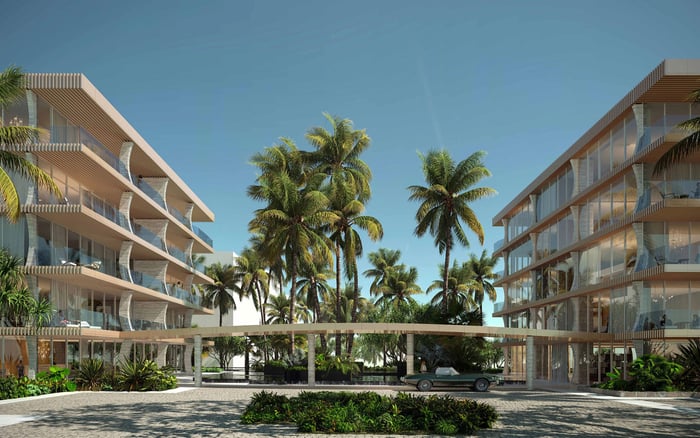
Banyan Tree aligns with a contemporary, wellness-inflected simplicity. Even when luxurious, the mood reads as calmer, cleaner, and more intentionally restorative. It speaks to buyers who want serenity without formality.
Palm Beach tends to project a more established grammar of luxury. Its visual cues often favor classicism, tradition, and the confidence of inherited taste over branded minimalism. The experience is less sanctuary-hotel and more cultivated private world.
Neither is inherently superior. They simply flatter different versions of wealth. One is curated and service-led. The other is inherited in spirit, even when newly acquired.
The Banyan Tree buyer is likely to value convenience, hospitality, wellness, and flexibility. This purchaser may want a primary residence with ease, a refined second-home base, or a luxury property that feels current in both service model and lifestyle orientation. New-construction appeal also matters here, especially for buyers drawn to the freshness of an active development cycle.
The Palm Beach buyer is usually pursuing something harder to replicate: a legacy address, beach adjacency, and participation in one of the country's most established luxury ecosystems. This purchaser is less interested in a branded operating model and more interested in permanence, privacy, and place.
For MILLION readers, the conclusion is straightforward. If your definition of luxury begins with wellness, service, and urban fluency, Banyan Tree is the sharper fit. If it begins with oceanfront stature, architectural tradition, and the social capital of Palm Beach, the island remains in a class of its own.
Is Banyan Tree Residences West Palm Beach an oceanfront project? No. It is positioned in downtown West Palm Beach, with its appeal centered on urban access and hospitality-style living rather than beachfront frontage.
Is Palm Beach Residences a single building? In this comparison, Palm Beach Residences functions as the broader Palm Beach residential market rather than one specifically identified project.
What makes Banyan Tree feel different from a traditional condo? Its branded identity emphasizes wellness, sanctuary-style living, and integrated concierge-style services that create a more hospitality-led ownership experience.
Why do Palm Beach homes usually command more? The island's pricing is strongly tied to direct oceanfront or near-oceanfront location, long-established prestige, and exceptional scarcity.
Who is better suited to Banyan Tree? Buyers who want branded service, wellness amenities, and a more accessible luxury entry point in West Palm Beach are the natural audience.
Who is better suited to Palm Beach? Buyers seeking direct beach access, legacy address value, and a more traditional ownership model typically align more closely with Palm Beach.
Does Banyan Tree offer a wider range of residence types? Yes. Layouts range from studios to three-bedroom homes, creating broader entry points than the typical Palm Beach estate profile.
Is this mainly a lifestyle choice or an investment choice? It is both, but lifestyle comes first. The clearest distinction is service-led wellness urbanism versus classic oceanfront prestige.
How does architecture differ between the two? Banyan Tree aligns with contemporary simplicity, while Palm Beach is more closely associated with classical, Mediterranean Revival, and Old Florida traditions.
What is the simplest way to frame the choice? Choose Banyan Tree for modern service and convenience, or choose Palm Beach for waterfront stature and enduring social cachet.
If you'd like a private walkthrough and a curated shortlist, connect with MILLION.
If branded residences are on your mind — as a home or as an allocation — we would be glad to share what we are seeing, privately.
Begin a quiet conversation