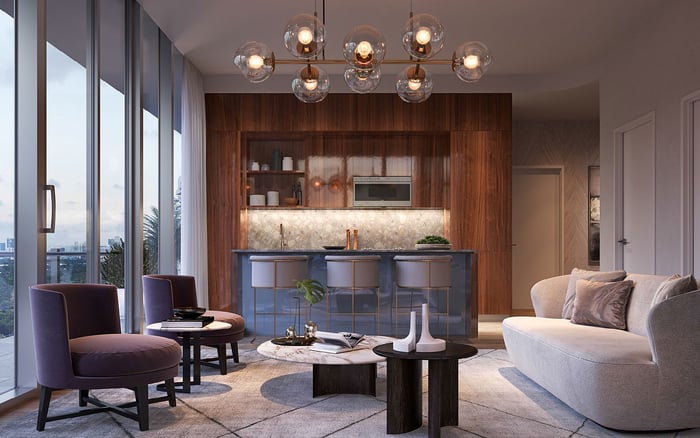
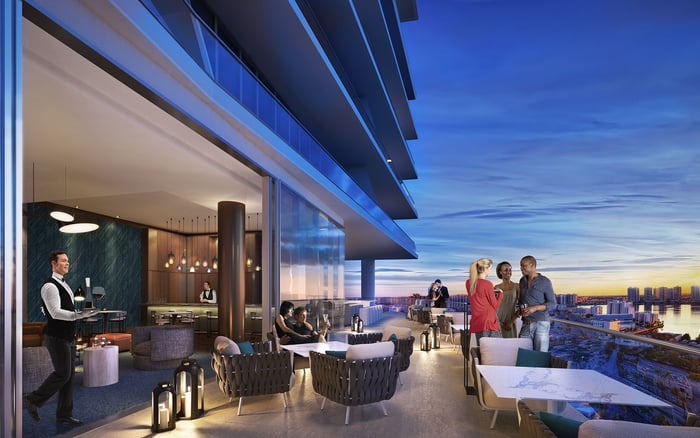
Club-centric living can make a second home feel more useful, more social, and easier to enjoy in 2026 by aligning private amenities, services, and location with the way affluent owners actually spend time in South Florida.
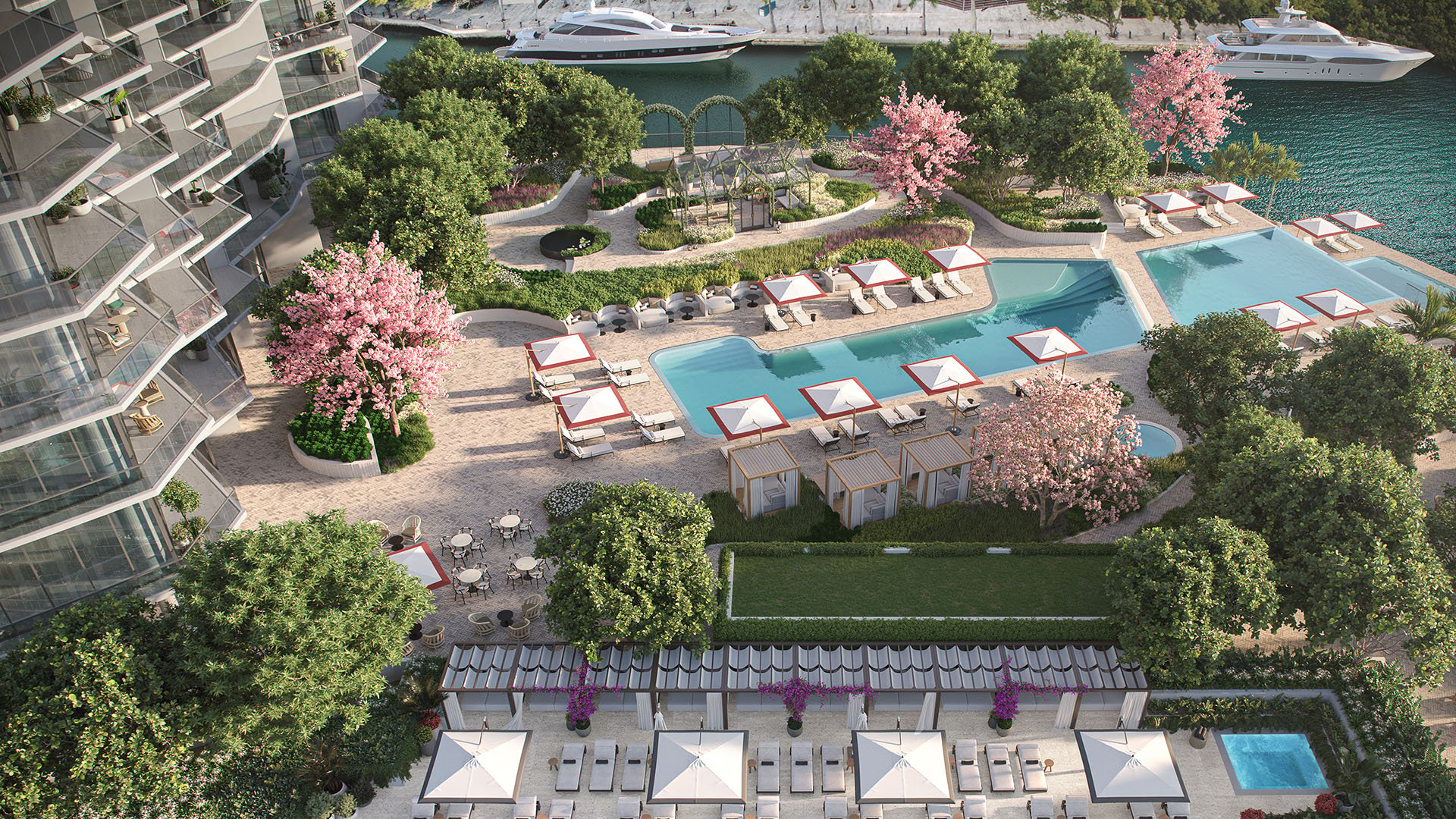
For the refined second-home buyer, the question in 2026 is no longer simply where to buy. It is how the residence will perform during the limited, valuable weeks when family, friends, work, wellness, dining, and privacy all need to align. Club-centric living answers that question with a more complete ownership proposition: not just a beautiful apartment or house, but a curated ecosystem that makes arrival easier and departure less disruptive.
A conventional second home often depends on outside coordination. Dinner reservations, fitness routines, guest plans, boating days, children’s activities, and last-minute entertaining can become a second layer of management. A club-centered residence compresses that effort. It creates an environment where the owner can step into a prepared rhythm, with services and shared spaces already shaped around leisure, connection, and discretion.
That is why second-home strategy is becoming less about occasional escape and more about repeatable use. The best purchase is not necessarily the largest residence or the most dramatic view. It is the one that turns time in South Florida into a habit.
Luxury buyers are often decisive, but their calendars are not always flexible. A second home that requires extensive planning may be underused, even if it is extraordinary on paper. Club-centric living helps solve this by placing the most frequent lifestyle needs inside the residential orbit.
This can include private dining, wellness areas, social rooms, sport-oriented programming, beach or water access, concierge-style assistance, and spaces that support both solitude and gathering. The specific mix varies by property, but the strategic value is consistent: owners spend less time arranging the experience and more time living it.
In Brickell, this idea is especially relevant for buyers who want an urban second home with immediate access to dining, business, and culture. A residence such as St. Regis® Residences Brickell fits into that broader buyer conversation because branded residential living is often evaluated through service, hospitality, and ease of use.
The most important distinction is cultural fit. One buyer may want a polished social setting with dining and entertaining at the center. Another may value wellness, quiet mornings, and spa-like routines. A family may prioritize flexible spaces for multigenerational visits, while a boating enthusiast may think in terms of marina access and waterborne weekends. A golfer may see golf not as an amenity, but as the anchor of the entire purchase.
This is where club-centric living becomes a sharper investment lens. A residence should not be judged only by the amenity checklist. It should be judged by the likelihood that the owner will actually use those amenities. A rarely used private dining room has little lifestyle value. A familiar club lounge where friends gather every visit may become the reason the home is used again and again.
The discipline is simple: identify the rituals that matter before being seduced by the renderings. Morning training, children’s holiday visits, sunset cocktails, boat days, remote work privacy, visiting parents, and intimate dinners all point to different buildings and neighborhoods.
South Florida is unusually well suited to the club-centric second-home model because its luxury geography is diverse. Miami Beach offers a coastal rhythm and resort sensibility. Brickell delivers urban energy. Coconut Grove suggests a quieter, village-like cadence. Boca Raton and Palm Beach County appeal to buyers who want a more residential, country-club-adjacent tempo. North Bay Village, Bay Harbor Islands, Surfside, Fort Lauderdale, Pompano Beach, Hallandale Beach, and Sunny Isles each present different versions of water, privacy, access, and atmosphere.
A buyer exploring Miami Beach may begin with sand and views, but the better question is how the property will feel on day three, day ten, and during peak holiday occupancy. Projects such as The Perigon Miami Beach speak to buyers weighing the beach lifestyle alongside architectural identity and residential privacy.
In Coconut Grove, a wellness-first interpretation can be compelling for owners who want a softer daily rhythm. The Well Coconut Grove is naturally part of that conversation for buyers who place health, restoration, and calm at the center of their second-home criteria.
Club-centric living is especially powerful when it connects to the natural habits of South Florida ownership. Water, fitness, dining, and social life are not separate categories here. They often blend into one weekend pattern: an early workout, a day near the water, friends visiting at sunset, and dinner without leaving the comfort of a managed environment.
For buyers drawn to a more explicit club identity, Continuum Club & Residences North Bay Village brings the concept into its very name. For those considering a golf-forward lifestyle in Broward County, Shell Bay by Auberge Hallandale is a natural reference point in conversations about sport, hospitality, and second-home use.
The strategic benefit is not merely access to facilities. It is belonging. A strong club environment can give a part-time resident the continuity that a traditional second home may lack. The owner returns to familiar staff, familiar spaces, and a familiar social pattern. That continuity can make seasonal ownership feel less occasional and more rooted.
A disciplined buyer should begin with use cases. How many weeks per year will the home be occupied? Will visits be spontaneous or planned around holidays? Will guests arrive often? Is privacy more important than social energy? Does the owner want to host, retreat, train, work, entertain, boat, play golf, or simply recover?
The next step is to compare the club promise with the residence itself. Floor plan still matters. Storage still matters. Arrival sequence, elevator privacy, terrace usability, service access, parking, pet comfort, and guest circulation all influence the daily experience. Amenities cannot compensate for a residence that does not live well.
Finally, evaluate the neighborhood beyond the building. A club-centric property should enhance its setting, not replace it entirely. The best second-home strategy creates layers: the privacy of the residence, the convenience of the club, and the richness of the surrounding area.
In 2026, the winning second-home strategy is likely to be more personal and less speculative. Buyers will still care about design, views, scarcity, and long-term value, but the more revealing question is whether the home will become part of the owner’s life. A club-centric residence can make that outcome more likely because it reduces friction and increases emotional attachment.
The right club does not need to be loud. In the ultra-premium market, the most compelling version is often discreet, service-led, and intuitive. It knows when to create energy and when to disappear. For the buyer who wants South Florida to feel effortless, that may be the true luxury.
What does club-centric living mean for a second home? It means choosing a residence where private amenities, service, and social spaces support daily use, not just occasional enjoyment.
Why is this important for 2026 buyers? Time is the scarce asset. A club-centric property can make each visit smoother, more social, and easier to repeat.
Is a club-centric residence only for social buyers? No. The best examples also serve buyers who want privacy, wellness, sport, dining, or quiet convenience.
Should amenities drive the purchase decision? Amenities should support the buyer’s real habits. A shorter list used often is more valuable than an expansive list rarely used.
How does location affect the strategy? Location shapes rhythm. Brickell, Miami Beach, Coconut Grove, and Hallandale each suggest different patterns of use.
Can club-centric living support long-term value? It can strengthen desirability when the services, spaces, and culture remain aligned with affluent owner expectations.
What should families consider first? Families should prioritize guest comfort, flexible gathering areas, privacy, and activities that work across generations.
Is branded residential living the same as club-centric living? Not always. Branding may signal service, but the buyer still needs to evaluate the actual lifestyle and residential experience.
How should golf or marina access be weighed? Treat these as lifestyle anchors if they define how the home will be used, rather than as secondary amenities.
What is the simplest test before buying? Ask whether the property will make you visit more often, stay longer, and feel more at home each time.
For a confidential assessment and a building-by-building shortlist, connect with MILLION.
If branded residences are on your mind — as a home or as an allocation — we would be glad to share what we are seeing, privately.
Begin a quiet conversation