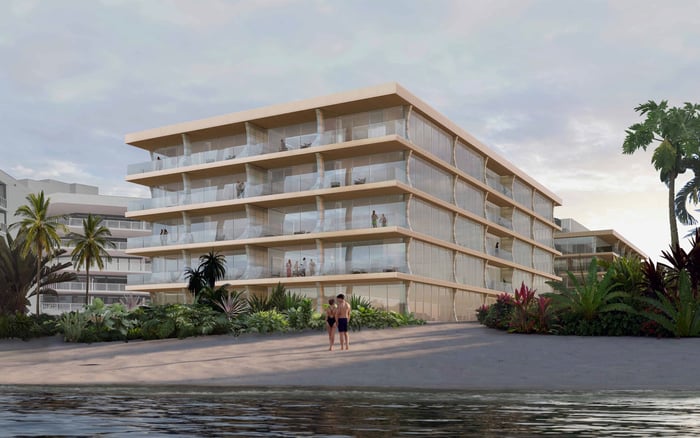
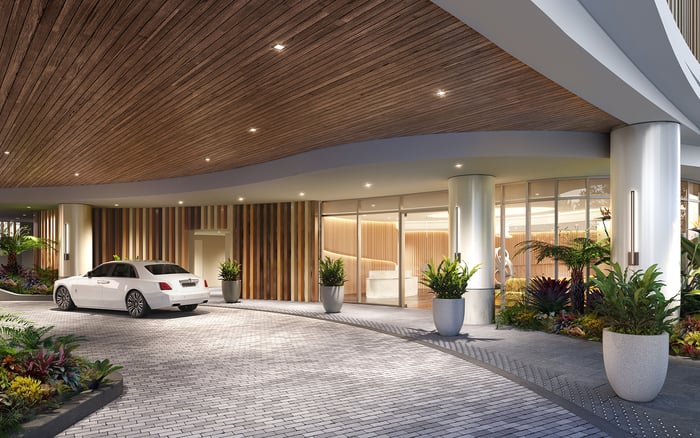
A buyer-oriented editorial comparing how two Flagler Drive condo offerings tend to use space, from entry sequences and core layouts to terrace planning and privacy. With limited publicly standardized disclosures across projects, this analysis focuses on practical, on-site verifiable heuristics that reveal “efficiency” beyond simple square footage.
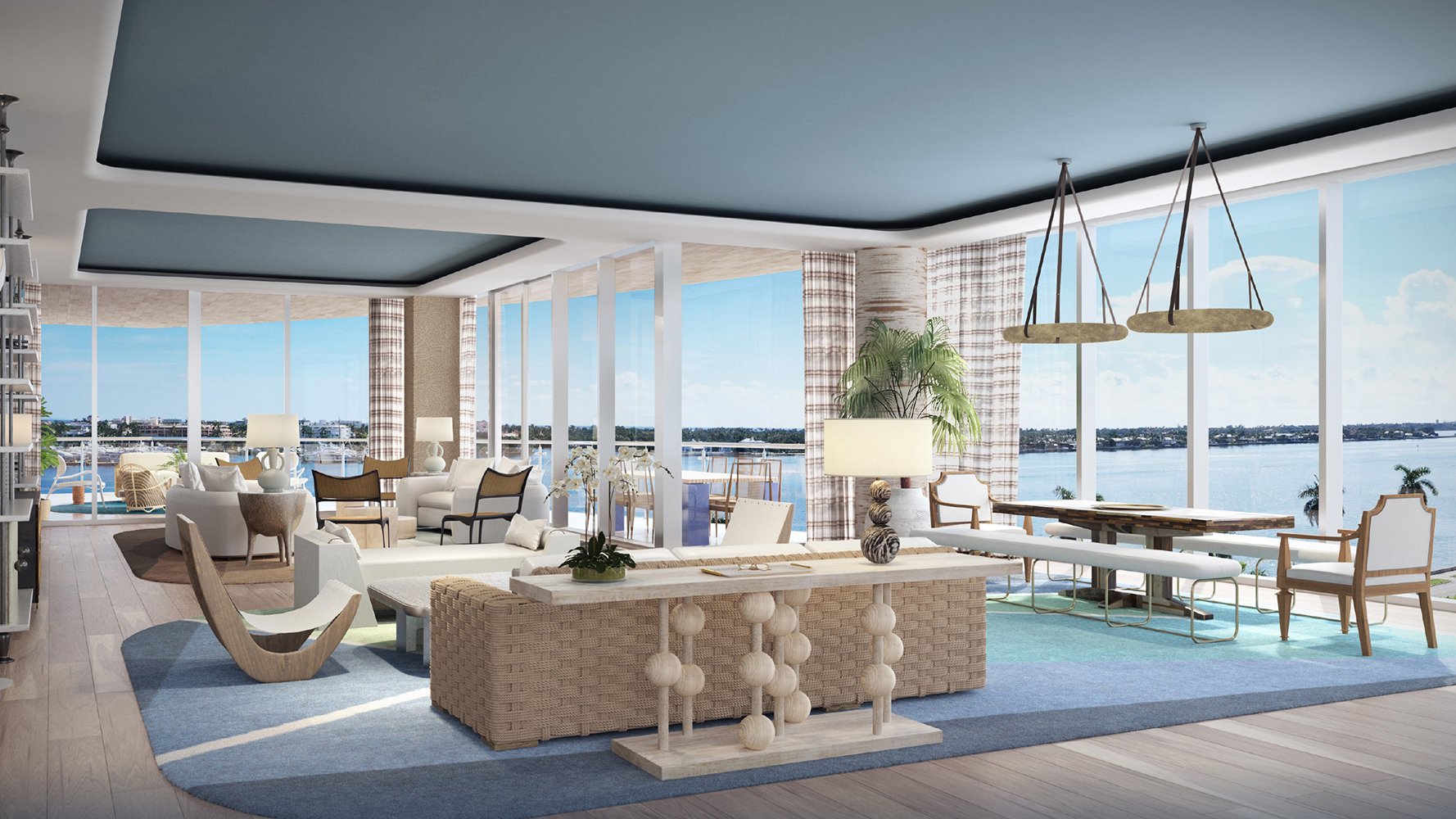
On Flagler Drive, view premiums can tempt buyers to treat square footage as the entire story. In practice, two residences with identical interior area can live very differently depending on how circulation, structure, and service functions are resolved. Efficiency isn’t about feeling smaller; it’s about feeling considered-less dead corridor, better wall lengths for art and furniture, cleaner transitions from public to private rooms, and terraces that operate as true outdoor rooms.
For this buyer-focused comparison of The Ritz-Carlton Residences® West Palm Beach versus Forté on Flagler West Palm Beach, the most useful approach is a consistent set of spatial tests you can apply to any stack you tour. With details varying by line, elevation, and plan edition, a repeatable checklist keeps the conversation anchored in livability-not brochure adjectives.
A high-performing plan typically “spends” area on rooms you use, not on transitions you endure. When you tour either building, focus on these five categories.
Efficient luxury begins at the threshold. Look for a foyer that offers a moment of pause before the main living space-without turning into a long gallery that functions as an expensive hallway. The strongest arrivals deliver three things quickly: a clear sightline to water or skyline, a discreet place to drop keys and bags, and immediate access to a powder room or coat storage.
A tell: count it in steps. If you take more than 10 to 12 steps from entry to your primary seating zone, you’re paying for circulation. If that’s the case, insist on compensations elsewhere: a genuinely generous powder room, a usable gallery wall for significant art, or meaningful storage that reduces bedroom closet pressure.
The building core is the silent author of every floorplan. When the core sits centrally with short, balanced corridors, residences often gain more regular room shapes and fewer structural surprises. When the core is pushed toward one edge, some stacks win broad view frontage while others absorb deeper, less efficient interior zones.
In either property, ask to see plans that indicate elevator lobbies and service access. A refined plan separates “guest arrival” from “daily operations,” even if the separation is subtle. If you can stand in the living room and hear elevator vestibule activity, privacy has been exchanged for area.
Luxury furniture, large-scale art, and proper media walls need uninterrupted length. A plan can read generous on paper yet feel constrained if columns chop the perimeter into short segments. In the living room, count how many contiguous walls you can actually use without obstructions. In bedrooms, confirm whether bed placement forces awkward circulation around corners.
Efficiency here is often felt before it’s measured: a room with simpler geometry reads calmer, photographs better, and furnishes with fewer custom solutions. When evaluating a view-forward stack, make sure structure isn’t forcing “floating furniture” that never quite settles.
In modern Flagler Drive living, kitchens are increasingly social-but they still need operational discipline. The key efficiency metric is choreography: can two people cook, plate, and clear without crossing paths? Study the relationship between the refrigerator, sink, cooking surface, and pantry, then overlay the path to dining and the terrace.
A high-efficiency kitchen also shields the living room from visual clutter. If the sink is the visual centerpiece and there’s no buffer for staging, the space can feel perpetually unfinished. Conversely, if an oversized island pinches circulation, you’ll feel the “square footage tax” in daily movement.
Terraces are often marketed by square footage, but efficiency comes down to depth and access points. A long, shallow terrace can be less usable than a smaller terrace with true room-like depth. Count doors: multiple access points let you distribute outdoor seating logically and prevent bottlenecks.
Also note where the terrace meets the living room. A clean, wide opening makes the interior feel larger because the edge dissolves. If the opening is segmented or awkwardly placed, the terrace reads as a separate zone rather than an extension of living.
While each building includes a range of layouts, buyers often sense a difference in planning ethos.
With The Ritz-Carlton Residences® West Palm Beach, many purchasers are drawn to hospitality-grade arrival, service cadence, and a feeling of edited calm. In floorplan terms, that typically shows up as more deliberate transitions: entries that manage sightlines, powder rooms positioned for guests, and clear separation between entertaining zones and sleeping quarters. When it’s executed well, the home reads composed-even with a full house.
With Forté on Flagler West Palm Beach, the perceived appeal often centers on straightforward, view-driven living: living and dining prioritized toward the water with practical bedroom placements. At its best, this approach delivers a living room that immediately claims the view, paired with a kitchen that supports daily life without becoming the entire identity of the great room.
The decision between these sensibilities is personal. Some buyers want the residence to feel like a private hotel suite: layered, quiet, and formally organized. Others want “direct living”: fewer transitions and maximum time spent where the light and view are.
Because marketing plans can flatten reality, treat your walkthrough as a diagnostic.
Ask yourself: where does the sofa go, and where does the dining table go, without blocking terrace doors? Efficient great rooms provide clear furniture zones that don’t compete. If you must choose between a proper dining table and a comfortable living arrangement, the plan is underperforming.
Look for a dining zone with enough wall adjacency to anchor a credenza or art. If dining floats in a circulation path, it will always feel provisional.
Primary bedroom efficiency comes down to proportion and privacy. A well-proportioned room fits a king bed with substantial nightstands while maintaining generous circulation. Check whether the bedroom door opens directly to the bed view; if it does, privacy is compromised.
In the bath, efficiency isn’t minimalism-it’s two people using the space simultaneously without negotiating around doors and pinch points. In the closet, look at double-hang versus long-hang balance, and whether the entry wastes depth.
For buyers using West Palm Beach as a second-home base, secondary rooms often carry dual roles: guest suite, office, wellness room. Efficient plans support that flexibility with clean rectangular geometry and closet placement that doesn’t steal the best wall.
If you are considering additional West Palm Beach inventory for comparison, it can be useful to tour a different planning style such as Alba West Palm Beach, where your eye can recalibrate on how much of a plan is “movement” versus “living.”
A residence can be beautifully planned and still feel inefficient if building circulation creates daily friction.
Consider elevator strategy: fewer residences per elevator bank often improves privacy and reduces lobby noise near the entry door. Consider service logistics: where do deliveries go, and how do they reach your door? The more the building separates resident arrival from operational flow, the more the home reads as serene.
Also evaluate acoustic adjacency. If a bedroom wall backs to a corridor or amenity area, you may experience noise that no amount of interior finish will solve. During tours, stand quietly in the primary bedroom and listen. Silence is a floorplan feature.
When weighing The Ritz-Carlton Residences West Palm Beach vs Forté on Flagler, choose the plan that matches your daily pattern-not your occasional fantasy.
If you entertain formally, prioritize entry sequence, powder placement, and dining adjacency.
If you live casually and work from home, prioritize daylight distribution, flexible secondary rooms, and kitchen choreography.
If the residence is a seasonal base, prioritize storage, lock-and-leave simplicity, and a terrace that works in the hours you’ll actually use it.
If you’re sensitive to privacy, prioritize core separation, residence count per landing, and sightlines from corridor to interior.
And remember: efficiency is a quiet lever in resale. Buyers can forgive a slightly smaller home if it lives large. They rarely forgive a large home that lives awkwardly.
To broaden the lens beyond Flagler Drive, it can be instructive to study how other South Florida markets handle efficiency at the ultra-premium tier, from waterfront indoor-outdoor planning at Una Residences Brickell to the resort-calibrated layouts of The Ritz-Carlton Residences® Sunny Isles.
The most efficient Flagler Drive plans share a few consistent sensations: the living room is where you naturally gravitate, circulation is nearly invisible, the primary suite feels protected, and the terrace behaves like an additional room-not a decorative ledge.
When touring, don’t be shy about bringing a measuring tape, mapping furniture footprints in your mind, and timing how quickly you can move from entry to kitchen to terrace. Luxury may be sold by finish, but it’s sustained by flow.
What does “floorplan efficiency” mean in luxury condos? It’s how much of the interior area feels usable and well-proportioned versus area spent on corridors, awkward angles, and pinch points.
Is a bigger terrace always better? No. Depth, door placement, and furniture zones matter more than raw exterior square footage.
How can I tell if a living room will furnish well? Look for uninterrupted wall length, minimal columns at the perimeter, and clear paths that don’t cut through seating.
What is the most common inefficiency in high-end plans? Overly long entry galleries and circulation spines that inflate square footage without improving daily living.
Should I prioritize view frontage or room proportions? Prioritize both-but if you’re forced to choose, better proportions often deliver a more livable home even with a slightly reduced angle on the view.
How important is core placement on a floor? Very. Core placement affects privacy, noise, and how much perimeter a residence can dedicate to windows and terraces.
Do open kitchens improve efficiency? Only when circulation is clean and there is adequate storage and staging; otherwise, they can steal usable living space.
What should I check in the primary suite? Bed wall options, door sightlines, double-vanity usability, and whether closet entries waste depth with narrow pinch points.
How many layouts should I tour before deciding? Tour at least two lines in the same building if possible; small plan shifts can materially change livability.
What is the simplest on-site test for efficiency? Walk the path from entry to kitchen to terrace and note any bottlenecks; if you keep sidestepping, the plan is telling you something.
When you're ready to tour or underwrite the options, connect with MILLION Luxury.
If branded residences are on your mind — as a home or as an allocation — we would be glad to share what we are seeing, privately.
Begin a quiet conversation