A discreet buyer’s guide to evaluating neighbor-tower exposure in South Florida luxury condominiums, with a family-first focus on privacy, light, noise, daily routine, and long-term confidence.

Neighbor-tower exposure is one of the quiet variables that separates a polished condominium purchase from a deeply livable family home. In South Florida’s vertical neighborhoods, the question is not simply whether a residence has a view. The more refined question is what the home sees, who can see into it, how light moves through the rooms, and whether the family’s most private rituals feel protected.
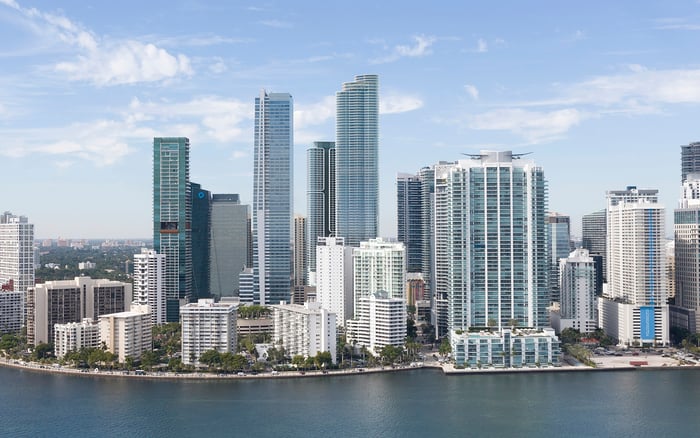
For buyers comparing Brickell, Miami Beach, Sunny Isles, Bal Harbour, Surfside, and Waterview residences, tower adjacency deserves the same scrutiny as floor plan, service, parking, school access, and finish quality. A neighboring tower can frame an elegant urban composition, or it can compromise a bedroom, terrace, kitchen, or home office in ways that only become obvious after move-in.
Family buyers should not treat exposure as a cosmetic preference. It shapes mornings, bedtime routines, homework zones, dinner privacy, natural light, balcony use, acoustic comfort, and the eventual resale narrative. The strongest decisions come from studying the home as it will actually be lived in, not as it appears during a brief showing.
The first demand is a complete sightline review from every primary family zone. Stand where daily life happens: beside the breakfast table, at the kitchen island, near the sofa, at the primary bed, at each child’s bed, inside baths with exterior glazing, and at the terrace edge. Then ask what is visible straight ahead, diagonally, upward, and downward.
A family residence may feel private from the living room yet exposed from a child’s bedroom. A terrace may look open from one corner and directly into another building from the seating area. A home office may appear serene until an opposing amenity deck, illuminated corridor, or glass line becomes impossible to ignore.
The essential question is not, “Is there another tower nearby?” In mature urban and waterfront settings, there often is. The better question is, “Which parts of family life does that tower touch?” If the answer includes bedrooms, baths, homework spaces, or evening gathering areas, the buyer should be exacting.
Many buyers instinctively ask for a higher floor, assuming height solves exposure. Sometimes it helps. But height alone is not a complete answer. Stack position, building angle, neighboring setbacks, terrace depth, window orientation, and the geometry of nearby towers can matter just as much.
A mid-level residence with a favorable diagonal view may feel more private than a higher home facing another glass wall directly. A corner plan may benefit from multiple orientations, but it can also carry more exposure if the wrong rooms face the wrong building. Flow-through units can be especially attractive for families because they may create more options for light, air, and separation, but the buyer still needs to study what each side faces.
When possible, tour at more than one time of day. Morning glare, afternoon heat, evening interior reflections, and nighttime visibility can change the personality of a residence. A room that feels discreet in daylight may feel more exposed after dark, when interiors are illuminated.
In luxury family living, privacy should be designed, not improvised. Window treatments can soften exposure, but they should not be the only solution. If a family must keep shades closed throughout the day to feel comfortable, the residence may be borrowing privacy from darkness rather than possessing it.
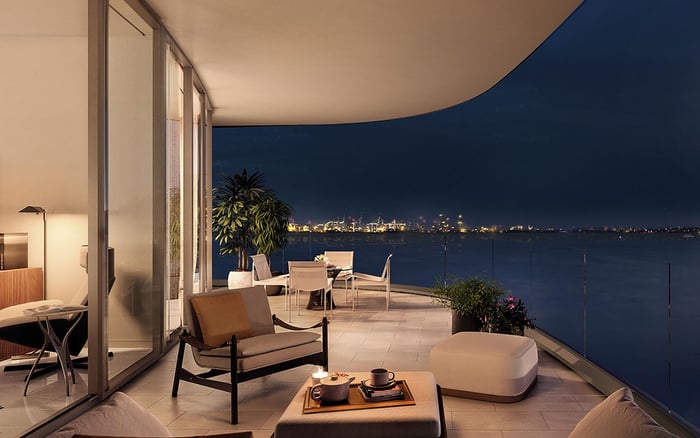
Demand clarity on glass, terrace railings, ceiling heights, room depth, and furniture placement. A deep living room can create a greater privacy buffer than a shallow room pressed against full-height glass. A well-planned primary suite can angle the bed away from opposing sightlines. A terrace with enough depth can allow seating to be arranged with discretion rather than exposure.
For families, the most sensitive spaces are predictable: children’s bedrooms, primary suites, baths, breakfast areas, and rooms used at night. If those rooms face close neighboring windows, the buyer should weigh whether the architecture offers genuine mitigation or merely attractive renderings and optimistic staging.
Exposure is visual, but it is also acoustic. Neighboring towers can introduce sound from mechanical areas, pool decks, arrival courts, balconies, service zones, and amenity levels. The presence of another building is not automatically a problem, but the character of its use matters.
A quiet residential facade is different from an active amenity edge. A garage entry differs from a landscaped setback. A pool deck has a different rhythm than a private residence stack. Family buyers should ask what sits opposite the home, not just what the view captures.
This is particularly important for homes with young children, early school mornings, multigenerational households, or frequent work-from-home routines. A dramatic outlook loses its appeal if bedtime, calls, or quiet weekends are consistently interrupted by neighboring activity.
A residence should be evaluated for today’s exposure and tomorrow’s potential exposure. In South Florida, nearby parcels, podiums, parking structures, low-rise neighbors, and open lots can shape the long-term privacy story. Buyers should ask disciplined questions about surrounding sites, allowable massing where relevant, and whether a currently open view corridor depends on conditions outside the building’s control.
The goal is not to predict every future building. It is to understand whether the premium being paid is supported by durable qualities. Oceanfront, bayfront, park-facing, and protected-edge positions may carry different exposure dynamics than interior urban corridors. Even then, no buyer should assume permanence without studying the surroundings.
For families, this is also a resale issue. A future buyer with children will scrutinize the same bedrooms, terraces, privacy angles, and light patterns. If today’s purchase story relies on a view that could be materially altered, the offer should reflect that risk.
Not every neighbor-tower relationship is negative. Some families prefer the energy of a refined urban view, the comfort of being above a composed streetscape, or the beauty of architectural lighting at night. In dense luxury neighborhoods, adjacency can feel sophisticated when distance, angle, and design are handled well.
The best family residences balance openness with discretion. They provide daylight without making private life feel displayed. They offer a terrace that can be used without constant self-consciousness. They allow children to move through the home naturally, without parents continuously managing shades, clothing, or noise.
This is where a buyer’s lifestyle should lead the analysis. A second-home owner may tolerate exposure in a way a full-time family will not. A couple with older children may prioritize views differently than a household with toddlers. A family that entertains often may value a dramatic living room even if secondary rooms require more careful treatment.
Neighbor-tower exposure can become a precise negotiation point. If a residence has compromised bedroom privacy, limited terrace usability, direct opposing windows, or uncertain future surroundings, those are not abstract concerns. They are livability factors that can influence pricing, terms, or the decision to continue searching.
Buyers should request floor plans, study stack diagrams where available, revisit the residence, and slow down the emotional momentum that often accompanies a beautiful lobby or amenity presentation. A trophy address still has to function at 7 a.m. on a school day and 9 p.m. on a Sunday night.
Treat exposure as a permanent part of the home’s architecture. Finishes can be changed. Furniture can be replaced. But the relationship between one tower and another is far harder to alter.
What is neighbor-tower exposure? It is the visual, acoustic, and privacy relationship between a residence and nearby towers or building faces.
Why does exposure matter more for family buyers? Families use bedrooms, kitchens, terraces, and living rooms throughout the day, so compromised privacy can affect daily comfort.
Is a higher floor always better? Not always. Stack position, angle, distance, and what sits opposite the home can matter as much as elevation.
Which rooms should be checked first? Prioritize children’s bedrooms, the primary suite, baths, kitchen seating, living areas, and the main terrace.
Can window treatments solve exposure problems? They can help, but a home that requires closed shades all day may not offer true livability.
Should buyers visit at night? Yes. Nighttime lighting can make interiors more visible and reveal sightlines that are less obvious during the day.
How does exposure affect resale? Future buyers may discount homes with direct bedroom exposure, limited terrace privacy, or uncertain view corridors.
Can a nearby tower ever improve a residence? Yes. A well-spaced or angled tower can create an elegant city view without undermining privacy.
What should buyers ask about future development? Ask what surrounding parcels, podiums, or low-rise sites could change the home’s light, views, or privacy.
What is the best test during a showing? Stand where daily life happens and ask whether the family would feel comfortable there every morning and evening.
For a discreet conversation and a curated building-by-building shortlist, connect with MILLION.
If branded residences are on your mind — as a home or as an allocation — we would be glad to share what we are seeing, privately.
Begin a quiet conversation