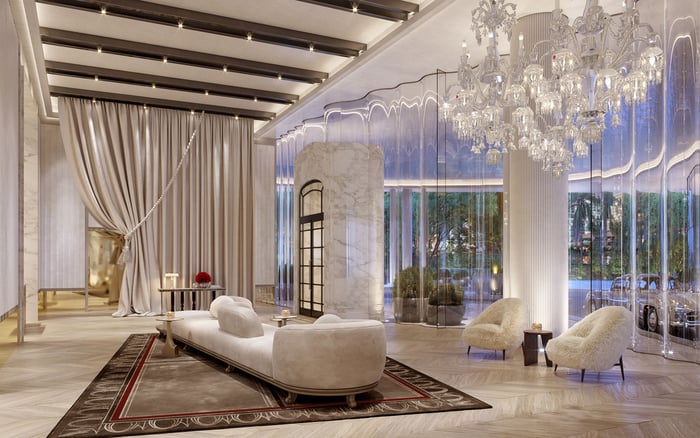
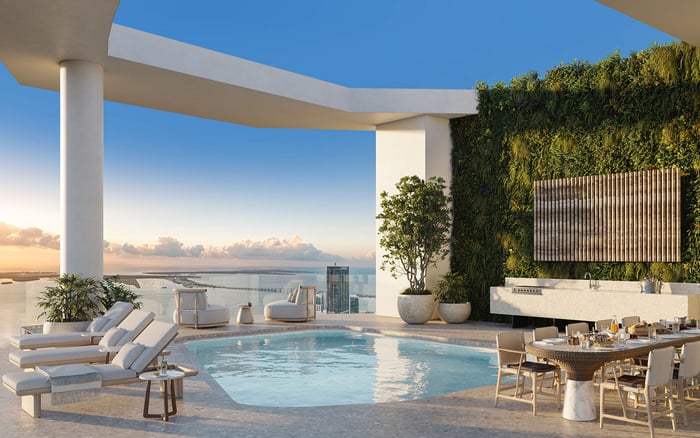
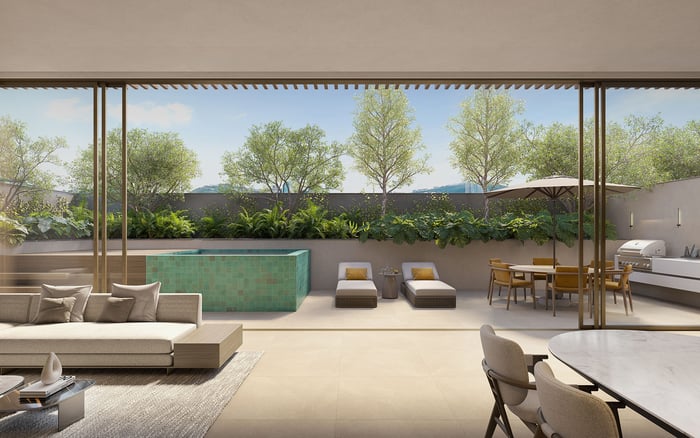
A buyer-focused comparison of The Ritz-Carlton Residences® South Beach and Colette Residences Brickell, centered on club access, private amenities, and the daily neighborhood rhythm that ultimately shapes ownership.
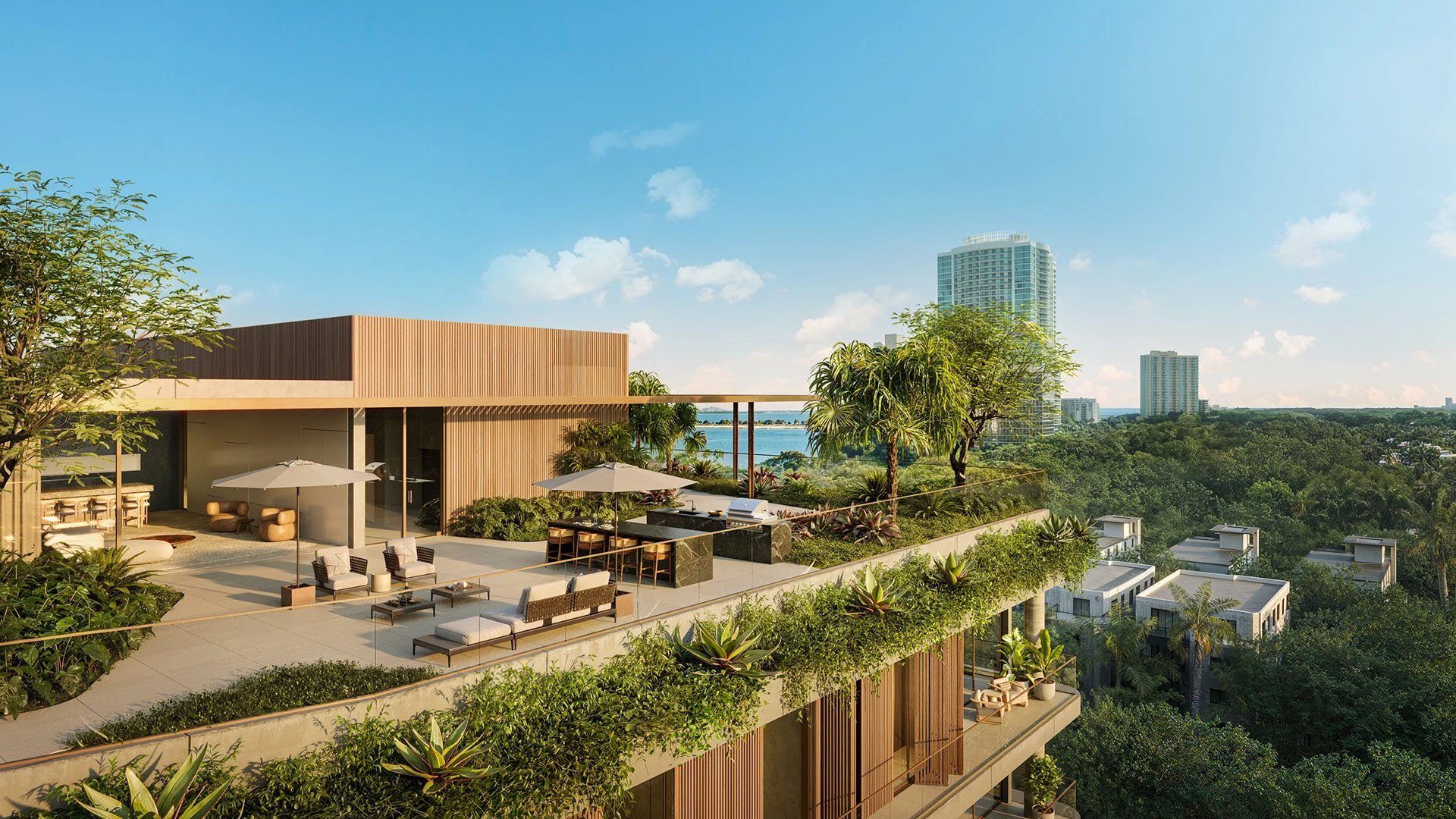
In South Florida luxury real estate, first impressions can be powerful. A polished model residence, a carefully paced presentation, a familiar hospitality name, and a skyline rendering can compress a major decision into a feeling. Yet for a buyer comparing The Ritz-Carlton Residences® South Beach with Colette Residences Brickell, the more useful comparison begins after the presentation ends.
The question is not simply which building presents the more seductive amenity menu. It is which residence will feel better at 7:30 on a weekday morning, 4:00 on a Saturday afternoon, and 10:00 after dinner with guests still in town. South Beach and Brickell can both deliver a highly serviced Miami life, but they do so through different rhythms, different thresholds between privacy and spectacle, and different assumptions about how owners use their time.
This is where a serious buyer should slow the conversation. Club access, private amenities, and neighborhood energy are not decorative categories. They shape the lived value of a residence long after the launch moment has faded.
Club access sounds straightforward until it is examined closely. For an ultra-prime buyer, the real measure is not whether a club exists, but how it functions. Is access resident-focused or layered with outside users? Are guest privileges generous but controlled? Are the most desirable spaces truly usable when owners want them? Does the experience remain calm during peak periods, or does it become another social room to schedule around?
At a South Beach address, club life often carries a resort-adjacent sensibility. The buyer may be seeking a more relaxed cadence, with mornings that can begin near the water, afternoons that do not require leaving the island, and evenings that move from private to social without becoming corporate. In that context, the strongest club experience feels elegant without being performative. It should create a sense of arrival while still allowing residents to disappear.
In Brickell, club access is usually judged against a more urban schedule. Owners may want convenience between meetings, a setting for informal entertaining, wellness uses that fit into a dense weekday, and hospitality touchpoints that make the building feel like a vertical private address rather than a conventional condominium. The best version is not louder or larger. It is more efficient, more legible, and more aligned with a city-centered life.
Before committing, buyers should ask for the operational details behind the promise. Hours, reservation policies, guest rules, staffing structure, private event limitations, and resident-only boundaries all matter. A club that photographs beautifully but requires constant planning may be less valuable than one that quietly works.
Amenity comparisons often become inventory exercises: wellness, dining, lounges, spa spaces, outdoor areas, children’s rooms, work areas, and entertainment rooms. That approach misses the point. The more sophisticated question is how the amenity program maps onto the owner’s actual day.
A buyer drawn to South Beach may be prioritizing ease, leisure, and a more fluid connection between home and neighborhood. In that setting, private amenities are most successful when they reduce friction. They should make it easy to exercise without a commute, host without turning the residence into a service corridor, and enjoy outdoor space without competing with the surrounding hospitality scene. Pool programming, arrival sequence, wellness privacy, and the ability to move from residence to amenity without feeling exposed all become meaningful.
A Brickell buyer may weigh amenities differently. The building may need to support a faster rhythm: morning fitness, a discreet meeting, a quiet place to take a call, a controlled arrival for a driver, a lounge that works before dinner, and services that make frequent travel easier. Terrace space and outdoor amenity design can be especially important because the neighborhood is intensely vertical. When private exterior space feels calm, shaded, and purposeful, it becomes a counterweight to the city rather than a decorative extra.
The distinction is subtle but important. South Beach amenities often need to protect the feeling of retreat. Brickell amenities often need to sharpen efficiency while softening the urban edge. Both can be luxurious. They are simply luxurious in different ways.
The neighborhood decision may be the most important one. A residence can be renovated, furnished, and styled, but the daily rhythm outside the lobby is far less adjustable.
South Beach has a layered identity. It offers beach proximity, cultural energy, hospitality, dining, and a social atmosphere that shifts throughout the day. For some owners, that is precisely the appeal. The neighborhood can feel cinematic, walkable, and connected to a version of Miami that is more sensual than corporate. For others, the same vitality requires a careful reading of building placement, arrival discretion, traffic patterns, and the transition between public energy and private calm. In buyer shorthand, this is a Miami Beach question as much as it is a building question.
Brickell, by contrast, is Miami’s high-density urban core. Its appeal is momentum: offices, restaurants, towers, retail, transit connections, and a steady procession of residents and professionals. For buyers who live between finance, entrepreneurship, travel, and dining, that proximity can feel invaluable. The tradeoff is that serenity must be engineered. The residence, arrival experience, amenity floors, and staff culture need to create a buffer from the pace below.
Neither rhythm is objectively superior. South Beach favors those who want the city to loosen its tie. Brickell favors those who want the city close at hand. The right choice depends less on architectural taste than on the owner’s tolerance for motion, visibility, and spontaneity.
A disciplined buyer should run both residences through the same private scenario. Where do you wake up most often? How many nights per month will you host? Do guests stay with you, or nearby? Will you use amenities daily, weekly, or mostly when entertaining? Do you want the lobby to feel social, anonymous, hotel-like, residential, or somewhere between? How important is immediate access to restaurants versus the psychological distance of a resort-style setting?
The answer may reveal more than any finish package. If the residence is a primary home, weekday cadence should dominate the analysis. If it is a second home, arrival ease, storage, guest accommodation, and service consistency may matter more. If it is a family foothold, privacy, staff familiarity, and amenity age range become central. If it is a new-construction purchase driven partly by long-term positioning, the buyer should consider how the neighborhood’s identity may support or complicate future desirability.
The Ritz-Carlton Residences® South Beach will naturally appeal to buyers who respond to brand comfort, a beach-area lifestyle, and the idea of a more leisure-oriented Miami base. Colette Residences Brickell will naturally appeal to buyers who want a highly urban address with the energy of Brickell immediately around them. The sharper decision is not brand versus boutique, or beach versus tower. It is whether the building’s private world and the neighborhood’s public world agree with how the owner actually lives.
Sales galleries are designed to remove doubt. Serious buyers should use them to create better questions.
Is The Ritz-Carlton Residences® South Beach automatically the better choice for a resort lifestyle? It may suit buyers who want a South Beach setting and a more leisure-oriented rhythm, but the decision still depends on privacy, access, and daily use patterns.
Is Colette Residences Brickell better for a primary residence? It may be compelling for buyers who want proximity to Brickell’s urban core, but primary-home suitability depends on commute, services, noise tolerance, and amenity needs.
How should buyers compare club access between the two? Focus on who can use the club, when it is available, how guests are handled, and whether the experience remains calm during peak demand.
Are private amenities more important than location? They are intertwined. Amenities shape the private day, while the neighborhood sets the public rhythm every time an owner leaves the residence.
What should a buyer ask before being influenced by a sales gallery? Ask how the building works on an ordinary weekday, how arrivals are handled, and which amenities are truly resident-prioritized.
Does South Beach offer a quieter lifestyle than Brickell? Not necessarily. South Beach can be relaxed or highly active depending on micro-location, season, and the building’s ability to create privacy.
Does Brickell feel too urban for luxury living? For some buyers, its intensity is the point. For others, the building must provide a strong private counterbalance to the pace outside.
Should second-home buyers weigh amenities differently? Yes. Second-home buyers often value arrival ease, staff consistency, guest comfort, storage, and low-friction use over daily commuting concerns.
How important are pool and terrace spaces in this comparison? They can be decisive when they provide real privacy, comfort, and usability rather than simply checking an amenity box.
What is the best way to shortlist comparable options for touring? Start with location fit, delivery status, and daily lifestyle priorities, then compare stacks and elevations to validate views and privacy.
When you're ready to tour or underwrite the options, connect with MILLION.
If branded residences are on your mind — as a home or as an allocation — we would be glad to share what we are seeing, privately.
Begin a quiet conversation