A privacy-first guide to touring Aston Martin Residences Downtown Miami, with questions for buyers to ask about visibility, access, operations, data, staff discretion, and condominium documents before committing to a waterfront branded residence.
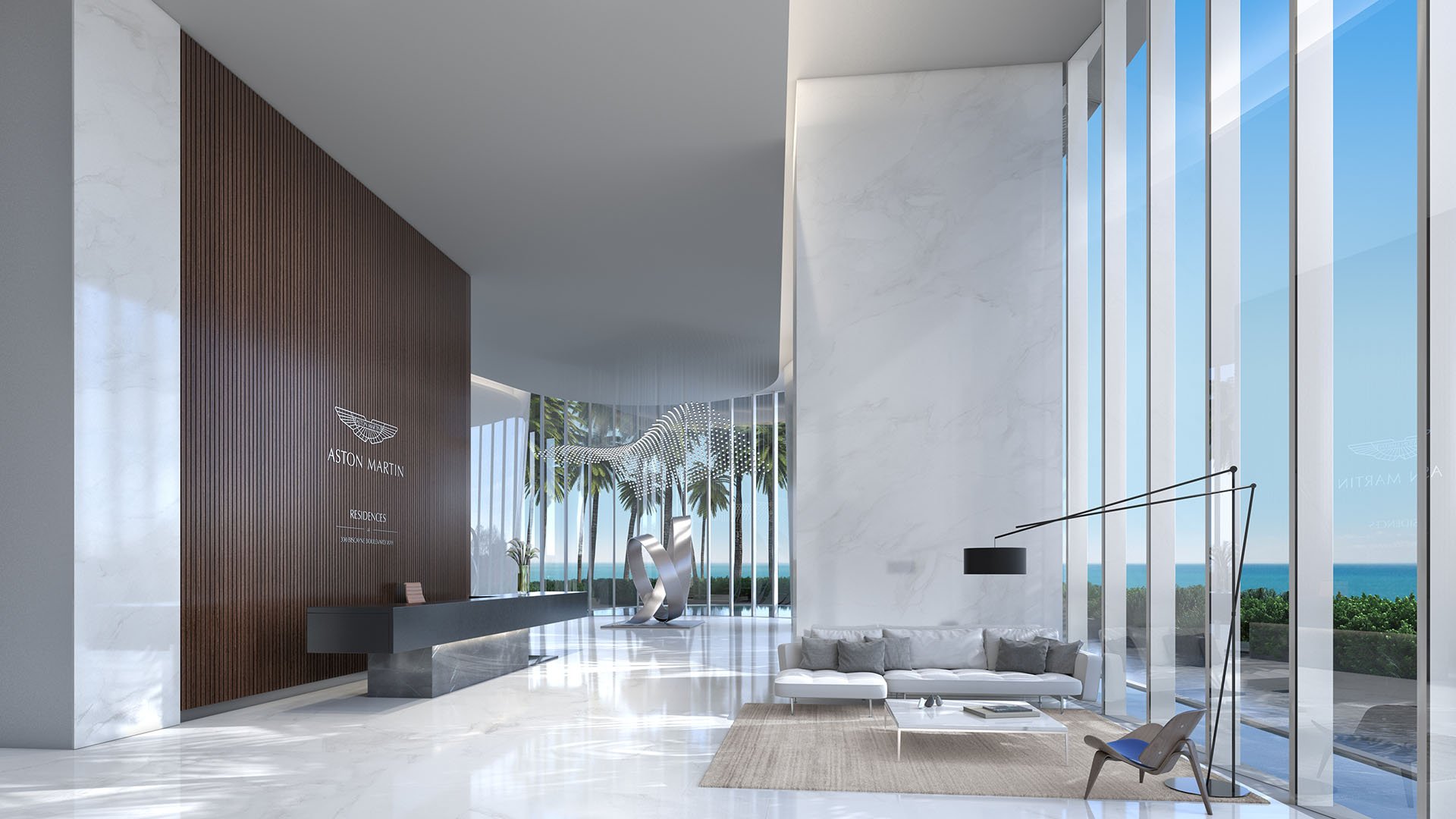
For a buyer considering Aston Martin Residences Downtown Miami, privacy is not a single amenity. It is a sequence. It begins at the approach road, continues through the porte-cochère and lobby, narrows at the elevator, and becomes most personal inside the residence.
The building’s Downtown Miami waterfront setting, near Biscayne Bay and the Miami River, delivers the drama buyers expect from a branded high-rise. It also places daily life within a highly visible urban-waterfront environment. That is not a flaw. It is the condition of owning in a dense, vertical city where light, views, boating traffic, neighboring towers, and social energy are part of the appeal.
The right question is not whether a resident can become invisible. In Downtown Miami, privacy is better understood as controlled visibility. A model-residence tour should therefore be treated as due diligence, not theater. For MILLION Buyer's Guides readers, the goal is to listen for specific policies, written procedures, and enforceable rules rather than broad language about exclusivity.
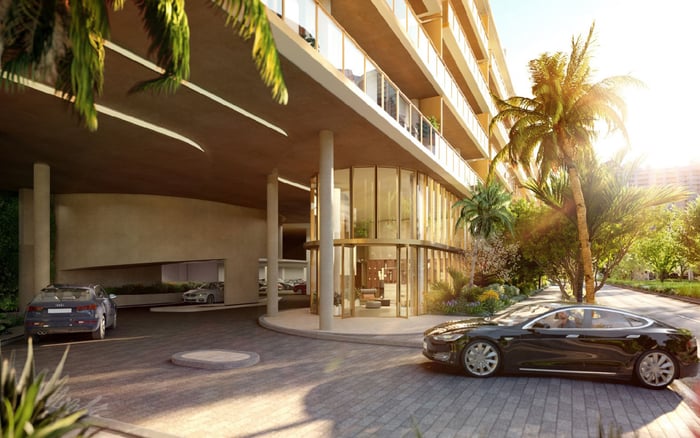
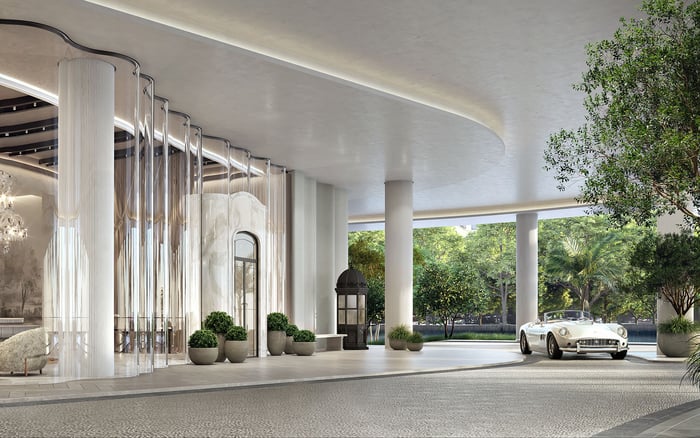
The most revealing privacy questions often arise before the residence tour begins. Ask the sales team to describe the resident arrival sequence in practical terms: where vehicles pause, who can see them, how valet or staff interaction is handled, and whether guests, vendors, and residents share any circulation points.
The porte-cochère, lobby, and elevator core are not merely design moments. They are exposure points. A security-sensitive buyer should ask whether private or semi-private elevator access is available, how residential corridors are controlled, and which protocols prevent unwanted encounters with visitors, event guests, delivery personnel, or vendors.
If a representative answers with atmosphere rather than procedure, keep asking. Who verifies guests? Who has access to residential floors? How are repeat vendors credentialed? How are unexpected visitors handled? The answer should be operational enough for a future resident to imagine a normal Tuesday morning, not just a polished preview.
Buyers comparing other central towers, such as Waldorf Astoria Residences Downtown Miami or One Thousand Museum Downtown Miami, can use the same arrival checklist. In a vertical city, the quality of privacy is often measured in transitions.
Waterfront living has a particular paradox: the best views also create the clearest sightlines. During the model tour, stand at the windows and ask what can be seen from neighboring towers, waterfront promenades, boats, terraces, amenity decks, and other residences. Then reverse the question: who can see you?
Visual privacy should be discussed at different times of day. Daylight reveals tower-to-tower angles, while evening conditions reveal how interiors read after dark. Ask how glazing, window treatments, terrace configuration, and night lighting affect visibility into living rooms, bedrooms, baths, and entertaining spaces.
Do not limit the conversation to the model residence. Ask whether sightlines differ meaningfully by stack, elevation, exposure, and terrace depth. A high floor may reduce one form of visibility while introducing another, particularly where other towers or amenity levels sit within the visual field.
This is where lifestyle and discretion intersect. A buyer may welcome the city as a view, but not as an audience.
Terrace privacy deserves its own conversation. Ask whether outdoor spaces are visually connected to neighboring terraces, amenity areas, or public waterfront activity. Also ask how furniture placement, railings, lighting, and overhangs affect the sense of being observed while dining, reading, or entertaining outside.
Acoustic privacy is equally important. During the tour, ask about sound transmission between residences, from corridors, from amenity floors, and from exterior traffic or waterfront activity. If the model environment is unusually controlled, ask how the completed residence performs during peak building use and active city hours.
The question is not whether the building is silent. Downtown Miami is not silent. The question is whether private rooms feel private, whether conversation carries, and whether a resident can host, work, rest, or return late without feeling acoustically exposed.
For buyers also looking across Brickell, privacy questions can travel easily to projects such as Baccarat Residences Brickell and The Residences at 1428 Brickell. The neighborhood changes; the scrutiny should not.
In luxury residential life, operational privacy may matter more than architecture. Ask how staff handle resident names, guest lists, delivery records, vendor access, and information about arrivals or absences. A discreet building culture is not created by marble, lighting, or branding. It is created by rules, training, and accountability.
Buyers with public profiles, family-office concerns, or security-sensitive routines should ask whether concierge, valet, housekeeping, maintenance, and third-party vendors are bound by confidentiality procedures. The important word is bound. Courtesy is not the same as obligation.
Ask what happens when a guest calls for a resident, when a vendor arrives without full details, or when someone asks whether an owner is in residence. Ask who can view resident information and whether access is limited by role. If the answer is that the staff is “very discreet,” ask where that discretion is documented.
This is especially relevant within Branded Residences, where the aura of hospitality can be seductive. Branding can shape service, design, and expectation, but it does not automatically guarantee operational discretion. The buyer should confirm the privacy culture in writing.
A contemporary condominium also has a digital footprint. Ask about smart-home systems, access-control platforms, building apps, surveillance footage, data retention, and who can see usage or occupancy patterns. If building technology integrates with branded lifestyle services or outside vendors, ask what personal data may be collected and how it may be used.
Surveillance can protect privacy while also creating records. Ask who can view footage, how long it is retained, and whether resident movement, guest entry, or vendor access can be reconstructed. For some buyers, data privacy is as important as physical screening.
Social privacy deserves equal attention. Ask whether the building hosts media-facing events, brand activations, influencer activity, or resident gatherings that could expose owners. A celebrated building may attract attention; the question is whether residents can opt out of visibility and whether rules protect names, images, and private spaces.
Finally, review condominium documents, association rules, sales materials, and any clauses governing use of resident names, images, or personal information. Contractual privacy is where elegant promises become enforceable protections.
Before leaving the model residence, ask the sales team which privacy-related items will be governed by future building management, which are embedded in condominium documents, and which are simply service expectations. Then ask whether a management representative can answer operational questions directly.
A privacy-focused buyer should leave with more than impressions. The ideal outcome is a written trail: policies, rules, procedures, and clear points of accountability. In a waterfront Downtown Miami tower associated with one of the world’s most recognizable luxury brands, discretion should be evaluated with the same precision as view, finish, and floor plan.
Is privacy the same as security at Aston Martin Residences Downtown Miami? No. Security may control access, while privacy also includes visibility, sound, staff discretion, data handling, social exposure, and contractual protections.
What is the first privacy question to ask on a model-residence tour? Start with the arrival sequence. Ask who can see residents and vehicles from the approach, porte-cochère, lobby, and elevator path.
Should buyers ask about private elevators? Yes. Ask whether private or semi-private elevator access exists and how corridors, guests, and vendors are managed around residential floors.
How should visual privacy be evaluated? Look outward and ask who can look back from neighboring towers, boats, waterfront areas, terraces, amenity spaces, and other residences.
Why does nighttime privacy matter? Interiors can become more visible after dark. Ask how glazing, window treatments, terrace lighting, and interior lighting affect exposure.
What should buyers ask about acoustic privacy? Ask about sound transmission between units, corridors, amenity floors, exterior traffic, and waterfront activity during active hours.
How can staff affect resident privacy? Staff may handle names, guests, deliveries, vendors, and absence patterns. Ask whether confidentiality procedures are documented and binding.
What digital privacy questions matter most? Ask who can access smart-home data, access-control logs, building app activity, surveillance footage, and occupancy-related information.
Can social events affect privacy? Yes. Ask whether media-facing events, influencer activity, brand activations, or resident gatherings can expose owners or private spaces.
Where should privacy protections be confirmed? Review condominium documents, association rules, sales materials, and management policies for enforceable privacy language.
To compare the best-fit options with clarity, connect with MILLION.
If branded residences are on your mind — as a home or as an allocation — we would be glad to share what we are seeing, privately.
Begin a quiet conversation