Circadian lighting in Miami’s top-tier penthouses is no longer a décor decision. It is an engineered wellness system that coordinates daylight, electric light, glazing, controls, and quiet infrastructure to support a 24-hour lifestyle without visual fatigue.
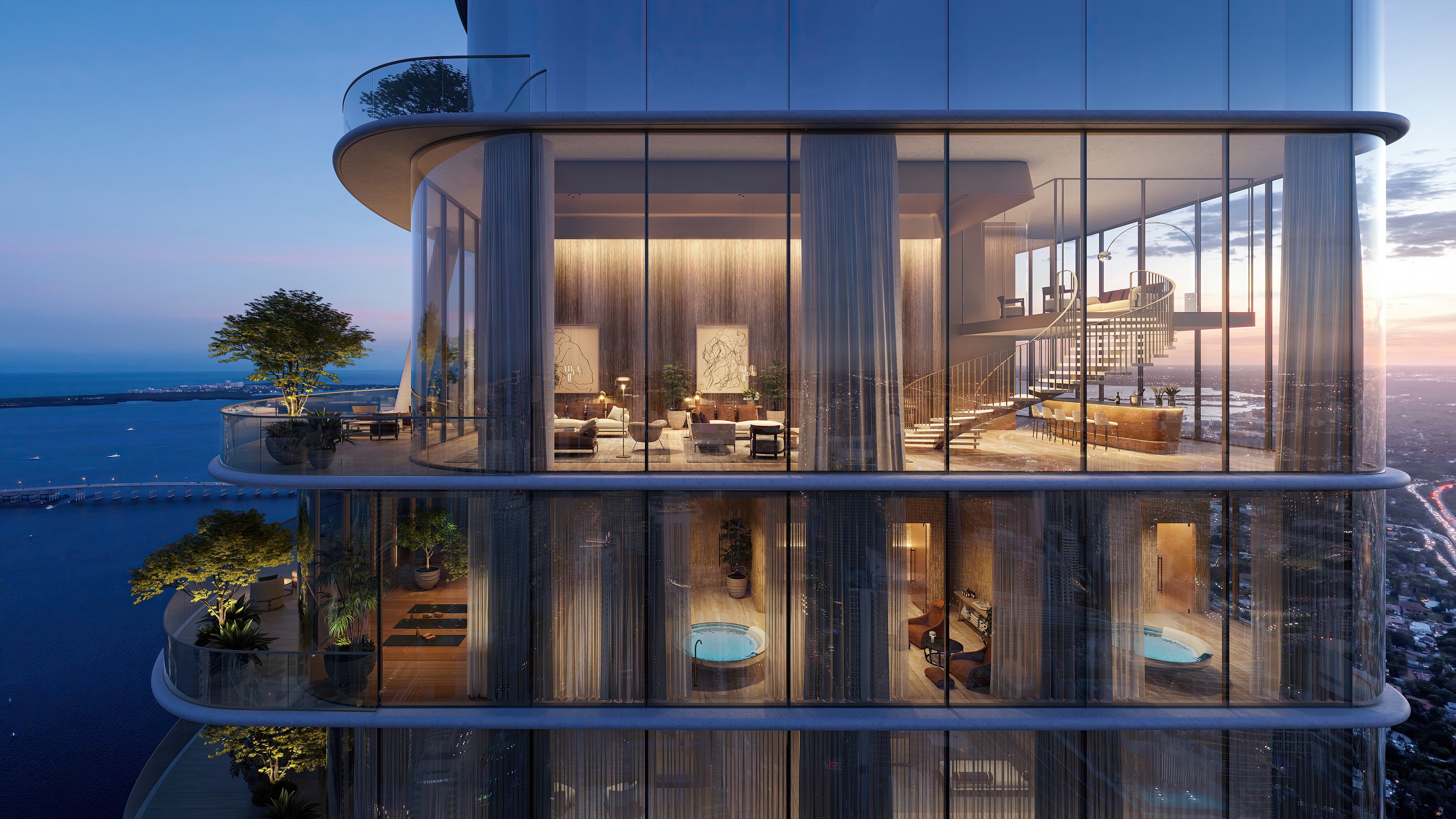
In an ultra-luxury Miami penthouse, lighting is no longer a finishing layer applied after the marble is selected and the furniture is placed. At the top of the market, “circadian” or “human-centric” lighting is treated like HVAC or acoustics: engineered early, coordinated through the ceiling plan, and integrated into the daily choreography of the home.
The driver is straightforward: South Florida living is dynamic. Days can start with sunrise workouts, shift into screen-heavy calls, stretch into late dinners, and end with the city still glowing beyond the glass. A circadian system is designed to keep interior light supportive through those transitions-warmer tones at night, stronger vertical illumination during focus periods, and disciplined glare control so the ocean view reads expansive rather than harsh.
In Brickell and Downtown towers-where glass walls and dramatic vistas are part of the proposition-the best implementations treat natural and electric light as a single composition. That mentality also aligns with the wellness narratives increasingly embedded in new luxury inventory, including destinations like The Residences at 1428 Brickell.
Circadian lighting is often mischaracterized as simply swapping in tunable-white downlights. In a properly engineered penthouse, the brief expands across five categories:
Spectral and color strategy: defining how warm the home feels at night versus how crisp it becomes for daytime productivity.
Layering and vertical illumination: ensuring the eye reads light not only from the ceiling, but also on walls, millwork, art, and drapery surfaces.
Glare control: protecting the view, reducing reflections, and preventing hotspots on polished finishes.
Controls logic: building an intuitive system of scenes that tracks the day but always respects the owner’s ability to override.
Infrastructure: power, drivers, low-voltage distribution, heat, and service access-concealed and quiet.
When any one of these is neglected, “circadian” becomes a marketing label. When all are coordinated, the home feels calm at midnight, energized at noon, and consistent from one room to the next.
The most convincing circadian environments in penthouse interiors rely on disciplined layering.
Indirect cove light
Provides the emotional baseline. It is typically the least fatiguing layer and the one most likely to carry the warmest evening setting. Because coves are architectural, they need to be resolved early-aligned with ceiling heights, sprinkler coordination, and millwork tolerances.
Wall-wash and grazing
Are the secret to a “bright” feeling without glare. When walls and large vertical surfaces are softly illuminated, the home reads luminous even as downlights are dimmed. This is especially important in glass-walled living rooms where the view should remain the focal point.
Task lighting
Is specified like precision equipment: under-cabinet linear runs for food prep, vanity lighting with flattering vertical illumination, and reading light that is quiet, controlled, and properly aimed.
Finally, decorative sparkle is used with restraint in ultra-luxury work-a pendant as jewelry, not as the primary light source. The more the lighting is expected to shift throughout the day, the more decorative fixtures must be compatible with dimming and scene logic.
Miami Beach and Surfside homes often prioritize soft, resort-like evenings and sunrise-ready mornings. In that context, a buyer looking at a coastal product such as The Perigon Miami Beach will often respond to lighting that flatters skin tones at night and keeps reflective materials elegant rather than sharp.
The hallmark of an engineered circadian system is not a complicated app. It is a predictable set of scenes that makes the home feel effortless.
A well-designed penthouse will typically include:
Wake: warmer but rising intensity, balanced to avoid a jarring transition.
Day: higher intensity with neutral-to-cooler whites, tuned for focus and color accuracy.
Golden hour: softened intensity and warmer tone, ideal for entertaining.
Evening: very warm, lower output, emphasizing indirect layers.
Night: path lighting for circulation that protects sleep routines.
The “override rule” is crucial for luxury clients. Automation should anticipate, not dictate. The best systems are designed so a guest can walk into a powder room and understand it instantly, while the owner can still fine-tune a scene for a late dinner party.
In Brickell, where many buyers expect hotel-grade convenience, residences associated with high-service concepts such as 888 Brickell by Dolce & Gabbana naturally invite a controls philosophy that feels curated: fewer buttons, stronger defaults, and a lighting story consistent with the brand’s interior mood.
Lighting quality in a penthouse is won or lost in places you do not see.
Drivers and dimming: Premium LEDs require drivers correctly matched to the dimming protocol and the load. Poor pairing leads to stepping, dead travel at the bottom of the dim range, or inconsistent behavior across zones.
Flicker discipline: Even when flicker is not consciously perceived, it can affect visual comfort for occupants who spend long hours indoors. A serious specification targets stable output across dim levels and avoids drivers that create strobing artifacts on camera-an increasingly relevant concern for video calls.
Color fidelity and consistency: In a high-art environment, color rendering matters. It is not only about “bright enough,” but about how the light respects textiles, wood tones, and skin.
Heat management: Recessed fixtures, linear channels, and concealed coves all generate heat. If details are too tight, output can degrade or components can fail prematurely. Coordinated ceiling sections and ventilation allowances become part of lighting design.
Serviceability: A penthouse should not require disruptive demolition to replace a driver. Access panels can be effectively invisible when planned early. A well-engineered system anticipates maintenance without compromising the architecture.
Miami penthouses are defined by glass. That makes circadian outcomes as much about daylight governance as about fixtures.
The most comfortable homes pair electric lighting with a coherent motorized shade strategy: sheer layers to soften glare during peak sun angles, blackout layers where sleep routines demand it, and programmed behavior that responds to lifestyle rather than rigid schedules. In oceanfront settings, the goal is often to preserve view and privacy simultaneously-using sheers as the default and reserving opaques for true darkness.
Another subtle issue is nighttime reflections. When interior levels are too high relative to the dark exterior, the view turns into a mirror. Circadian engineering can mitigate this by emphasizing wall-wash and perimeter coves rather than blasting downlights near glass. The result is a home that feels intimate at night while still allowing the skyline or ocean to read beyond the glazing.
In Sunny Isles, where towers often feature expansive frontage and dramatic height, buyers considering a sky-level residence such as Bentley Residences Sunny Isles tend to value systems that can shift from bright daytime clarity to a low-reflection evening atmosphere with a single scene change.
Circadian engineering becomes tangible when it is translated into program.
Great room: Prioritize indirect light, wall-wash for art, and carefully aimed downlights for circulation. Use multiple zones so the entertaining layout can change without re-aiming fixtures.
Primary suite: Warm, low-glare evening scenes and layered bedside control matter more than headline brightness. Night path lighting should be intentionally placed, not improvised.
Bathrooms: Vertical illumination at the mirror is non-negotiable. The best solutions avoid harsh top-down shadows and keep color rendering consistent so grooming feels accurate.
Kitchen: Daytime functionality demands higher intensity and neutral white, but late-night snacking should not flood the home with cool light. Two families of scenes-one task-forward and one after-hours-are the luxury standard.
Home office: The goal is comfortable focus light with controlled contrast, plus camera-friendly settings for calls. A single overhead fixture rarely solves this; layered wall and task components do.
Terraces: Exterior lighting should respect neighbors and preserve the night sky. Warm, shielded fixtures with discreet aiming keep the terrace elegant rather than over-lit.
For a buyer evaluating new construction or a high-end renovation, circadian lighting quality is measurable in the mock-up experience, the discipline of the specification, and the clarity of the control interface.
Ask to see how the system behaves at the lowest dim levels. Note whether the home can reach a true evening mood without buzzing, stepping, or color shifts that feel overly “techy.” Confirm that scenes remain consistent between adjacent spaces, and that the system is built for both daily living and entertaining.
Most importantly, evaluate whether lighting, shades, and the architectural envelope are treated as one. A penthouse can have beautiful fixtures and still feel visually exhausting if glare and reflection were never designed out.
In neighborhoods like Brickell, Downtown, and Miami-beach, the newest ultra-luxury residences increasingly treat lighting as part of the wellness promise rather than an optional upgrade. The best homes do not announce it. They simply feel right at every hour.
What is circadian lighting in a luxury penthouse? It is a whole-home approach that shifts color and intensity through the day to support comfort, focus, and restful evenings.
Is circadian lighting the same as tunable white lighting? Tunable white is a tool; circadian design also requires layering, glare control, scenes, and daylight integration.
Will circadian lighting make my interior look too “cool” during the day? Not if it is calibrated; daytime settings can be crisp without feeling clinical when layers and surfaces are balanced.
Do I need special fixtures to do this well? You need fixtures and drivers designed for smooth dimming, stable output, and consistent color across zones.
How does motorized shading relate to circadian goals? Shades manage glare and daylight contrast so electric light can stay comfortable and the view remains usable.
What should I look for during a lighting demo? Check low-level dimming, color stability, silence, and whether scenes feel intuitive in multiple rooms.
Is flicker actually a concern in high-end LED systems? It can be if drivers are poorly specified; premium systems are engineered to maintain stable output across dim levels.
Can I still control lights manually if the system is automated? Yes; the best designs prioritize simple overrides so owners and guests can adjust without friction.
Does circadian lighting increase energy use? Not necessarily; efficient LEDs plus a strong daylight and shade strategy can reduce unnecessary output while improving comfort.
Is circadian lighting worth prioritizing in a purchase decision? In a glass-forward penthouse, it meaningfully affects daily experience, view quality at night, and the overall wellness feel.
For a discreet conversation and a curated building-by-building shortlist, connect with MILLION Luxury.
If branded residences are on your mind — as a home or as an allocation — we would be glad to share what we are seeing, privately.
Begin a quiet conversation