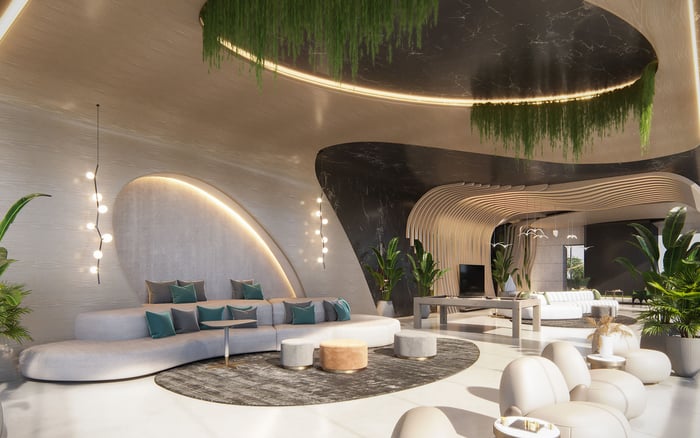
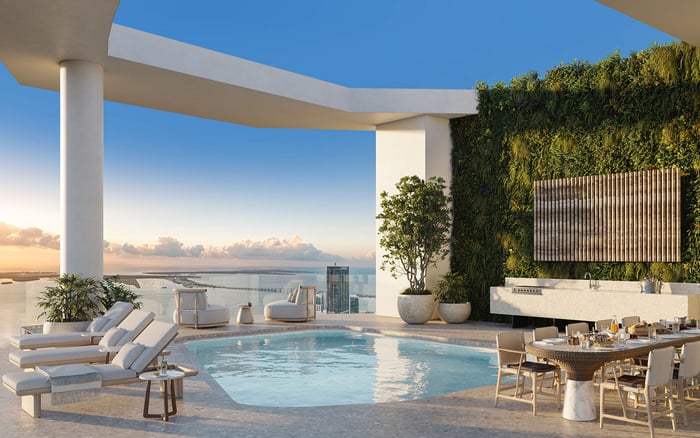
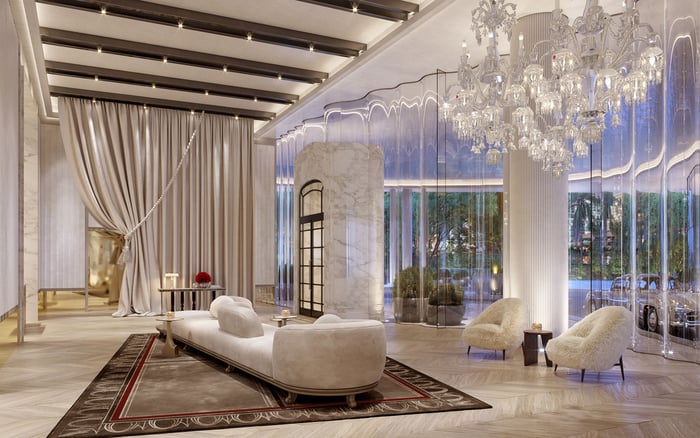
In Brickell, the conversation around trophy towers is expanding: design, privacy, and service still matter, but so does operational intelligence. The Residences at 1428 Brickell sits squarely in that new frame, where sustainability is not a marketing layer applied at the end, but a premise that influences form, facade, and long-term ownership logic. For South Florida buyers who treat real estate as a generational asset, the most compelling sustainability features are the ones you can live with, maintain, and underwrite. Solar integration, energy-conscious systems, resilient envelopes, and measurable performance can translate into comfort, quieter interiors, and a building that feels current for longer. In a district defined by waterfront views and cosmopolitan convenience, the next differentiator is how a tower performs, not only how it photographs.

Luxury buyers in Brickell rarely need persuasion on location. They are already choosing a neighborhood with a calibrated lifestyle: walkability, dining, waterfront access, and a global level of polish. The more nuanced decision today is the building itself-how it functions over decades, how it handles increasingly complex conditions, and how consistently it delivers comfort.
That is where solar-powered sustainability enters the high-rise narrative. When solar is treated as architecture rather than an accessory, it can shape daily living in ways that feel quietly luxurious: more stable interior conditions, considered shading strategies, and a tower designed to manage energy with intention. In a category where many offerings compete on finishes and brand signatures, performance becomes the next form of prestige.
Within this evolving context, The Residences at 1428 Brickell has helped raise expectations for new construction in Brickell: not simply a beautiful tower, but one that treats sustainability as part of its core engineering and design ethos.
The most credible sustainability shows up in the building’s decisions, not only its language. In solar-forward high-rise construction, that typically means a facade and massing strategy that considers sun exposure, heat gain, and opportunities for renewable generation-paired with systems designed to use energy more intelligently.
For buyers, the practical question is not whether the concept is appealing, but whether it is truly integrated. Integration tends to appear in three places:
Architecture: elements that manage light and heat, reducing cooling load without sacrificing the openness Brickell view corridors demand.
Mechanical thinking: a commitment to energy efficiency that supports comfort, air quality, and noise control-especially on high floors and in high-wind conditions.
Operations: a realistic plan for maintenance, monitoring, and replacement cycles. A sustainable tower still has to be serviceable, with components designed for long-term stewardship.
In a market where many residences are purchased as second homes, the operational layer matters. A building that performs predictably can be easier to own at a distance-and more consistent in feel when you arrive.
Solar in a high-rise is often discussed in abstract terms, but owners experience it through outcomes. The relevant outcomes are straightforward and buyer-oriented.
Comfort and interior stability.
Buildings that address sun and heat with discipline can feel calmer. Interiors may hold temperature more evenly, and glazing and shading decisions can reduce the harshness of direct exposure. In a luxury residence, comfort is a design feature.
A quieter kind of efficiency.
True efficiency is not performative; it is the absence of friction-systems that do their work without constant adjustment. In high-rise living, where the mechanical backbone carries much of the load, energy-conscious design can translate into a more seamless daily routine.
Resilience as discretion.
Many South Florida buyers value resilience, but prefer it delivered without theatrics. Solar-informed strategies can support a broader approach to continuity of operations and smart building management. Owners should ask how sustainability features are coordinated with the rest of the building’s infrastructure.
Future relevance.
Sustainability increasingly reads as modernity. A tower designed with performance in mind may age more gracefully in market perception, particularly among globally mobile buyers comparing Miami’s new inventory with other leading cities.
Brickell’s skyline has matured into an ecosystem. Buyers can choose between architectural personalities and service models, and they often cross-shop by lifestyle priority: waterfront proximity, privacy, arrival experience, and amenity culture.
A useful way to frame the decision is to separate the “visible” from the “structural.” The visible includes finishes, lobbies, branded interiors, and photogenic amenity decks. The structural includes the building envelope, mechanical systems, energy strategy, and operational sophistication. The structural layer reveals itself over time, which is why long-term value is often earned there.
In the same neighborhood, projects such as Baccarat Residences Brickell and Cipriani Residences Brickell reflect the market’s appetite for elevated service and brand-level consistency. The rise of solar-forward sustainability adds another axis-not a replacement for luxury, but an additional layer of discernment.
Sustainability claims can be broad. A sophisticated buyer evaluates them the way they would any building promise: by asking how it is measured, maintained, and experienced.
Is the sustainability feature integral or additive? Integrated solutions tend to be more durable, aesthetically coherent, and operationally rational. Add-ons can work, but they can also introduce future maintenance complexity.
How is performance verified? The most meaningful conversations focus on monitoring and management: how building teams track systems, calibrate them, and ensure performance does not drift over time.
What is the maintenance plan? Any advanced facade or renewable component must be accessible for inspection and replacement. In a luxury building, the maintenance plan should support discretion and continuity.
How does it influence the owner experience? The best sustainability is felt through comfort, air quality, acoustic serenity, and reliability. If the only benefit is conceptual, it may not justify complexity.
These questions are not about skepticism. They are about protecting the elegance of ownership.
Brickell is a leading edge for the region, but the sustainability conversation is not confined to the urban core. Coastal buyers increasingly evaluate how buildings respond to sun, salt air, and weather patterns-and whether the design logic anticipates long-term stewardship.
In Sunny Isles, for instance, supertall living and high design have become a baseline, and projects like Bentley Residences Sunny Isles illustrate how the market continues to evolve the luxury high-rise typology. Across the region, the next step is aligning that luxury with performance, so the building remains as compelling to own as it is to tour.
Even within Brickell’s pipeline, forward-looking residences such as Mercedes-Benz Places Miami suggest buyers are paying attention to how design brands interpret modern living, including wellness and operational intelligence. Solar-powered sustainability fits naturally into this trajectory, especially for buyers who view their residence through a broader portfolio mindset.
Luxury real estate in South Florida is often purchased for lifestyle first, but value retention still matters. Sustainability can support value protection when it is anchored to three fundamentals.
Durability.
Materials and systems selected with long-term exposure in mind can reduce future capital surprises. Coastal conditions reward buildings designed for the environment they inhabit.
Operational efficiency.
Owners may not buy for savings, but they do buy for predictability. A building with a coherent energy strategy can help stabilize the ownership experience.
Market positioning.
As buyer expectations evolve, a credible sustainability posture can become part of a tower’s identity. In a mature market, identity is a form of liquidity.
For buyers comparing multiple Brickell addresses, the question becomes: which building’s narrative will still feel current in ten years? Solar-forward design is one of the few differentiators likely to become more-not less-relevant.
The most successful sustainability is quiet. It does not ask you to change your life to accommodate a system. Instead, it elevates daily living by removing friction: better-managed light, more consistent comfort, and a sense that the building is operating with intention.
In that sense, The Residences at 1428 Brickell reads as a signal of where premium urban living is headed. Not away from glamour, but toward a more refined definition of it: luxury that performs.
What makes The Residences at 1428 Brickell notable in Brickell? It is positioned around a future-forward sustainability narrative that treats performance as part of luxury living.
Does solar power in a high-rise change the day-to-day owner experience? It can, especially when paired with a considered facade and efficient systems that support comfort and stability.
Should buyers expect lower costs solely because a building is solar-powered? Not necessarily; the more meaningful benefit is often predictability and long-term relevance rather than simple savings.
How can I evaluate whether sustainability claims are credible? Ask how performance is measured, monitored, and maintained over time-not only how it is described.
Is sustainability becoming a requirement in new-construction luxury towers? It is increasingly a differentiator many buyers expect, particularly in internationally benchmarked neighborhoods.
Why is Brickell a key market for performance-focused luxury? Brickell buyers often compare Miami to other global cities, where building performance is part of the value equation.
How does sustainability relate to resale value in luxury real estate? A coherent performance story can support long-term positioning and help a building feel current as tastes evolve.
Are branded residences in Brickell focused on sustainability too? Many branded concepts emphasize lifestyle systems like wellness and operations, which can align naturally with sustainability.
What questions should second-home owners ask about sustainable buildings? Focus on maintenance plans, monitoring, and how the building sustains comfort when the residence is unoccupied.
Is solar integration only an environmental choice, or also an architectural one? In the best projects it is both, shaping facade decisions and reinforcing a building’s overall design logic.
To compare the best-fit options with clarity, connect with MILLION Luxury.
If branded residences are on your mind — as a home or as an allocation — we would be glad to share what we are seeing, privately.
Begin a quiet conversation