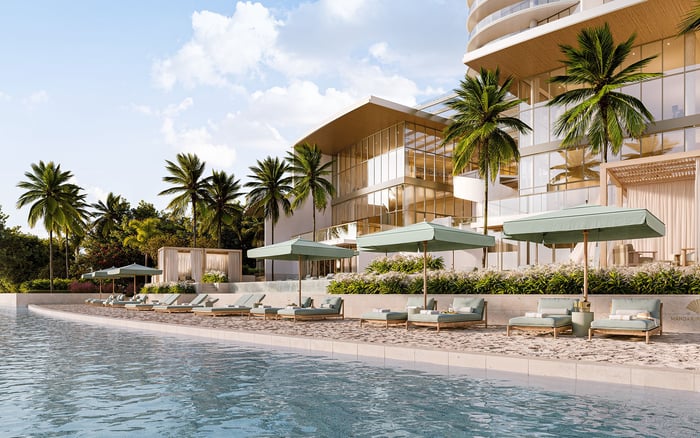
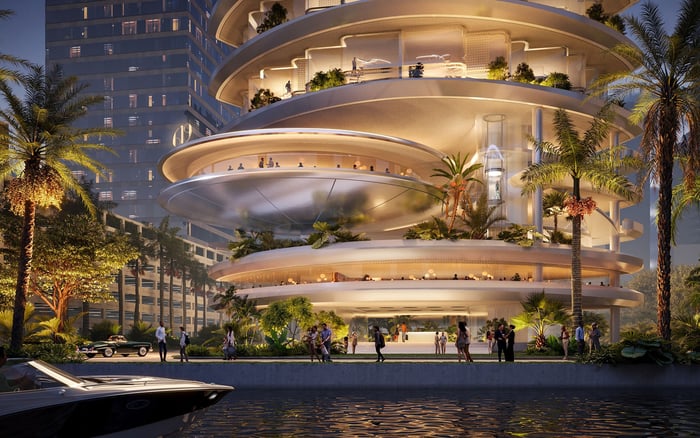
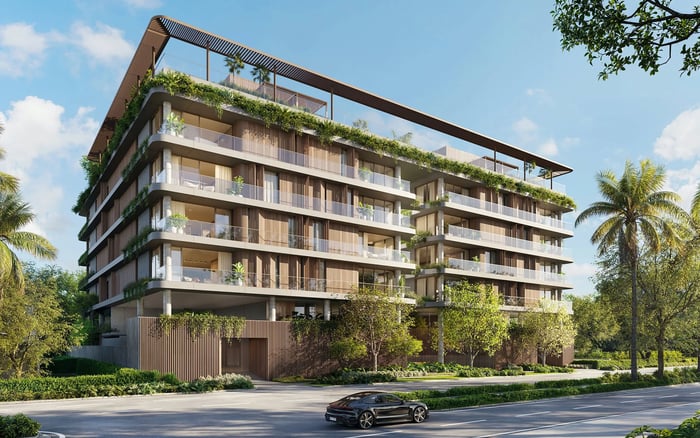
A buyer-focused analysis of how 2026 pre-construction purchasers should evaluate deposit-schedule leverage, brand value, waterfront scarcity, and opportunity cost at The Residences at Mandarin Oriental, Miami.
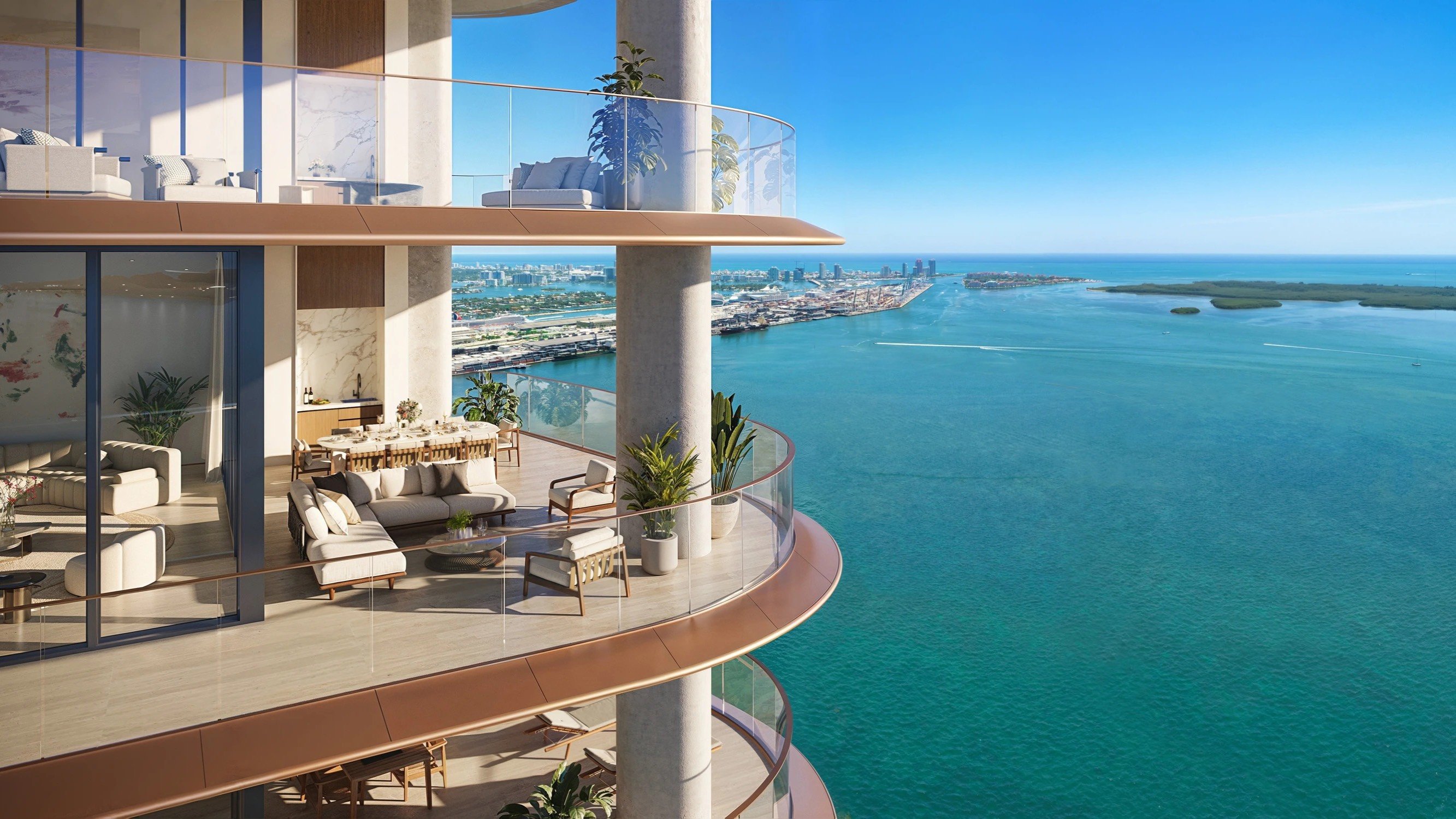
For ultra-prime buyers, the deposit schedule at The Residences at Mandarin Oriental, Miami should not be treated as a routine step between reservation and closing. In 2026, it is better understood as a capital-allocation decision: how much capital is committed, for how long, and in exchange for what type of exposure.
The asset is unusual because it brings together three variables that rarely align cleanly in Miami. It is a branded residential offering tied to Mandarin Oriental services, it is planned for the existing Mandarin Oriental Miami site, and it sits on Brickell Key, an island enclave immediately adjacent to Brickell’s financial and cultural center of gravity. That makes the deposit conversation less about paperwork and more about whether staged payments secure access to a scarce waterfront position with durable ownership utility.
A buyer who sees the deposit as dead money is asking the wrong question. The more refined test is whether capital tied up before closing is justified by the long-term claim on Biscayne Bay views, hospitality-driven living, and a redevelopment setting rather than an untested submarket bet.
Brickell Key occupies a distinct place in Miami’s luxury geography. It is close enough to Brickell to function as part of the urban core, yet separated enough to feel more residential and protected. For buyers who want access without constant exposure, that balance is central to the appeal.
This is not a generic Brickell tower competing only on height, finishes, or amenity scale. The island context changes the underwriting. Waterfront living on Biscayne Bay is finite, and the emotional premium attached to protected views can be difficult to replicate once a site is gone. That is why The Residences at Mandarin Oriental, Miami belongs in the same strategic conversation as St. Regis® Residences Brickell and Baccarat Residences Brickell, even though each project expresses luxury through a different lens.
Brickell is dense, vertical, and increasingly branded. Brickell Key offers a softer proposition: proximity to the city with a measure of remove. For some buyers, that remove is not a lifestyle detail. It is the reason to commit.
Deposit-schedule leverage is not leverage in the conventional borrowing sense. It is the ability to control future ownership of a coveted residence through staged capital commitments before closing. The appeal is clear: a buyer may secure exposure to a highly constrained asset without deploying the full purchase amount immediately.
The risk is equally clear. Deposits reduce liquidity, often while the buyer is also evaluating other homes, private investments, business opportunities, or portfolio reallocations. The question is not whether the residence is desirable. The question is whether its desirability is strong enough to justify capital being parked ahead of delivery.
That test becomes sharper in pre-construction. Buyers are not only purchasing the physical residence. They are underwriting completion risk, brand execution, service culture, and the eventual lived experience. In a new-construction market defined by branded launches and increasingly polished amenity narratives, the buyer must separate genuine scarcity from presentation.
The Mandarin Oriental association gives the project a service-based identity, not merely a design identity. For private residences, the brand premise is hospitality translated into daily ownership: arrival, privacy, amenity management, and an environment where service consistency matters as much as visual drama.
That matters because branded residences can create value in two ways. First, they may elevate the day-to-day ownership experience for the resident. Second, they may help clarify the asset’s positioning in a crowded luxury resale field later. Neither outcome is automatic. Both depend on execution.
This is where the deposit schedule becomes a buyer filter. A confident buyer should be able to articulate why Mandarin Oriental services, the Brickell Key setting, and the waterfront proposition create enough combined value to offset the opportunity cost of staged deposits. If that thesis feels vague, the deposit may be controlling emotion rather than controlling value.
Miami’s luxury buyer is not short on alternatives. A buyer considering Brickell Key may also study skyline-facing residences at The Residences at 1428 Brickell, waterfront-oriented living at Una Residences Brickell, or other branded offerings across Miami Beach, Surfside, Sunny Isles, and South Florida’s coastal markets.
That comparison should not be reduced to price per square foot, especially without a complete view of floor plan, elevation, exposure, and contract terms. The better comparison is utility. Which residence is most likely to be used, enjoyed, maintained, and valued by the owner over time?
For some, a mainland Brickell address offers immediacy and urban immersion. For others, Brickell Key’s island setting will feel more enduring. A buyer who travels frequently may prioritize hotel-caliber services. A buyer relocating full time may weigh privacy, daily circulation, and building culture more heavily. A second-home buyer may care most about reliable arrival and a frictionless lock-and-leave experience.
The first question is liquidity. If deposits are staged before closing, what else is that capital not doing? The answer varies widely by buyer. For a family office, the opportunity cost may be measured against other private investments. For an owner-occupier, it may be measured against flexibility.
The second question is downside protection. Does the project have attributes that should remain desirable even if broader market enthusiasm cools? Brickell Key, Biscayne Bay views, and a globally recognized hospitality brand are meaningful answers, but they still require buyer-specific conviction.
The third question is replacement risk. If the buyer walks away, how easy would it be to replicate this combination later? A redevelopment on the existing Mandarin Oriental Miami site suggests a different scarcity profile than a ground-up launch in an expanding corridor.
The fourth question is lifestyle truth. Will the buyer actually use the residence in a way that justifies the premium? Waterview living has emotional power, but utility is what makes ownership durable.
The fifth question is exit clarity. Even buyers with no plan to sell should understand the future resale narrative. Investment logic is strongest when the next buyer can quickly understand the asset: Brickell Key, Mandarin Oriental, waterfront, services, city access, island calm.
The Residences at Mandarin Oriental, Miami is not simply a test of appetite for branded luxury. It is a test of how buyers think about control. A staged deposit can be attractive if it secures an asset that is unlikely to be replicated and if the buyer has conviction in the brand, the setting, and the utility of ownership.
It is less compelling if the buyer is stretching for status, uncertain about usage, or comparing projects without accounting for liquidity. The strongest purchaser will not ask, “Can I afford the deposit?” That buyer will ask, “Is this the best use of capital for the exposure I want?”
In that sense, the project’s greatest advantage is also its most demanding feature. Brickell Key scarcity and Mandarin Oriental service raise the bar. They invite serious buyers, but they also require serious underwriting.
Is The Residences at Mandarin Oriental, Miami a branded residence? Yes. It is positioned as an ultra-luxury branded residential development associated with Mandarin Oriental services for private residences.
Where is the project located? It is planned for the existing Mandarin Oriental Miami site on Brickell Key, immediately adjacent to Miami’s Brickell district.
Why is Brickell Key important for buyers? Brickell Key offers proximity to the urban core while preserving a more insulated island setting, which is rare in central Miami.
Should buyers focus only on the deposit amount? No. The more important issue is the opportunity cost of staged capital before closing and whether the asset justifies that commitment.
Is this a redevelopment or an untested submarket launch? The project is described as a redevelopment on the existing Mandarin Oriental Miami site rather than a ground-up entry into an untested submarket.
What makes the waterfront component meaningful? The residential offering is framed around waterfront living and Biscayne Bay views, both of which support the project’s scarcity narrative.
How should buyers compare it with other Brickell projects? They should compare location, service model, long-term utility, liquidity impact, and the strength of each project’s ownership narrative.
Does branding guarantee future value? No. Branding can support value, but execution, service quality, buyer demand, and market conditions remain essential.
Who is the best fit for this project? It may suit buyers seeking waterfront privacy, hospitality-level service, and access to Brickell without full immersion in the urban core.
What is the core 2026 buyer test? The test is whether staged deposits provide attractive exposure to a scarce branded waterfront asset relative to capital tied up before closing.
When you're ready to tour or underwrite the options, connect with MILLION.
If branded residences are on your mind — as a home or as an allocation — we would be glad to share what we are seeing, privately.
Begin a quiet conversation