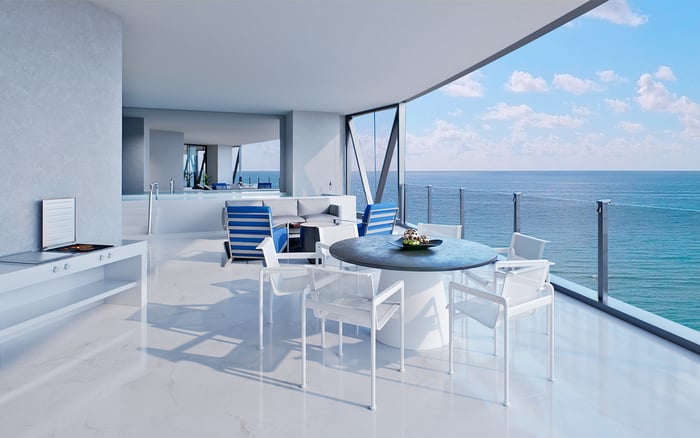
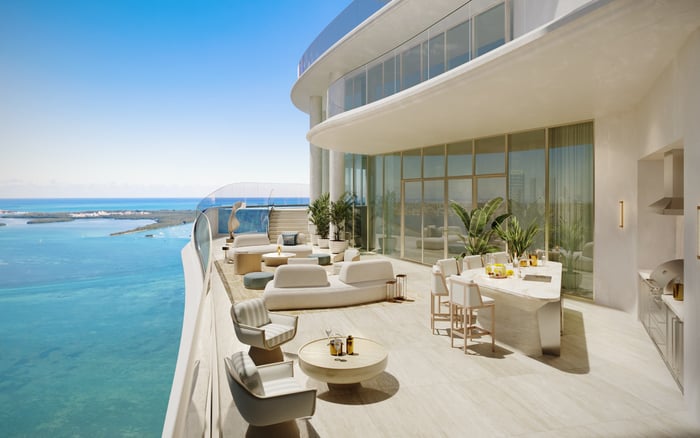
A discreet pre-contract guide for evaluating the technology backbone behind Turnberry Ocean Club Sunny Isles and comparable ultra-luxury South Florida condominium towers.
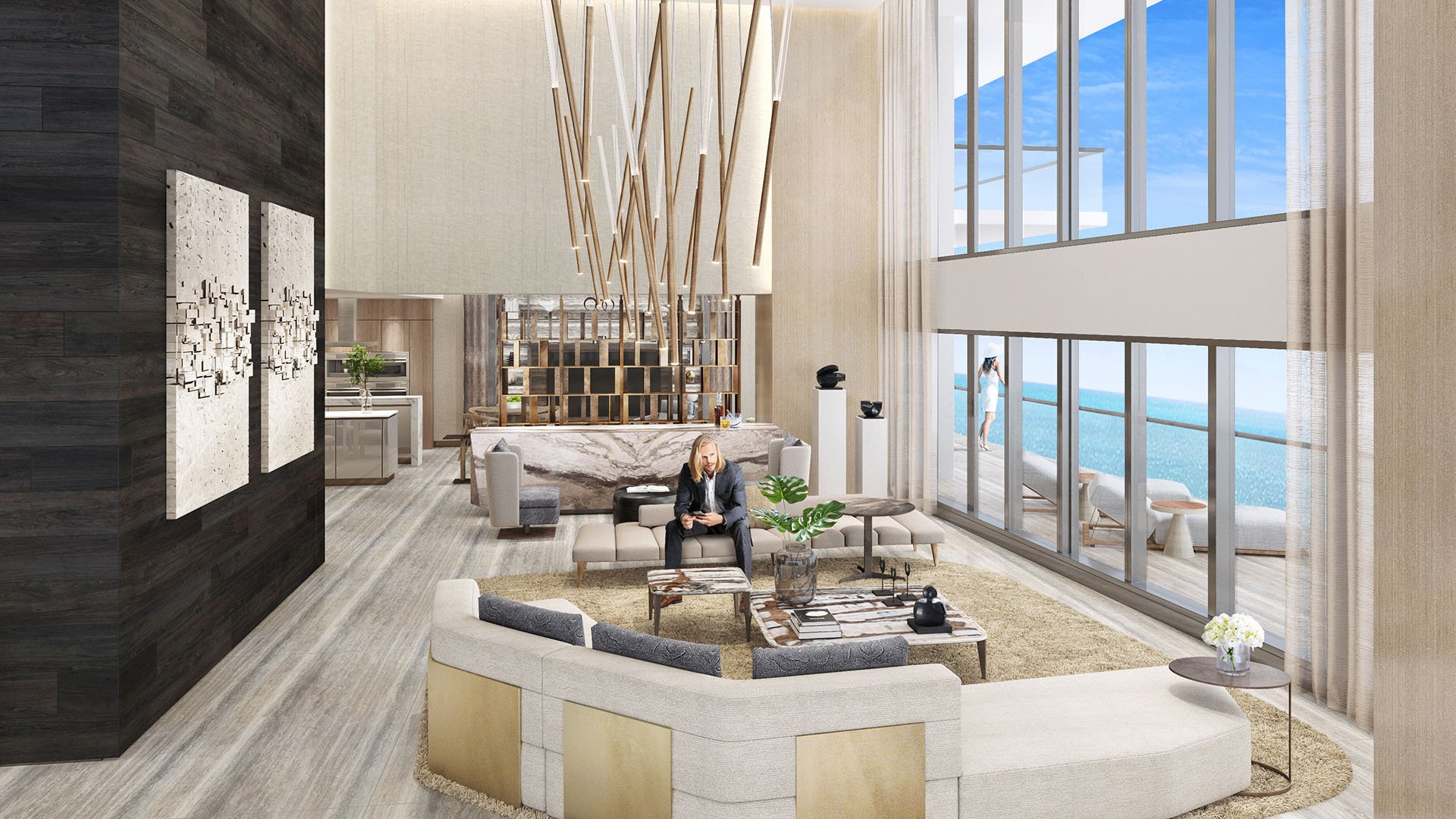
For the ultra-luxury condominium buyer, technology is no longer a secondary amenity concealed behind marble, millwork, and panoramic glass. It is part of the living experience itself. At Turnberry Ocean Club Sunny Isles, the project offers a useful reference point for how sophisticated purchasers should assess a tower’s building technology stack before signing a contract: with the same seriousness they bring to architecture, views, amenities, privacy, and service culture.
The objective is not to be impressed by phrases such as “smart home” or “state-of-the-art.” Those terms may be useful signals, but they are not diligence. A contract-stage buyer should understand what is actually being delivered, which systems are included, which are optional, who maintains them, how they will be upgraded, and what happens when resident expectations move faster than the original hardware.
In Sunny Isles, where oceanfront residences compete on arrival experience, discretion, security, and seamless service, technology should feel almost invisible. The best systems reduce friction. They do not require residents to manage a patchwork of apps, cards, codes, remotes, and service requests simply to live well.
Every luxury building technology review should begin with the unglamorous layer: wiring, low-voltage rooms, risers, network closets, equipment locations, conduit capacity, and the practical ability to repair or expand systems later. A polished interface is only as strong as the infrastructure behind it.
Before contract, buyers should request written technical specifications rather than relying on renderings or amenity language alone. Useful materials may include system specifications, vendor names, integration diagrams, maintenance plans, and a clear allocation of upgrade responsibilities. The goal is to determine whether the building has been designed for long-term operations or simply packaged with a handful of visible convenience features.
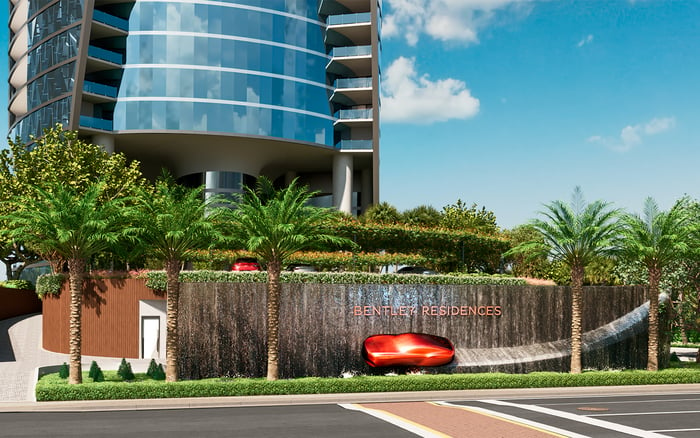
This matters across the Sunny Isles corridor, including branded and design-forward towers such as Bentley Residences Sunny Isles and St. Regis® Residences Sunny Isles, where buyers often compare the full ownership experience rather than a single amenity. Technology should be evaluated as part of that experience, not as an isolated brochure category.
In-residence automation and building-wide intelligence are related, but they are not the same. A residence may include controls for lighting, shades, temperature, audio, or other interior functions, while the tower may use digital systems for elevators, parking access, security, concierge requests, package handling, guest management, and service coordination.
The pre-contract question is not whether a residence can be described as smart. It is whether the private residence, shared amenities, staff operations, and arrival sequence work together gracefully. Does the access system communicate efficiently with valet or parking? Are elevator controls intuitive for residents and guests? Is the mobile concierge function simply a request form, or is it integrated into the building’s service model? Are there separate systems residents must learn independently?
A buyer comparing The Ritz-Carlton Residences® Sunny Isles with other ultra-premium towers should look beyond finishes and views. The real question is whether the building’s digital layer supports the rhythm of daily life: arriving home, receiving guests, accessing amenities, requesting service, and maintaining privacy.
Coastal South Florida makes resilience central to any technology review. Humidity, salt air, hurricanes, storm surge, and flooding can affect electronic systems and low-voltage infrastructure. Outdoor cameras, access-control devices, wireless equipment, sensors, and exposed communication components need protection suited to a marine environment.
Buyers should ask how exterior and semi-exterior systems are shielded from salt exposure, where sensitive equipment is located, and how critical electronics are protected from water intrusion. Backup power, emergency communications, life-safety systems, and flood mitigation should be part of the same conversation. In an oceanfront tower, beauty and exposure arrive together. The technology plan must acknowledge both.
This is especially relevant when evaluating new-construction offerings, where systems may appear contemporary at delivery but still require a thoughtful path for maintenance and replacement. A buyer does not need to become an engineer, but a buyer does need to know who is responsible when technology ages, fails, or must be upgraded.
Security in a luxury tower is not only about cameras and controlled access. It also includes governance of digital credentials, resident data, vendor access, guest permissions, system logs, and operational visibility. Technology can enhance privacy, but it can also raise questions about who can see what, who owns the data, and how information is retained.
Before contract, buyers should ask how access credentials are issued and revoked, how guests and service providers are handled, and whether building systems rely on third-party platforms. The question is not simply whether the building is secure. It is how security is administered, audited, and maintained over time.
Sophisticated purchasers may involve a technical consultant, family office advisor, or smart-building specialist to review the documents. In the context of a high-value condominium acquisition, that is not excessive. It is the same discipline buyers already bring to legal review, tax planning, insurance, and title matters.
A practical pre-contract technology review can be condensed into several core questions. What systems are included in the residence, and what requires separate customization? Which vendors are responsible for access control, security, automation, connectivity, parking, and concierge platforms? Are integration diagrams available? What warranties apply, and who responds when systems malfunction after closing?
Buyers should also ask what the association or building operator controls after turnover, how future upgrades are approved, and whether assessments or operating budgets may be affected by major technology replacements. Hardware, software, cybersecurity standards, and resident expectations all change. A tower that feels advanced at delivery still needs a governance model for the next decade.
Most importantly, the contract should distinguish between what is promised, what is optional, what is subject to substitution, and what can be modified after closing. Technology language should be specific enough for a buyer to understand the delivered product and the long-term ownership implications.
In the highest tier of South Florida real estate, technology should not compete for attention with architecture or service. It should support them. The elevator should know where it is going. The arrival should feel controlled without feeling ceremonial. The residence should respond predictably. The concierge platform should simplify communication. Security should be present without becoming theatrical.
That is why durable, maintainable technology matters more than novelty. A dramatic feature with uncertain service support can become a liability. A quieter system with clear documentation, reliable vendors, and an upgrade path can preserve the quality of ownership for years.
For buyers considering Turnberry Ocean Club Sunny Isles or comparable towers across South Florida, the most valuable mindset is simple: treat the building technology stack as part of the asset. It shapes convenience, privacy, resilience, operating costs, and the daily sense of ease that defines true luxury.
What is a building technology stack in a luxury condo? It is the combined infrastructure and digital systems that support access, security, automation, elevators, parking, concierge functions, connectivity, and operations.
Why review technology before signing a contract? Once under contract, it can be harder to clarify what is included, what is optional, what is maintained by the association, and what may be subject to later change.
Is “smart home” language enough for diligence? No. Buyers should ask for written specifications, vendor details, integration information, maintenance plans, and upgrade responsibilities.
Which systems deserve the closest review? Focus on in-residence automation, building access, elevators, parking, cameras, concierge platforms, emergency communications, and life-safety systems.
Why does coastal exposure matter? Salt air, humidity, storms, flooding, and surge conditions can affect low-voltage infrastructure, exterior devices, and electronic equipment.
Should a buyer hire a technology consultant? For a major ultra-luxury purchase, a smart-building specialist or family office advisor can help interpret technical documents before contract.
What contract language is most important? Clarify what technology is delivered, what is optional, who maintains it, who owns system data, and how substitutions or upgrades are handled.
How should buyers think about future upgrades? Hardware, software, and cybersecurity standards evolve, so the building should have a clear governance model for updates over time.
Can technology affect monthly operating costs? Yes. Maintenance, vendor contracts, replacement cycles, and future upgrades can influence association budgets and long-term ownership costs.
What is the ideal luxury technology experience? It should be reliable, discreet, and intuitive, making access, privacy, service, and daily living feel seamless rather than complicated.
If you'd like a private walkthrough and a curated shortlist, connect with MILLION.
If branded residences are on your mind — as a home or as an allocation — we would be glad to share what we are seeing, privately.
Begin a quiet conversation