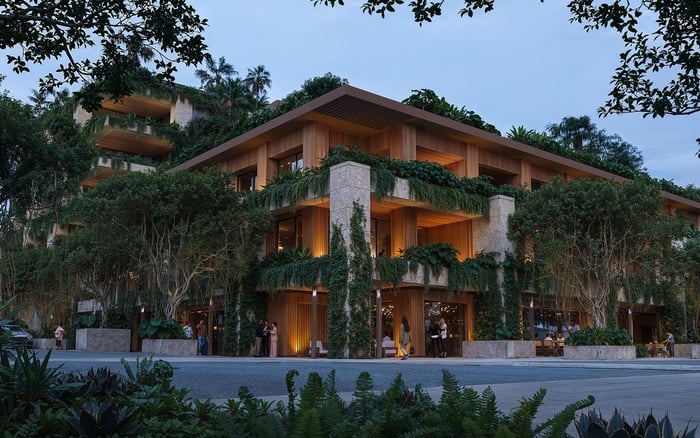
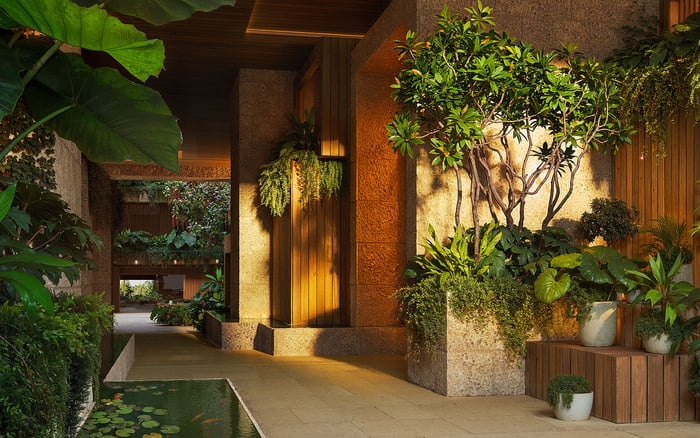
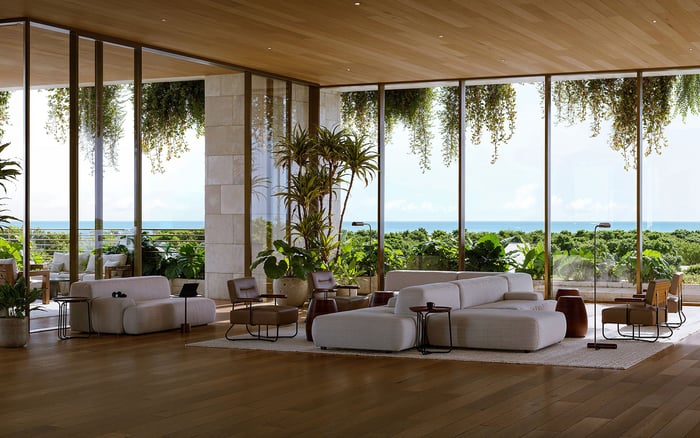
A discreet buyer’s guide to evaluating two prestige residential propositions through amenity density, elevator experience, governance structure, and the practical meaning of owner control.
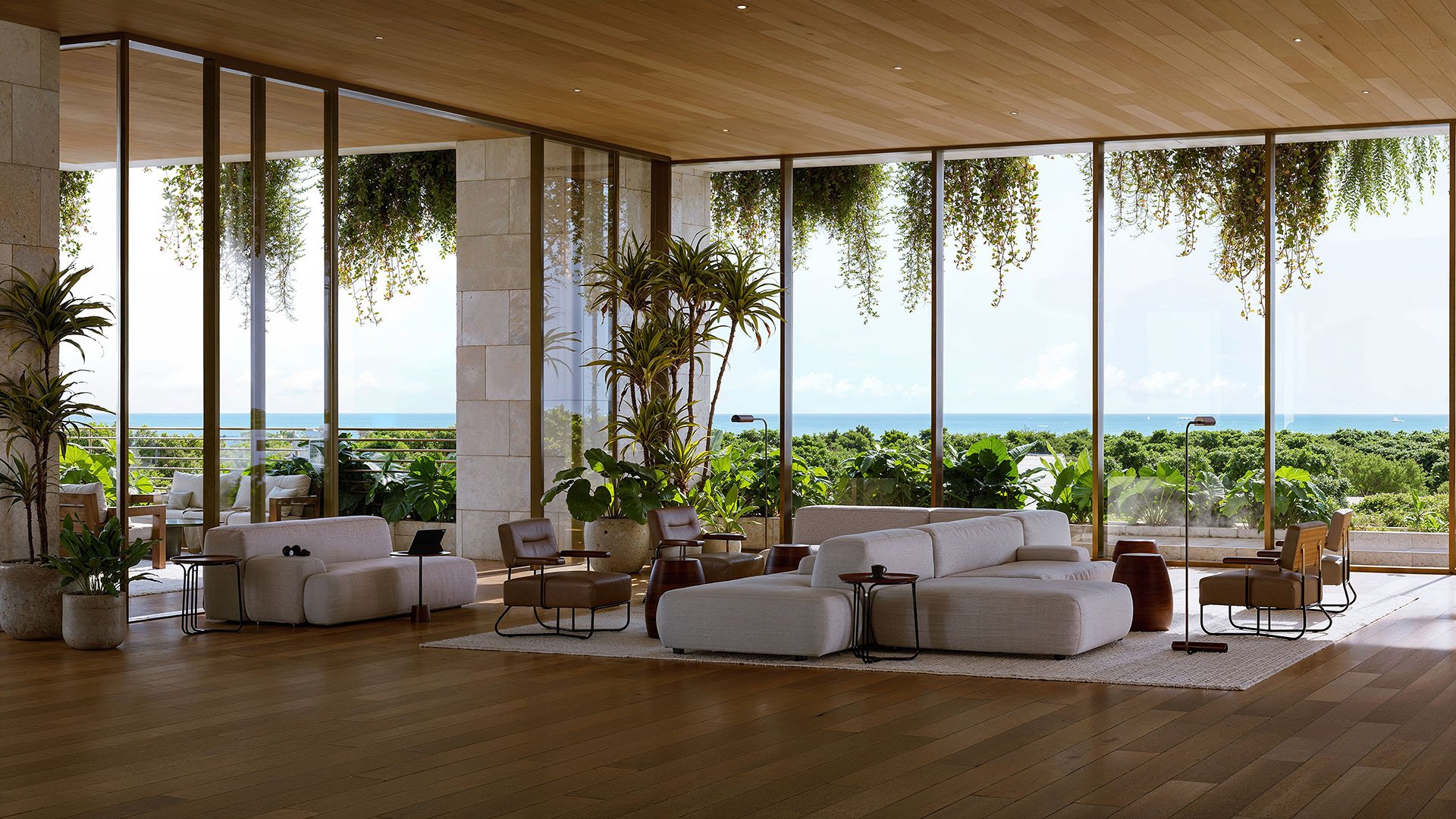
The Residences at Mandarin Oriental Boca Raton and Ziggurat Coconut Grove occupy a similar tier in the South Florida buyer’s imagination: polished, scarce, and designed for purchasers no longer shopping by square footage alone. Yet the sharper comparison is not simply brand aura or architectural presence. It is how each residential proposition may function at 8:15 in the morning, on a holiday weekend, during a private dinner, or when a board is asked to approve something that touches daily life.
For ultra-premium buyers, prestige begins the conversation; it does not conclude it. Amenity density, elevator experience, and owner control are the variables that often separate a compelling sales presentation from a residence that feels graceful over years of ownership. That is the practical lens behind comparing these two South Florida residences: not search labels alone, but prompts for deeper due diligence.
Amenity density is the relationship among the number of residences, the scale of shared spaces, the service model, and the way owners actually live. A building can offer an extensive amenity menu and still feel crowded if too many functions converge in the same time windows. Conversely, a quieter amenity program can feel more luxurious when access is intuitive, staff circulation is discreet, and spaces are scaled for real daily use.
At The Residences at Mandarin Oriental Boca Raton, buyers are likely to focus on the promise of a refined, hospitality-adjacent lifestyle. The essential question is not whether the amenity package sounds impressive. It is whether the daily path from residence to service, wellness, dining, arrival, and guest hosting feels seamless. If owners expect high-touch service, the building must support that expectation with thoughtful separation between private residential life and programmed social energy.
At Ziggurat Coconut Grove, the evaluation may feel more residential and neighborhood-driven. Coconut Grove buyers often prize atmosphere, shade, privacy, walkability, and a sense of retreat. In that context, amenity density should be tested against calm. The most persuasive spaces are not necessarily the most numerous; they are the ones that extend the residence without making owners feel as though they have joined a club they must constantly navigate.
Elevator planning is one of the least glamorous subjects in luxury real estate, which is precisely why experienced buyers take it seriously. Wait times are not merely mechanical. They are shaped by unit count, vertical stacking, service movement, guest flow, pet routines, deliveries, staff access, and the timing of shared amenities.
A buyer comparing these two properties should ask how the elevator experience is intended to feel during ordinary peak periods. Morning departures, school runs, private trainers, housekeeping, drivers, guests, and evening arrivals can all create friction. The best buildings reduce that friction through planning that is felt more than seen.
For some owners, a slightly longer ride in a building with exceptional service may be acceptable if the arrival sequence remains composed. For others, especially those who value privacy and speed, the elevator experience can become decisive. The point is not to reduce a residence to a stopwatch. The point is to understand whether the vertical circulation supports the lifestyle being sold.
Owner control is often less visible than finishes, views, or amenities, but it can matter more over time. It includes governance rights, approval processes, use restrictions, reserve philosophy, budget discipline, leasing parameters, renovation rules, and the relationship between residential owners and any branded or service-oriented operating structure.
A prestigious name can create confidence, but it can also introduce additional layers of standards, oversight, and operating expectations. Some owners welcome that framework because it protects consistency. Others want more flexibility and a clearer sense of resident-led decision-making. Neither preference is inherently superior. The right answer depends on whether a buyer values uniform service standards more than discretionary control.
At this price level, governance deserves the same scrutiny as floor plans. Buyers should understand who makes decisions, how service costs are managed, what can change over time, and how conflicts between lifestyle expectations are resolved. A luxury building is not only a place to live. It is a private economy with rules.
Boca Raton and Coconut Grove both appeal to affluent buyers seeking privacy, but they express it differently. Boca Raton often reads as polished, composed, and resort-minded. Coconut Grove tends to feel layered, lush, and quietly bohemian in its luxury. These differences shape what buyers expect from amenity spaces, staff interaction, arrival sequences, and the rhythm of ownership.
A buyer drawn to The Residences at Mandarin Oriental Boca Raton may be responding to a more formalized version of ease: service, ceremony, and controlled polish. A buyer drawn to Ziggurat Coconut Grove may be seeking prestige that feels more organic, design-conscious, and embedded in a historic residential setting. The contrast is not about better or lesser. It is about which version of privacy feels natural.
The strongest comparison begins with the buyer’s own calendar. How often will the residence be used? Will it function as a primary home, seasonal base, or long-horizon hold? How many guests will arrive regularly? Is staff access part of the lifestyle? Are pets, trainers, private chefs, or frequent deliveries part of the daily routine? Each answer changes the importance of amenity density and elevator performance.
Next, buyers should examine where the building places social life. If the most desirable amenities are likely to be used at the same time by many residents, density matters. If wellness, dining, lounging, and outdoor space are distributed with privacy in mind, the experience can feel more expansive than the raw amenity count suggests.
Finally, governance deserves direct attention before emotional commitment. A buyer should understand not only what is promised at delivery, but how the residence will be maintained, modified, and managed over time. In luxury real estate, enduring value often comes from restraint: the discipline to keep common areas elegant, service consistent, rules clear, and ownership culture aligned.
In the upper tier of South Florida real estate, resale strength is not built on spectacle alone. It is supported by everyday usability. Future buyers will respond to recognizable prestige, but they will also ask whether the building lives well. A residence that feels efficient, private, well governed, and properly staffed has broader appeal than one that relies only on a beautiful first impression.
The Residences at Mandarin Oriental Boca Raton and Ziggurat Coconut Grove can both belong in a serious buyer’s consideration set, but they should not be evaluated as interchangeable trophies. They are better understood as different answers to the same question: what kind of luxury will still feel intelligent after the novelty fades?
Are these two residences direct competitors? They may compete for similar luxury buyers, but the lifestyle propositions can differ meaningfully by setting, service expectation, and ownership priorities.
Does prestige guarantee low elevator wait times? No. Elevator experience depends on planning, resident behavior, service circulation, and peak-use patterns, not prestige alone.
What is amenity density? Amenity density is the balance among shared spaces, number of residences, service demands, and how often owners use those spaces.
Can a smaller amenity program feel more luxurious? Yes. If spaces are well scaled, calm, and easy to access, restraint can feel more private than abundance.
Why does owner control matter in a branded residence? Owner control affects governance, costs, rules, flexibility, and the way service standards are maintained over time.
Is Boca Raton the more formal option? It may appeal to buyers who prefer a polished, composed, and service-oriented residential atmosphere.
Is Coconut Grove better for privacy? Coconut Grove can appeal to buyers who value a lush, neighborhood-based sense of discretion and residential calm.
Should buyers prioritize amenities or governance? Both matter, but governance often determines whether amenities remain elegant, funded, and well managed over time.
What should seasonal owners examine most closely? Seasonal owners should focus on access, service consistency, guest policies, security, maintenance, and ease of arrival.
Which project is the better investment? The better fit depends on the buyer’s intended use, tolerance for structure, privacy expectations, and long-term liquidity goals.
When you're ready to tour or underwrite the options, connect with MILLION.
If branded residences are on your mind — as a home or as an allocation — we would be glad to share what we are seeing, privately.
Begin a quiet conversation