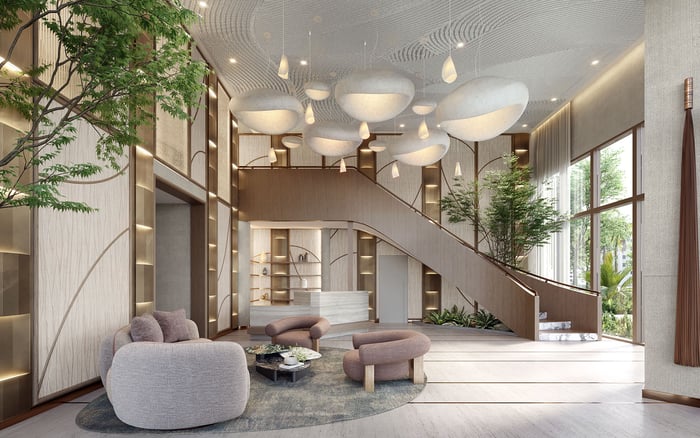
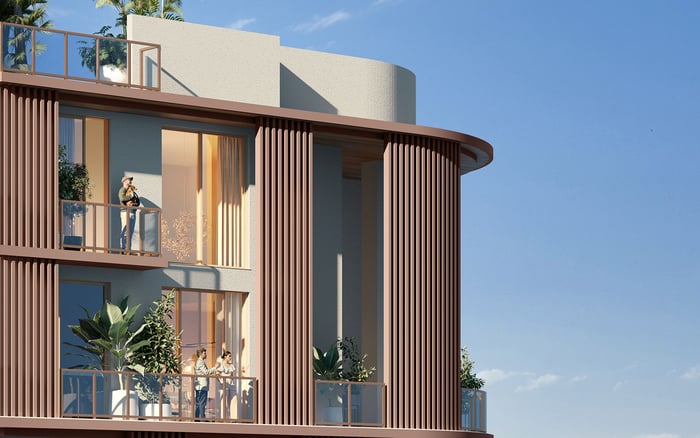
A buyer-focused editorial comparison of Coconut Grove calm and Brickell intensity, framed around quiet luxury, concierge culture, car storage, EV charging, and private-driver logistics.
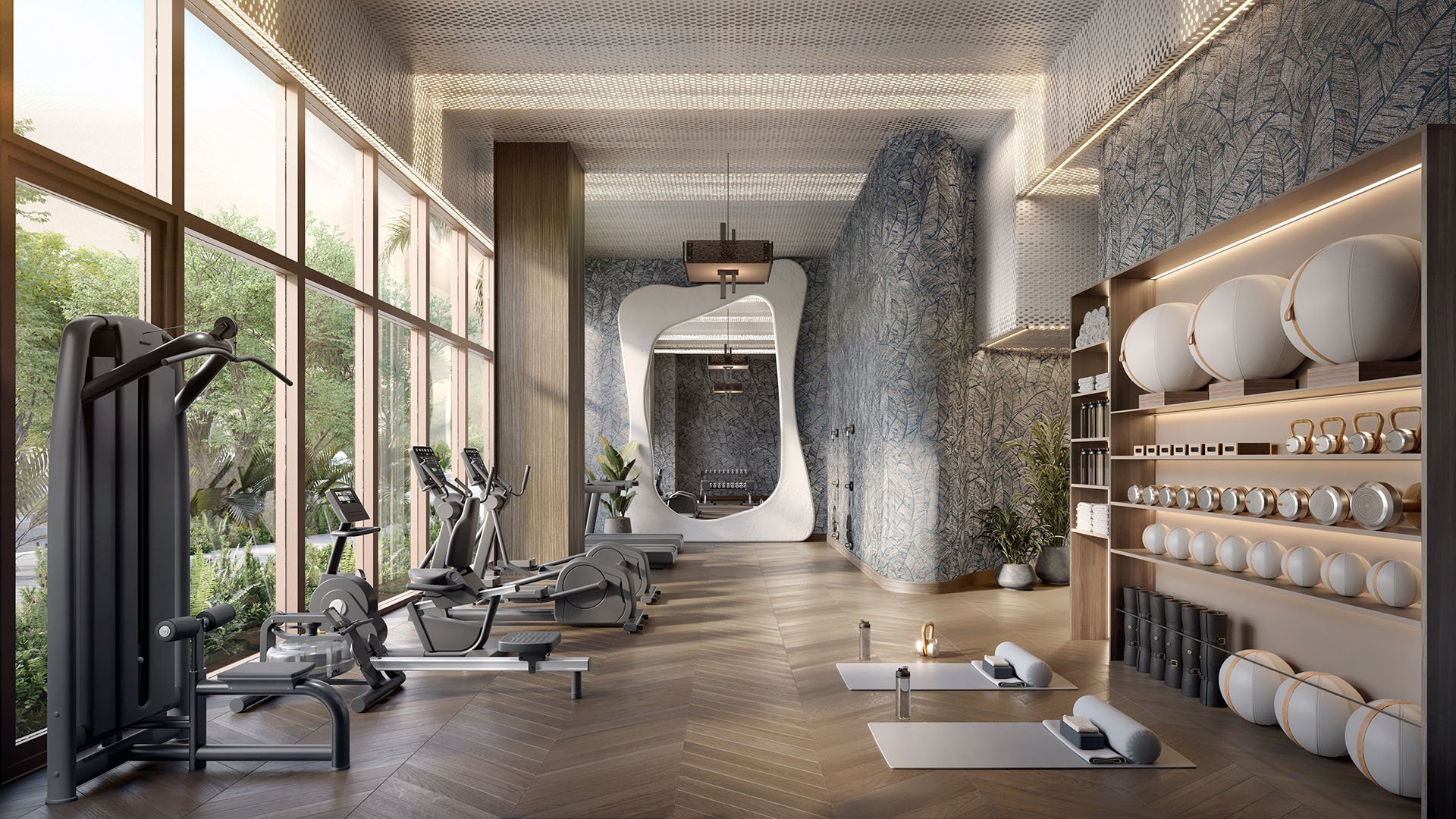
For a sophisticated South Florida buyer, the comparison between The Lincoln Coconut Grove and House of Wellness Brickell is less about neighborhood preference than the choreography of daily life. The right residence must protect time, reduce exposure, and make the movement of cars, drivers, guests, packages, wellness routines, and household staff feel nearly invisible.
That is where quiet luxury becomes operational rather than decorative. It is not simply a softer palette or a boutique lobby. It is the sense that a building understands how its residents actually live. A family with multiple vehicles, an electric car, a private driver, visiting executives, and seasonal guests needs a residence that handles arrival and departure with the same care as architecture and views.
In Coconut Grove, The Lincoln belongs to a neighborhood conversation defined by privacy, shade, and residential texture. In Brickell, a wellness-forward address such as House of Wellness Brickell should be evaluated through a different lens: density, immediacy, vertical energy, and the degree to which service can soften an urban pace.
Quiet luxury is often mistaken for retreat. In practice, it is control. Buyers at this level want to decide when they are seen, how they arrive, where a driver waits, whether a guest can be received without disrupting the household, and how much of the building’s social life they are expected to join.
Coconut Grove, in this context, signals a preference for neighborhood intimacy over a constant urban pulse. For these buyers, a building’s value is often measured by how gracefully it supports a more discreet way of living.
Brickell asks a different question. It offers proximity, velocity, and a cosmopolitan business rhythm. The challenge is not energy, but filtration. A Brickell building that succeeds for ultra-prime residents must create clear layers between the city and the private home: disciplined valet service, elevator privacy, responsive staff, thoughtful security, and an arrival experience that does not feel shared with the entire neighborhood.
For many luxury buyers, cars are not accessories. They are collections, tools, and extensions of schedule. A primary SUV, a performance car, a household car, and a vehicle used by staff or a driver may all need a place in the plan. That makes car storage one of the first questions in any serious due diligence process.
The correct inquiry is not only how many spaces are included. Buyers should understand the nature of the parking environment, whether spaces are assigned or otherwise controlled, how guest parking is handled, how valet interacts with owner vehicles, and whether oversized vehicles or specialty cars introduce practical constraints.
A Grove buyer may be especially sensitive to the feel of arrival. The garage, drive court, and lobby sequence should preserve the calm promised by the residence itself. A Brickell buyer may be more focused on throughput. At peak hours, can the building move residents, drivers, guests, and service providers without creating a visible bottleneck?
EV charging is no longer a secondary amenity. For high-net-worth buyers, it is infrastructure. A residence may have elegant finishes and strong wellness programming, but if charging is difficult, slow, limited, or subject to unclear approvals, the daily experience can feel compromised.
Buyers should ask whether charging is available, how access is allocated, what approvals are required, and whether the building is positioned to adapt as electric vehicles become more common. The strongest answer is not always the flashiest one. It is the one that gives a resident confidence that tomorrow’s vehicle needs will not outgrow today’s building systems.
This matters equally in both neighborhoods. In Coconut Grove, EV charging should support a private, low-friction routine. In Brickell, it should withstand higher circulation demands and a more complex valet culture. New-construction buyers should pay particular attention to how future capacity, power management, and resident protocols are described before committing.
The private driver is one of the clearest tests of a building’s operational maturity. A residence may claim refined service, but the questions are straightforward: where does the driver wait, how is the car called, how are arrivals coordinated, and what happens when multiple residents need the same level of attention at once?
For buyers who maintain a driver, the ideal building does not improvise. It has a culture of anticipation. Staff understand timing, discretion, vehicle positioning, luggage, guest names, and the difference between a casual pickup and a formal departure. The best buildings make movement feel prearranged even when the schedule changes.
In a boutique setting, the advantage can be intimacy. Staff may know residents more closely, patterns may be easier to read, and the building may feel less anonymous. In a larger urban building, the advantage may be scale, if staffing and systems are strong enough to match the resident profile. The deciding factor is not size alone. It is whether the building’s service culture has depth.
Finishes can be upgraded. Furniture can be replaced. Cars can be moved. Building culture is much harder to change. It is expressed in how the lobby feels at 8 a.m., how staff communicate, how visitors are screened, how valet prioritizes residents, and whether privacy is treated as a courtesy or a standard.
The Lincoln Coconut Grove should be considered within a Grove framework, where quiet residential character is part of the appeal. House of Wellness Brickell, by contrast, belongs in the Brickell decision set, where buyers must determine whether wellness, service, and urban convenience combine into a livable daily rhythm.
Investment quality at this level is not only about future resale. It is about whether the building will remain desirable to the next buyer with the same logistical standards. Residences that solve unglamorous problems elegantly often age better in the minds of discerning purchasers.
A serious buyer should tour each option at more than one time of day. Morning departures, evening returns, weekend guest arrivals, and weekday service activity all reveal different truths. Pay attention to the first five minutes: the curb, the valet exchange, the lobby atmosphere, the elevator path, and the staff’s confidence.
Then ask practical questions without apology. How are multiple vehicles handled? What is the EV charging protocol? Can a driver wait without disrupting circulation? How are guest arrivals staged? Is there a clear plan for privacy during peak periods? A luxury residence should welcome these questions because they are the questions of a real owner, not a casual visitor.
The better choice will be the one that makes life feel calmer after the purchase, not merely more impressive before it.
Is The Lincoln Coconut Grove best understood as a Coconut Grove option? Yes. It sits within the Coconut Grove buyer conversation, where privacy, neighborhood feel, and quiet daily rhythm often matter deeply.
How should buyers evaluate House of Wellness Brickell? Treat it as a Brickell lifestyle decision, with close attention to how wellness, service, arrival flow, and urban density work together in practice.
What is the most important car storage question? Ask how vehicles are assigned, accessed, protected, and moved during peak periods, not simply how many spaces are included.
Should EV charging be discussed before contract review? Yes. EV access, approvals, capacity, and long-term adaptability should be understood before a buyer becomes emotionally committed.
Why do private-driver logistics matter so much? They reveal whether a building can manage time-sensitive movement with discretion, consistency, and minimal resident effort.
Is quiet luxury more common in Coconut Grove than Brickell? The Grove often feels more residential, while Brickell requires stronger service layers to create privacy within a faster urban setting.
Can a larger building still feel discreet? Yes, if staffing, circulation, elevator planning, valet discipline, and resident protocols are strong enough to preserve privacy.
What should buyers observe during a tour? Watch the curb, valet timing, lobby tone, staff awareness, elevator path, and how the building handles guests and service providers.
Does boutique scale guarantee better service? No. Boutique scale can support intimacy, but service quality depends on training, culture, staffing, and operational consistency.
What makes a residence durable for investment purposes? Durable value often comes from buildings that solve daily logistics elegantly while maintaining privacy, service quality, and neighborhood relevance.
When you're ready to tour or underwrite the options, connect with MILLION.
If branded residences are on your mind — as a home or as an allocation — we would be glad to share what we are seeing, privately.
Begin a quiet conversation