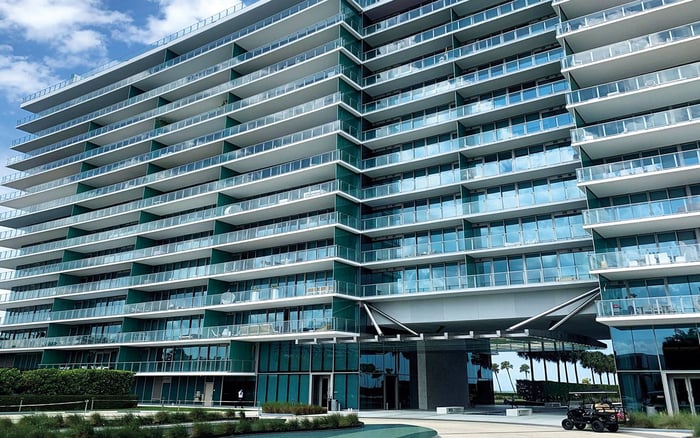
South Florida’s luxury condo market has matured into a true family category, where kid programming, privacy-minded floor plans, and neighborhood walkability carry as much weight as ocean views. This guide distills what matters most: amenity ecosystems that make daily life effortless, layouts that manage noise and independence, and locations that feel like a community, not just a skyline.
For years, family living in a high-rise was framed as a compromise: trade a backyard for views, then manage kid energy somewhere else. In South Florida’s ultra-premium segment, that tradeoff has shifted. The most compelling residences now design for the full household rhythm, school mornings, homework hours, rainy-day play, visiting grandparents, and the quiet that makes it all feel effortless. At the top end, “family-friendly” isn’t a single playroom. It’s an ecosystem: kid-dedicated spaces, outdoor water and activity zones, practical security, and layouts that preserve privacy. Just as important is the neighborhood-as-amenity effect. In Miami especially, walkability to parks, daily retail, and child activities can matter as much as what’s behind the lobby doors.
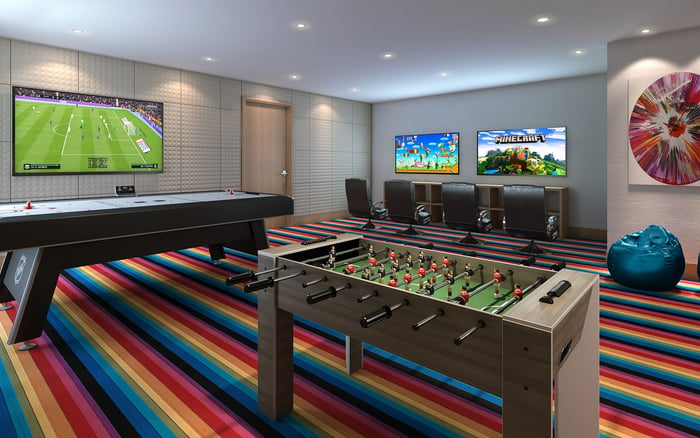
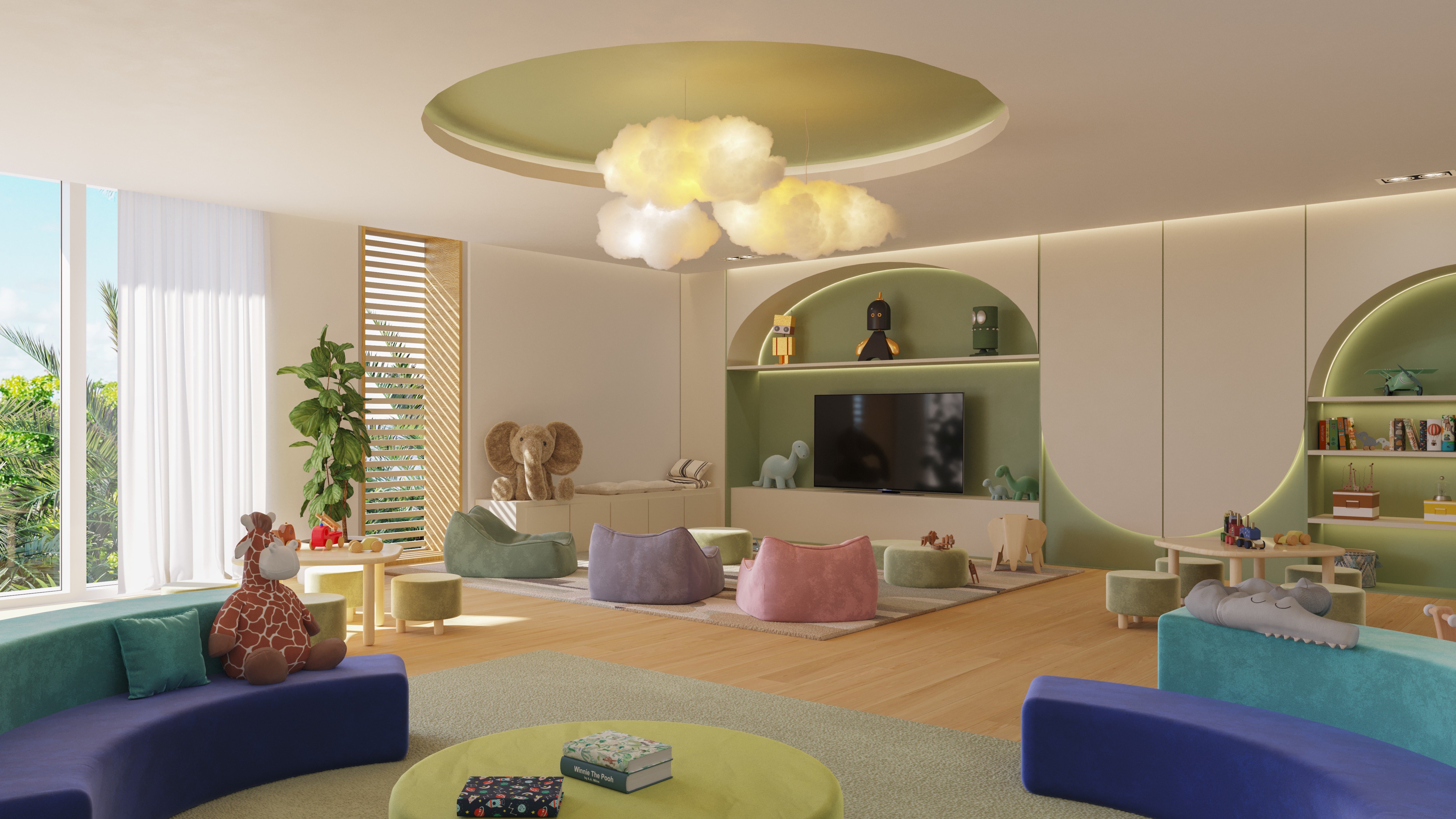
The strongest buildings organize children’s life into age-appropriate zones, then execute those spaces with the same design discipline typically reserved for lounges and spa decks. A clear benchmark is programming that acknowledges different stages. Some branded residences publicly highlight kid-focused spaces that include a children’s entertainment room plus a separate teen video game lounge. That separation matters: it reduces friction between toddlers and teens, helps contain noise, and makes each age group feel considered. Elsewhere, the idea of a Kids Club has evolved into a true service amenity, not a spare room with soft flooring. Buildings have marketed kids clubs with indoor and outdoor play facilities, arts-and-crafts classes, and organized daily activities. For working parents or households that coordinate caregivers, this can become a stabilizing piece of the weekly schedule. Outdoor water play is another tell. A dedicated kids’ splash area or pad, close enough to feel connected, yet planned so spray, sound, and circulation don’t overtake the main deck, is one of the most family-forward features a tower can offer. Done well, it creates a reliable ritual space: post-school decompression, weekend play, and visiting cousins all land naturally.
Luxury buyers are often shown dramatic, open living rooms as the ultimate expression of modern life. Families know the counterpoint: open plans can amplify sound and blur boundaries between play, sleep, and work. Family-ready planning typically prioritizes separation between sleeping zones and living or entertaining zones. That can mean a bedroom wing that closes off, or a den that flexes into a study, nursery, or supervised playroom without taking over the primary social space. Noise isn’t a minor irritation. It’s the difference between a calm home and a constantly negotiated one. In multi-family construction, common baseline targets for sound performance are frequently cited around STC 50 and IIC 50 between units. Families who prioritize sleep and homework often look for better-than-minimum performance or ask direct questions about assemblies. Practical upgrades can include decoupled wall and ceiling systems, added mass layers, and insulation that reduces both airborne noise and impact sounds. If your routine includes early bedtimes, instrument practice, or remote work, treat this as a non-negotiable due diligence category.
In warm climates, a terrace isn’t decorative, it’s usable square footage. The most satisfying family condos treat outdoor space as a true extension of the great room, with a seamless transition that supports everyday living: breakfast outside, a contained place for supervised play, and a pressure valve for high-energy moments. Indoor-outdoor design is repeatedly positioned as a quality-of-life requirement because it expands what “home” can do without requiring a family to leave the building. When evaluating residences, look beyond the view. Ask whether the terrace is deep enough to furnish, shaded enough to use, and connected enough to feel integrated with the plan. A beautiful balcony that can’t host real life is a missed opportunity.
Families don’t just want safety, they want freedom within safety. High-rise living can support older children’s semi-independence when access is managed thoughtfully: resident-only amenity levels, controlled entry points, and discreet staff presence. Elevator access control is a common strategy, limiting who can reach certain floors or areas. That can reduce unwanted access and help parents feel comfortable as kids become more independent. The luxury layer is frictionless: secure without feeling intrusive.
In premium condos, smart-home systems are often positioned as lifestyle enhancements. For families, they function as operational advantages. Remote control of lighting, HVAC, and security can keep a home running on schedule, while access monitoring supports modern household realities: caregivers, deliveries, visiting relatives, and service providers. The result is a residence that behaves more like a managed environment than a static space.
In South Florida, the right address is as much about daily cadence as it is about prestige. Three neighborhoods are repeatedly associated with a family-forward profile. Coconut Grove is often described as village-like, with walkable pockets and a lifestyle anchored by parks and waterfront recreation. For buyers seeking a calmer daily loop without losing the city’s cultural gravity, the Grove can be a compelling balance. Within that context, residences like Four Seasons Residences Coconut Grove and Park Grove Coconut Grove frequently come up for households that want refined service in a neighborhood that still feels human-scaled. Coral Gables is commonly framed as family-friendly for its structured layout and proximity to the routines that shape everyday life: schools, shopping, and dining that fits family schedules. If your household values predictability, quieter streets, and a classic South Florida aesthetic, new residential options like Ponce Park Coral Gables can align with that preference. Key Biscayne is often positioned as a family-first alternative with an island feel and a strong community orientation compared with denser urban cores. For households that want a clear separation between “home life” and the city, Key Biscayne’s atmosphere can feel like a deliberate exhale. In that setting, Oceana Key Biscayne is the type of residential anchor buyers may explore when they want luxury living paired with an unmistakably residential tone.
The most reliable way to evaluate a building is to map it against your family’s actual week. First, test the amenity stack for real-world utility. A kids’ room is helpful; a kid ecosystem is transformative. Look for multiple zones, outdoor options like splash areas, and programming that extends beyond “space” into “experience.” Second, interrogate the plan, not just the finishes. Favor layouts that allow doors to close, noise to stay contained, and adults to host without displacing bedtime. Third, treat sound as a feature. Ask how the building approaches insulation between units and floors, and whether there are design strategies that reduce impact noise. Finally, let the neighborhood do some work. Walkability to parks and daily needs, plus child activities nearby, can reduce friction that even the best amenities can’t fully solve.
What makes a luxury condo genuinely family-friendly? Look for kid-specific spaces and programming, privacy-minded layouts, and a neighborhood that supports daily routines.
Are kids’ clubs in condos just marketing, or do they matter? When they include organized activities and indoor-outdoor options, they can meaningfully improve day-to-day family logistics.
Is a separate teen lounge really useful? Yes. Separating younger-kid play from teen hangout space can reduce conflict and keep noise more contained.
Why do layouts matter more for families than for couples? Families benefit from separation between living areas and bedrooms to protect sleep, homework, and adult downtime.
How can I evaluate sound privacy in a high-rise? Ask about wall and floor assemblies, and whether performance exceeds common minimum targets for multi-family separation.
What building features help older kids be more independent safely? Controlled entry and elevator access control can limit unwanted access while allowing residents to move comfortably.
Why is indoor-outdoor living considered a family requirement in South Florida? Usable terraces expand daily living space and give kids a supervised outlet without leaving home.
Is smart-home tech worth prioritizing for a family? It can simplify routines by letting you manage lighting, HVAC, and access for caregivers or guests remotely.
Do neighborhoods matter as much as building amenities? Often, yes. Walkability to parks and everyday needs can be as valuable as any on-site amenity.
Which Miami areas are commonly associated with family living? Coconut Grove, Coral Gables, and Key Biscayne are frequently favored for their community feel and routines. For a tailored short list of family-ready residences across South Florida, explore MILLION Luxury.
For tailored guidance, speak with MILLION Luxury.
If branded residences are on your mind — as a home or as an allocation — we would be glad to share what we are seeing, privately.
Begin a quiet conversation