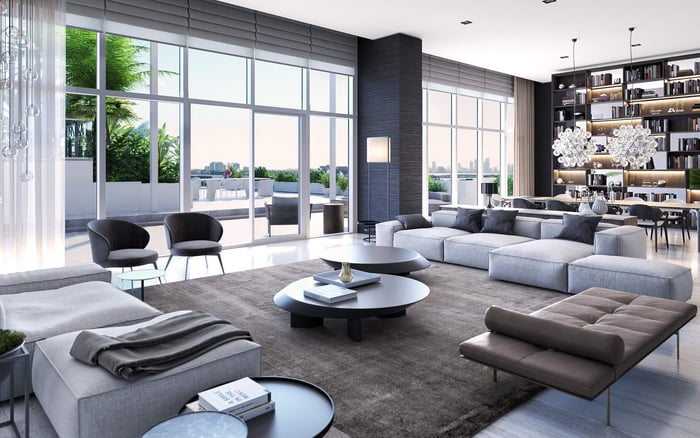
A refined buyer’s guide to evaluating South Florida condo residences for elegant, work-ready living without sacrificing privacy, entertaining, or daily ease.
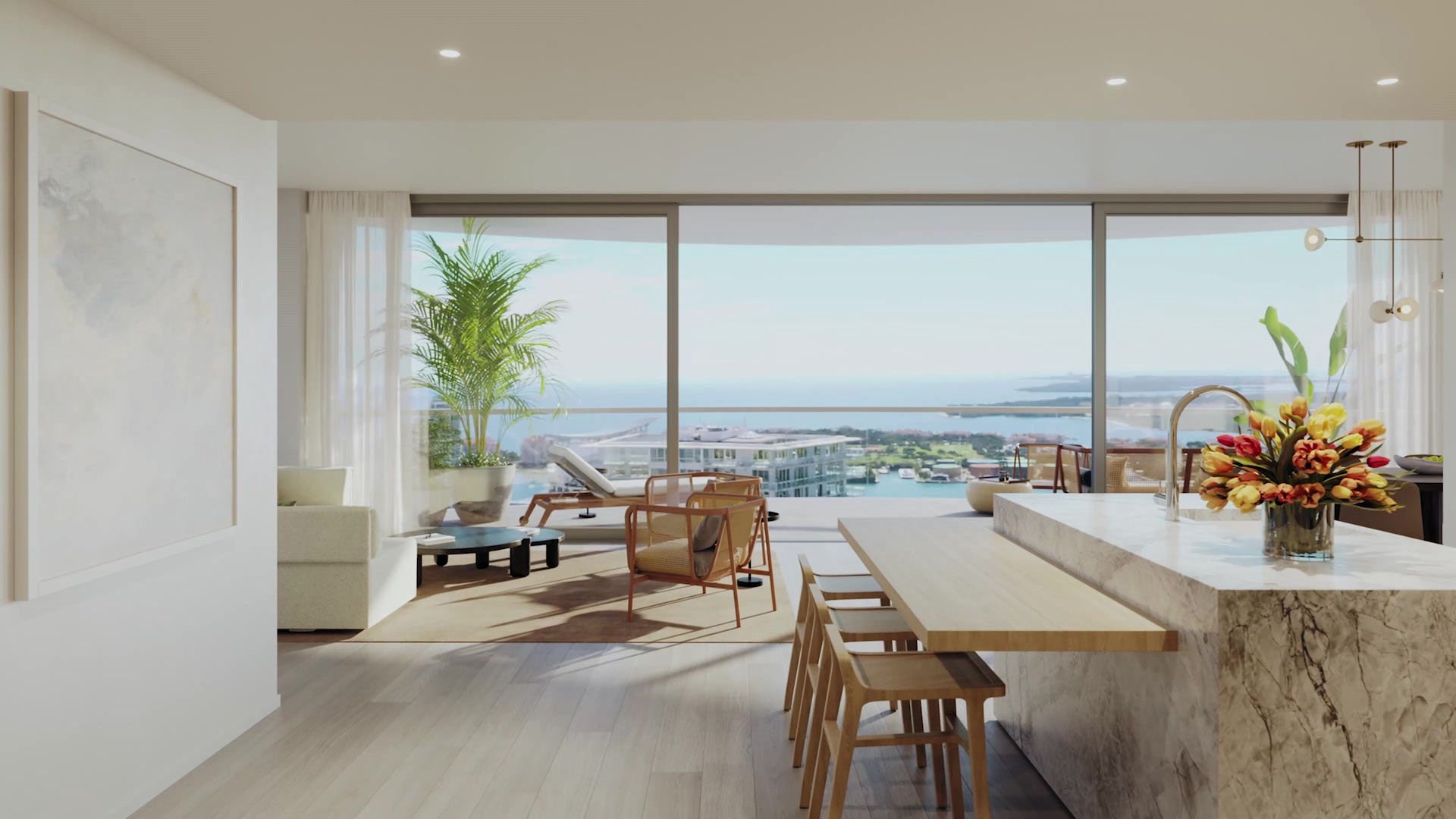
In South Florida’s most considered condominiums, the home office is no longer about finding space for a desk. It is about preserving the rhythm of the entire residence. It must support a morning call, stay quiet when the living room is active, and recede gracefully when guests arrive for dinner. For luxury buyers, the office has become a design and lifestyle test, not an afterthought.
The strongest layouts do not treat work as a compromise. They create a place for concentration without taking the best light, obstructing a view, or turning the main living area into a permanent workstation. In markets where many buyers split time between South Florida, New York, Latin America, Europe, and the Caribbean, the office is often used at unconventional hours. That raises the standard for comfort, acoustics, privacy, and lighting.
A residence at 2200 Brickell, for example, may be evaluated very differently by a buyer who hosts frequently than by one who needs two closed-door work zones. The question is not simply whether a floor plan includes an office. It is whether the residence allows work, family, service, and guests to move without friction.
South Florida light is one of the region’s defining luxuries, but in a home office it needs discipline. The best office light is layered, flattering, and controllable. Direct glare on a screen can make a spectacular window feel impractical, while an overly enclosed den can feel secondary in a residence that otherwise celebrates openness.
Buyers should study how daylight enters the potential workspace at different times of day. A room with beautiful morning brightness may be ideal for focused work, while a west-facing exposure may require more careful shading. The ideal solution is rarely one dramatic gesture. It is a balance of window placement, shade pockets, wall surfaces, task lighting, and enough depth to position a desk without forcing the user to face glare or sit with a bright opening directly behind them on video calls.
This is where the distinction between view and usability matters. A water view may elevate a workday, but only if the office can still function on a cloudless afternoon. A refined office lets the resident enjoy the view between calls, then control light instantly when privacy or screen clarity matters.
Privacy is not only about a door. It begins with the path guests, family, staff, and deliveries take through the home. A dedicated office near the entry can be efficient for receiving an advisor or business colleague, but it may feel exposed if the powder room, kitchen, or main entertaining space draws constant traffic past the work area. An office tucked near bedrooms may feel quieter, but it can also bring professional activity too close to private family zones.
In a condo residence, the most elegant solution often comes from transitional space. A short gallery, vestibule, or subtle bend in the plan can protect sightlines without making the office feel isolated. Pocket doors, well-placed millwork, and concealed storage also help the room shift between work mode and residential calm.
For buyers considering Miami Beach living, a residence such as The Perigon Miami Beach may prompt a careful discussion about how formal and informal areas relate. The same is true in Sunny Isles, where St. Regis® Residences Sunny Isles can be part of a broader comparison for buyers who want resort-style living, discretion, and serious work capability in one address.
Acoustic comfort is one of the least glamorous items on a showing checklist, yet it is often one of the most consequential after move-in. A beautiful desk wall means little if calls echo through stone floors, glass walls, and high ceilings. Open-plan residences can be visually magnificent, but they require a more sophisticated approach to sound.
Buyers should listen as carefully as they look. Stand in the proposed office while others speak in the kitchen. Close the door and note whether voices soften or remain distinct. Consider the proximity of elevators, service areas, media rooms, children’s rooms, and outdoor spaces. Even when a building feels serene, the internal sound path of the residence matters.
Soft surfaces can help, but luxury buyers should think beyond rugs and drapery. Upholstered panels, fabric-wrapped millwork, bookshelves, acoustic backing, and solid-core doors can make the difference between a room that looks like an office and one that performs like one. In the best residences, acoustic decisions are integrated into the design language rather than added visibly later.
South Florida living is social. A residence must often handle visiting family, cocktails at sunset, a private dinner, or a long weekend guest without making the office feel like a locked utility closet. Guest flow is the art of allowing hospitality to expand while preserving a work zone that can remain private.
A strong plan lets guests move from entry to living room, terrace, dining area, and powder room without passing confidential papers, monitors, or personal devices. If the office doubles as a guest room, the conversion should feel intentional. A sofa bed in a glassy den may be acceptable for occasional use, but a truly successful dual-purpose room has storage, lighting, privacy, and a way to close down the workday completely.
This is especially relevant for buyers in Coconut Grove, where a more residential rhythm often informs expectations. In a comparison that includes The Well Coconut Grove, the office conversation may naturally include wellness, quiet, family routine, and the ability to host without rearranging everyday life.
A serious home office review should be physical, not theoretical. Bring a laptop or tablet. Sit where the desk would actually be placed. Check reflections, outlet locations, background views for video calls, door swing, and whether the chair has enough clearance. If two people work from home, test both locations at once rather than assuming a secondary niche will be comfortable.
Also ask how the office will age with your needs. A room used today for investing, calls, and correspondence may later become a study, studio, library, or quiet media room. The best luxury condo offices are adaptable without feeling temporary. They have proportion, light, storage potential, and enough separation to support multiple uses over time.
Buyers sometimes focus on whether a room is labeled as a den, office, bedroom, or media room. Labels are less important than performance. The practical questions are simpler: Can it close? Can it breathe? Can it stay quiet? Can it look composed when the rest of the residence is alive with guests?
The next generation of South Florida condo luxury is not only about spectacle. It is about a residence that supports private ambition as elegantly as public entertaining. Light should be beautiful but controllable. Privacy should be architectural, not improvised. Acoustics should be designed into the atmosphere. Guest flow should allow the home to receive people warmly while keeping work discreetly protected.
For the buyer who values both performance and grace, the home office is no longer a secondary room. It is a measure of how intelligently a residence lives.
What makes a condo home office feel truly luxurious? It should combine controlled natural light, acoustic comfort, privacy, storage, and a setting that feels integrated with the residence rather than improvised.
Is a den always better than an open workstation? Not always. A den offers privacy, but an open workstation can work if it has good light control, strong circulation, and a way to remain visually tidy.
How important is the office door? Very important. A door helps with sound, privacy, and psychological separation between work and the rest of the home.
Should the office be near the primary suite? It depends on lifestyle. Proximity can be convenient, but it may blur private and professional zones if calls or visitors are frequent.
Can a guest room and office successfully share one space? Yes, if storage, lighting, privacy, and furniture placement allow the room to convert cleanly between work and overnight use.
What should buyers test during a showing? Sit in the likely desk position, check glare, listen for sound transfer, review outlets, and study how guests would move through the residence.
Does a water view make a better office? It can, but only if glare is controlled and the desk can be positioned comfortably for both work and video calls.
Are flow-through units good for home offices? They can be appealing when the plan allows light and air to feel expansive while still giving the office a protected, quiet location.
What role does the terrace play in work-from-home living? A terrace can offer a restorative pause between calls, but the indoor office still needs privacy, shade control, and acoustic comfort.
Which South Florida areas work well for office-focused condo buyers? Brickell, Miami Beach, Sunny Isles, Coconut Grove, and West Palm Beach can all work, depending on the buyer’s daily rhythm and privacy needs.
For a discreet conversation and a curated building-by-building shortlist, connect with MILLION.
If branded residences are on your mind — as a home or as an allocation — we would be glad to share what we are seeing, privately.
Begin a quiet conversation