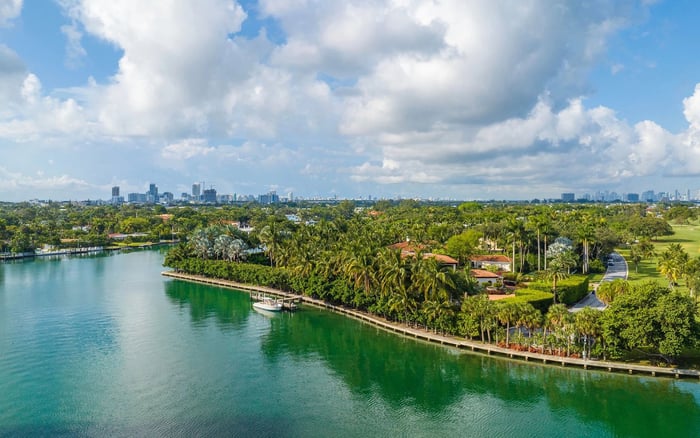
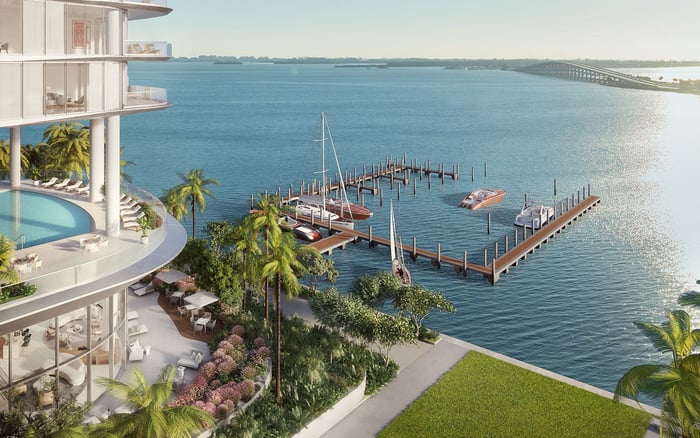
A discreet, practical guide for luxury buyers evaluating year-round boating access, waterfront property design, marina logistics, insurance, maintenance, and resale considerations across South Florida.
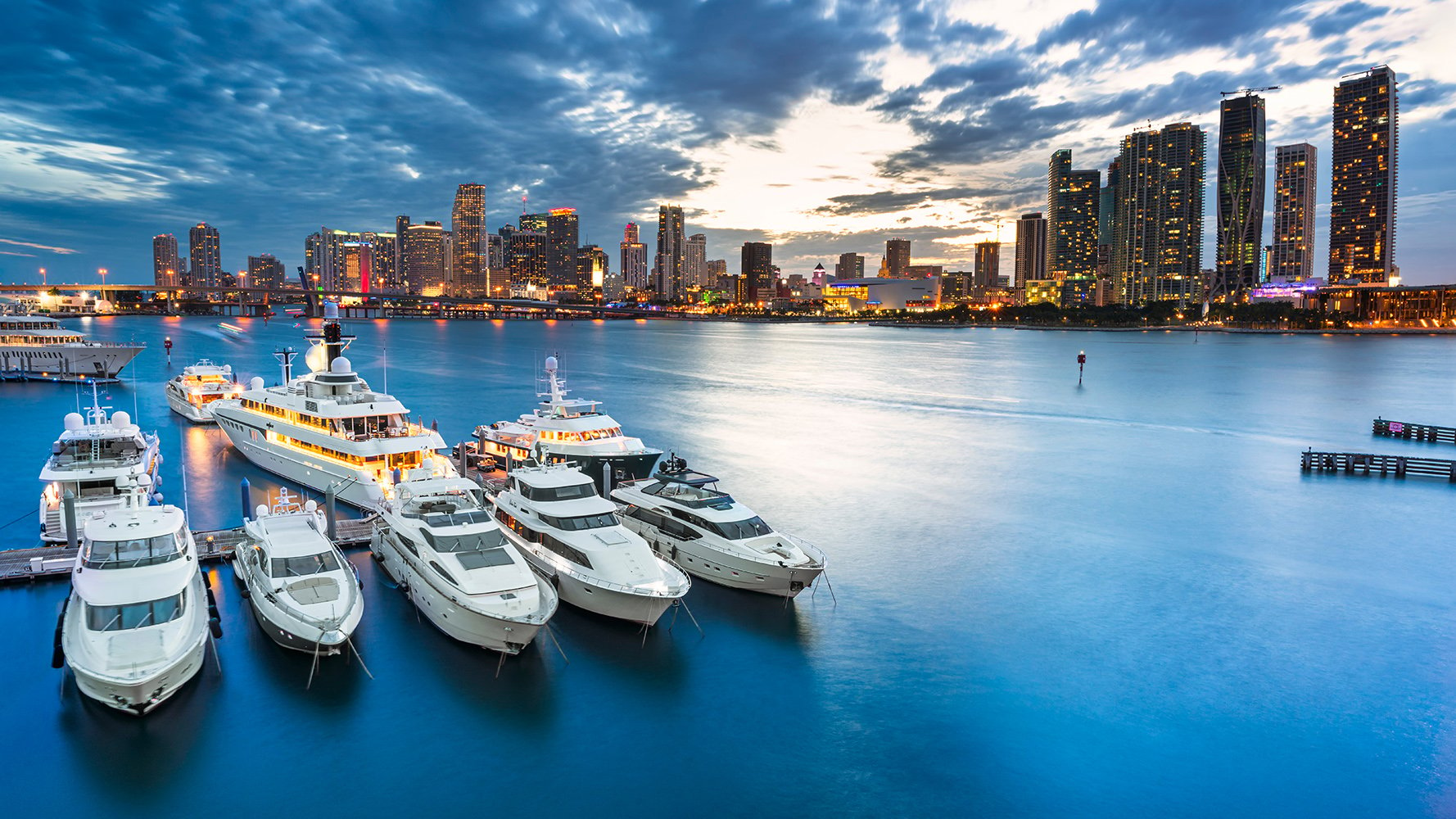
Year-round boating is one of South Florida’s defining luxuries, but the strongest purchases are rarely driven by the view alone. A beautiful panorama can be passive. A true boating residence is active, calibrated to how an owner lives, moves, entertains, stores equipment, hosts guests, and reaches open water.
For the practical buyer, the question is not simply whether a home is waterfront. It is whether the property supports the vessel, the routine, and the level of privacy expected at the high end of the market. The dock, seawall, approach, exposure, service access, and neighborhood rhythm deserve the same scrutiny as millwork, ceiling heights, and terrace proportions.
This is especially important in a region where buyers may be comparing a bayfront condominium with marina access, a canal-front estate with a private dock, or an oceanfront residence that prioritizes beach life over direct boating utility. The right answer depends on the boat, the destination, and the owner’s appetite for management.
Before falling in love with a façade, define the boating program. Is the vessel for short evening cruises, fishing, entertaining, island weekends, or longer coastal runs? Will the owner keep one boat, a tender, personal watercraft, or a combination? Does the captain need convenient access, and will provisioning happen from the residence or from a nearby marina?
These questions shape the property search. A home that feels perfect for a small day boat may be impractical for a larger yacht. A condominium may offer a more managed experience, while a single-family property can provide greater control and greater responsibility. Buyers should confirm every operational detail early, including dock rights, dimensions, association rules, utility access, guest boarding, and any restrictions that affect the intended use.
In private search notes, labels such as boat-slip, marina, oceanfront, Fort Lauderdale, Miami Beach, and Palm Beach can help organize options by lifestyle rather than price alone. The shorthand is useful because boating value is deeply local and highly specific.
In South Florida, two waterfront properties with similar views can deliver very different boating experiences. The practical distinction is access. Buyers should evaluate bridges, channels, turning room, wake exposure, tide conditions, and the ease of reaching preferred cruising grounds.
Bridge clearance can be decisive for certain vessels. So can the distance between the dock and open water, particularly for owners who use the boat frequently and value spontaneity. A residence that requires a more complex route may still be desirable, but the buyer should understand that daily use can feel different from occasional use.
Water depth is another early conversation. It should be considered at the dock, along the route, and near the approach. Buyers should avoid relying on visual impressions. A canal may look generous, while the real constraint sits beneath the surface or around a bend. The best underwriting of a boating purchase includes site-specific professional review before commitments become emotional.
Luxury buyers often focus on the romance of a private dock, but ownership structure matters. A private dock may offer immediate access and autonomy, yet it also places maintenance and oversight closer to the owner. A deeded or assigned slip can be more convenient in some condominium or club settings, but the buyer must understand the governing documents, transferability, size limitations, and service protocols.
A managed marina can appeal to owners who prefer a hospitality-style experience. It can simplify fueling, maintenance coordination, staffing, security, and guest arrivals. The tradeoff may be less direct control, with potential limitations on vessel size, frequency of use, or availability.
The right structure depends on temperament. Some owners want the boat visible from the breakfast room. Others prefer the vessel professionally managed nearby, with the residence kept visually serene. Neither is inherently superior. The best choice is the one that makes boating feel natural rather than burdensome.
A boating residence is more than a house beside water. It is a piece of private infrastructure. Buyers should study the seawall, dock materials, lift capacity if relevant, electrical service, water service, lighting, storage, drainage, and pedestrian flow from the home to the vessel.
The route matters. Guests should be able to move from arrival to terrace to dock with grace. Crew should be able to operate without disrupting the household. Gear should have a logical home. Wet feet, towels, coolers, fishing equipment, and water toys all require places that are elegant, durable, and discreet.
The most refined properties solve these issues quietly. They do not make the owner negotiate the house each time the boat is used. They create a sequence that feels inevitable: dressing area, shaded terrace, outdoor shower, dock, departure.
South Florida’s waterfront neighborhoods have distinct boating personalities. Some favor privacy and estate-style living. Some favor condominium convenience and resort services. Some are oriented toward beach culture, while others are more naturally connected to marinas, canals, and inland waterways.
A Fort Lauderdale buyer may prize canal networks and a strong boating culture. A Miami Beach buyer may focus on bay access, privacy, and proximity to dining or cultural life. A Palm Beach buyer may be balancing boating with club life, architecture, and a quieter residential cadence. These are lifestyle distinctions, not merely map points.
The most important exercise is to compare the owner’s real routine with the neighborhood’s natural rhythm. If boating is a weekly habit, convenience is paramount. If the boat is used for special weekends, the residence can prioritize views, entertaining, and privacy, with the vessel handled nearby.
A waterfront purchase should be evaluated with a sober view of long-term stewardship. Salt air, sun, humidity, and storm exposure require disciplined maintenance. Finishes, mechanical systems, exterior metals, glazing, landscaping, docks, lifts, and seawalls all deserve attention.
Insurance and risk planning should be addressed early, not treated as closing logistics. Buyers should understand the property’s exposure profile, elevation considerations, storm preparation requirements, and the practical steps required to secure both home and vessel. A beautiful dock is only as valuable as the plan that protects it.
For seasonal owners, management is central. Who prepares the property before weather events? Who checks the dock after heavy conditions? Who coordinates service if the owner is away? In the ultra-premium market, convenience is often the product of invisible systems.
Boating utility can support long-term desirability, but only when it is well documented and easy to understand. Future buyers will ask many of the same questions: what size vessel can be accommodated, how access works, what rights transfer, and what maintenance has been performed.
Clear documentation can make a property feel more liquid. Ambiguity can do the opposite. Buyers should preserve surveys, association confirmations, permits where applicable, maintenance records, and professional assessments. In a market where emotional appeal is powerful, precision remains a form of luxury.
The practical buyer also resists overpaying for water that does not serve the intended lifestyle. A dramatic view may justify a premium for one owner, while another should pay more for dock function, protected water, or faster access. The right property is not the most theatrical. It is the one that will be used with pleasure.
Is every waterfront home suitable for boating? No. A property can offer beautiful water views without the access, depth, dock rights, or clearances required for a specific vessel.
Should I choose a private dock or a marina slip? A private dock offers control and immediacy, while a marina slip can provide service, security, and a more managed experience.
What should be reviewed before making an offer? Buyers should review dock rights, water access, seawall condition, association rules, vessel limitations, and storm preparation requirements.
Does bridge clearance matter for luxury buyers? Yes. Bridge clearance can determine whether a vessel can reach open water conveniently, or at all.
Are condominium boating options practical? They can be, especially when slips, marina services, and association rules align with the owner’s vessel and schedule.
How important is water depth? Water depth is essential and should be evaluated at the dock, along the route, and near the approach to the property.
What makes a boating home feel effortless? The best properties combine easy dock access, discreet storage, service planning, durable materials, and a natural indoor-outdoor sequence.
Should seasonal owners buy waterfront property? Yes, if they have reliable management for maintenance, storm preparation, vessel oversight, and routine inspections while away.
Can boating utility affect resale? Yes. Clear, transferable, and well-documented boating features can make a property easier for future buyers to understand.
What is the first step for a boating-focused search? Define the vessel, intended use, desired access, and management preference before comparing individual homes.
For a confidential assessment and a building-by-building shortlist, connect with MILLION.
If branded residences are on your mind — as a home or as an allocation — we would be glad to share what we are seeing, privately.
Begin a quiet conversation