A discreet guide for private-club buyers on why waterfront title review in South Florida should examine recorded rights, association obligations, dock permissions, coastal considerations, flood exposure, and title insurance exceptions before a contract becomes binding.
For private-club members, South Florida waterfront property carries a quiet promise: a residence that connects dining rooms to docks, beach clubs to boardrooms, and morning swims to evening arrivals by boat. Yet the most consequential part of the acquisition may not be the view, the club letter, or the architectural pedigree. It is the title review completed before signing.
In this setting, title review is more than confirmation that a seller can convey ownership. It is a layered examination of recorded rights, recorded burdens, amenity transferability, lien exposure, association obligations, waterfront use, and title insurance exceptions. The distinction matters. A buyer may be purchasing a residence while the dock, marina access, beach path, seawall work, or vegetation management is governed by documents and approvals that sit outside the sales brochure.
That is why a waterfront contract should be read alongside the survey, association materials, club documents, title commitment, exceptions, estoppel materials, and any available dock or shoreline documentation. In Miami-Dade, Palm Beach, and Broward, the practical goal is to understand what is owned, what is shared, what is restricted, and what may require separate approval before the buyer becomes bound.
Waterfront adjacency can be easy to admire and difficult to interpret. A buyer may see open water, a private dock, or a manicured path to a club amenity, but title review asks whether those features are supported by recorded instruments, association rights, licenses, permits, or other documentation.
For private-club buyers, the important question is not merely whether the experience feels exclusive. It is whether the ownership package supports the intended use. The dock, the route to the dock, the ability to assign a slip, the right to use a beach access point, and the rules around guests or vessels may each be addressed in different documents.
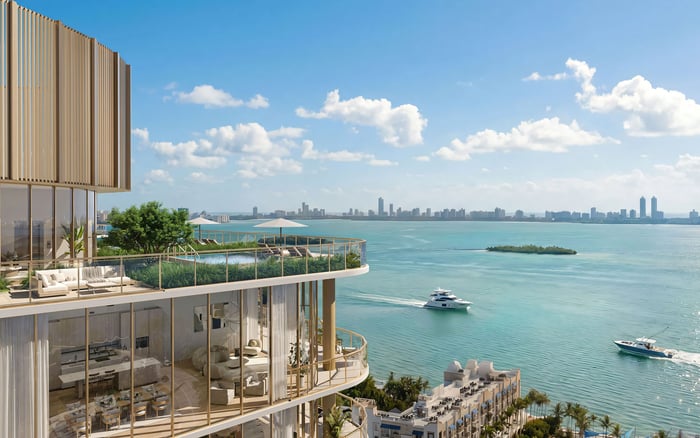
This is especially relevant around high-value club and resort corridors, from Fisher Island and Bal Harbour to Miami Beach, Boca Raton, Palm Beach, and Fort Lauderdale. A residence at The Residences at Six Fisher Island, for example, sits in a market where waterfront access and private-community documents are part of the overall ownership experience. The question is not merely what is beautiful. It is what is recorded, transferable, and enforceable.
In a buyer's internal diligence memo, labels such as Oceanfront, Boat-slip, Marina, Waterview, Palm-beach, and Fort-lauderdale should not be treated as amenities alone. Each should trigger a focused document review.
Waterfront buyers often focus on whether a dock exists, whether a yacht fits, and whether the view is open. A more disciplined title review asks different questions. Is the dock shown on the survey? Does it match the property description and recorded rights? Are there easements affecting access? Are there limits on expansion, repair, assignment, or use?
Shoreline improvements can raise similar issues. Seawalls, drainage features, landscaping, beach paths, and dock connections should be considered as part of the overall diligence file. The issue is not only whether an improvement exists today, but whether a buyer can maintain, alter, or replace it in the manner expected after closing.
Vegetation and view corridors also deserve care. A buyer who values a clean sightline should confirm whether trimming, alteration, or shoreline work is addressed by property documents, association rules, governmental approvals, or other restrictions that could affect future plans.
For beachfront property, construction and renovation planning should be reviewed with particular caution. At residences where beach, dune, shoreline, and building envelope converge, the due diligence process should test whether the buyer's intended improvements are realistic before deadlines expire.
Projects such as Shore Club Private Collections Miami Beach and Rivage Bal Harbour illustrate why coastal luxury buyers should pair architectural review with legal diligence. The finer the setting, the more precise the boundary between private enjoyment and documented rights must become.
Private-club membership, beach access, marina privileges, cabana rights, guest policies, dining minimums, and transfer approvals may not all transfer in the same way. Some rights may be tied to ownership. Others may be contractual, personal, separately approved, or subject to club discretion. The title commitment alone may not answer those questions.
Condominium declarations can include covenants, restrictions, easements, and use limitations. For a club-linked condominium buyer, the recorded declaration should be reviewed directly rather than relying on marketing language. The same applies to homeowners' association documents, which often include covenants and restrictions affecting what an owner may build, rent, dock, landscape, or access.
This is particularly important where waterfront living is packaged with hospitality-level services. A buyer considering The Ritz-Carlton Residences® Pompano Beach or Alina Residences Boca Raton should distinguish between real property rights, association rights, and service or amenity privileges. All may feel like part of the same lifestyle, but they may be governed by different documents.
South Florida buyers sometimes underestimate how many obligations can become title concerns. Association assessments, special assessments, shared-maintenance charges, club-related obligations, transfer fees, and community costs should be identified before closing so the buyer understands which amounts are secured by the property and which are separate contractual obligations.
For private-club buyers, the practical question is whether estoppel certificates are complete, whether any amounts remain unpaid, and whether club or community obligations are separate from title. A clean aesthetic presentation is not a clean ledger. Before signing, buyers should ask for the documents that confirm what is owed, what may become owed, and what happens if prior obligations were not satisfied.
Older recorded rights require similar caution. Historic covenants, easements, reservations, and restrictions may need careful interpretation before a buyer assumes that they are enforceable, irrelevant, or extinguished. The answer often depends on the specific documents and the property history.
Title insurance can be an important risk-management tool, but the exceptions and exclusions matter. A policy may not solve every issue involving docks, zoning, environmental limits, club privileges, use rights, surveys, or association documents. The title commitment is a starting point, not the closing argument.
The strongest waterfront review combines several lenses. The survey should be compared with recorded instruments. Easements should be read for location, purpose, duration, and who benefits. Association and club documents should be tested for transferability and lien exposure. Coastal, flood, dock, shoreline, and environmental constraints should be identified before diligence deadlines expire.
For ultra-premium buyers, this discipline is not about slowing momentum. It is about preserving optionality. The goal is to know, before signing, whether the waterfront life being purchased is supported by title, documents, approvals, and insurable risk.
Is title review different for waterfront property? Yes. It should examine ownership along with easements, docks, shoreline matters, association obligations, club privileges, and use restrictions.
Should buyers review documents before signing? Yes. Reviewing title, survey, association, club, and estoppel materials before binding deadlines gives the buyer more leverage and clearer options.
Can waterfront access be separate from ownership? It can be. Access, dock use, beach paths, marina privileges, and guest rights may be governed by separate documents or approvals.
Can a dock be assumed usable if it already exists? No. Buyers should review the survey, recorded rights, association rules, and any available dock documentation before relying on an existing dock or lift.
Can vegetation or shoreline conditions affect a view? Yes. View planning should be reviewed carefully because trimming, shoreline work, or access improvements may be limited by documents or approvals.
Why do beachfront renovation plans require extra diligence? Beachfront sites may involve shoreline, dune, access, and building-envelope considerations that can affect whether a buyer's intended improvements are realistic.
Can condo or HOA documents affect waterfront use? Yes. Declarations and covenants may control docks, rentals, access, construction, assessments, common amenities, and owner responsibilities.
Are unpaid assessments a title concern? They can be. Buyers should confirm whether any assessments, special charges, or community obligations are unpaid and whether they affect closing.
Does title insurance cover every waterfront problem? No. Buyers should study exceptions and exclusions because coverage may not resolve every dock, club, zoning, environmental, survey, or use-right issue.
When should private-club buyers complete this review? Before signing or before diligence deadlines expire, so the contract can address documents, approvals, estoppels, surveys, and risk allocation.
If you'd like a private walkthrough and a curated shortlist, connect with MILLION.
If branded residences are on your mind — as a home or as an allocation — we would be glad to share what we are seeing, privately.
Begin a quiet conversation