A discreet buyer’s guide to choosing between bayfront serenity and oceanfront intensity when wellness, privacy, daily rhythm, and long-term livability matter as much as the view.
For South Florida’s most discerning residential buyers, the choice between bayfront calm and direct oceanfront exposure is rarely just aesthetic. Both can be extraordinary. Both can be restorative. Both can earn deep loyalty from owners who understand that water is not a backdrop, but a daily influence on mood, pace, privacy, and ritual.
The more useful question is not which view is more impressive. It is which waterfront condition supports the way an owner actually wants to live. Bayfront calm tends to appeal to those who prize composure, softened light, a slower visual rhythm, and a sense of retreat. Direct oceanfront exposure often resonates with buyers who want elemental immediacy, a broad horizon, and the unmistakable drama of the Atlantic as part of the daily routine.
Wellness, in this context, is not a marketing word. It is the compound effect of sleep, sound, privacy, morning rituals, terrace use, arrival sequence, elevator experience, airiness, and the way a residence feels at different hours. The best waterfront address is the one that lowers friction in the owner’s life.
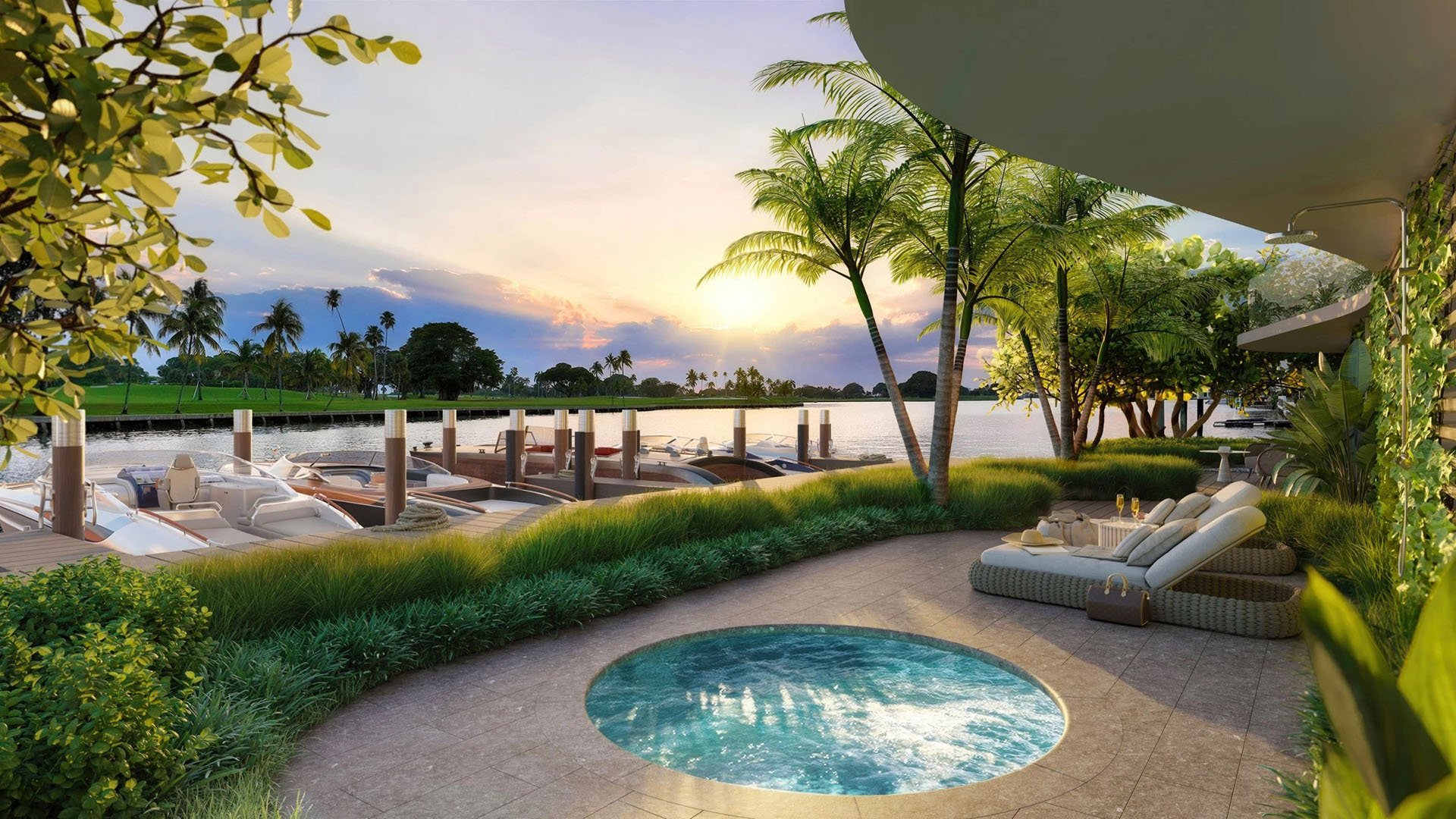
Bayfront living is often chosen by owners who want water without constant intensity. Its appeal is less about spectacle and more about regulation. A bay view can feel meditative because the eye has room to rest. The experience may be quieter, more inward, and more aligned with owners who use their residence as a sanctuary from travel, meetings, social obligations, and the pace of South Florida’s luxury calendar.
This is why Bay Harbor Islands has become such a compelling lens for the wellness conversation. A residence such as The Well Bay Harbor Islands speaks naturally to buyers who are weighing calm, scale, and lifestyle fit rather than simply asking for the loudest view in the room. The address conversation becomes less about being seen and more about how a home supports recovery.
Bayfront calm can also suit owners who value discretion. The mood is residential, softened, and often more compatible with long breakfasts on the terrace, reading at dusk, or entertaining without making every gathering feel like a resort moment. For a wellness-focused buyer, that subtlety matters. It allows the residence to become a private instrument rather than a performance.
Direct oceanfront exposure answers a different desire. It is for the owner who wants the water to be unmistakable, cinematic, and physically present. The horizon is not incidental. It sets the tone from the moment the curtains open. For some buyers, that daily contact with scale is the wellness benefit itself.
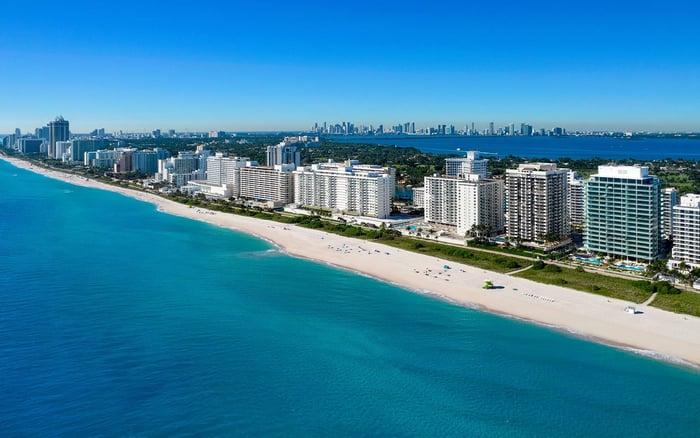
In Miami Beach, 57 Ocean Miami Beach belongs in this discussion because its very name places the buyer squarely in an oceanfront frame of mind. The question for an owner is whether that immediacy produces calm or stimulation. Some people sleep better with a sense of openness. Others prefer a softer edge between home and nature.
The same consideration applies when evaluating The Perigon Miami Beach. Direct coastal exposure can make everyday rituals feel elevated: morning coffee, a walk before calls, a late return after dinner, or an early swim. Yet the wellness value depends on whether the owner experiences that exposure as restorative, not merely impressive.
Oceanfront living can be emotionally clarifying. It suits buyers who are energized by light, openness, and the feeling of being at the edge of the continent. For the right owner, the Atlantic is not a view. It is a discipline.
Water orientation alone does not make a home wellness-focused. The interior plan may matter more. A poorly arranged residence with a magnificent view can still feel restless. A thoughtfully proportioned home with balanced light, acoustic privacy, intuitive circulation, and usable outdoor space can support wellness even when the water experience is more restrained.
Buyers should study how the residence lives from morning to night. Where does the primary suite sit relative to the terrace? Does the living room invite stillness or constant movement? Is the kitchen positioned for private routine or visible entertaining? Is there enough separation between guest areas and the owner’s daily retreat? These questions often reveal more than a first impression from the balcony.
Brickell adds another layer to the conversation. It can offer a waterfront lifestyle with urban immediacy, appealing to owners who define wellness partly through access, efficiency, and reduced daily friction. Una Residences Brickell is a useful example to consider when the buyer wants water, design presence, and proximity to the city’s working and dining rhythm without choosing a beach address.
For some owners, wellness means silence. For others, it means never wasting time. The right property understands which definition matters most.
A bayfront residence may be the better fit for the owner who values privacy, gentle pacing, protected-feeling surroundings, and a home that functions as a restorative base. This buyer may entertain selectively, travel often, and want the residence to feel composed the moment the door opens.
An oceanfront residence may be the better fit for the owner who wants daily awe, visible horizon, immediate beach identity, and a stronger sensory connection to South Florida’s coastal character. This buyer may regard the ocean as part of the reason to own here in the first place.
There is also a hybrid buyer: someone who wants water, wellness, and beauty, but does not want to be governed by any single idea of coastal prestige. For that owner, the best choice may depend less on bay versus ocean and more on building scale, service culture, terrace usability, neighborhood convenience, and how calm the home feels after the first ten minutes.
Lifestyle is the key word. Not every spectacular address supports the same daily life. Not every quiet address feels emotionally rich enough. The most successful purchase aligns the water condition with the owner’s rituals, not the other way around.
A wellness-focused showing should be slow. Arrive at the building as you would on an ordinary weekday, not as a guest at a presentation. Notice the approach, the lobby energy, the elevator sequence, the corridor, and the moment the residence opens. Wellness begins before the view appears.
Inside, spend time without talking. Stand in the primary bedroom. Sit in the living room. Step onto the terrace and remain there long enough to understand whether you would use it daily. Consider the balance between sun, shade, exposure, and privacy. Ask whether the home invites you to exhale.
Then test the practical elements. Where would you work privately? Where would guests gather? Could you exercise, read, dine, and sleep without compromise? Does the residence feel equally compelling on a quiet morning and after an evening out? A home that performs only during golden hour may not be the right wellness asset.
Bayfront calm and direct oceanfront exposure are both valid luxuries. The distinction is not status. It is compatibility.
Is bayfront living better for wellness than oceanfront living? Not universally. Bayfront living may suit owners seeking calm and privacy, while oceanfront living may suit those restored by openness and energy.
Is direct oceanfront exposure always more valuable emotionally? It can be powerful, but emotional value depends on the owner. Some buyers prefer the softer rhythm of bayfront water.
What should wellness-focused buyers evaluate first? Begin with daily rhythm: sleep, privacy, terrace use, arrival, work patterns, and how the home feels at different times of day.
Does a bigger view always mean a better residence? No. Layout, acoustics, circulation, and usable outdoor space can matter as much as the scale of the view.
Can Brickell work for wellness-focused waterfront buyers? Yes, if the buyer values efficiency, access, design, and water orientation as part of a balanced urban lifestyle.
Why do some buyers prefer Bay Harbor Islands? It can appeal to buyers who want a composed residential setting and a quieter relationship with the water.
Why do some buyers choose Miami Beach oceanfront? Miami Beach can appeal to buyers who want the ocean to shape daily rituals, identity, and the feeling of arrival.
Should second-home buyers choose bayfront or oceanfront? The better choice is the one that makes short stays feel effortless, restorative, and easy to repeat.
How important is the terrace in this decision? Very important. A terrace that feels usable, private, and comfortable can define the true wellness value of the residence.
What is the simplest way to decide between the two? Ask whether you feel more restored by calm water and discretion or by horizon, movement, and direct coastal presence.
When you're ready to tour or underwrite the options, connect with MILLION.
If branded residences are on your mind — as a home or as an allocation — we would be glad to share what we are seeing, privately.
Begin a quiet conversation