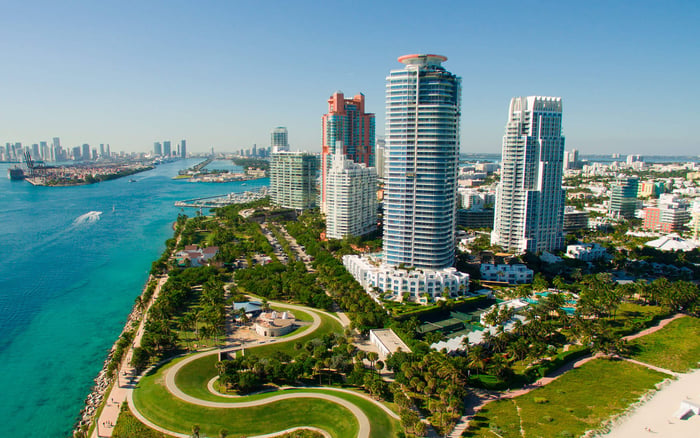
A practical guide for luxury buyers evaluating rental restrictions across South Florida, with emphasis on privacy, liquidity, governance, income flexibility, and document review before contract.

For many South Florida luxury buyers, the conversation begins with views, architecture, wellness amenities, marina access, and privacy. Yet one of the most consequential details is often buried in the condominium documents: the building’s rental policy. Strong rental restrictions can shape who occupies the property, how often residents change, how quiet the common areas feel, and how predictable the service culture remains over time.
In the ultra-premium tier, restrictions are not merely administrative. They are a statement of building identity. A residence designed for long-term ownership, discreet seasonal use, and familiar staff relationships will feel different from a building where units turn frequently. Buyers evaluating Brickell, Miami Beach, Surfside, Aventura, Sunny Isles, Fort Lauderdale, Boca Raton, or Palm Beach should treat rental rules as part of the asset itself.
The practical question is not whether restrictions are good or bad. It is whether the policy matches the way you intend to own.
A strong rental policy typically limits flexibility in one or more ways. It may require association approval before a lease begins, impose minimum lease terms, limit the number of leases permitted within a given period, restrict rentals during the first phase of ownership, require tenant screening, or prohibit hotel-style occupancy. Some buildings also regulate advertising, guest access, move-in procedures, pet permissions, elevator use, deposits, and service-area logistics.
For a primary or second-home buyer, these rules can be reassuring. They may reduce transient use, support a quieter atmosphere, and help maintain a residential rhythm. For an investment buyer, the same rules may narrow the tenant pool or reduce the ability to respond quickly to seasonal demand.
This is why the word “rent” should never be treated as a simple yes-or-no category. A building may allow leasing yet still be unsuitable for a buyer who wants maximum income flexibility. Another may appear restrictive yet work beautifully for an owner who plans occasional long-term leasing while preserving a private lifestyle base.
At the high end, a building’s value is inseparable from its resident experience. Door staff, valet teams, concierge desks, pool attendants, wellness areas, private dining rooms, package rooms, elevators, and beach or marina services all depend on predictability. When occupancy changes constantly, staff must repeatedly orient new users to the building’s culture.
Strong restrictions can help protect the social contract among owners. They may support quieter lobbies, more consistent security protocols, fewer move-in disruptions, and a stronger sense that residents understand the property’s standards. This matters in boutique buildings, branded residences, oceanfront towers, and private enclaves where discretion is part of the purchase.
The trade-off is flexibility. Buyers who expect to monetize unused weeks, test different tenant profiles, or pivot quickly between personal use and income use may find the most restrictive buildings too rigid. That does not make those buildings inferior. It makes them specific.
The buyer’s team should review the declaration, bylaws, rules and regulations, application procedures, leasing forms, house rules, budget, insurance structure, and any board policies affecting occupancy. The goal is to understand both the written rule and the operating culture behind it.
Key questions include whether leases require approval, whether the board has discretion to reject an applicant, whether there is a waiting period before leasing, whether the number of annual leases is limited, whether renewals are treated differently from new leases, and whether family or guest use triggers separate procedures. Buyers should also understand fees, deposits, background checks, elevator reservations, move-in windows, and penalties for noncompliance.
In practice, the most important issue is alignment. A strict policy can be elegant when it is clear, consistently enforced, and understood before closing. A vague policy can be frustrating even if it appears permissive at first glance.
Rental rules influence more than monthly income. They can affect buyer demand, lender comfort, building reputation, and resale positioning. A highly restrictive building may appeal to buyers prioritizing privacy, long-term neighbors, and owner occupancy. A more flexible building may appeal to buyers who want optionality, seasonal leasing, or a broader exit audience.
Neither profile is universally stronger. In some luxury segments, exclusivity and permanence can command confidence. In others, flexibility may expand the buyer pool. The correct answer depends on price point, location, building type, operating costs, and the owner’s time horizon.
A buyer focused on investment should model conservative rental assumptions, not optimistic ones. If leasing is allowed only under narrow conditions, the underwriting should reflect that reality. Carrying costs, assessments, insurance, taxes, and reserves do not pause simply because a tenant cannot be approved on the desired timeline.
In luxury residential buildings, short-term rental expectations can create immediate tension. A buyer may see unused time as an income opportunity, while an association may see frequent turnover as a threat to privacy, security, and quality of life. This is especially important for buyers who casually use the term AirBnb to describe any short stay.
Before assuming a residence can be leased in brief intervals, the buyer should confirm what the governing documents actually permit and how the building enforces those provisions. The distinction between personal guests, approved tenants, corporate stays, seasonal leases, and commercial-style occupancy can be significant.
A discreet building may permit long-term leases while firmly rejecting hotel-like use. Another may be more flexible but impose operational rules that reduce convenience. The best time to learn this is before the contract becomes difficult to unwind.
In Brickell, buyers may compare buildings with very different resident profiles, from urban primary residences to lock-and-leave pied-à-terre ownership. In Aventura, the conversation may center on family use, seasonal residents, and long-term convenience. In Surfside, privacy, boutique scale, and beach access may make restrictive policies feel more natural to the ownership culture.
The same lease rule can feel different across these settings. A buyer seeking a serene coastal residence may welcome limits that discourage constant turnover. A buyer purchasing a city residence for periodic use may prefer a policy that allows carefully controlled leasing when the home is vacant.
This is why rental restrictions should be evaluated in context, not in isolation. The building’s tone, staff model, amenity design, parking structure, elevator access, and ownership mix all influence whether a policy feels protective or burdensome.
Start with your intended use. Will the residence be a primary home, seasonal retreat, family base, legacy holding, or income-oriented asset? Then test the rental policy against that purpose. If you expect to lease, ask how often, for how long, to whom, and under what approval process.
Next, ask how the building handles enforcement. A rule that is rarely enforced creates uncertainty. A rule enforced with professionalism can preserve both expectations and value. Review application timelines, board meeting cadence, required documents, fees, deposits, and any history of owner questions around leasing.
Finally, make sure your offer strategy reflects the answer. If a building’s restrictions materially reduce income optionality, that should be considered before pricing. If the restrictions enhance the privacy and stability you desire, they may be a meaningful reason to pursue the residence with confidence.
Strong luxury rental restrictions are not obstacles by default. They are governance tools. For the right buyer, they can protect quiet enjoyment, service quality, and the residential character that makes a property feel rare. For the wrong buyer, they can limit income, complicate travel patterns, and create friction with expectations.
The most sophisticated approach is simple: define your ownership plan first, then choose the building whose rules support it. In South Florida’s luxury market, the finest residence is not only the one with the best view. It is the one whose documents, culture, and daily life align with the way you intend to own.
What are luxury rental restrictions? They are building rules that govern whether, when, and how an owner may lease a residence.
Are strict rental rules bad for resale? Not always. They may narrow some buyer demand while attracting buyers who value privacy and stability.
Can I assume a building allows seasonal leasing? No. Seasonal use should be confirmed through the governing documents and association procedures.
What should I review before buying? Review the declaration, bylaws, rules, leasing forms, approval process, fees, and enforcement practices.
Do restrictions matter if I never plan to rent? Yes. They can affect building atmosphere, future resale, financing fit, and long-term flexibility.
What is the biggest mistake buyers make? They focus on whether leasing is allowed without studying the conditions that make leasing practical.
Can an association screen tenants? Many luxury buildings require some form of application or approval, but the exact authority must be verified.
How do short-term rentals differ from long-term leases? Short-term use often raises more concerns around security, turnover, and building wear than longer leases.
Should investors avoid restrictive buildings? Not automatically. They should underwrite conservatively and confirm that the rules match the income plan.
What is the best way to shortlist comparable options for touring? Start with location fit, delivery status, and daily lifestyle priorities, then compare stacks and elevations to validate views and privacy.
When you're ready to tour or underwrite the options, connect with MILLION.
If branded residences are on your mind — as a home or as an allocation — we would be glad to share what we are seeing, privately.
Begin a quiet conversation