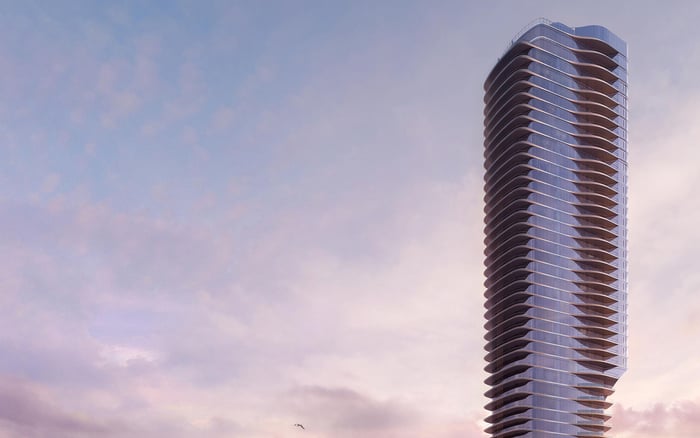
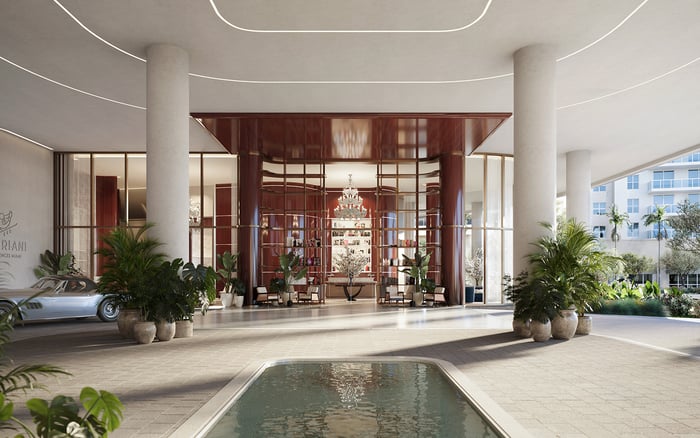
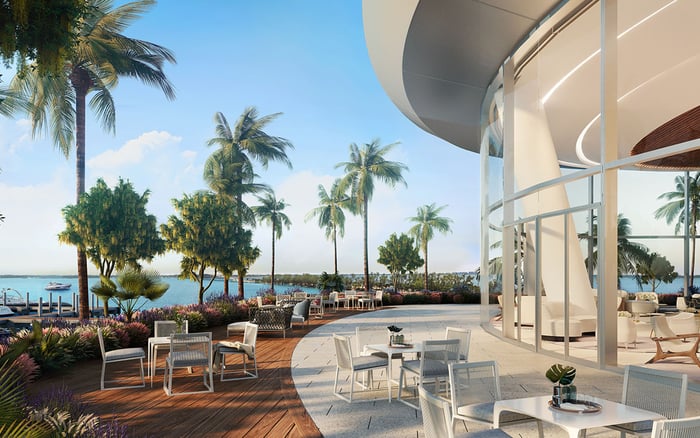
A discreet buyer-focused comparison of Cipriani Residences Brickell and Una Residences Brickell, centered on service depth, elevator privacy, owner-only amenities, and the different luxury philosophies shaping each address.
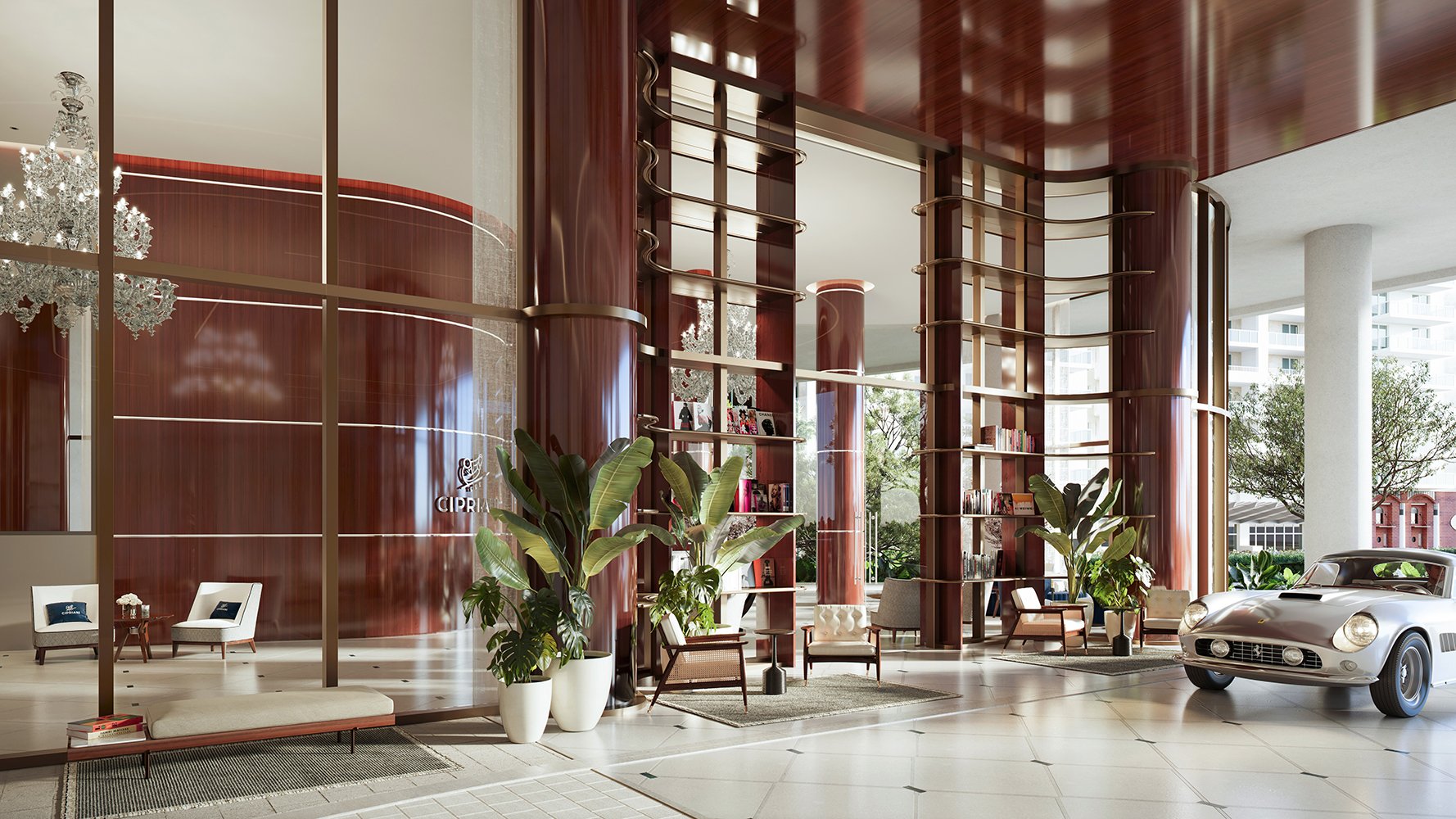
Cipriani Residences Brickell and Una Residences Brickell belong in the same rare conversation: top-tier luxury condominium living in Miami’s Brickell market. Both address buyers who expect refinement, access, and a residential experience materially above the conventional high-rise model. Yet the more useful comparison is not which building is more prestigious. It is which building gives a particular owner the right kind of control.
At Cipriani Residences Brickell, that answer is rooted in a branded, hospitality-driven residential model. The appeal is a recognizable identity, a high-touch service culture, and a daily rhythm that feels closer to a private hotel residence than a traditional condominium. At Una Residences Brickell, the answer is quieter. Its positioning leans toward a boutique, waterfront, more purely residential experience, with a premium on discretion, anonymity, and owner-centered calm.
That makes the choice unusually personal. Two buyers with the same budget and the same appetite for Brickell may reach opposite conclusions, not because one is compromising, but because each is optimizing for a different version of luxury.
For buyers who want residential life supported by a deeper layer of service, Cipriani Residences Brickell is the more natural fit. Its value proposition is strongest where service becomes part of daily living: arrival, hosting, household support, and the broader sensation that the building has a hospitality pulse. The Cipriani name also carries a public-facing brand identity, which matters to owners who want their home to be legible within a larger global language of service and taste.
That does not mean every owner wants that visibility. In fact, Cipriani’s strength is also the question a private buyer should consider carefully. A branded building often brings more external recognition, more anticipation around the experience, and a stronger sense that the residence participates in a wider hospitality culture. For some, that is precisely the point. For others, the ideal home should recede from public identity and feel known only to the people who live there.
In a new-construction market where services are often described in similar language, the real differentiator is not the existence of amenities. It is the density and consistency of the service culture around them. Cipriani’s edge is that service is central to the story rather than peripheral to it.
Una Residences Brickell is better understood through the lens of residential purity. Its appeal is not the absence of luxury, but the absence of unnecessary friction. The building is framed around waterfront character, a quieter owner experience, and fewer external touchpoints than a more publicly branded condominium.
That distinction matters for buyers who prize anonymity. Some owners do not want a residence that announces itself through brand recognition. They want the more private satisfaction of a home that feels composed, protected, and emotionally separate from the social energy of Brickell. Una’s boutique character supports that psychology. It reads less like a hospitality platform and more like a discreet waterfront address for people who already know exactly what they want.
The waterview dimension is also part of the mood. Waterfront living in Brickell carries a different emotional register from the district’s more urban, tower-centric energy. It softens the experience. It gives the home a private visual horizon. For buyers choosing Una Residences Brickell, that quieter relationship with water can be as meaningful as the amenity program itself.
Elevator privacy is one of the most practical luxury questions in any high-end condominium, even when buyers do not ask it first. The issue is not only whether an elevator feels exclusive. It is how movement through the building affects the rhythm of ownership: how many encounters occur between the porte cochere and the residence, how public the amenity route feels, and whether the vertical experience supports discretion or social energy.
In this comparison, elevator privacy and vertical circulation are central because they reflect the broader philosophy of each project. Cipriani’s hospitality-driven model is more aligned with a building that feels staffed, serviced, and active. Its daily movement may appeal to owners who like the reassurance of a visible service ecosystem and the sense that the residence is part of a curated environment.
Una, by contrast, is more naturally associated with privacy-led circulation. The buyer drawn to Una will likely care about how quietly one can move from arrival to residence, how owner-centered the building feels, and whether the experience minimizes unnecessary exposure. This is less about a single specification and more about the feeling of the building as a private instrument.
Amenities are often discussed as inventory, but the more revealing question is who they are for and how they are used. A gym, pool, lounge, or wellness area can feel entirely different depending on the density of use, the staffing model, and the degree to which the environment is reserved for residents rather than shaped by a broader hospitality identity.
Cipriani’s model is strongest for buyers who want amenities to feel supported by service. That can create ease, continuity, and polish, especially for owners who entertain, travel frequently, or prefer to outsource many daily details. The amenity experience is not only about space, but about the cadence of assistance around that space.
Una’s strength is more owner-only in spirit. Its amenity culture is positioned around fewer outside touchpoints and a more residential atmosphere. For buyers who are sensitive to crowding, recognition, or the feeling of a building becoming too socially porous, this may be decisive. Privacy at this level is not simply a matter of walls and doors. It is a matter of who has reason to be in the building, how often, and why.
The Cipriani buyer is likely to be drawn to confidence that can be felt immediately. Brand, service, presence, and hospitality rhythm all create a sense of certainty. This buyer may value a home that performs beautifully for guests, supports a fast-moving lifestyle, and carries an identity that needs little explanation.
The Una buyer is likely to be drawn to confidence that does not need to be announced. Privacy, waterfront calm, residential discretion, and owner-centered amenities create a subtler form of power. This buyer may already have access to hospitality elsewhere and may want home to feel more protected, less performative, and more personal.
Neither profile is more sophisticated. They simply measure luxury differently. Cipriani Residences Brickell answers the question, “How much service can my residence bring into daily life?” Una Residences Brickell answers, “How much privacy can my residence preserve while still delivering top-end Brickell living?”
A buyer comparing these two addresses should begin with behavior, not finishes. How often will you entertain? Do you want staff presence to feel visible and anticipatory, or quiet and minimal? Does a celebrated brand enhance your sense of home, or do you prefer a residence that feels more anonymous? Will you use amenities as extensions of a serviced lifestyle, or as protected owner-only spaces?
For a primary residence, the answer often turns on routine. For a second home, it may turn on arrival experience and ease of use. For a long-term hold, it may turn on which philosophy best matches the owner profile likely to value the property in the future. Brickell can support both models, but the buildings should not be treated as interchangeable simply because they compete at the same level.
Cipriani is the stronger answer for recognizable branding, high-touch service, and hotel-like daily support. Una is the stronger answer for anonymity, waterfront residential character, and quieter owner-only amenity privacy. The best choice is not the louder one. It is the one whose operating philosophy matches the way the owner wants to live.
Are Cipriani Residences Brickell and Una Residences Brickell direct competitors? Yes. Both are positioned within the upper tier of the Brickell luxury condominium market, but they appeal to different owner priorities.
Which building is more service oriented? Cipriani Residences Brickell is the stronger fit for buyers who want a branded, hospitality-driven service model and more hotel-like daily support.
Which building is more privacy oriented? Una Residences Brickell is better aligned with buyers who prioritize discretion, anonymity, waterfront calm, and a quieter owner experience.
Does Cipriani’s brand identity matter to buyers? Yes. The Cipriani name creates a more public-facing luxury identity, which can be attractive to buyers who value recognizable service culture.
Why is Una described as more residential? Una is framed around a boutique waterfront lifestyle with fewer external touchpoints and a more owner-centered amenity environment.
Is elevator privacy an important comparison point? Yes. Vertical circulation shapes how private, social, serviced, or discreet a building feels in daily use.
Which building is better for entertaining? Cipriani may suit buyers who want a hospitality-style rhythm and service depth that supports hosting and frequent arrivals.
Which building is better for a low-profile owner? Una may be the more natural choice for an owner who wants Brickell access without a highly public-facing residential identity.
Are amenities the main difference between the two? Not exactly. The more important difference is how amenities are supported, used, and protected within each building’s broader lifestyle philosophy.
What is the best way to shortlist comparable options for touring? Start with location fit, delivery status, and daily lifestyle priorities, then compare stacks and elevations to validate views and privacy.
When you're ready to tour or underwrite the options, connect with MILLION.
If branded residences are on your mind — as a home or as an allocation — we would be glad to share what we are seeing, privately.
Begin a quiet conversation