A strategic look at The Perigon Miami Beach, where stack selection is less about a single view premium and more about orientation, privacy, light, height band, service expectations and long-term ownership fit.

The Perigon Miami Beach asks a more sophisticated question than many oceanfront condominium purchases: which residence position best supports the way the owner intends to live, hold and eventually exit? In a conventional tower, stack selection can sometimes be reduced to view, floor height and price. Here, the decision is more layered because the building is positioned as an ultra-luxury oceanfront condominium in Miami Beach with a sculptural architectural character rather than a standard glass-box profile.
The mid-Miami Beach setting immediately creates a hierarchy of exposures, but it does not make one stack universally superior. The correct stack depends on how the owner values oceanfront drama, western light, privacy, arrival patterns, amenity access and future marketability.
For many buyers, the shorthand is simple: Miami Beach, oceanfront, waterview, resale and investment all converge in one stack decision at The Perigon Miami Beach. The more disciplined view is that each stack carries a distinct ownership thesis.
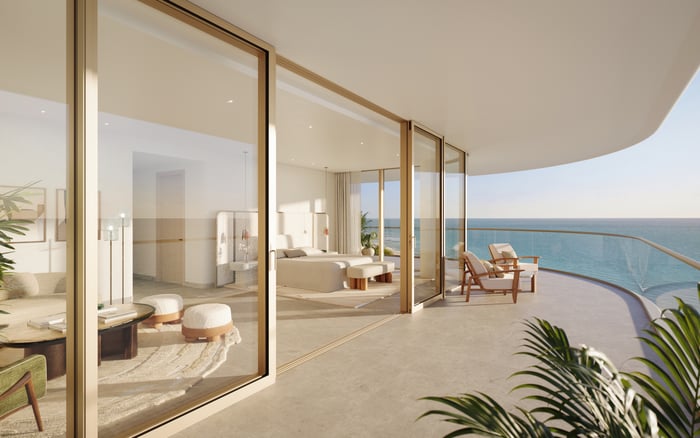
The design-forward architectural character of The Perigon matters because a sculptural mid- to high-rise tower can produce materially different residence experiences across orientations and elevations. The building’s geometry is not merely an exterior signature. It can influence how light enters, how terraces or exterior edges feel, how neighboring residences are perceived and how view corridors open or compress.
In a rectilinear oceanfront tower, buyers often compare similar units by floor level. At The Perigon, stack selection calls for more nuance. Orientation, height band, privacy, light and view corridors can interact differently from one residence line to another. A lower residence with a stronger spatial relationship to landscaping and beach may appeal to one owner, while another may prefer a higher vantage point with a more expansive horizon and a greater sense of separation.
That is why the stack decision is not simply a ranking of east over west or high over low. It is a matching exercise between architecture and ownership intent.
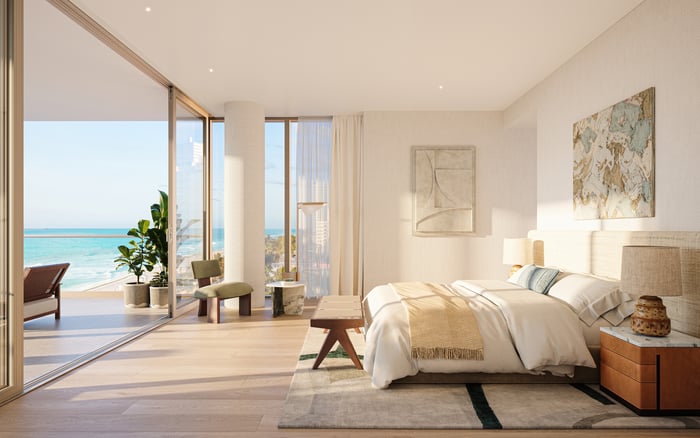
The Perigon’s oceanfront setting makes east-facing Atlantic exposure a central consideration. For many buyers, the emotional premium of waking to the ocean is core to the purpose of owning on Miami Beach. East exposure can support the classic oceanfront narrative: morning light, open water, resort-like calm and an immediate visual connection to the beach.
Still, disciplined buyers should separate emotional preference from practical ownership. Direct ocean exposure may be ideal for an owner who wants daily immersion in the waterfront setting. It may also support long-term liquidity because ocean-facing residences often have broad appeal in Miami Beach’s luxury market. Yet the best stack is not always the most obvious stack if another line offers stronger privacy, better usable light for the owner’s schedule or a more comfortable relationship to neighboring sightlines.
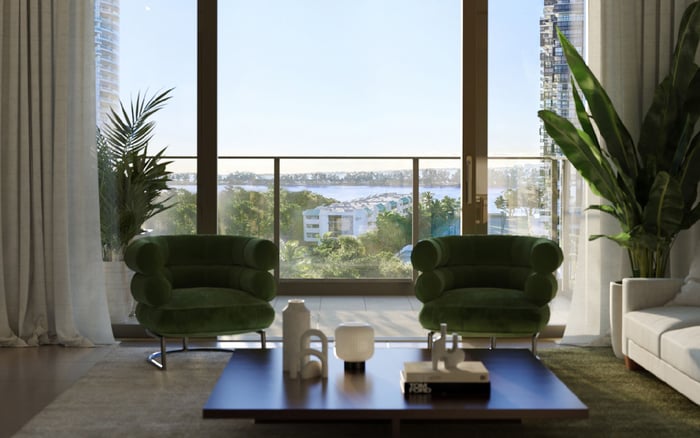
Western or mixed exposures should not be dismissed without study. Westward outlooks can contribute their own sense of place, especially where water, skyline glow or evening light become part of the daily rhythm.
The Perigon is framed around low density relative to its site, a point with real ownership implications. Low density is not just a marketing phrase in the ultra-luxury category. It affects how residents experience privacy, amenity crowding, service consistency and the quietness of common areas during peak seasonal periods.
Parcel depth is also significant. A deeper oceanfront site can allow for more meaningful landscaping, setbacks and spatial separation from both the street and the beach. For stack selection, that depth may change the way lower and mid-level residences feel. Instead of reading only as less elevated versions of higher homes, certain lower height bands may benefit from a stronger connection to gardens, arrival sequences or the resort layer of the property.
This is where The Perigon differs from a purely vertical purchase. Buyers should study how each stack relates to the full site, not just the view beyond the glass. The ownership experience begins before the elevator opens and continues through the landscape, amenity level, beach approach and private residence.
The most important question is how the residence will be used. A full-time owner may prioritize quiet, natural light, privacy and a residence line that feels balanced through every season. A seasonal owner may place more emphasis on ease, service, amenity access and the emotional impact of arrival. An occasional-use owner may want the most immediately legible oceanfront experience because each visit is compressed and highly intentional.
For a long-term hold or estate-planning purchase, liquidity becomes central. The stack should have qualities that are understandable to a future buyer without requiring too much explanation. Clean views, strong privacy, pleasing light and a coherent connection to the building’s design tend to age better than purely idiosyncratic preferences.
A second-home buyer should also think carefully about the periods when the residence will be occupied. Morning-oriented owners may value ocean light differently from those who arrive for long weekends and evenings. Buyers who entertain may emphasize larger perceived volume, view drama and separation from adjacent sightlines. Buyers who use the residence privately may prefer calm, discretion and a stack that feels protected rather than theatrical.
The mid-Beach setting is more residential-resort-oriented than highly walkable urban districts such as South of Fifth. That distinction should shape the stack decision. In a neighborhood less dependent on street-level retail and nightlife, the building’s internal amenity and service package becomes especially important, particularly for seasonal and occasional owners.
This does not diminish the location. It clarifies the ownership proposition. The buyer is not choosing The Perigon because it functions like a dense urban village. The buyer is choosing an oceanfront, design-forward residential environment where privacy, service, beach access and a composed daily rhythm matter more than constant street activity.
For stack selection, that means evaluating not only what is seen from the residence, but how effortlessly the building supports the owner’s routine. The right stack should feel aligned with the owner’s pattern of arrival, retreat, entertaining, wellness and beach use.
Before committing to a stack, buyers should compare orientation, height band, privacy conditions, light quality and view corridors. They should also consider how the sculptural building form may alter the experience of adjacent stacks. Two residences with similar square footage or general exposure may live differently because of geometry, angle, setback or sightline.
Precise unit-by-unit guidance requires current inventory intelligence, including what is actually available at the time of purchase. Without that, the better approach is to define the buyer’s ownership profile first, then evaluate stacks against that profile. The strongest choice is rarely just the most expensive or the highest. It is the residence position that best combines daily satisfaction, architectural integrity and credible future liquidity.
At The Perigon Miami Beach, stack selection is ultimately a question of fit. The building’s oceanfront location, design-forward character, low-density emphasis and site planning make the decision more consequential than a simple view premium. For the right buyer, that complexity is the opportunity.
Why is stack selection so important at The Perigon Miami Beach? Because orientation, height, privacy, light and view corridors can materially change the ownership experience from one residence line to another.
Is an east-facing stack automatically the best choice? Not automatically. East-facing ocean exposure is a core consideration, but privacy, light quality, intended use and long-term liquidity also matter.
What role does architecture play in stack selection? A sculptural tower form can create different spatial experiences across stacks and elevations, making geometry part of the ownership decision.
Is The Perigon Miami Beach more suited to full-time or seasonal owners? It can appeal to both, but each buyer type should evaluate stacks differently based on daily routine, service expectations and arrival patterns.
How does the Mid-Beach setting influence ownership? The area is more residential-resort-oriented than highly walkable urban districts, so the building’s internal amenity and service experience becomes important.
Should buyers prioritize high floors? High floors may offer broader outlooks and separation, but lower or mid-level residences may provide a stronger relationship to landscaping or the beach approach.
What makes parcel depth relevant? Parcel depth can support landscaping, setbacks and spatial separation, which may improve privacy and the overall sense of arrival.
Is stack selection mainly about resale? Resale is important, but the best stack also has to serve the owner’s actual use pattern, whether full-time, seasonal or occasional.
Can buyers make a final stack decision without current inventory details? A strategic preference can be formed, but precise unit-by-unit advice requires current availability and specific residence comparisons.
What is the best way to shortlist comparable options for touring? Start with location fit, delivery status, and daily lifestyle priorities, then compare stacks and elevations to validate views and privacy.
When you're ready to tour or underwrite the options, connect with MILLION.
If branded residences are on your mind — as a home or as an allocation — we would be glad to share what we are seeing, privately.
Begin a quiet conversation