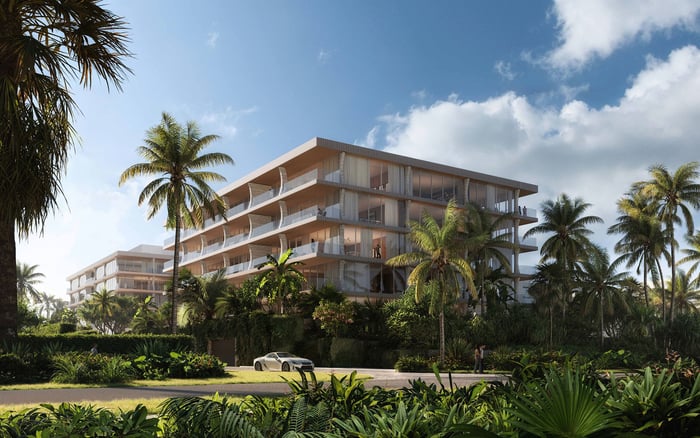
A buyer-focused framework for evaluating parking allocation, valet operations, vehicle compatibility, EV charging, security, storm planning, and recurring costs before contract.

For a multi-car household, parking is not a secondary amenity. It shapes morning departures, evening returns, the care of collectible automobiles, and the ease with which family, guests, and drivers move through a property. At The Ritz-Carlton Residences® West Palm Beach, prospective owners should therefore treat garage and valet arrangements as a distinct due-diligence category.
The available material does not establish the total parking count, resident-to-space ratio, allocation by residence, or detailed valet service level. That absence should prompt precise questions, not assumptions. This is where lifestyle expectations, branded-residence service, and the practicalities of ownership must be reconciled.
Begin with the approved parking schedule. Buyers should confirm how many spaces are included with the selected residence and whether another space can be purchased, leased, or licensed. The legal character matters: a deeded space, an assigned space, a revocable license, and access to pooled valet inventory do not provide equivalent control.
Ask whether the rights transfer with the residence upon resale, whether an unused space may be rented to another resident, and whether transfers require association or management approval. These details can affect daily flexibility and long-term investment considerations.
Households comparing West Palm Beach options such as Forté on Flagler West Palm Beach and Mr. C Residences West Palm Beach should ask the same questions at every property. A consistent comparison can reveal differences that broad amenity descriptions may not capture.
Determine whether residents may self-park, must use valet, or follow different rules for primary and secondary vehicles. Request operating hours, overnight staffing levels, retrieval procedures, and the process for advance requests. Expected wait times during mornings, weekends, events, and storm preparations should be addressed explicitly.
A household with a chauffeur may require a different arrival sequence than an owner who drives daily. Clarify where drivers wait, how vehicles are staged, and whether repeated same-day retrievals receive special handling. If Mandarin Oriental Residences, West Palm Beach is part of a broader Palm Beach search, compare operating rules, not merely the presence of valet service.
Request written specifications for clearance, stall dimensions, ramp angle, turning radius, and weight limits. These measurements are essential for low-clearance sports cars, long-wheelbase sedans, heavy electric vehicles, pickups, oversized SUVs, and Sprinter vans. A vehicle may clear the entrance yet struggle at a ramp transition or tight internal turn.
Where access permits, test the route with the household's largest and lowest vehicle before closing. Include the porte cochère, entry gate, ticket or access point, ramps, turning bays, stall, and exit. Owners of exotic or collectible cars should also ask whether valet personnel receive specialized training and whether handling restrictions can be recorded for individual vehicles.
EV owners should verify charger count, location, power level, billing, reservation rules, and capacity for future expansion. Ask whether a charger is tied to a particular space, shared through valet, or subject to time limits. The answers determine whether charging is reliably available or merely possible.
Guest-parking capacity, validation, time restrictions, and overflow arrangements also require confirmation. For seasonal residents, the building's rules governing battery maintainers, protective covers, periodic vehicle exercise, and extended unmoved storage are equally important. A garage policy designed for frequently driven cars may not suit a carefully maintained collection.
Review surveillance coverage, garage access control, key custody, valet liability, insurance requirements, and procedures for documenting damage. Ask who holds keys overnight, how access is logged, and how a claim progresses from inspection to resolution.
Hurricane and flood planning deserve equal attention. Buyers should review garage elevation, drainage, emergency relocation protocols, and resident access during preparations. Finally, calculate recurring expenses beyond common charges, including extra-space fees, EV charging, guest parking, special handling, and customary gratuities.
The controlling documents should provide the final standard. Review the purchase agreement, condominium declaration, parking exhibit, rules, budget, and valet contract, and obtain material representations in writing before contract.
How many parking spaces come with a residence? The available details do not specify an allocation. Request the approved parking schedule for the residence under consideration.
Can an owner acquire an additional space? Confirm whether another space may be purchased, leased, or licensed, along with its term, cost, and transfer restrictions.
Are parking spaces deeded to owners? Do not assume so. Verify whether parking is deeded, assigned, licensed, or managed as pooled valet inventory.
Can residents self-park? Confirm the operating model in writing, including any different rules for primary and secondary vehicles.
What should exotic-car owners ask? Ask about specialized valet training, handling restrictions, key control, surveillance, damage documentation, and liability.
Will oversized vehicles fit? Obtain clearance, ramp, turning-radius, stall, and weight specifications, then test the actual route if access is permitted.
How should EV charging be evaluated? Verify charger quantity, placement, output, billing, reservations, time limits, and capacity for future expansion.
What guest-parking questions matter? Confirm capacity, validation, time limits, overnight rules, fees, and the designated overflow arrangement.
Can a seasonal owner leave a car long term? Ask about unmoved-vehicle limits, battery maintainers, protective covers, and authorized periodic vehicle exercise.
Which documents should a buyer review? Examine the purchase agreement, declaration, parking exhibit, rules, budget, and valet contract with qualified advisers.
For a tailored shortlist and next-step guidance, connect with MILLION.
If branded residences are on your mind — as a home or as an allocation — we would be glad to share what we are seeing, privately.
Begin a quiet conversation