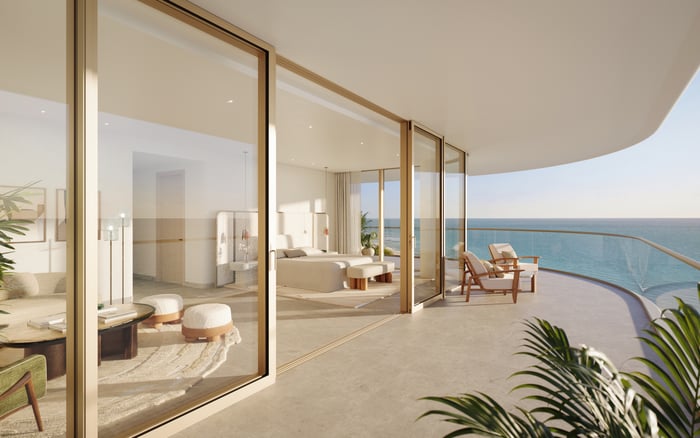
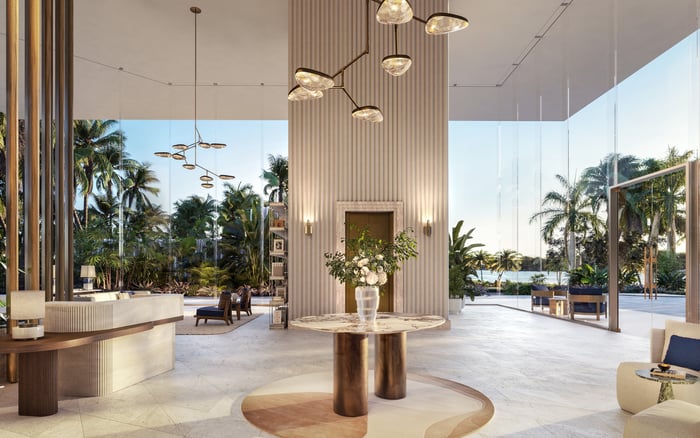
A buyer-focused guide to evaluating media-room acoustics at The Perigon Miami Beach, with attention to privacy, service choreography, and long-term resale appeal.
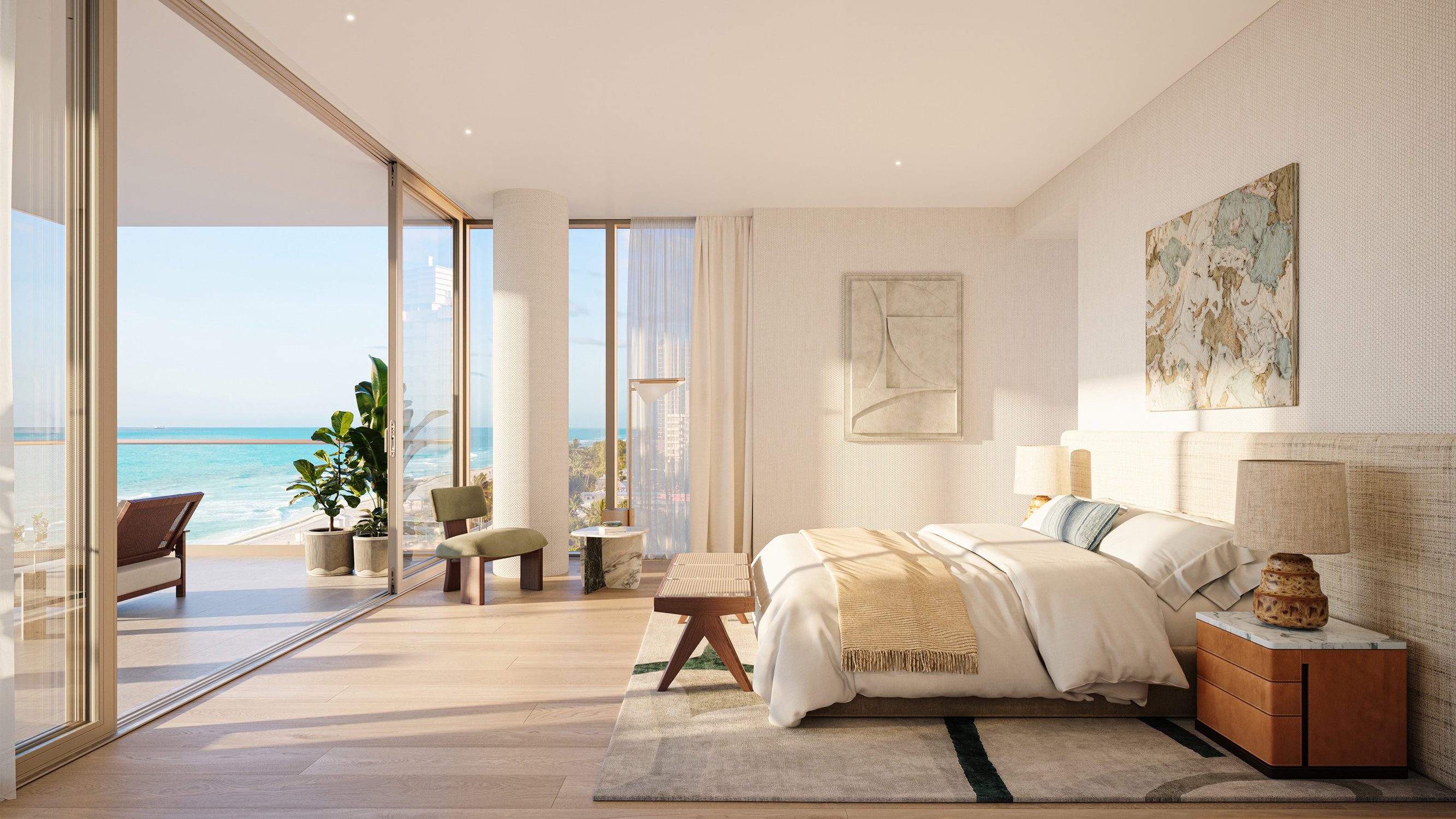
For many buyers evaluating The Perigon Miami Beach, the media room is no longer a secondary amenity tucked behind the principal spaces. It may function as a private cinema, a game-night salon, a quiet retreat after dinner, a children’s evening zone, or the place where a host can extend an event without disrupting the rest of the residence. That makes acoustics central to the luxury experience, not a technical afterthought.
At the upper end of Miami Beach real estate, a beautiful media room should do three things with discipline: contain sound, preserve speech privacy, and remain flexible enough to satisfy a future buyer. The best evaluations look past screen size and millwork. They consider how sound travels through walls, floors, ceilings, doors, ducts, glass, and corridors. A room can appear visually serene while still leaking bass into bedrooms or carrying conversation into an arrival gallery.
This is especially relevant for a residence positioned within the Miami Beach, oceanfront, new-construction, investment, and resale conversation, where buyers expect a high level of polish. In a setting such as The Perigon Miami Beach, the acoustic question is not simply whether the room sounds good inside. It is whether the room behaves beautifully within the life of the entire home.
The most common mistake is beginning with speakers, processors, or display technology. Those elements matter, but privacy begins with the envelope. Ask what separates the media room from adjacent bedrooms, living areas, staff zones, elevator vestibules, terraces, and shared walls. A media room can be visually insulated by doors and cabinetry, yet acoustically porous if its weakest point is a reveal, return-air path, pocket door, or unsealed millwork edge.
A private media room should protect two categories of sound. The first is entertainment noise, especially low-frequency bass from films, music, or sports. Bass is difficult to control because it travels through structure, not just air. The second is speech privacy. Buyers often use media rooms for sensitive conversations, family calls, business discussions, and intimate entertaining. If voices can be recognized from a hallway or bedroom, the room has not reached a luxury privacy standard.
During a showing, do not rely on silence. A quiet room at midday may behave differently during an evening gathering. If possible, test the room with spoken voice, music, and bass-heavy content at realistic levels. Walk nearby corridors and sleeping areas. Listen at the door, along built-ins, under return grilles, and near glazing. A refined room should not announce itself beyond its intended boundary.
Doors are often the acoustic weak link. A substantial wall assembly can be compromised by a lightweight door, an unsealed jamb, a gap at the threshold, or a decorative pull that prevents tight closure. In a media room designed for privacy, the door should close with authority and create a continuous seal around the perimeter.
Pocket doors deserve particular scrutiny. They are elegant and space efficient, but pocket cavities can create acoustic leakage if not carefully detailed. Sliding panels, concealed doors, and glass doors can also look exquisite while performing modestly. The question is not whether the door is attractive. The question is whether it supports the room’s purpose.
Threshold design also matters. Even a small undercut can allow dialogue and music to migrate into adjoining spaces. Buyers should note whether the room has a drop seal, acoustic gasket, or other integrated solution. If the answer is unclear, it is worth bringing in an acoustic consultant before committing to major electronics or custom furnishings.
A luxury media room should feel hushed before the first note plays. Mechanical noise from air conditioning, returns, diffusers, elevators, plumbing runs, or equipment closets can fatigue the ear and reduce the perceived quality of the space. In South Florida, where cooling is constant, HVAC noise is particularly important. A room that requires aggressive airflow can become distracting during quiet scenes or private conversation.
Service choreography is the next layer. A media room often supports entertaining, which means food, drinks, staff movement, cleanup, and occasional late-night use. The ideal acoustic plan allows service to occur without exposing the rest of the residence to sound or interruption. If a bar, pantry, or service corridor is nearby, listen for cabinet closures, ice makers, glassware, and footfall.
The most elegant service plan is discreet. Guests should feel attended to, not overheard. Staff should be able to move efficiently, not through the emotional center of the home. When the room is acoustically controlled, the host gains optionality: a film can run while dinner continues, children can gather while adults remain elsewhere, or a late event can wind down without compromising bedrooms.
Acoustic quality is shaped by more than construction. Stone, glass, lacquer, and large expanses of hard flooring may suit the visual language of a residence, but they can introduce reflections, flutter echo, and brightness. The strongest media rooms balance architectural glamour with absorptive and diffusive elements integrated into the design rather than added as visible equipment.
Look for upholstered wall panels, textured fabrics, area rugs, drapery, bookshelves, sculptural surfaces, and soft seating that contribute to acoustic comfort. Ceiling treatments can also play an important role when designed with intention. The goal is not to deaden the room. It is to create clarity, warmth, and calm.
Flexibility is essential for resale. A future buyer may not want a traditional cinema. They may prefer a family lounge, gaming room, music room, wellness retreat, or private office. Permanent specialty installations can narrow the audience if they are difficult to adapt. A media room with strong baseline acoustics, elegant proportions, and concealed infrastructure will usually feel more valuable than one defined solely by a specific technology package.
Resale value is often influenced by details that are felt before they are articulated. A buyer may not ask for an acoustic rating, but they will notice whether the room feels calm when the door closes. They will notice if a film can play without shaking the primary suite. They will notice if conversation remains private. These impressions build confidence.
The most compelling media rooms offer quiet luxury in the literal sense. They create separation without isolation. They support entertainment without spectacle. They respect adjacent rooms, neighboring residences, and the rhythm of daily life. In a competitive luxury market, that restraint can be meaningful.
Documentation can also help. If acoustic upgrades, wiring, equipment ventilation, or specialty doors have been installed, owners should retain plans, invoices, and product information. For a future sale, this allows the room to be explained with precision rather than described vaguely as custom or upgraded.
Before making a decision, evaluate the room from multiple points. Stand inside with the system off and listen for mechanical noise. Play dialogue at a normal level and listen from outside the door. Test bass modestly, then walk to nearby sleeping areas. Open and close doors slowly. Inspect thresholds, grilles, millwork gaps, ceiling penetrations, and service paths.
Then consider how the room lives. Can guests move in and out without disturbing private areas? Can service reach the space discreetly? Is there a logical place for equipment that does not add heat or fan noise? Are the finishes beautiful but overly reflective? Could the room be reimagined without expensive demolition?
For buyers comparing The Perigon Miami Beach with other high-end choices, acoustics should be evaluated alongside view, plan, terrace, finishes, service, and privacy. It is one of the rare due diligence topics that affects both immediate enjoyment and future marketability.
Why are media-room acoustics important in a luxury residence? They influence privacy, comfort, and the perceived refinement of the home, especially during entertaining or evening use.
Should I evaluate speakers first or room construction first? Start with the room envelope, including walls, doors, ceilings, floors, and openings, before focusing on equipment.
What is the biggest acoustic weakness in many media rooms? Doors and thresholds are common weak points because small gaps can allow sound and speech to travel.
How can I test privacy during a showing? Play dialogue or music at a realistic level, then listen from nearby corridors, bedrooms, and service areas.
Does bass require special attention? Yes. Low-frequency sound can move through structure, making it harder to contain than ordinary speech.
Can beautiful hard finishes hurt room performance? They can. Stone, glass, and lacquer may create reflections unless balanced with softer acoustic treatments.
Why does service circulation matter? A media room used for entertaining should allow food, drinks, and cleanup without disrupting private areas.
Should I hire an acoustic consultant before purchase? For a high-value residence, a specialist can identify issues that are not obvious during a standard tour.
What makes a media room better for resale? Flexibility, privacy, quiet mechanical systems, and adaptable infrastructure tend to appeal to more buyers.
What is the best way to shortlist comparable options for touring? Start with location fit, delivery status, and daily lifestyle priorities, then compare stacks and elevations to validate views and privacy.
To compare the best-fit options with clarity, connect with MILLION.
If branded residences are on your mind — as a home or as an allocation — we would be glad to share what we are seeing, privately.
Begin a quiet conversation