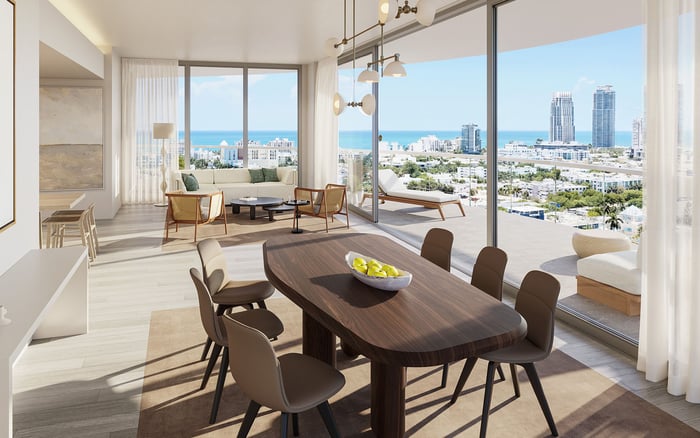
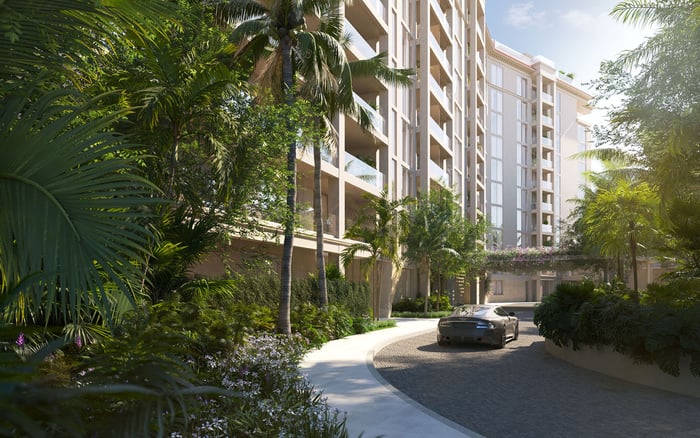
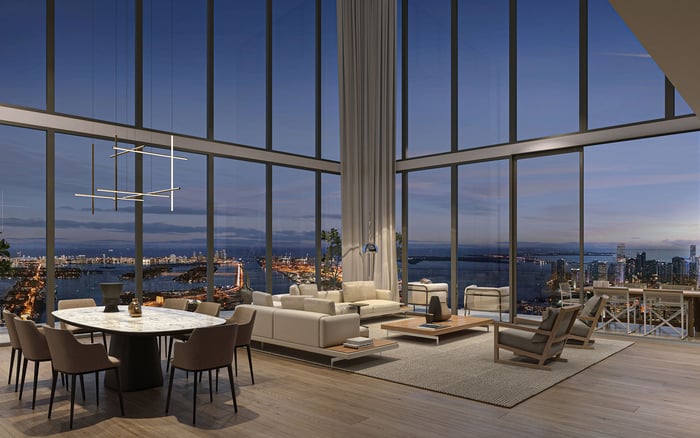
A discerning penthouse buyer’s guide to evaluating summer kitchens in South Florida, from terrace planning and appliance strategy to privacy, serviceability, entertaining flow, and long-term ownership comfort.
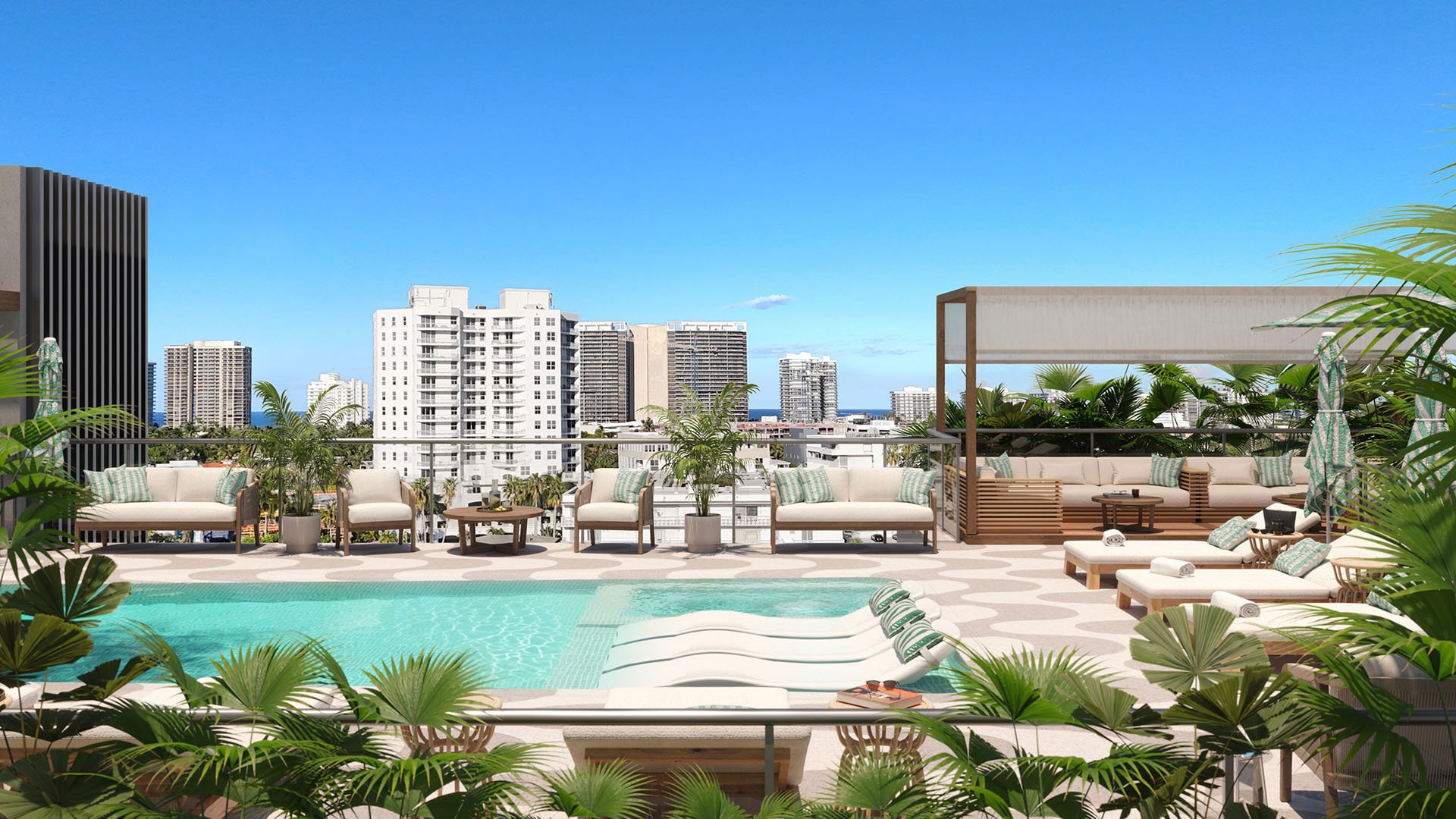
In South Florida, the summer kitchen is not a novelty feature. In the right penthouse, it functions as a second living room, a private restaurant, a cocktail terrace, and a revealing test of the residence’s overall design intelligence. Buyers often focus first on the view, the ceiling heights, the primary suite, or the building’s arrival experience. Yet for day-to-day pleasure, few spaces reveal quality faster than the outdoor kitchen.
A penthouse summer kitchen has to perform under more demanding conditions than a standard balcony grill station. It must account for wind, sun, salt air, privacy, service logistics, sound, lighting, and the natural choreography between indoor and outdoor rooms. A beautiful counter is only the beginning. The best spaces feel effortless because the difficult decisions have already been resolved.
For a buyer comparing residences across Miami Beach, Sunny Isles, Brickell, Coconut Grove, Fort Lauderdale, or Palm Beach, the checklist should be less about spectacle and more about control. The question is not simply whether the terrace has a grill. The real question is whether the outdoor kitchen can support the way you actually live.
Before asking about brand names, burner counts, or refrigeration, study the terrace itself. A penthouse outdoor kitchen should be positioned where it enhances the view rather than interrupting it. It should allow the cook to remain part of the conversation while keeping smoke, heat, and prep activity away from primary seating areas.
Look closely at the depth of the outdoor space. A narrow balcony may photograph well but feel constrained once dining chairs, lounge seating, planters, and service movement are introduced. A generous terrace, by contrast, gives the kitchen its own zone while preserving circulation. Buyers should imagine a seated dinner, a casual breakfast, and a catered evening, then ask whether the plan still feels calm.
Orientation matters as much as size. Morning sun, afternoon exposure, cross-breezes, and shade all affect comfort. A counter that looks ideal during a showing may become less practical if it sits in direct late-day heat. In a true penthouse, the most successful summer kitchens are integrated into a broader outdoor plan, with dining, lounging, and quiet view moments each given room to breathe.
A summer kitchen should be evaluated for completeness, not abundance. More equipment is not always better. What matters is whether the appliance package supports the owner’s routine without overwhelming the space.
A built-in grill or cooking surface should have enough landing space on both sides for platters, tools, and ingredients. Outdoor refrigeration should be easy to reach from both the kitchen and the dining area. If there is a sink, confirm that it feels useful for prep and cleanup rather than ornamental. Storage should be sufficient for essentials, but not so exposed that it becomes a maintenance issue.
Buyers who entertain often should consider whether the setup allows a private chef, caterer, or assistant to work without passing constantly through guest seating. Even a compact summer kitchen can feel luxurious when the workflow is intelligent. Conversely, an oversized installation can feel inefficient if the grill, sink, refrigeration, and serving counter are poorly arranged.
Do not overlook power access. Small appliances, warming equipment, speakers, and task lighting can all require thoughtful placement. An outdoor kitchen without conveniently located outlets may limit how the space is used after closing.
In coastal South Florida, durability is part of luxury. Finishes should be judged by how they age, not only how they appear on day one. Cabinetry, hardware, counters, appliance fronts, and fasteners all deserve close inspection. Look for materials that feel substantial, clean easily, and resist the visible fatigue that can come from sun, moisture, and salty air.
Countertops should be evaluated for staining, heat tolerance, glare, and touch temperature. A surface that looks dramatic indoors may not be the best outdoor choice if it becomes uncomfortable in direct sun or demands constant attention. Cabinet doors should close cleanly and feel stable. Hinges and pulls should not seem delicate or merely decorative in a space exposed to the elements.
Maintenance access is equally important. Ask how filters, drains, appliance panels, and utility connections can be reached. A sophisticated summer kitchen should not require disruptive work for routine service. The more discreet the design, the more important it is to confirm that technicians can access what they need without dismantling finished surfaces.
Outdoor cooking in a penthouse setting requires etiquette as well as equipment. Smoke and scent can travel in ways that are not obvious during a daytime tour. Study the relationship between the cooking area and neighboring terraces, building setbacks, and upper or lower outdoor spaces.
Ventilation should be treated as a comfort issue, not merely a technical one. Even when a kitchen is outdoors, smoke can linger under overhangs or move toward seating areas. Consider whether the cooking zone is protected enough for comfort but open enough to disperse heat and aroma.
Sound deserves the same attention. Entertaining outdoors is part of the South Florida lifestyle, but privacy is a premium feature. A well-planned summer kitchen supports conversation without broadcasting it. The location of speakers, dining tables, bar seating, and prep zones should be reviewed with an ear for both enjoyment and discretion.
This is why penthouse, terrace, balcony, pool, oceanfront, and Miami Beach considerations should be treated as separate parts of the same ownership experience. Each one influences how the others feel in daily use.
The best penthouse summer kitchens have a natural relationship with the interior kitchen, living room, and dining area. Guests should move easily between inside and outside without bottlenecks. The path from the main kitchen to the terrace should be direct enough for serving but elegant enough that it does not feel like a service corridor.
Sliding doors, thresholds, flooring transitions, and furniture placement can determine whether the outdoor kitchen feels truly connected. If guests have to navigate tight corners or pass through private rooms, the feature may be less functional than it appears. If the terrace opens gracefully from the main living space, the summer kitchen becomes part of the home’s social architecture.
Buyers should also think about weather changes. A sudden shift in wind or rain should not make the entire entertaining plan collapse. Covered areas, nearby indoor seating, and flexible dining arrangements help preserve comfort. A thoughtful setup allows a host to adapt without drama.
Many penthouse terraces are most magical after sunset. That makes lighting more than an accessory. It is a defining part of the summer kitchen experience. Task lighting should illuminate cooking and prep areas clearly, while ambient lighting should flatter guests and preserve the mood of the view.
Avoid overly bright fixtures that turn the terrace into a stage. The goal is layered light: subtle undercounter illumination, controlled task lighting, and gentle accents around dining or lounge areas. The most refined outdoor kitchens feel cinematic, not commercial.
Privacy should be tested from multiple angles. Look outward, then look back toward the residence. Consider nearby towers, terraces, and sightlines from amenity decks. A summer kitchen may be perfectly positioned for the view yet too exposed for relaxed evening use. Landscaping, screens, architectural returns, and furniture placement can all help create a more intimate setting.
A buyer should ask direct, practical questions before assigning value to a summer kitchen. What utilities serve the space? What equipment is included? What is built in, and what is movable? Who maintains the components? Are there building rules that affect cooking, smoke, hours of use, or modifications? Are future upgrades simple or complicated?
Review the space with the same discipline you would bring to an indoor kitchen. Open every cabinet. Test the ergonomics. Stand at the cooking station and imagine guests arriving. Walk the path to the powder room, the bar, the main kitchen, and the dining table. If the layout feels intuitive, that is a strong sign. If it requires explanation, it may be less successful in practice.
A summer kitchen should add confidence to the purchase. It should not be a feature that creates uncertainty after closing. In South Florida’s luxury market, the difference between an attractive terrace and an exceptional one often lies in these quiet, practical details.
What is the first thing to evaluate in a penthouse summer kitchen? Start with the terrace layout, because size, orientation, circulation, and shade determine how useful the kitchen will be.
Is a larger outdoor kitchen always better? No. A compact, well-planned kitchen can outperform a larger one if the workflow, storage, and seating relationships are stronger.
Should buyers prioritize appliance brands? Appliance quality matters, but placement, ventilation, service access, and durability are just as important in a penthouse setting.
How important is shade for a summer kitchen? Very important. Shade affects comfort, counter usability, appliance performance, and how often the space will be used.
What should buyers check about storage? Confirm that storage is practical, weather-aware, easy to clean, and sufficient for tools, serving pieces, and outdoor essentials.
Can a balcony summer kitchen be successful? Yes, if the plan preserves circulation and does not crowd dining, lounging, or the view experience.
Why does privacy matter so much outdoors? Privacy shapes how naturally owners use the terrace for dining, entertaining, and quiet evenings after sunset.
What lighting works best for outdoor kitchens? Layered lighting works best, with clear task lighting for cooking and softer ambient light for dining and conversation.
Should building rules be reviewed before purchase? Yes. Buyers should understand any rules affecting outdoor cooking, modifications, equipment, noise, and maintenance access.
What makes a penthouse summer kitchen truly luxurious? It feels effortless, durable, private, and connected to the interior living spaces without sacrificing the view.
To compare the best-fit options with clarity, connect with MILLION.
If branded residences are on your mind — as a home or as an allocation — we would be glad to share what we are seeing, privately.
Begin a quiet conversation