A discreet buyer’s guide to terrace exposure at St. Regis® Residences Sunny Isles, focusing on salt air, UV, wind, floor height and long-term outdoor presentation.
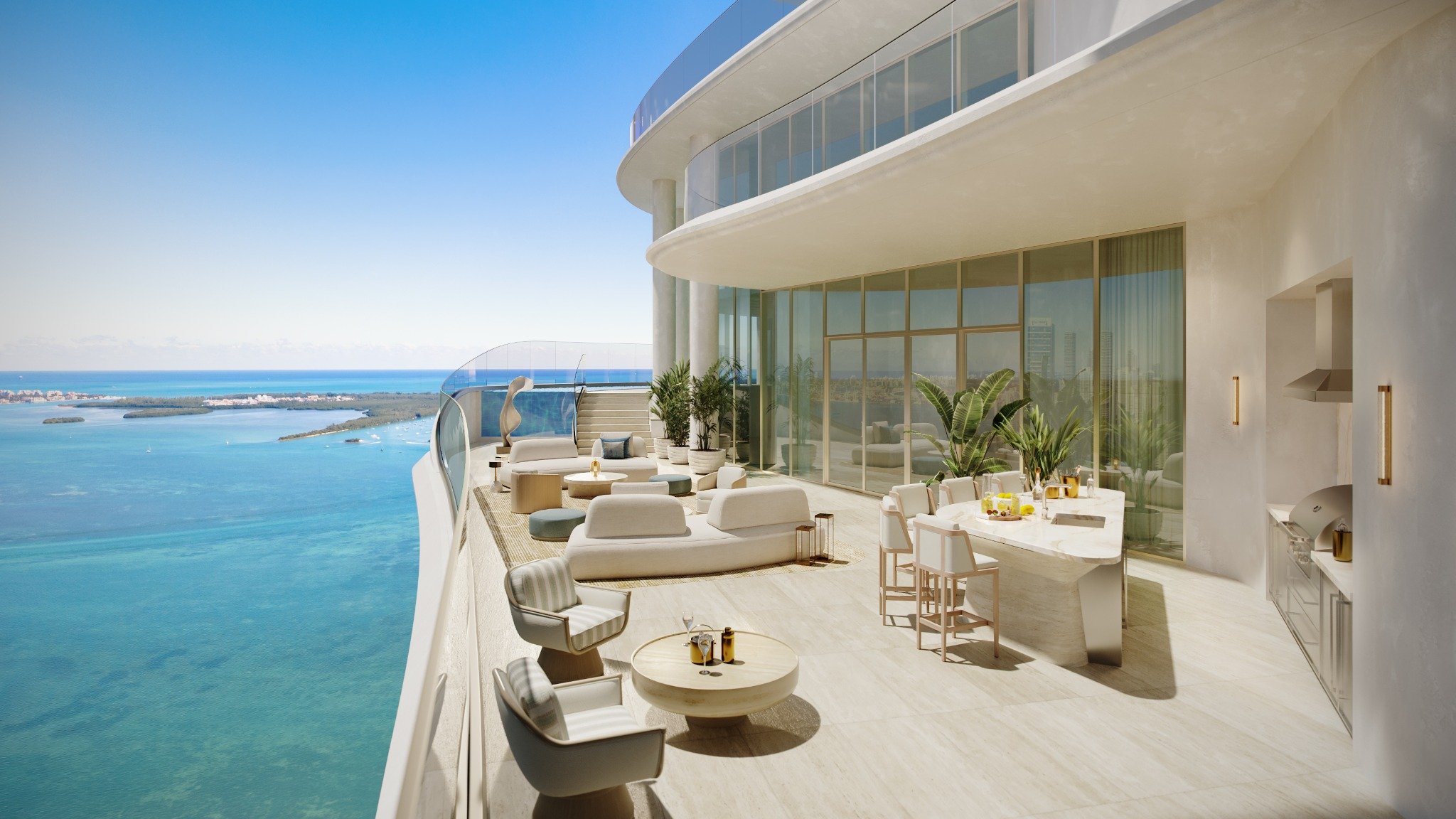
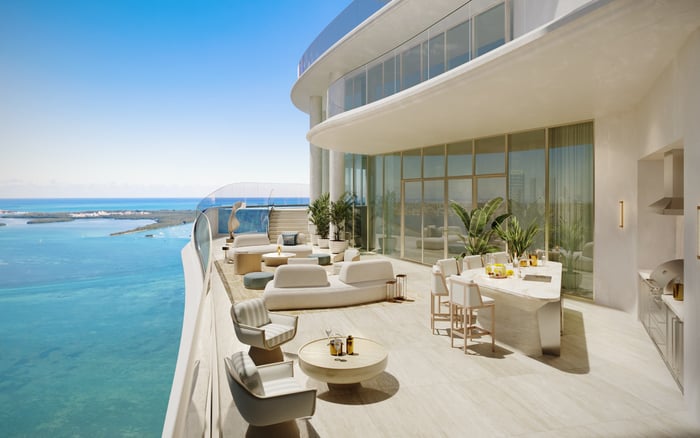
At St. Regis® Residences Sunny Isles, the terrace is not an afterthought attached to a finished interior. It is a defining element of the ownership experience, set within the Atlantic oceanfront environment of Sunny Isles Beach. That distinction matters. A terrace here functions as an open-air living room, a view platform and, in practical terms, an exposed component of the residence that deserves the same discipline applied to interior finishes.
The project is positioned for buyers who value indoor-outdoor living, expansive water views and service-oriented branded-residence ownership. In this context, exposure is not simply about what appears beyond the glass. It shapes how outdoor furniture ages, how surfaces present, how often owners think about care and how usable a terrace feels across changing weather conditions.
For buyers considering St. Regis® Residences Sunny Isles, the essential question is not whether the terrace is beautiful. It is how that beauty should be protected in a setting shaped by salt air, humidity, UV intensity, wind and storm conditions.
Waterview is not a single condition on the South Florida coast. At this project, east-facing exposure is oriented toward the Atlantic Ocean, while west-facing exposure is oriented toward the Intracoastal and city side. Both can be compelling, but they do not behave the same way.
East-facing terraces typically carry the emotional premium of direct ocean orientation. They also sit closer to the energy of the Atlantic environment, where salt spray, wind and sun intensity can play a more active role in daily terrace conditions. For an owner, that can influence everything from the weight and resilience of outdoor furnishings to the choice of fabrics, metals, planters and decorative accessories.
West-facing terraces may feel comparatively more sheltered from direct ocean influence, while still participating in the broader coastal climate of Sunny Isles Beach. They can offer a different rhythm of light, view and exposure. The practical takeaway is straightforward: orientation should be evaluated as a lifestyle choice and an upkeep profile, not only as a view preference.
That distinction matters in a market where buyers may compare oceanfront and near-water experiences across addresses such as Bentley Residences Sunny Isles, The Ritz-Carlton Residences® Sunny Isles and other Sunny Isles Beach towers. The view is part of the seduction, but exposure is part of the ownership reality.
Terrace design in an oceanfront tower should begin with durability, then move into aesthetics. In South Florida, salt air and humidity are not occasional variables. They are persistent conditions. UV exposure can alter color, texture and surface appearance, while wind can affect how furniture feels and performs in daily use.
That does not mean outdoor spaces should become visually defensive. Quite the opposite. The most successful terraces feel resolved, calm and luxurious because the owner has selected pieces appropriate to the setting. Frames, cushions, tables, planters and accessories should be understood as coastal materials, not merely extensions of an interior palette.
This is where the definition of luxury becomes more rigorous. A terrace that photographs beautifully on day one but requires constant correction may not deliver the ease expected from branded residences. Conversely, a terrace planned around coastal exposure can remain elegant precisely because its beauty is supported by practical judgment.
For owners comparing branded coastal and urban-resort residences, St. Regis® Residences Brickell offers a useful reminder that outdoor space should be treated as functional living space, not just a visual amenity. At Sunny Isles, that means considering where people will sit, how furniture will be secured or stored when conditions change, which surfaces will show weathering first and how the outdoor environment will be cared for when the residence is not in constant use.
Higher-floor terraces can experience different wind and weathering conditions than lower-floor terraces. That does not make one inherently better than the other, but it does make floor height a meaningful part of buyer diligence. An owner who imagines quiet morning coffee outdoors, frequent sunset entertaining or year-round lounge use should consider how elevation may affect comfort, furniture choices and maintenance expectations.
On higher levels, the sensation of wind can become more prominent, and the terrace may require a more deliberate approach to movable objects, plantings and lightweight decor. On lower levels, the outdoor space can have a different feel, with its own balance of exposure, view angle and privacy considerations. In both cases, the Atlantic environment remains a central factor.
Buyers often focus first on the view corridor. That is understandable. Yet a sophisticated purchase decision also asks how the terrace will live on an ordinary Tuesday, after a humid week, after sustained sun and after weather has tested every exposed finish. Oceanfront ownership rewards this kind of foresight.
This same lens can be useful when comparing other design-forward coastal addresses in Sunny Isles and the broader South Florida market. The architectural language may differ, but the coastal maintenance mindset remains relevant.
The long-term concerns for South Florida oceanfront towers include corrosion, sealant fatigue and surface weathering. For individual owners, the point is not to diagnose building systems or anticipate technical outcomes. It is to understand that the terrace is part of the residence’s outward presentation and should be managed with the same care as millwork, stone, lighting and furnishings inside.
Furniture, finishes, plantings and maintenance arrangements should all be evaluated through the lens of Atlantic exposure. Outdoor fabrics should be selected for performance in strong light and humidity. Metal details should be considered for coastal appropriateness. Planters should be chosen with wind, drainage and salt tolerance in mind. Service routines should reflect the reality that an outdoor room faces a harsher environment than an interior salon.
For seasonal owners, this can be especially important. A terrace that is not used daily still receives daily exposure. Sun, salt, humidity and wind do not pause when the owner is away. The residence may be service-oriented, but the owner’s selections still shape how gracefully the outdoor space performs.
Oceanfront luxury has always involved a bargain: the closer the residence comes to the water, the more extraordinary the experience, and the more thoughtful the stewardship required. At St. Regis® Residences Sunny Isles, that balance is central to the appeal.
The most useful questions are practical rather than purely decorative. Which exposure best matches how the owner will actually use the terrace? Is the priority direct Atlantic orientation, a more sheltered city and Intracoastal outlook, or a particular balance of both? How does floor height affect the intended use of the outdoor space? Will the terrace be furnished for daily lounging, formal entertaining or quiet seasonal enjoyment?
Buyers should also consider how terrace choices will affect long-term presentation. A St. Regis-branded residence carries expectations of polish and continuity. Outdoor rooms contribute to that impression every bit as much as the interior arrival sequence. Weathered cushions, unsuitable metals or wind-challenged planters can diminish the experience, even when the view remains exceptional.
The most successful approach is to treat the terrace as both lifestyle and infrastructure. It should be beautiful enough to belong to the residence, resilient enough to belong to the coast and maintained well enough to preserve the quiet standard associated with true oceanfront ownership.
Why does ocean exposure matter so much at St. Regis® Residences Sunny Isles? The residences sit in an Atlantic oceanfront environment, so salt air, humidity, UV exposure, wind and storm conditions all influence terrace planning.
Are east-facing terraces different from west-facing terraces? Yes. East-facing terraces are oriented toward the Atlantic Ocean, while west-facing terraces look toward the Intracoastal and city side.
Should buyers choose terrace furniture differently for oceanfront living? Yes. Outdoor furnishings should be selected for coastal durability, not only for visual continuity with the interior.
Does floor height affect terrace upkeep? It can. Higher-floor terraces may experience different wind and weathering conditions than lower-floor terraces.
Is the terrace mainly a design feature? No. At this level, the terrace is a functional living area and a meaningful part of the residence’s lifestyle value.
What long-term issues should owners keep in mind? Corrosion, sealant fatigue and surface weathering are relevant concerns for South Florida oceanfront towers.
Do plantings need special consideration on oceanfront terraces? Yes. Plantings should be evaluated with wind, salt air, humidity and maintenance practicality in mind.
Can a more sheltered orientation still feel luxurious? Yes. A west-facing exposure can offer a different view and lifestyle profile while remaining part of the coastal experience.
How should seasonal owners think about terrace care? Even when a residence is not occupied daily, the terrace continues to face sun, salt, humidity and wind.
What is the best buyer mindset for this type of residence? Treat the outdoor space as both a luxury asset and an exposed part of the residence that deserves planned care.
When you're ready to tour or underwrite the options, connect with MILLION.
If branded residences are on your mind — as a home or as an allocation — we would be glad to share what we are seeing, privately.
Begin a quiet conversation