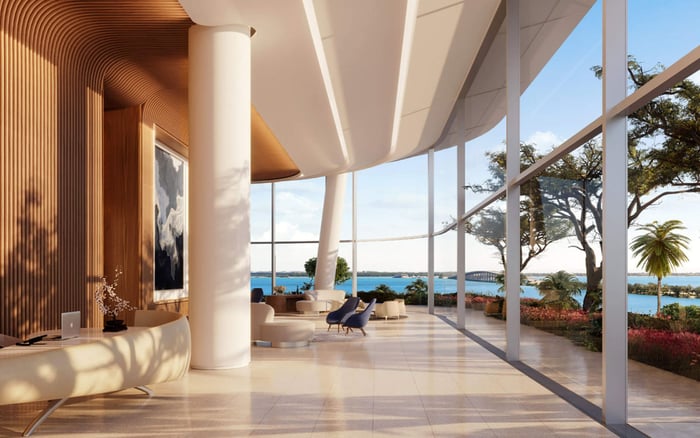
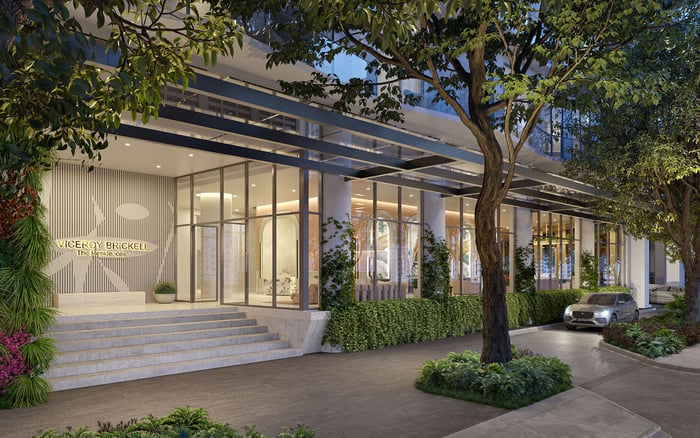
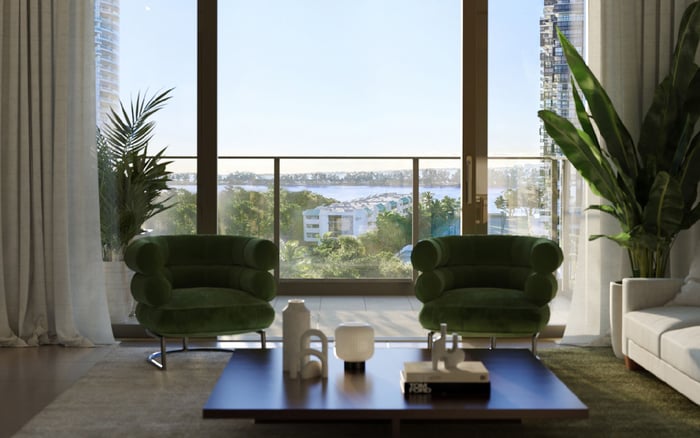
A buyer-focused guide to evaluating light, glare, privacy, and view durability at The Residences at Mandarin Oriental, Miami on Brickell Key.
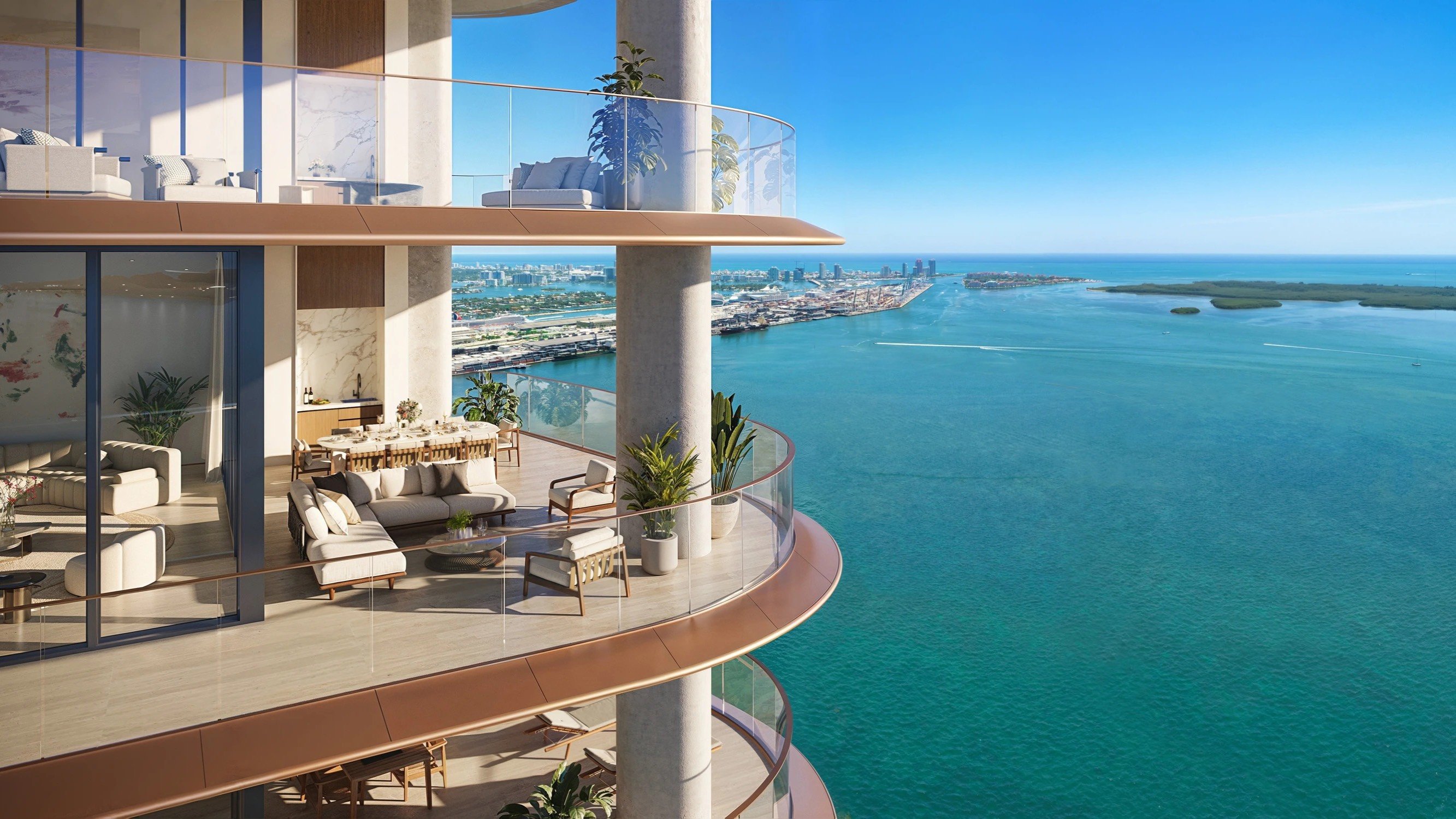
At The Residences at Mandarin Oriental, Miami, the initial temptation is to reduce the decision to one phrase: waterfront living on Brickell Key. For sophisticated buyers, that is only the starting point. Waterfront is a setting, not a complete description of how a residence will live at 8 a.m., 3 p.m., or after sunset.
Brickell Key offers a rare combination of downtown adjacency and a water buffer from the mainland. Its limited-entry island layout, connected to the Brickell financial district by a short bridge, shapes not only arrival and privacy, but also sightlines. A residence may look toward Biscayne Bay, the Brickell and Downtown skyline, neighboring Brickell Key towers, the existing hotel, podium elements, pool areas, gardens, promenades, or a layered mix of those elements.
That is why light, glare, and view corridors deserve the same scrutiny as finishes, amenities, and brand. In a high-value purchase, the question is not simply whether a home has a water view. It is whether the daily experience of that view aligns with the way the buyer lives.
On Brickell Key, simple labels such as east-facing or west-facing rarely tell the full story. The island’s oblique geometry means an exposure can receive sun and frame views at angles that differ from a conventional street grid. A bay-facing residence may emphasize water, sky, and distant island or causeway impressions, while a mainland-facing residence may lean into Brickell and Downtown skyline drama.
That does not make one inherently superior. A buyer who values bright morning living spaces may evaluate differently from someone who works from home in the afternoon, entertains at dusk, or wants bedrooms that remain calm through peak heat. Morning light, afternoon heat, and low-angle sun should be studied room by room, especially in living areas, bedrooms, kitchens, and workspaces.
The most useful exercise is to pair the floor plan with the stack location and balcony orientation. Buyers comparing Brickell projects such as St. Regis® Residences Brickell or Una Residences Brickell often learn that exposure, not just height, can define comfort. The same discipline applies on Brickell Key.
Miami’s light is part of its luxury vocabulary, but it is also physically intense. The reflective surface of Biscayne Bay, surrounding glass façades, and expansive outdoor spaces can create materially different glare and heat conditions from one residence to another. A beautiful water view can also amplify brightness across floors, walls, screens, art, and seating areas.
This does not mean buyers should avoid bright residences. It means they should understand how brightness is managed. Balcony depth, glass performance, window treatments, interior finish palettes, and screen placement all matter. A deep balcony may soften certain moments of sun, while a shallow outdoor edge may feel more visually open but expose interiors to stronger light depending on angle and time of day.
For buyers who work remotely, glare is especially practical. A dramatic view corridor can be less useful if a laptop, television, or kitchen surface becomes difficult to use during key hours. Ask where the primary seating wall sits, where screens are likely to go, and whether bedrooms receive direct low-angle light during the moments that matter most to the household.
View quality at The Residences at Mandarin Oriental, Miami should be assessed as a composition. Open bay is only one possibility. Skyline, bridge, neighboring towers, hotel elements, podium areas, pools, gardens, and promenades may all become part of the visual foreground or background.
Because Brickell Key is largely ringed by high-rise residential buildings, some residences may have layered sightlines rather than uninterrupted open water. That layering can be attractive. Neighboring towers can create urban depth, frame the skyline, and produce powerful nighttime city-light effects. They can also create privacy questions or partial obstructions that are not obvious from a generic rendering.
The buyer’s task is to identify the primary view corridor. Is the eye drawn first to Biscayne Bay, the skyline, a bridge alignment, a neighboring tower, the hotel, a podium, a pool deck, a garden edge, or a water-edge promenade? Comparable waterfront decisions arise at nearby projects such as Baccarat Residences Brickell, where the most valuable perspective is often the one that fits the buyer’s daily rhythm, not merely the one that sounds best in a brochure.
Higher floors may improve openness and horizon visibility, but they do not automatically eliminate glare, reflected light, or skyline interruptions. A high residence can still face intense sun, catch reflected water light, or look across another tower depending on stack and angle.
Lower floors deserve equal nuance. They may benefit from gardens, promenades, pool areas, and water-edge foregrounds that make the residence feel connected to the island. At the same time, they require closer review of privacy, near-field obstructions, and the role of podium or hotel-related elements. The existing Mandarin Oriental hotel and surrounding low-rise or amenity areas can influence near-field views from some residences.
For this reason, floor premium should not be evaluated in isolation. A higher floor with a compromised angle may not outperform a lower floor with a more pleasing foreground, and a lower floor with a warm garden view may live better than expected if privacy is well resolved. This is a classic buyer’s guide issue: price must be connected to lived experience.
Before committing, buyers should ask for exact floor plans, stack locations, balcony orientation, and real view studies. The goal is to compare similar-priced residences with specific visual and light information rather than broad directional language.
A strong due-diligence review includes daytime and evening perspectives where available, close attention to neighboring tower relationships, and a careful look at whether the view depends on existing gaps between buildings or a more durable open-water corridor. View durability matters for resale value because the next buyer will ask many of the same questions.
It can also be useful to compare the emotional profile of other Brickell residences, such as The Residences at 1428 Brickell, with the island experience of Brickell Key. The latter offers a distinct waterfront setting, but that setting still requires stack-by-stack judgment.
Is every residence at The Residences at Mandarin Oriental, Miami an open-water view home? No. Views may include bay, skyline, neighboring towers, hotel, podium, pool, garden, promenade, or a combination.
Should buyers rely on east-facing or west-facing labels? No. Brickell Key’s angled island geometry can make actual sun and view direction more nuanced than simple labels.
Do higher floors always have better views? Not automatically. Higher floors may improve openness, but glare, reflections, and nearby skyline elements can still matter.
Can lower floors be desirable? Yes. Lower floors may offer garden, promenade, pool, or water-edge foregrounds, but privacy should be evaluated carefully.
Why is glare such an important issue in Miami? Sun, bay reflection, glass façades, and balcony design can make brightness feel very different by exposure and room.
Which rooms deserve the closest light review? Living areas, bedrooms, kitchens, and workspaces should be studied for morning light, afternoon heat, and low-angle sun.
What documents should a buyer request? Ask for exact floor plans, stack locations, balcony orientation, and real view studies before comparing residences.
Can neighboring towers improve a view? Yes. They can create skyline depth and evening light, although they may also affect privacy or block portions of a view.
Does a water view guarantee resale strength? No. Resale value depends on the quality, comfort, and durability of the specific view corridor.
What is the most practical way to compare similar-priced units? Compare actual light, glare, privacy, and view composition room by room rather than relying on broad marketing terms.
For a discreet conversation and a curated building-by-building shortlist, connect with MILLION.
If branded residences are on your mind — as a home or as an allocation — we would be glad to share what we are seeing, privately.
Begin a quiet conversation