Saltwater pools have become a quiet marker of wellness-forward luxury in South Florida, pairing a softer swim experience with a maintenance profile that can be more predictable when managed correctly. For buyers evaluating amenity packages, the distinction is not simply “salt versus chlorine,” but how water chemistry is controlled, how surfaces are protected, and how daily routines can be simplified without compromising skin comfort. At The Well Bay Harbor Islands, the conversation resonates because the broader market is increasingly aligning lifestyle, longevity, and design. Understanding what saltwater systems do, what they do not do, and what best practices look like helps residents protect their skin, safeguard finishes, and preserve that resort-level feel season after season.
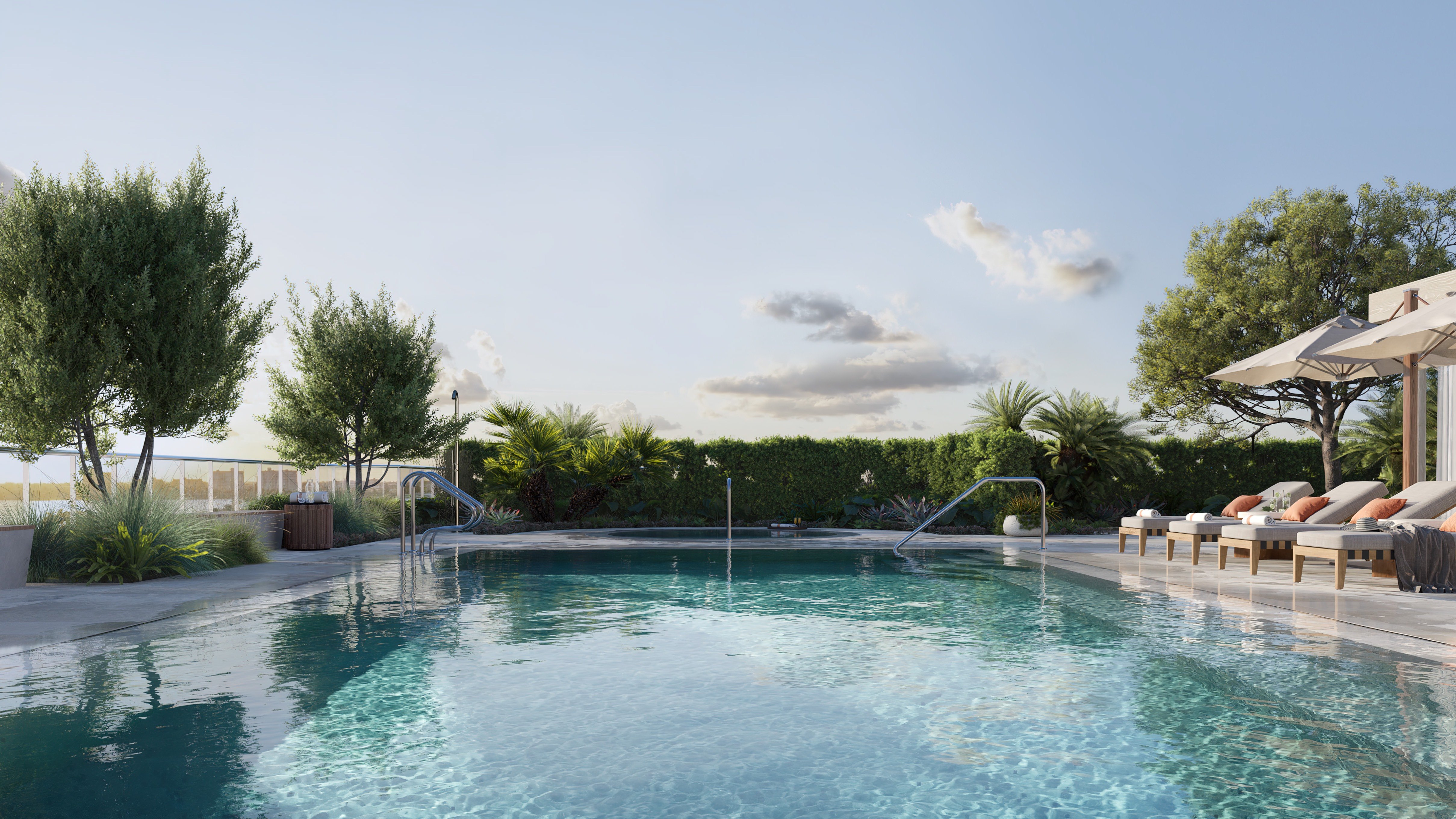
Saltwater pools are often framed as “better for skin,” but for a discerning South Florida buyer, the value is more specific. A saltwater pool uses a salt chlorine generator to produce chlorine on-site instead of relying on frequent additions of traditional chlorine products. The water is still chlorinated-yet many swimmers experience it as less harsh, with less of the sharp “pool smell” and a softer feel on the skin.
In an ultra-premium market where amenity decisions increasingly connect to longevity, recovery, and everyday comfort, saltwater reads as a lifestyle signal: the property is designed for repeat use. This is not merely an aesthetic upgrade. It is a systems choice that shapes how the pool is serviced, how surrounding materials age, and how residents feel after a daily swim.
Wellness-oriented buyers comparing Bay Harbor and neighboring enclaves are also evaluating how an amenity supports routine. A pool that encourages frequent, low-friction use becomes more than recreation-it becomes a daily practice, particularly when paired with **the well**ness-first positioning associated with The Well Bay Harbor Islands.
Most skin complaints tied to pools are not about chlorine in isolation; they are about imbalance-overly high sanitizer levels, pH drift, and irritants that accumulate when filtration and circulation don’t keep pace with heat, bather load, and organic matter.
A well-managed saltwater system can help because it typically generates chlorine continuously in smaller increments. That steadier output can reduce the peaks and valleys that make water feel aggressive. When pH, alkalinity, and sanitizer levels stay within a consistent range, skin often feels less stripped, eyes can feel less irritated, and hair is frequently less brittle.
Still, saltwater is not a guarantee of comfort. If pH rises and stays high, sanitizer becomes less effective and operators may compensate in ways that make the swim feel worse, not better. The takeaway is straightforward: the “gentle” experience comes from stable chemistry, not the label.
Practical habits matter, even in a fully serviced building. A quick pre-swim rinse reduces sunscreen and oils entering the water, helping keep combined irritants down. A post-swim rinse followed by moisturizer supports the skin barrier-especially for anyone already managing dryness in air-conditioned interiors.
From a maintenance standpoint, saltwater systems appeal because the generator produces sanitizer automatically. That can mean fewer manual chemical additions and less reliance on handling chlorine products. For lifestyle-driven owners and second-home residents, predictability is part of the luxury.
The tradeoff is a different kind of discipline: materials stewardship. Saltwater isn’t “ocean water,” but it is saline enough to accelerate corrosion and surface wear when details are overlooked. Common vulnerabilities include metal fixtures, railings, outdoor furniture hardware, and porous stone that isn’t properly specified and sealed.
In South Florida’s coastal environment, the air already works against metals. With added salt exposure, the design and maintenance program must be exacting: appropriate stainless steel grades, powder-coating where suitable, correct fastening systems, and a rinse-down routine for touchpoints.
This is where elevated buildings separate themselves. The strongest amenity decks are planned as a complete system-water chemistry, drainage, surfaces, and service access are considered together-so the experience remains pristine and the maintenance stays discreet.
Bay Harbor attracts buyers who want proximity without constant intensity. The location supports a rhythm of morning workouts, midday resets, and evenings that feel private. In that lifestyle, a pool isn’t a weekend feature-it’s a daily utility: a place for laps, low-impact conditioning, and post-training decompression.
Saltwater pools complement that cadence because they can feel more inviting for frequent use. When you’re swimming often, comfort becomes cumulative. Small differences in water feel, eye comfort, and post-swim skin “tightness” start to matter.
For those exploring new luxury inventory nearby, the broader Bay Harbor set includes boutique and waterfront options like Onda Bay Harbor and La Maré Bay Harbor Islands, where amenity decks and material decisions are part of the value proposition. Even when buildings differ in scale and mood, buyers increasingly ask the same questions: how will it feel to use this every day, and what will it look like in five years?
A luxury resident doesn’t need to become a pool technician-but understanding the basics improves outcomes and helps you ask better questions.
First, saltwater pools still rely on chlorine for sanitation. The salt chlorine generator converts dissolved salt into chlorine, which performs the same core function as in any pool: controlling pathogens and keeping water safe. Second, comfort is closely tied to pH management. When pH climbs, water can feel more irritating and sanitizer becomes less efficient. Third, “feel” is influenced by what’s in the water beyond sanitizer: sunscreen residue, body oils, and fine debris that filtration needs to remove.
In a well-run residential environment, residents experience the benefits indirectly: clear water, minimal odor, and a consistent sensation on the skin. Behind the scenes, that outcome typically comes from consistent testing, calibrated equipment, and a service plan that keeps filtration and circulation performing as designed.
If you’re evaluating a building, ask to see how the pool deck is maintained in real time-not only how it’s rendered. Look for quiet indicators: no scale buildup at the waterline, no chalky residue on tile, no rust staining near fixtures, and surfaces that read crisp rather than tired.
Saltwater brings finish considerations that matter for long-term value. Natural stone can be stunning on a pool deck, but porous stone requires the right selection and sealing program to reduce salt intrusion and staining. Metal details should be specified with corrosion resistance in mind, especially in an already-humid, coastal climate.
Even with professional maintenance, residents can extend the life of surrounding materials through small, nearly invisible habits: rinsing off after ocean days before entering the pool, avoiding leaving wet towels draped over metal rails for extended periods, and periodically rinsing outdoor furniture rather than only wiping it down.
For buyers who also spend time in other South Florida districts, it’s worth noting how different design languages treat the pool as a brand statement. In Brickell, for example, some projects position the pool deck as an extension of hospitality and fashion. The amenity experience at 888 Brickell by Dolce & Gabbana expresses that concept through high design, where material selection and meticulous upkeep are essential to maintain the intended look.
If skin health is part of your personal wellness strategy, the pool can be a supportive habit-when approached with intention.
Start with timing and exposure. Frequent, shorter swims can be gentler than occasional marathon sessions, particularly for sensitive skin. Rinse before entering to reduce the chemical load required to keep water clean. After swimming, rinse again, then apply a simple, fragrance-light moisturizer to restore the skin barrier.
For sun protection, choose a water-resistant sunscreen and reapply thoughtfully, while recognizing that heavy oils and certain formulations can contribute to residue in pool water. A balanced approach keeps your skin protected while keeping the water cleaner for everyone.
Finally, pay attention to your environment. Air-conditioned interiors can amplify dryness after a swim. Hydration, a warm shower rather than overly hot, and consistent moisturizer use often make a bigger difference than pool type alone.
In a market crowded with “resort-style” language, saltwater pools can be a meaningful differentiator when they support a coherent wellness promise. The value isn’t limited to a softer swim. It’s the signal that systems were considered-water quality, daily usability, and long-term material performance.
For buyers considering Bay Harbor as a primary residence or refined second home, this is also about alignment. A wellness-centered building should support habits without adding friction. When the pool feels inviting, looks immaculate, and is maintained discreetly, residents use it more. Over time, that consistent use becomes part of how a home performs-not just as an address, but as a platform for health.
The strongest luxury outcomes pair aspiration with specifics. Saltwater pools can support skin comfort and a calmer maintenance cadence, as long as chemistry is managed and materials are protected. That combination is exactly what wellness-forward buyers are underwriting when they choose a building.
Are saltwater pools chlorine-free? No. Saltwater pools generate chlorine from salt, so sanitation still relies on chlorine.
Why do some people say saltwater feels better on skin? The water often has steadier chemistry and fewer sharp swings, which can feel less drying.
Can saltwater pools still dry out sensitive skin? Yes. If pH or sanitizer is off, or you skip rinsing and moisturizing, dryness can still occur.
Does saltwater reduce the “chlorine smell”? It can, especially when water is well-balanced and combined irritants are kept low.
Is saltwater maintenance truly easier? Day-to-day dosing can be simpler, but equipment and materials require attentive oversight.
Will saltwater damage stone and metal around the pool? It can accelerate wear if finishes are not properly selected, sealed, and regularly rinsed.
What should buyers look for on a pool deck during a tour? Check for rust staining, scale at the waterline, slippery residue, and tired-looking surfaces.
Is a saltwater pool the best option for frequent swimmers? Often yes for comfort, but the deciding factor is consistent water balance and filtration.
How can residents protect skin after swimming? Rinse off promptly and apply a simple moisturizer to support the skin barrier.
Does a saltwater pool add resale appeal in South Florida? Increasingly, yes, because it aligns with wellness-focused amenity expectations.
To compare the best-fit options with clarity, connect with MILLION Luxury.
If branded residences are on your mind — as a home or as an allocation — we would be glad to share what we are seeing, privately.
Begin a quiet conversation