Bay Harbor Islands has long been defined by a calm, rational grid: short blocks, water views that arrive in glimpses, and a scale that historically favored privacy over spectacle. Today, that same grid is being reinterpreted through contemporary architecture that treats constraints as a design brief, not a limitation. Within this context, Kobi Karp Architecture has become shorthand for a particular South Florida sensibility: disciplined massing, clean lines, and a resort-grade approach to arrival, amenity, and indoor-outdoor living. For luxury buyers, the conversation is less about reinvention for its own sake and more about what the next chapter of Bay-harbor can deliver. How does a new building sit among established streets? Can it elevate daily life without overwhelming the neighborhood? And in a market where Bal-harbour and Miami-beach remain immediate neighbors, what does “quiet luxury” look like when expressed in concrete, glass, stone, and shade? This is the revival: a move from purely utilitarian waterfront living toward a curated residential experience, one that respects the grid while upgrading everything that happens inside it.
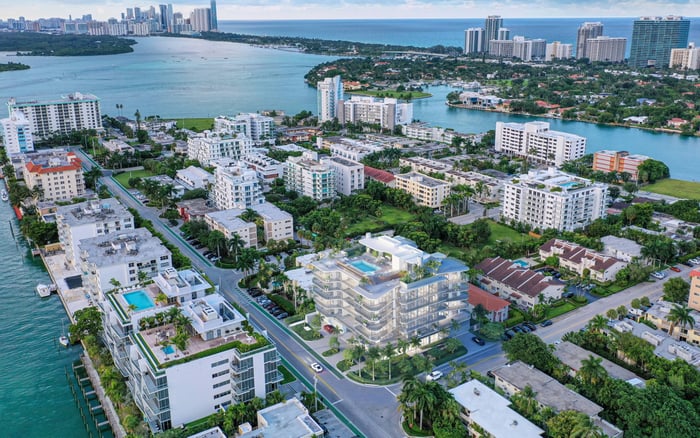
Bay Harbor Islands is a rare coastal enclave where the layout does much of the work. Streets are straightforward, blocks are short, and the presence of water is constant-even when it’s only hinted at between buildings. That clarity is exactly why the neighborhood is entering a new cycle of design ambition. In a place this legible, architectural choices read with more precision, and every decision about height, setback, and façade rhythm becomes part of a shared streetscape.
This revival is not about turning Bay-harbor into a high-intensity skyline. It’s about calibrating luxury to the neighborhood’s scale. The most compelling new residences treat the grid as a sequence of experiences: a discreet drop-off, a considered lobby, a private-feeling vertical transition, and a home where light and water function as the primary finishes.
Within that framework, Kobi Karp Architecture’s influence shows up in buildings that feel composed rather than simply constructed. The intent is to elevate daily living without breaking the neighborhood’s essential promise: a quieter alternative with close proximity to Bal-harbour and Miami-beach.
Luxury buyers often focus on views, finishes, and amenities, but the grid quietly shapes the lived experience. In a compact island setting, it influences everything from morning traffic patterns to afternoon shade.
A practical way to evaluate a new condo in Bay Harbor Islands starts with geometry. How does the building sit on its parcel? Does it preserve sightlines down the street, or present a hard edge? Are terraces designed to protect privacy while still capturing breezes? In premium enclaves, the difference between a good residence and a great one can be as simple as where the sun lands at 4 p.m., or whether the lobby reads as a thoroughfare or a sanctuary.
This is where contemporary architecture can create real value. Better planning turns constraints into comfort: smarter loading and service circulation, a more intentional resident arrival, and floor plans that place primary rooms where they belong. When executed well, the grid becomes an advantage, not a compromise.
Kobi Karp Architecture is often associated with a specific discipline: crisp silhouettes, controlled material palettes, and a belief that South Florida modernism should feel resort-grade without becoming theatrical. In Bay Harbor Islands, that sensibility aligns with what sophisticated buyers tend to seek-privacy, calm, and a sense that every space was drawn, not improvised.
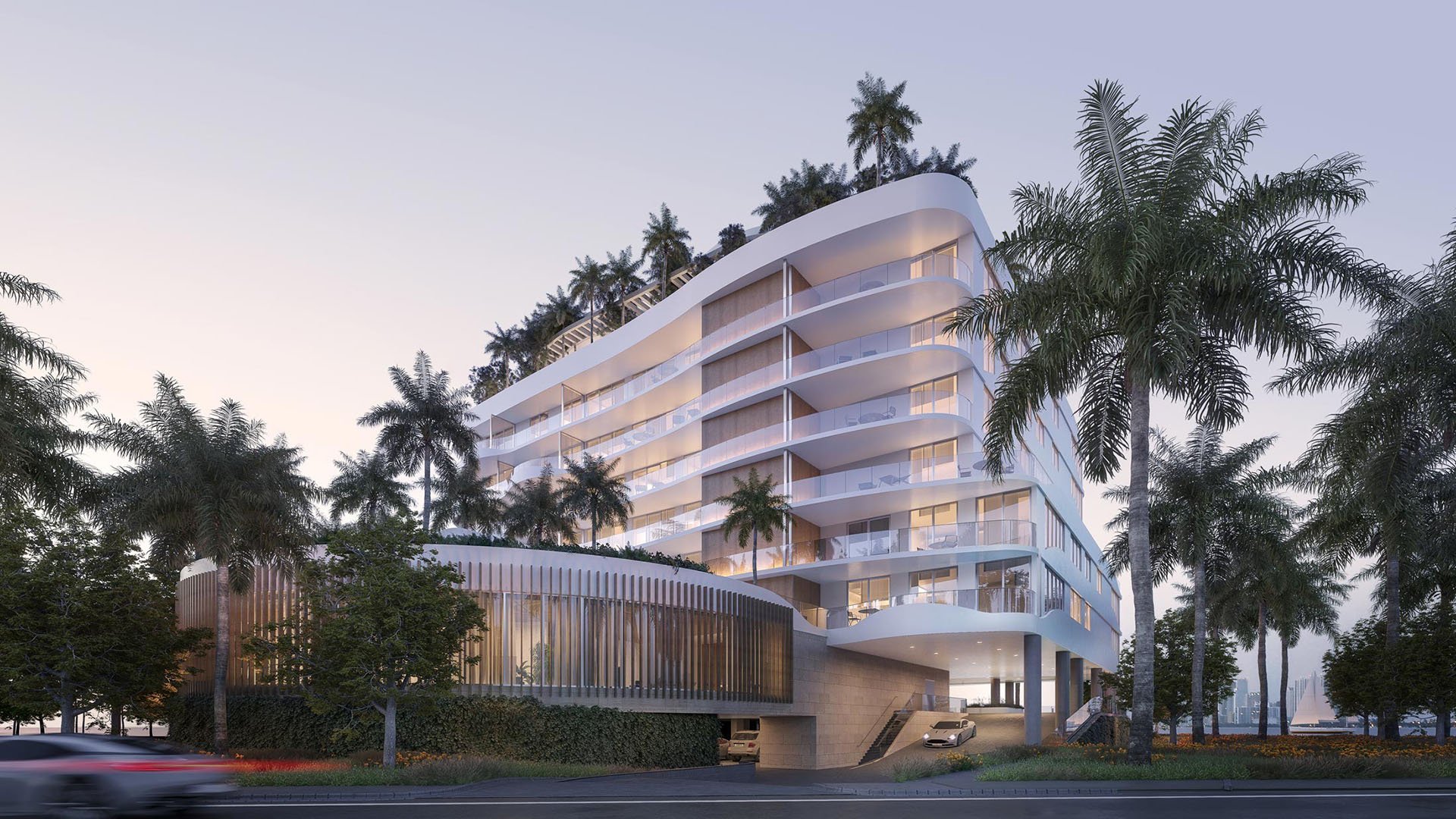
Rather than leaning on visual noise, the strongest contemporary buildings here rely on proportion and shadow. Deep overhangs, layered façades, and carefully considered glazing can make a structure feel lighter, even when it carries substantial volume. The goal isn’t to dominate the street; it’s to refine it, introducing a higher standard of detailing while still respecting the neighborhood.
For residents, the payoff is subtle but meaningful. Better acoustic separation, more thoughtful transitions from public to private space, and amenity levels that feel like extensions of the home all translate into a quieter form of luxury. This is the design language redefining the grid: measured, composed, and livable.
Bay Harbor Islands attracts buyers who want waterfront proximity without the constant intensity of Miami-beach. The revival strengthens that positioning by layering in modern lifestyle expectations: wellness, privacy, and curated communal spaces.
A clear marker of this evolution is the wellness-oriented residential model gaining traction in the area. The Well Bay Harbor Islands reflects the broader shift toward health-minded design and amenities that feel integral rather than bolted on. Even buyers who don’t identify as “wellness people” recognize the value of better air, better light, and spaces that support recovery and routine.
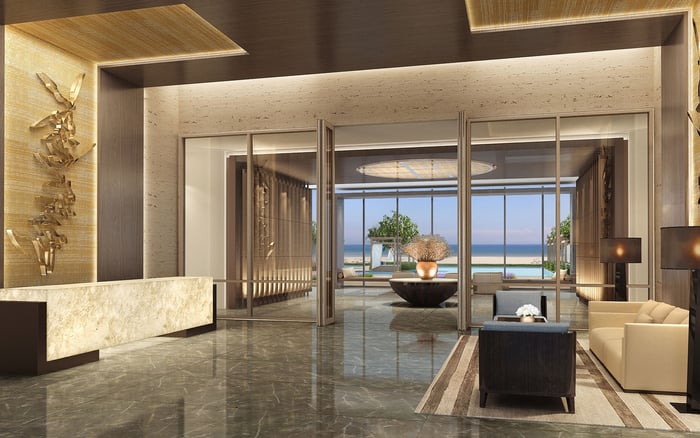
Boutique scale also remains central to the appeal. In Bay-harbor, many buyers want fewer residences, fewer strangers in the elevator, and a more residential cadence. The best new developments answer with restrained amenity programs, increased privacy, and lobbies that feel closer to a private club than a hotel.
One reason the Bay Harbor story feels durable is that it isn’t happening in isolation. The broader North Bay area is moving toward a more design-driven identity, and Bay Harbor Islands benefits from that gravitational pull while maintaining its own distinct tone.
Look at the nearby wave of new residential offerings that anchors the conversation around North Bay living. Origin Bay Harbor Islands signals how new construction is positioning itself: architecture-forward, lifestyle-aware, and aimed at buyers who value both proximity and discretion.
Similarly, Onda Bay Harbor speaks to demand for boutique waterfront residences that emphasize design clarity and indoor-outdoor continuity. For buyers weighing the spectrum between Miami-beach glamour and purely residential quiet, these projects help define what modern Bay Harbor can be.
The takeaway isn’t that every building is identical. It’s that the area has momentum-and momentum tends to compound. Streets improve, expectations rise, and older inventory is pushed to compete through renovations, pricing, or both.
Bay Harbor Islands rewards buyers who evaluate the “invisible” elements, not just the showpieces. A few considerations matter disproportionately here.
First, prioritize arrival and circulation. On a small island, driveways, valet flow, and service entries can either disappear elegantly or become daily friction. A well-designed building protects the resident experience by separating public movement from private arrival.
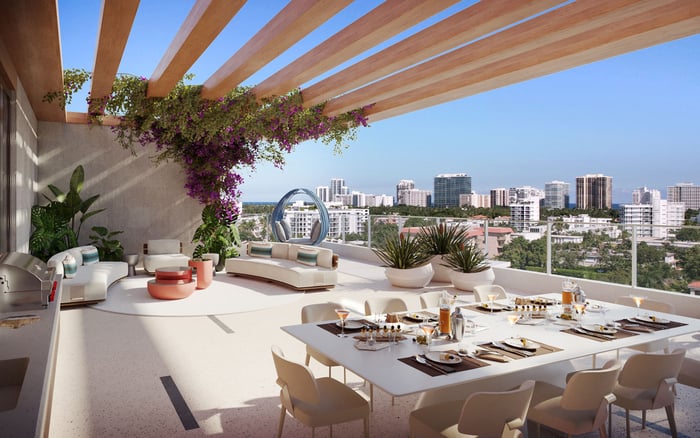
Second, scrutinize terrace design. In a tight grid, terraces are where luxury either feels generous or exposed. Look for depth, privacy strategies, and how railings and planters are used to create comfort without cutting off light.
Third, consider how the building engages the street. Bay-harbor’s charm lies in its residential cadence. Projects that contribute a respectful streetscape-with landscaping and human-scaled details-tend to feel more timeless than those that read as purely object-like.
Finally, evaluate long-term livability. The strongest residences don’t just photograph well; they perform. Storage, acoustics, elevator access, and back-of-house planning are often what separates a merely “new” building from a truly luxurious one.
Bay Harbor Islands sits in the orbit of two globally recognized luxury destinations: Bal-harbour and Miami-beach. Yet it offers a different contract. Where Bal-harbour can feel like a polished showcase and Miami-beach can feel like an ever-evolving stage, Bay Harbor delivers a quieter, more residential rhythm.
For many second-home buyers, that contrast is the point. The island’s scale can feel protective, especially for those who want to stay close to the region’s best dining, retail, and beaches without living at the center of it. This is also where architecture becomes a differentiator. If the neighborhood is quiet by nature, the building has to deliver the “wow” through comfort: ceiling heights that feel airy, glazing that frames water, and materials that age well.
To see how this design-led luxury plays out elsewhere in the region, buyers often cross-shop with Miami-beach projects that emphasize elevated living and a refined amenity experience, such as Five Park Miami Beach. The comparison clarifies what Bay Harbor does best: discretion and day-to-day ease.
The strongest argument for Bay Harbor Islands’ revival is that it’s grounded in fundamentals: water proximity, a coherent street system, and adjacency to world-class neighborhoods. Architecture simply makes those fundamentals more visible.
If Kobi Karp Architecture and similarly design-forward practices continue to shape the area, expect a grid that feels more intentional at every scale. Streetscapes become greener. Ground floors become more curated. Lobbies feel more residential. Homes become more tailored to modern expectations, with spaces that support remote work, wellness routines, and entertaining-without sacrificing privacy.
For buyers, the opportunity is to choose a residence that fits not only a lifestyle, but a philosophy of place. In Bay-harbor, the most valuable luxury isn’t noise or height. It’s calm, carefully designed.
Is Bay Harbor Islands considered part of Miami Beach? No. Bay Harbor Islands is its own municipality near Miami-beach and Bal-harbour.
What makes Bay Harbor Islands’ grid appealing to luxury buyers? The compact layout supports walkability, predictable navigation, and a residential feel.
How does contemporary architecture change the Bay Harbor experience? It can improve privacy, arrival, floor plans, and indoor-outdoor living within tight sites.
Why is Kobi Karp Architecture associated with the area’s revival? The firm’s modern, disciplined design language aligns with Bay Harbor’s discreet luxury.
Are boutique condos more common than large towers in Bay Harbor Islands? The neighborhood is known for a more intimate scale, which many buyers prefer.
What should I prioritize when evaluating a new condo here? Focus on circulation, terrace livability, privacy, and how the building fits the street.
How does Bay Harbor compare with Bal-harbour for daily living? Bay-harbor often feels quieter and more residential while remaining close to Bal-harbour.
Is waterfront exposure guaranteed in Bay Harbor Islands? Not always. Views depend on orientation, setbacks, and how the building is positioned.
Do newer projects change the value of older buildings? New construction can raise neighborhood standards, pushing older inventory to compete.
What is the key advantage of living near Miami-beach without being on it? You get proximity to the lifestyle while maintaining a calmer, more private home base.
For a tailored shortlist and next-step guidance, connect with MILLION Luxury.
If branded residences are on your mind — as a home or as an allocation — we would be glad to share what we are seeing, privately.
Begin a quiet conversation