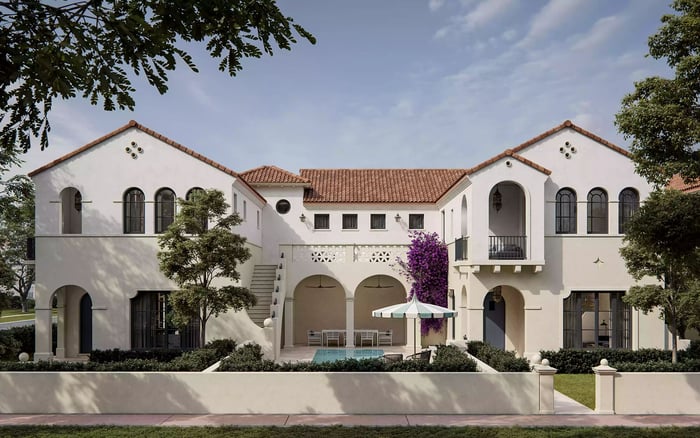
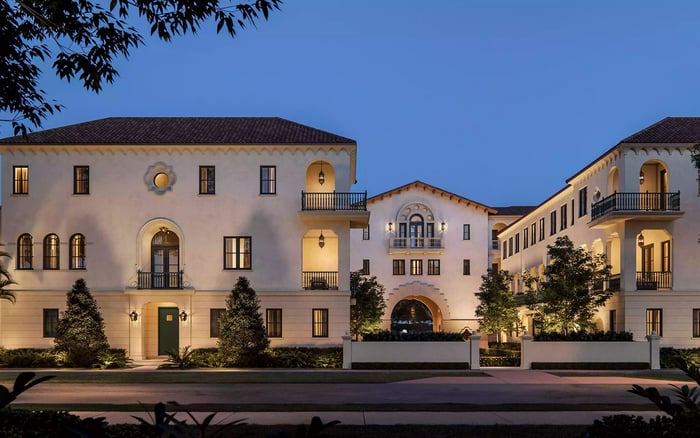
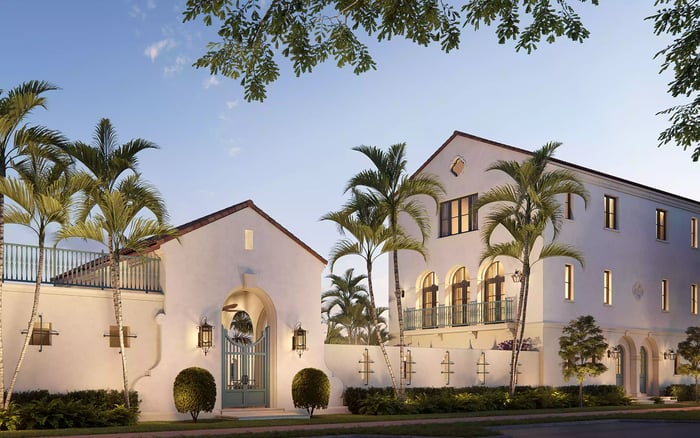
In Coral Gables, “guard-gated” can mean many things: a staffed entry, a controlled perimeter, or simply an expectation of discretion. For luxury buyers, the right question is not whether a gate exists, but what the community’s full security footprint actually delivers day to day. This editorial outlines how to evaluate access control, surveillance coverage, staffing, governance, and the lived experience of safety without confusing visibility with effectiveness.
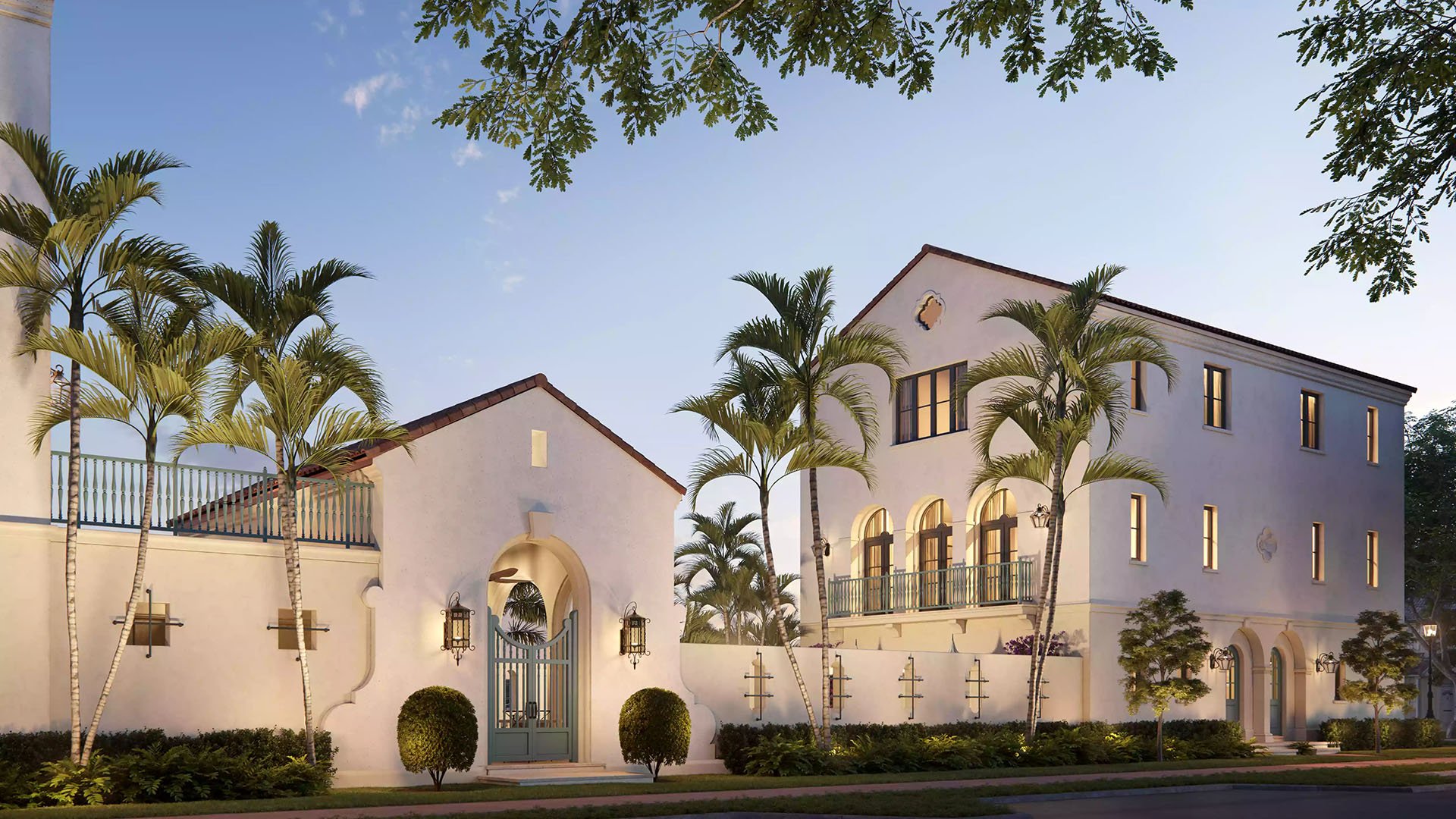
In Coral Gables, guard-gated living suggests a specific promise: controlled access, quieter streets, and a level of privacy that feels aligned with the architecture and the lifestyle. But the label is not a specification. One community may operate as a fully managed security ecosystem with clear protocols and layered controls, while another may rely on a minimal checkpoint that mainly deters casual traffic.
For a luxury buyer, the practical objective is to understand the security footprint: the full set of measures, policies, and day-to-day habits that collectively reduce risk. A staffed gate is only one layer. The true differentiator is how those layers integrate, how consistently they’re maintained, and how the community’s governance makes security decisions over time.
A useful evaluation starts by breaking the footprint into four categories. Any one category can be strong or weak regardless of how impressive the entrance looks.
Perimeter and access design.
Assess how the community controls every point of entry-not simply whether a guardhouse exists. Strong setups minimize “soft” access points, reduce tailgating opportunities, and treat pedestrian and service access with the same seriousness as vehicle lanes.
People and procedures.
Staffing matters, but training and consistency matter just as much. A gate attendant who is expected to function as both concierge and security can work well in a smaller setting, but only when procedures are clear and supported.
Technology and coverage.
Evaluate cameras and access systems by placement, retention, and monitoring practices rather than by brand names. Technology that isn’t routinely tested is effectively decorative.
Governance and funding.
Even a solid security program can thin out over time if it isn’t maintained. The board’s philosophy, reserve planning, and willingness to enforce rules are part of the security posture.
If you want a clean mental model, treat the gate as the front door-not the whole house.
Guard-gated communities often market “controlled access.” Your due diligence is to understand controlled by whom, how, and under what circumstances.
Resident entry.
Confirm whether access is credential-based (sticker, fob, transponder, license plate recognition) and how quickly credentials can be revoked. Many luxury households include staff, family, and frequent guests, so credential management should be easy to administer without becoming permissive.
Guest and vendor entry.
The most common failure point isn’t a dramatic breach-it’s informal exceptions that become routine. Ask how guests are pre-authorized, how delivery drivers are handled, and whether vendors must be on an approved list. If unknown contractors are regularly waved through because “they look like they belong,” the gate is delivering theater.
After-hours protocols.
If staffing shifts overnight, clarify what changes operationally. Do policies tighten or loosen? Are entries logged the same way? Who can override the system?
In this part of Miami-Dade, luxury also means time. The goal is a system that is secure without being frictional. That balance is easiest to sustain when procedures are formal-not improvised.
A uniform at the entrance can provide deterrence and reassurance, but staffing should be evaluated as a program, not a single person.
Coverage and continuity.
Determine whether staffing is continuous, and what happens during shift changes, breaks, or peak traffic. Consistency is a security asset.
Role clarity.
In some communities, gate personnel serve as hospitality-facing ambassadors, elevating the arrival experience. The risk is blurred responsibility. Ask who owns incident response, escalation, and documentation.
Patrol patterns.
If roving patrols exist, understand whether they’re scheduled, random, or reactive. Randomization is often more effective than predictability, but it must be actively managed.
Culture and discretion.
In a true luxury environment, the best security feels calm. The aim is fewer interruptions, fewer confrontations, and fewer “exceptions.” A well-run post is firm without being performative.
For buyers weighing lifestyle tradeoffs, it can be useful to observe how other South Florida luxury properties address secure access alongside high-touch living. For example, Cora Merrick Park and Ponce Park Coral Gables reflect a different security posture than a guard-gated single-family enclave: more vertical, more system-driven, and often more dependent on front-desk and elevator access protocols.
Technology is only as strong as its configuration and upkeep. When evaluating a guard-gated community, focus on fundamentals that translate into real-world performance.
Camera placement and blind spots.
Ask where cameras are positioned: entry lanes, exits, visitor parking, amenities, and perimeter edges. The question isn’t how many cameras exist-it’s whether they cover meaningful decision points.
Retention and access.
Confirm whether footage is stored for a meaningful duration and who can retrieve it. If the retrieval process is unclear or slow, the system is less useful when you actually need it.
Lighting as a security asset.
High-quality, consistent lighting reduces risk and anxiety. Look for thoughtfully illuminated pedestrian paths, entrances, and perimeter-adjacent areas.
System testing and maintenance.
Ask how often access systems and cameras are tested, and whether there’s a routine for replacing failed devices. “We have cameras” isn’t an answer; “we verify they’re working” is.
Luxury buyers often focus on prevention, but response is what you’ll remember. A community’s response posture is a serious component of the overall footprint.
Documentation.
Ask whether incidents are logged, how trends are tracked, and whether residents receive periodic security updates. A mature program learns.
Escalation and coordination.
Clarify how urgent situations are handled, including medical calls, suspicious activity, or property damage. Clear escalation reduces chaos.
Access lockdown capability.
Some communities can quickly restrict entry when needed. Others cannot. You don’t need dramatic scenarios to justify this question; even minor events benefit from clear controls.
In guard-gated communities, security is inseparable from governance. Rules that are inconsistently enforced invite exceptions.
Vendor rules and renovation culture.
High-value neighborhoods attract improvement projects. Ask whether the community has structured rules for contractor access, working hours, and staging. This isn’t merely aesthetic-it controls who is inside the perimeter and when.
Short-term rentals and transient occupancy.
Communities vary in their tolerance for short-term stays. From a security perspective, transient occupancy increases the number of unfamiliar faces and access requests. Even when permitted, it demands tighter guest controls.
Budgets and reserves.
Security systems require ongoing investment. A community may look polished at the gate while the operational footprint quietly thins if maintenance is deferred.
A parallel can be drawn to well-managed concierge environments in other luxury submarkets, where governance is central to discretion. In places like Bay Harbor Islands, for instance, La Maré Bay Harbor Islands reflects the idea that access control is as much about consistent operations as it is about physical barriers.
The most sophisticated security footprint is the one that fits your life. An owner who entertains frequently will want streamlined guest processes. A household with children may prioritize safe internal streets and controlled amenity access. A buyer with travel-heavy routines may value robust credential management for staff and house management.
Also consider the psychological element. Some buyers prefer visible security because it reassures. Others want quiet competence and minimal friction. The strongest communities can deliver both: a graceful arrival, a controlled environment, and policies firm enough to matter.
If you’re comparing guard-gated single-family living in Coral Gables with high-rise, doorman-led access in other neighborhoods, it helps to tour a few distinct models. A Brickell property such as 2200 Brickell offers a more vertical security stack, with controlled entry sequences, staffed lobbies, and elevator access patterns that can feel exceptionally private when well executed.
You can keep this evaluation elegant by focusing on a handful of high-signal questions:
Where are the true entry points? Not just cars, also pedestrians and service routes.
How are guests handled? Pre-authorization, verification, and logging.
What is the overnight posture? Staffing, protocols, and any changes after hours.
Is there a culture of enforcement? Rules that matter are rules that are applied.
Are systems maintained? Testing cadence, replacements, and accountability.
Does it fit your routine? Security should support your lifestyle, not fight it.
In practice, the right community won’t need to over-explain. It will have clear policies, quiet confidence, and a visible track record of consistency.
What does “guard-gated” usually include in Coral Gables? Typically, it means a staffed entry point, but the broader security footprint varies by community.
Is a staffed gate always safer than a keypad gate? Not necessarily; effectiveness depends on procedures, enforcement, and how access is verified.
What is the biggest weakness in many gated communities? Informal exceptions-waved-through guests, vendors, or tailgating behind a resident vehicle.
Should I ask about camera footage retention? Yes; retention, retrieval, and coverage matter more than simply having cameras installed.
How can I evaluate visitor management without being intrusive? Ask to see the guest authorization process and what information is logged at entry.
Do patrols matter if there is already a gate? Patrols can add deterrence and speed response, especially around amenities and perimeter-adjacent areas.
What role does the HOA or community governance play in security? Governance sets budgets, enforces rules, and decides whether systems are maintained or deferred.
How do deliveries affect a community’s security footprint? Deliveries increase entry volume; strong communities use clear protocols to prevent uncontrolled access.
Can a luxury condo have a comparable security profile to a gated enclave? Yes; staffed lobbies, controlled elevators, and credentialed access can create strong, layered security.
What is the most important “feel” factor when touring? Look for calm consistency: an attentive gatehouse, clear procedures, and minimal improvisation.
For a tailored shortlist and next-step guidance, connect with MILLION Luxury.
If branded residences are on your mind — as a home or as an allocation — we would be glad to share what we are seeing, privately.
Begin a quiet conversation