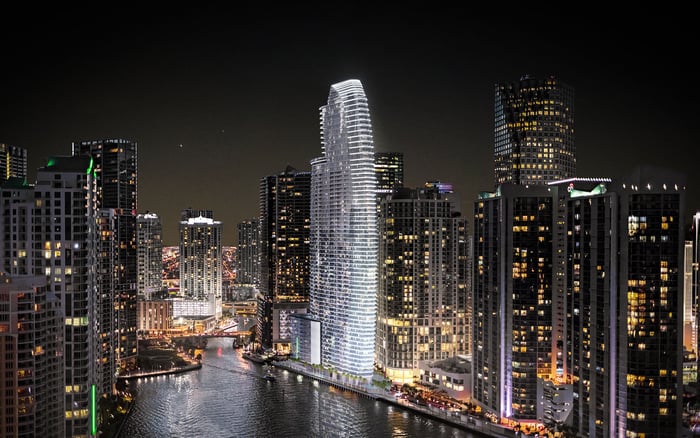
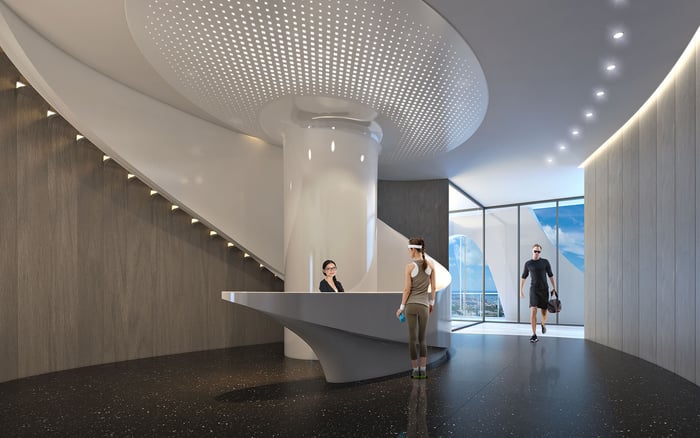
In a connected luxury tower, cyber defense is no longer a back-office concern. For buyers evaluating JEM Private Residences in Downtown Miami, the real standard is whether smart-home convenience, shared building systems, privacy controls, and incident readiness are treated as one integrated security environment.

At the highest tier of residential real estate, buyers have long evaluated design, service, views, privacy, and amenity programming. Today, another criterion deserves equal attention: whether a residence can protect the digital life unfolding inside it. In a tower such as JEM Private Residences, presented publicly as a luxury high-rise in Downtown Miami, smart-home cyber defense should be understood as part of the property’s core value proposition, even when specific technical details of its implementation have not been publicly disclosed.
That distinction matters. It is reasonable to discuss why an ultra-luxury tower should embrace integrated cyber protection. It is not prudent to assume the exact architecture behind any one building without direct public confirmation. For discerning buyers, that means asking sharper questions about the ecosystem rather than focusing only on polished interfaces. A beautiful control panel is not the same as a secure one.
Smart homes are no longer limited to lighting scenes and climate presets. Connected locks, cameras, thermostats, speakers, appliances, visitor systems, parking access, package management, and resident apps all expand the number of potential entry points. In a standalone estate, that is already significant. In a vertical community, where private residences intersect with shared access control, surveillance, elevators, parking, and building automation, the stakes rise materially.
The defining mistake in many connected environments is treating each apartment as a sealed island. In reality, luxury towers operate as layered digital ecosystems. The resident experience may begin at the unit door, but the technology footprint starts much earlier: garage entry, lobby credentials, valet workflows, camera systems, guest verification, service elevators, and digital communications with management all shape the overall cyber posture.
That is why integrated defense matters. If one weakly configured device, app credential, vendor account, or wireless segment is compromised, risk can move laterally across systems unless the network and permissions are carefully separated. Segmentation between guest traffic, resident traffic, IoT devices, and building-management systems is one of the clearest hallmarks of mature design. So is the principle that no device or user is trusted simply because it is already inside the network.
For a buyer comparing residences in Downtown and Brickell, this has become part of meaningful due diligence. A tower may offer polished automation, yet the more important question is whether convenience has been engineered with discipline. That same lens is increasingly relevant at Waldorf Astoria Residences Downtown Miami, Aston Martin Residences Downtown Miami, and The Residences at 1428 Brickell, where sophisticated living environments naturally invite closer scrutiny of digital resilience.
Ultra-premium residences do not face ordinary exposure. High-net-worth households are more attractive targets because home systems and personal devices can reveal financial patterns, travel schedules, family routines, staff movements, and communication habits. In practice, the risk is not just a hacked thermostat. It is the possibility that access logs, video feeds, Wi-Fi weaknesses, or compromised resident credentials could expose a map of daily life.
For many South Florida owners, the home is also an operating base for business, investment activity, and family office communications. That makes the residence part sanctuary, part private network edge. In Downtown, where density, international ownership, and high-value targets converge, cyber hygiene becomes inseparable from discretion.
The privacy dimension is equally important. Smart-home platforms frequently collect behavioral data, access records, device telemetry, and sometimes video-related information. In a luxury setting, owners should expect thoughtful governance around who can see what, how long information is retained, and how quickly data exposure would be contained if an incident occurs. That conversation is no longer technical housekeeping. It is part of modern residential stewardship.
Because publicly disclosed information about JEM’s specific cyber stack is limited, the best approach is to evaluate the building against best-practice categories rather than assume hidden strengths. Buyers and advisors should look for evidence that the property’s technology program addresses five core areas.
First is asset visibility. Management should understand which connected systems exist across residences and common areas, including routers, locks, cameras, sensors, access-control platforms, intercom tools, and vendor-connected maintenance systems.
Second is protection. That includes strong authentication, changed default credentials, encrypted communications, secure remote access, least-privilege permissions, and disciplined separation between networks.
Third is detection. In connected environments, some threats appear as abnormal device behavior rather than obvious workstation alerts. Continuous monitoring matters because unusual patterns in access systems or automation traffic can surface problems early.
Fourth is response. In a luxury tower, incident handling cannot be improvised. Residents need confidence that management, integrators, and critical vendors know who acts first, how access is restricted, and how service continuity is maintained.
Fifth is recovery. A resilient building should be able to restore normal operations quickly, whether the issue affects resident apps, shared automation, or access workflows.
These expectations are increasingly relevant across the regional market, from Baccarat Residences Brickell to Mercedes-Benz Places Miami, where digital amenities are becoming inseparable from everyday convenience.
One of the least glamorous but most consequential issues in smart residential security is third-party access. Installers, software portals, maintenance providers, audiovisual contractors, and app vendors may all touch the resident experience. Every external credential and service connection creates another potential opening.
For that reason, role-based access is essential. A valet system vendor should not enjoy unnecessary visibility into residential controls. An installer should not retain broad remote privileges after commissioning is complete. Temporary maintenance access should be temporary in fact, not only in theory.
This is especially important in new-construction environments, where multiple systems are brought online in quick succession and handoffs between contractors can blur accountability. In Brickell and Downtown towers, where service intensity is part of the offering, luxury operations must balance white-glove ease with disciplined permissions.
Even the most elegantly designed building can be undermined by weak habits inside the home. Reused passwords, unsecured routers, poorly configured devices, and casual approval of third-party app permissions all create unnecessary exposure. In practice, resident awareness is part of the defense architecture.
That does not mean burdening owners with complexity. It means delivering a refined onboarding experience: secure setup of routers and accounts, guidance on authentication, clear device update practices, and an easy path for reporting suspicious activity. Staff training is equally important, because phishing and social engineering often bypass technical controls by exploiting trust.
For MILLION Luxury readers, the takeaway is straightforward: digital discretion now belongs beside physical privacy on every tour checklist. If buyers ask about screening rooms, wellness amenities, and wine storage, they should also ask how the building approaches firmware updates, remote access, data handling, and incident escalation.
The South Florida luxury market increasingly rewards residences that feel future-ready. That does not simply mean more screens, more automation, or a longer list of connected features. It means a property is designed to preserve confidence as technology becomes more deeply embedded in daily life.
For JEM Private Residences, the opportunity is clear. In a Downtown setting where prestige, density, and digital convenience converge, integrated cyber defense should be viewed as essential infrastructure. Not ornamental. Not optional. Essential.
The most sophisticated buyers already understand that true luxury is measured by what remains controlled, quiet, and secure behind the scenes. In that sense, cyber defense is becoming one of the most elegant amenities of all.
Why is smart-home cyber defense important in a luxury tower? Connected residences combine private devices with shared building systems, so a single weakness can affect privacy, access, and daily operations.
Can buyers assume JEM already has advanced cyber protections? Buyers should avoid assumptions and instead ask how the building approaches access controls, updates, monitoring, and vendor permissions.
What systems are usually part of a tower’s cyber risk surface? Common examples include smart locks, cameras, resident apps, Wi-Fi, parking access, surveillance, intercoms, and building automation.
Why are affluent residents more attractive cyber targets? Their homes and devices may expose financial information, travel patterns, family routines, and other highly valuable personal data.
What is network segmentation in simple terms? It separates guest, resident, device, and building traffic so a compromise in one area is less likely to spread across the property.
Why do firmware and software updates matter so much? Unpatched connected devices are common entry points, especially in environments with many always-on systems.
Are resident apps and portals a security concern? Yes. They can improve convenience, but they also require careful authentication, permission controls, and secure data handling.
How do third-party vendors increase risk? Installers, software providers, and maintenance teams may retain remote access or excessive privileges unless permissions are tightly managed.
What should a buyer ask during due diligence? Ask how the property handles secure remote access, resident data, patching, network separation, and incident response procedures.
Does cyber readiness influence long-term value? Increasingly, yes. In a connected luxury residence, resilient digital infrastructure supports privacy, continuity, and buyer confidence.
To compare the best-fit options with clarity, connect with MILLION Luxury.
If branded residences are on your mind — as a home or as an allocation — we would be glad to share what we are seeing, privately.
Begin a quiet conversation