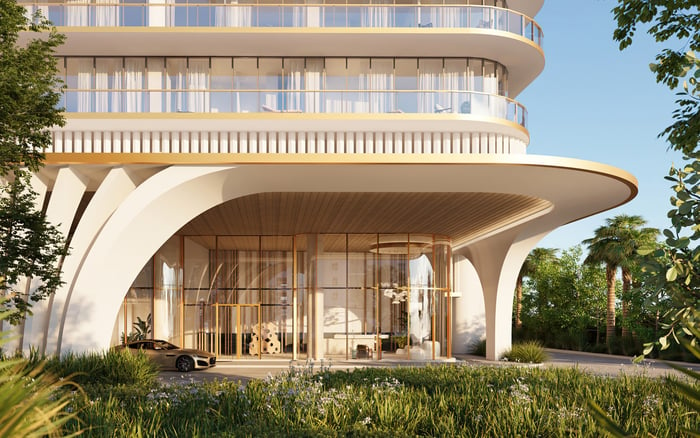
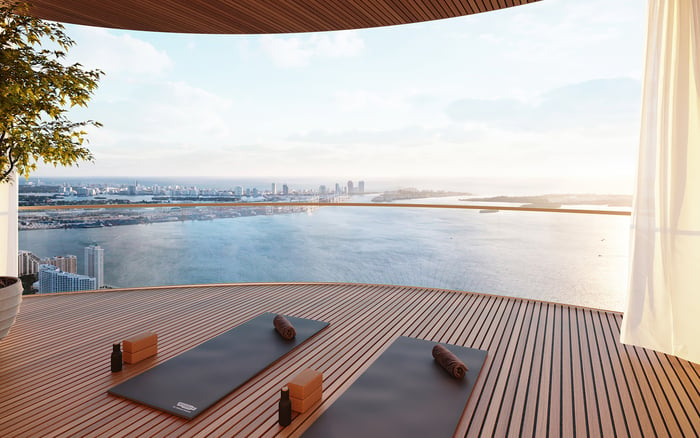
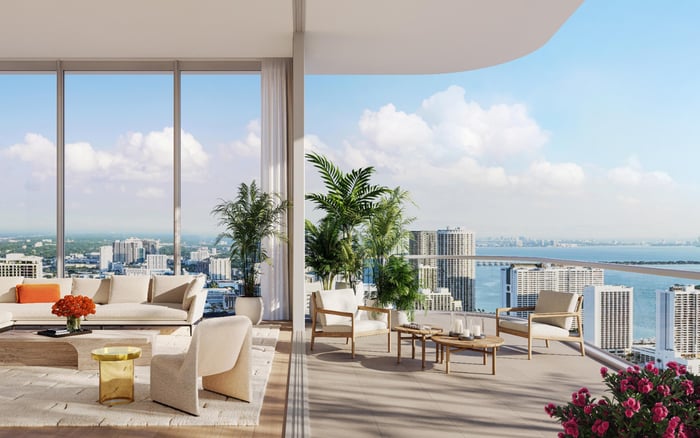
A buyer-oriented comparison of two signature Miami glass towers, contrasting The Residences at 1428 Brickell’s view-maximizing transparency with Waldorf Astoria Residences Downtown Miami’s newer façade strategy, smarter controls, and stronger energy-efficiency positioning.
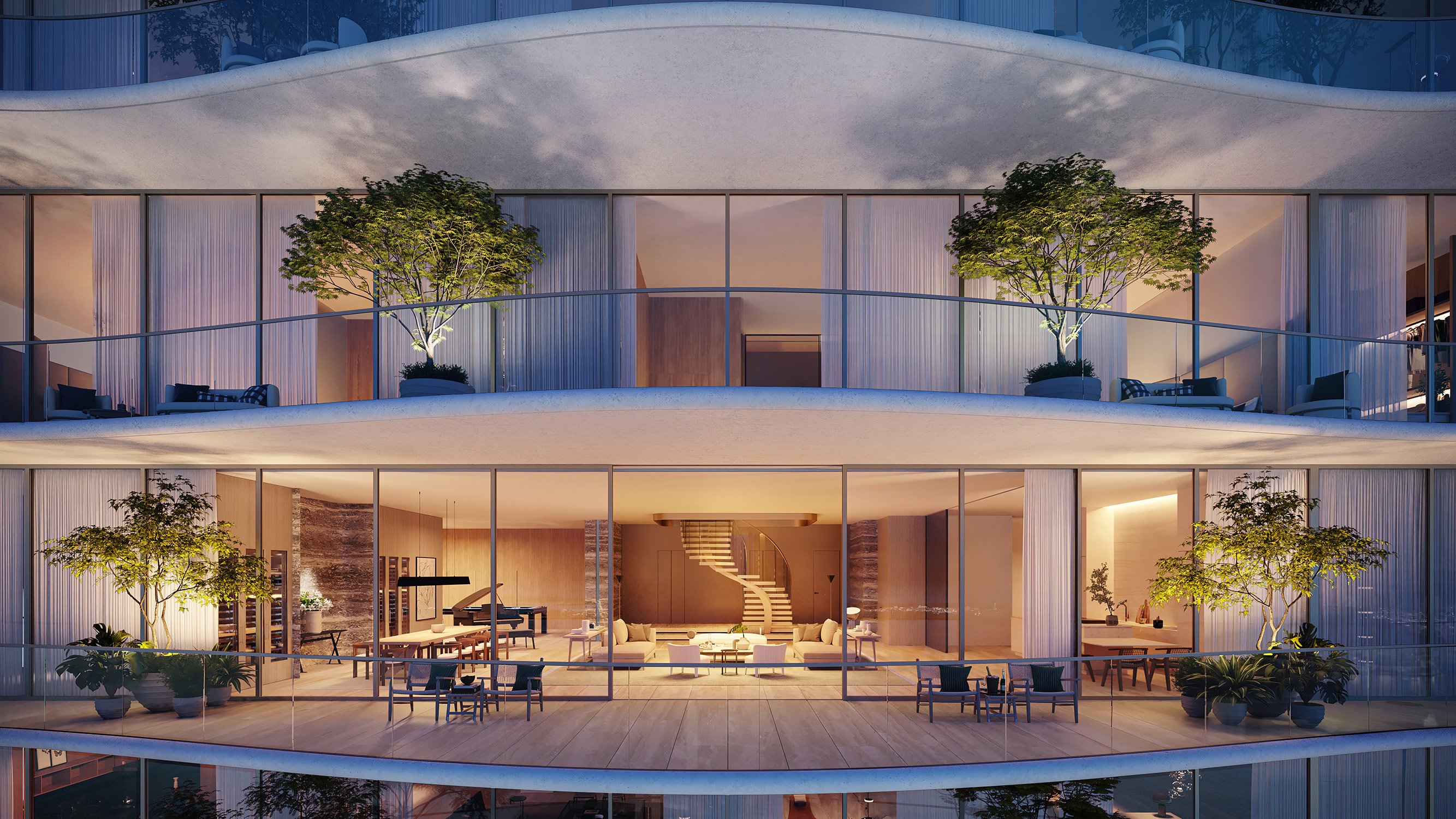
In South Florida, a glass tower is never just a stylistic gesture. For the luxury buyer, glazing shapes daily life: the quality of morning light, the reach of a Biscayne Bay view, the force of afternoon heat, and the consistency of interior comfort in summer. That is why the comparison between The Residences at 1428 Brickell and Waldorf Astoria Residences Downtown Miami is more consequential than a simple design preference.
Both addresses are architecturally expressive and transparent by design, but they reflect different priorities. The Residences at 1428 Brickell leans into a classic glass-luxury experience centered on openness and panoramic exposure. Waldorf Astoria Residences Downtown Miami suggests a newer approach, where visual drama is paired with stronger expectations around solar control, humidity management, and system intelligence.
For buyers, the practical question is not which tower appears more striking from the street. It is which one better balances architecture, comfort, and climate response in Miami.
The Residences at 1428 Brickell reads as a glass-forward Brickell statement. Floor-to-ceiling glazing and a high glass presence reinforce the openness that has long defined premium bay-oriented living in the neighborhood. The result is a bright, immersive interior experience where the view becomes part of the residence itself.
That visual generosity also introduces Miami’s familiar tradeoff. More exposed glass can increase solar load in a cooling-dominated environment, especially in residences with broad afternoon exposure. The building is described with thermally broken aluminum framing, which supports improved thermal separation at the façade. Even so, the overall design impression remains one of maximizing transparency first.
Waldorf Astoria Residences Downtown Miami takes a more performance-focused route. Its stacked-cube form is highly recognizable, but the façade proposition is also central to the buyer story. The glazing is presented as high-performance and Low-E, indicating an effort to preserve transparency while reducing unwanted heat gain. In practical terms, that points to a more calibrated envelope strategy.
This distinction mirrors a broader shift in Miami luxury development, where buyers increasingly weigh not only views and finish, but also how the exterior skin performs over time. Comparable conversations often arise around other newer residential towers such as Baccarat Residences Brickell, Una Residences Brickell, and St. Regis® Residences Brickell.
In Miami, energy efficiency is closely tied to cooling demand. Glass that welcomes daylight but does too little to limit solar gain can place more pressure on mechanical systems and affect comfort near the window line. That does not diminish the appeal of expansive glazing, but it does make façade specification especially important.
The Residences at 1428 Brickell is described with central chiller-based cooling and individual in-unit thermostat control. That can still support a refined residential environment, but it differs from the more advanced occupancy-aware and sub-metered approaches often associated with newer luxury towers. Publicly available unit-level performance detail remains limited, which makes direct utility comparisons difficult.
Waldorf Astoria is presented with a broader efficiency-oriented package. Alongside Low-E glazing and thermal breaks, it is described as offering smart control features and unit-level sub-metering availability. For seasonal owners or buyers focused on operating efficiency, those features can matter because they make cooling management more precise.
As a buyer inference, Waldorf Astoria appears to hold the stronger position on likely cooling efficiency per square foot. That should be understood as a directional conclusion rather than a verified cost comparison, because detailed public performance disclosures are limited.
Building era matters in Miami high-rise performance. The Residences at 1428 Brickell represents an earlier moment in the city’s luxury glass-tower evolution, while Waldorf Astoria aligns with a newer generation of development shaped by more current expectations around envelope sophistication and integrated controls.
That distinction is increasingly relevant across Miami-Dade. Buyers now expect luxury to include not only strong design and service, but also a more considered relationship between glazing, humidity, comfort, and ongoing operation. Newer inventory in Brickell and Downtown often competes on that broader definition of quality.
For many owners, real luxury is measured by how a residence feels on a hot and humid summer afternoon. A successful glass tower should frame the skyline beautifully while also supporting stable indoor comfort.
On that front, Waldorf Astoria appears to benefit from newer thinking. A thermally refined envelope and more advanced control logic can help support steadier comfort near the façade and better overall humidity management. In Miami, that has real lifestyle value.
Storm resilience follows a similar logic. In this market, impact-resistant glazing and robust envelope detailing are expected in upper-tier residential product. While both towers operate within that premium context, the newer project is more likely to reflect more recent standards and expectations in façade detailing.
The Residences at 1428 Brickell is likely to appeal to the buyer who prioritizes openness, light, and a classic Brickell glass-residence sensibility. Its attraction is emotional as much as technical: broad views, luminous interiors, and a direct visual relationship with Miami.
Waldorf Astoria Residences Downtown Miami is likely better suited to the buyer who wants dramatic architecture with a more current performance mindset. Its proposition is not less glass, but more deliberate glass paired with smarter systems.
If the decision is framed around likely energy efficiency and building-envelope sophistication, Waldorf Astoria appears to have the edge. If the buyer values the feel of a highly transparent Brickell residence first, 1428 Brickell retains a compelling identity of its own.
Which tower appears stronger on likely energy efficiency? Waldorf Astoria Residences Downtown Miami appears better positioned because it is presented with newer glazing and more advanced control features.
Is The Residences at 1428 Brickell still attractive for luxury buyers? Yes. Its appeal centers on expansive glass, strong natural light, and a classic Brickell view-oriented experience.
Why is Low-E glass important in Miami? It can help reduce solar heat gain while preserving transparency, which is especially important in a cooling-heavy climate.
Does more glass always mean a better residence? Not necessarily. More glass can improve light and views, but it can also increase heat exposure if the façade is not carefully managed.
Can buyers confirm exact façade-performance numbers for both buildings? Not from the information discussed here. Public technical detail appears limited, so some comparisons remain directional.
Are direct utility-cost comparisons available between the two towers? No. Publicly available unit-level consumption data is not presented in a way that supports a direct comparison.
How does building era affect this comparison? Newer towers often reflect more current expectations around glazing, controls, and climate response, which can influence comfort and efficiency.
Which building better fits a buyer focused on modern systems? Waldorf Astoria appears to be the better match for buyers prioritizing newer control features and a more performance-oriented envelope.
Which building better fits a buyer focused on openness and views? The Residences at 1428 Brickell is the more natural fit for buyers drawn to a highly transparent, view-driven residential experience.
Why does this comparison matter in South Florida specifically? Because heat, humidity, and sun exposure make façade quality a daily lifestyle issue rather than just an architectural talking point.
For a tailored shortlist and next-step guidance, connect with MILLION Luxury.
If branded residences are on your mind — as a home or as an allocation — we would be glad to share what we are seeing, privately.
Begin a quiet conversation