On Fisher Island, luxury is operational as much as it is aesthetic. At The Residences at Six Fisher Island, the lived experience hinges on two quiet systems: reliable private ferry access and disciplined vendor management. This buyer-oriented guide breaks down the decisions that protect privacy, timing, and service quality, from move-ins and renovations to daily deliveries and household staffing.
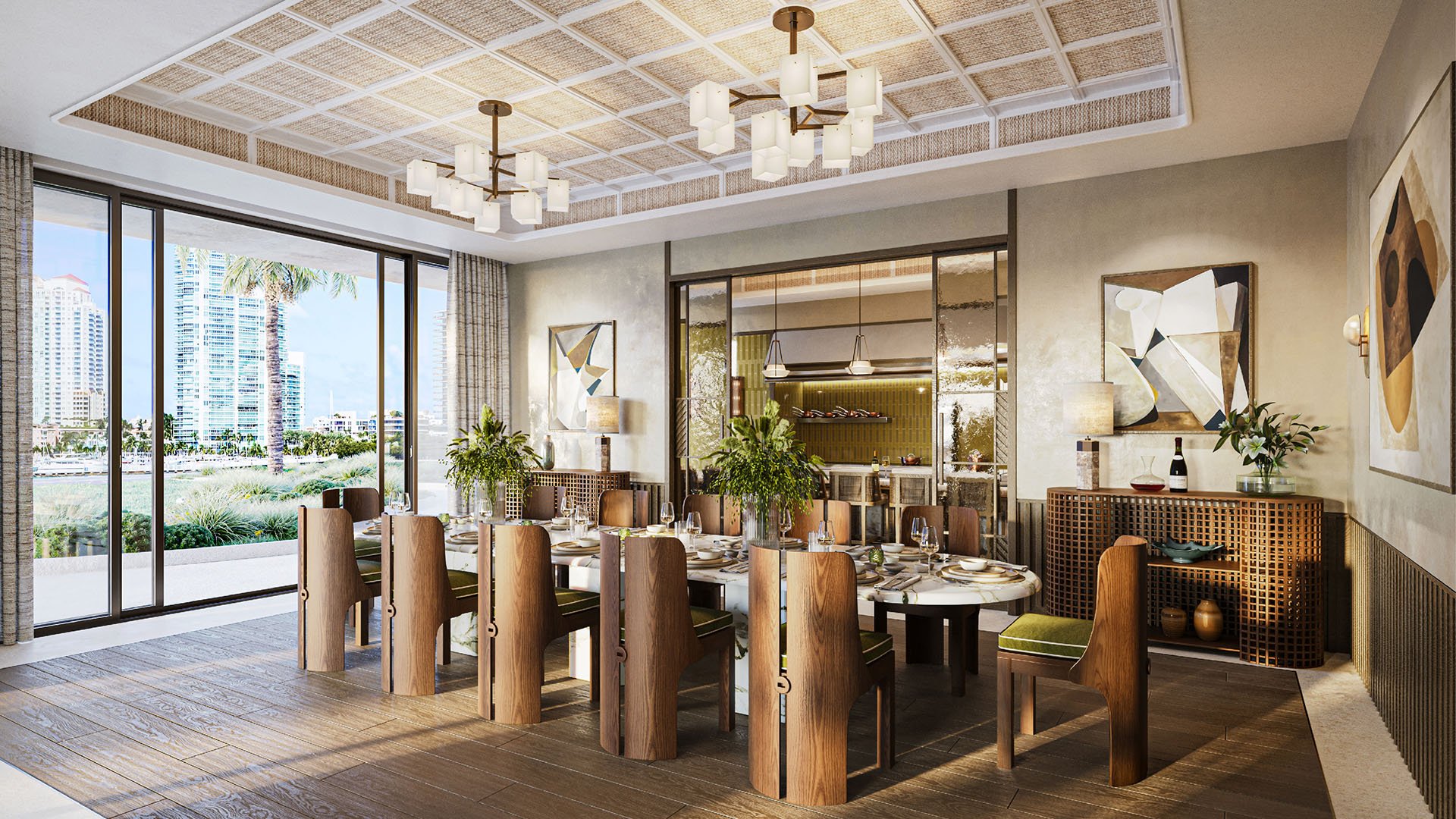
For most South Florida addresses, “convenience” is a function of valet speed, package rooms, and an elevator bank that behaves. Fisher Island is different. The island’s core appeal is separation-and separation is a logistical contract. Every arrival, delivery, and service call is mediated by water access and layered gatekeeping.
At The Residences at Six Fisher Island, expectations are naturally high, but operations determine whether daily life feels effortless or exacting. Ferry cadence touches everything from school drop-offs and dinner reservations to contractor scheduling. Vendor policies, in turn, shape whether your home remains discreet through the steady rhythm of maintenance, seasonal turnover, and upgrades.
This is not glamour for its own sake. It is risk management for time, privacy, and quality control.
Private ferry access is not simply transportation; it is the island’s supply chain-and your personal calendar. When evaluating the practicality of living at The Residences at Six Fisher Island, focus on how ferry operations intersect with your real routines.
Start with your “repeated moments.” How often will you commute to Miami Beach, Downtown, or the airport? Do you regularly host guests who need clear directions and predictable procedures? Will you keep a vehicle on the island full-time, or do you expect to move primarily by rideshare and driver?
Then translate those habits into operational questions:
Reliability and redundancy. If weather shifts quickly, what happens to timing? If you have an early flight, what is your tolerance for a missed window? Practical luxury is not the best-case scenario; it is a calm, workable Plan B.
Guest experience. Visitors do not share your familiarity with access points and protocols. A seamless arrival is part of hospitality, and on Fisher Island the “welcome” starts before the front door.
Service windows. Household staff, cleaners, and specialty vendors all operate within access rules. Your preferred cadence of service should match operational reality.
A useful mental model is to treat the ferry like a private lobby: a controlled threshold where privacy, security, and efficiency must coexist.
The island lifestyle often involves a vehicle strategy: one car on-island, one kept off-island, or a driver-based approach. Each choice changes the friction level of ordinary life.
Owners who prioritize spontaneity often prefer an on-island vehicle with predictable access. Owners who travel frequently tend to build a routine around staged departures, with bags packed and rides timed precisely. Neither approach is inherently superior, but both require clear procedures.
This is also where vendor management begins to overlap with ferry access. Bulky deliveries, appliance swaps, and furniture returns require vehicle coordination. A residence can be spectacular and still feel inconvenient if “simple” errands repeatedly expand into multi-step operations.
If you are comparing Fisher Island to other ultra-private waterfront enclaves, note the difference between controlled entry by road and controlled entry by water. In many Miami Beach settings, the friction is traffic. On Fisher Island, the friction is scheduling.
Luxury residential operations work best when rules are explicit, not implied. Vendor management is where high-end communities protect residents from three common failures: privacy leakage, inconsistent workmanship, and avoidable disruptions.
For buyers, the key is understanding whether the building’s culture is permissive or precise. A permissive system can feel flexible-until it creates headaches: unannounced crews, hallway congestion, noisy work at the wrong hour, or limited accountability when something goes wrong. A precise system may feel strict, but it is often what delivers the calm you are actually buying.
Evaluate vendor management across five control points:
Pre-approval and documentation. Expect requirements for licensing, insurance, and identification. The goal is not bureaucracy; it is traceability.
Scheduling discipline. High-performing properties treat service as an appointment-based ecosystem. That reduces elevator conflicts, loading bottlenecks, and surprise interruptions.
Access boundaries. The best systems define where vendors can stage materials, which elevators they can use, and how they move through common areas.
Noise and cleanliness standards. Discretion is not only visual; it is acoustic. Clear rules about hours, debris handling, and protective coverings preserve the building’s tone.
Escalation paths. When a vendor misses a window or violates policy, who has authority to intervene? The luxury is a fast, professional correction.
If you are familiar with tightly managed condominiums in Miami Beach, these principles may feel recognizable. The distinction on Fisher Island is compounded by ferry access: if a crew misses its approved entry window, the delay is not minutes. It can reshape the day.
A move-in on Fisher Island is not a standard delivery sequence. It is a staged operation involving reservation timing, elevator protection, loading protocols, and often multiple vendors arriving in coordination.
The “island multiplier” is the principle that small inefficiencies compound because rework is expensive in time. A single missing part can trigger an additional trip. A mismeasured item can become a week of rescheduling. An unapproved vendor can be turned away, forcing you to restart paperwork and timing.
Owners planning upgrades should approach the process the way a project manager would:
Consolidate shipments whenever possible so fewer trips cross the threshold.
Choose vendors who can self-manage on strict schedules, not teams that require constant prompting.
Build buffer days into timelines, especially around specialty materials.
If you are considering alternatives in similarly elevated coastal settings, the contrast is instructive. A high-rise like Five Park Miami Beach can offer impressive operational infrastructure and access without the ferry variable. In Brickell, a property such as 2200 Brickell may deliver a different kind of predictability where the logistics are vertical rather than maritime. Fisher Island’s advantage is the privacy premium, but it asks for more intentional planning.
Even the most self-contained owner relies on deliveries, recurring services, and seasonal changeovers. On Fisher Island, the best experience is built through routine design.
A few practices are consistently effective:
Delivery batching. Rather than multiple small deliveries, combine where feasible. It reduces the number of access events and the administrative overhead.
White-glove over volume. Choose service providers who understand high-discretion environments and can execute without attention-seeking. The cheapest option is rarely the most efficient once rescheduling costs are included.
Staff calendars aligned to access. Housekeeping, pet care, and maintenance should be scheduled around predictable arrival windows. When staff run late, the ripple effect is larger than it would be on the mainland.
In other South Florida communities, the “package room” is the pivotal amenity. Here, the pivotal amenity is coordination.
Security on Fisher Island is widely understood as a feature, but in daily life, security is a series of small interactions that should feel consistent and professional. For vendor management, that means the building should be able to articulate what is permitted, what is not, and how exceptions are handled.
Ask practical questions that reveal operational maturity:
How are vendors verified and logged?
Are there defined service hours and quiet hours?
What is the procedure for after-hours emergencies?
How are repeated violations handled?
Who is empowered to make real-time decisions when timing changes?
The quality of the answers matters more than the strictness of the rules. A polished operation is transparent. An uncertain operation leans on informal “it depends,” which is where frustration grows.
For context, many buyers also weigh Fisher Island against other privacy-forward oceanfront lifestyles. Apogee South Beach, for example, is often associated with discretion and strong building culture within a road-accessible neighborhood. The comparison clarifies your priorities: absolute separation with ferry coordination, or immediate mainland access with a different security perimeter.
Because your Research Pack and Fact Table for this topic do not provide property-specific operational disclosures, the safest approach is scenario-based due diligence. You are not looking for promises; you are looking for process.
Request and review, where available, the building rules and procedures that typically govern:
Vendor registration and insurance requirements
Delivery and move-in scheduling protocols
Elevator and loading usage rules
Renovation hours, permitted work scopes, and material handling
Security procedures for guests and staff
Then run three real-world scenarios through management before closing:
A same-day emergency repair when you are out of town.
A multi-vendor installation day with furniture, art, and AV arriving together.
A holiday-week arrival when traffic, staffing, and schedules are strained.
If the building can describe how these situations are handled calmly, you are likely looking at a culture that protects the lifestyle you expect.
The buyer who thrives on Fisher Island is not the buyer who demands spontaneity without structure. It is the buyer who values controlled access-and then designs routines to match.
When ferry operations and vendor management are treated as part of the residence’s amenity stack, the island becomes what it should be: a quiet enclave where privacy feels natural and service feels invisible.
As you evaluate The Residences at Six Fisher Island, prioritize operational clarity as highly as the view line and the floor plan. In ultra-luxury, the true differentiator is not what you see. It is what you never have to think about.
What should I evaluate first: ferry access or building rules? Start with ferry access because it sets the timing constraints for everything else.
Do vendors typically need pre-approval on Fisher Island? Many high-security communities require documentation and scheduling before entry.
How can I reduce delivery friction for a second home? Consolidate shipments and use vendors who can coordinate timing without supervision.
What is the biggest renovation risk in an island setting? Missed windows and rework can multiply timelines because every trip is more complex.
How do I keep household staffing discreet? Use consistent personnel, align schedules to access windows, and limit ad hoc drop-ins.
Should I plan for after-hours emergency procedures? Yes, confirm who can authorize access and how emergencies are handled when you are away.
Are strict vendor rules a negative for owners? Not necessarily; clear rules often preserve quiet enjoyment and protect property values.
How do I assess operational quality during due diligence? Ask scenario questions and look for confident, specific answers rather than vague flexibility.
Can guests arrive smoothly without local knowledge? Yes, if you provide clear instructions and the property has consistent guest procedures.
What should I expect for move-ins and large installations? Expect reservations, protective measures, and defined routes so work does not disrupt residents.
For a tailored shortlist and next-step guidance, connect with MILLION Luxury.
If branded residences are on your mind — as a home or as an allocation — we would be glad to share what we are seeing, privately.
Begin a quiet conversation