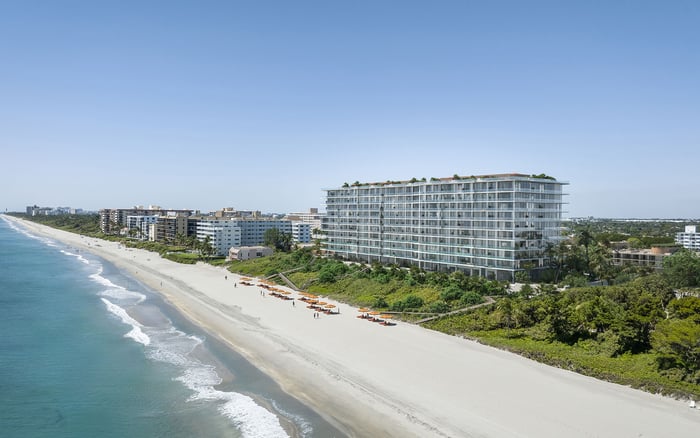
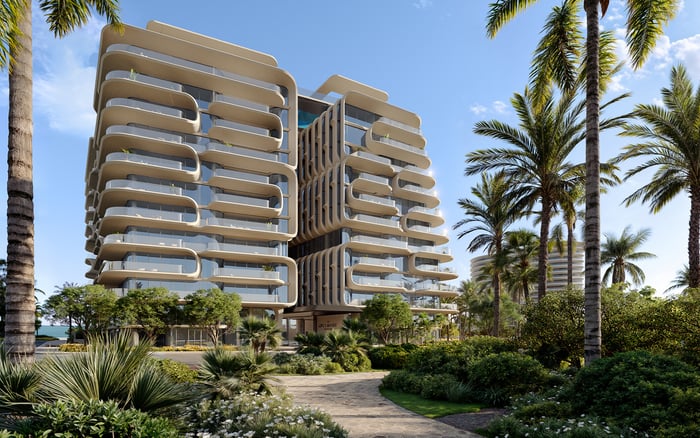
Two oceanfront addresses, two interpretations of boutique luxury: Surfside’s curated, walkable village atmosphere versus Hillsboro Beach’s quieter, elongated shoreline privacy. This MILLION Luxury comparison focuses on what buyers can control: day-to-day intimacy, building scale, service posture, and how each setting performs for second-home rhythms and long-hold value.
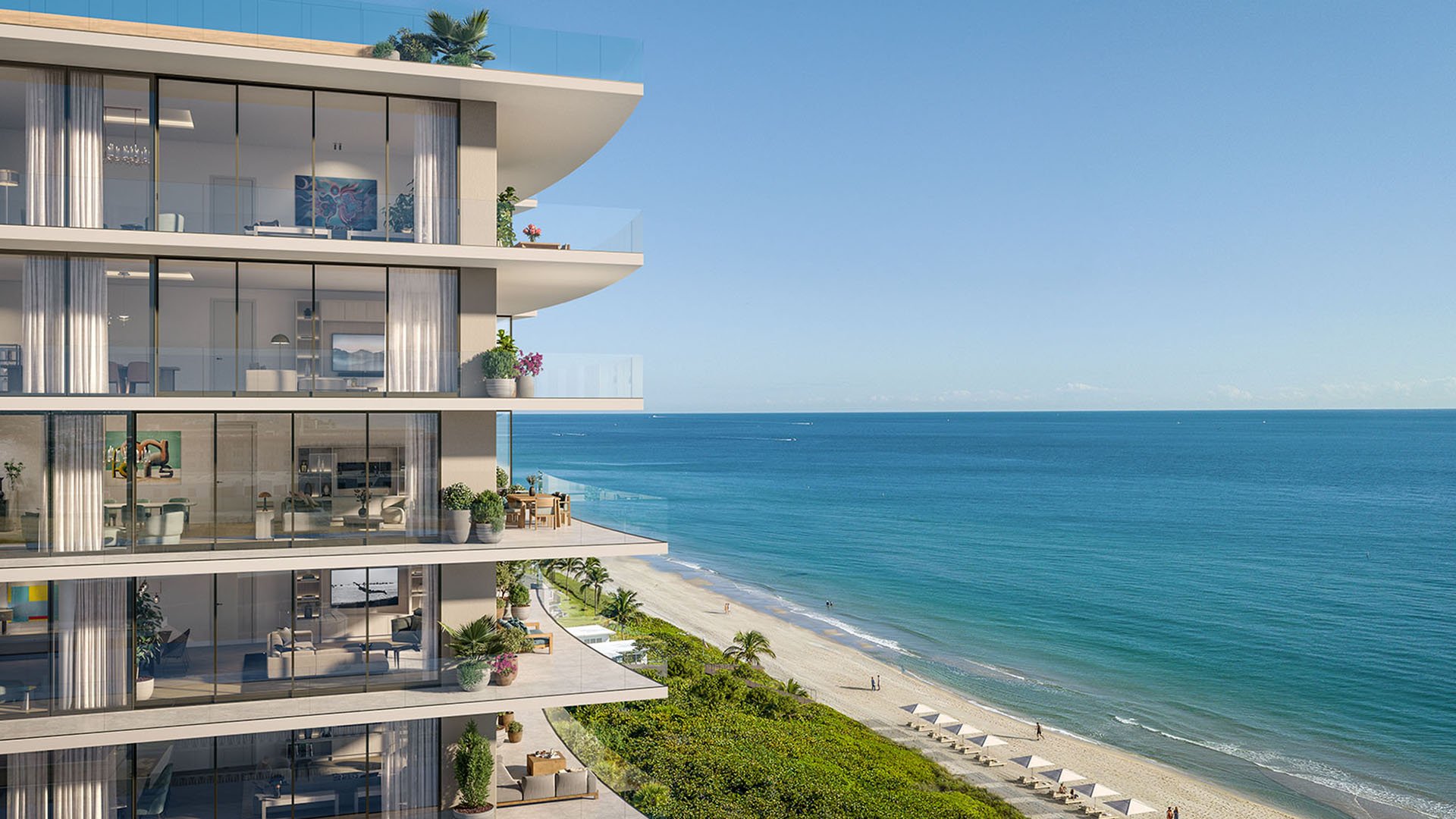
In South Florida’s ultra-premium tier, “oceanfront” is the starting point-not the conclusion. What separates one address from another is how it shapes daily life: the cadence of arrivals, the hush of common areas, the tempo beyond the gate, and the kind of privacy that still holds when friends arrive-or when you want the beach to feel like it’s yours.
That’s why the comparison between The Delmore Surfside and Rosewood Residences Hillsboro Beach lands with buyers who already understand the category. Both speak in the language of boutique oceanfront intimacy, yet each is defined by a different coastline, a different surrounding texture, and a different day-to-day interpretation of “exclusive.”
Because publicly disclosed details can evolve as projects progress, the most durable way to evaluate these residences is to anchor the decision to what doesn’t change: setting, scale, service posture, and how confidently each supports ownership with minimal friction.
Surfside is valued for its village energy-where luxury coexists with walkability and the feeling that life can run on foot. In real terms: morning coffee without a car, easier last-minute dinners, and a lifestyle that feels integrated rather than remote. For many second-home buyers, that integration is the luxury: you arrive on a Friday and you’re immediately living, not logistics-planning.
Hillsboro Beach reads differently: a quieter coastal ribbon with a more insulated feel and fewer reasons for outsiders to pass through. That can be a feature, not a compromise, for owners who prioritize low visibility and a more residential rhythm. Here, the ocean is the primary amenity-and the neighborhood’s understatement reinforces it.
If your definition of luxury includes street life, curated retail, and the ability to keep the car parked, Surfside naturally leads. If your definition centers on quiet, narrow social exposure, and a “leave me alone” shoreline sensibility, Hillsboro Beach often takes the edge.
“Boutique” is often used as shorthand for “expensive,” but the lived difference is operational. Smaller-scale buildings tend to deliver:
Fewer daily interactions, which increases discretion.
A calmer arrival sequence, often with less lobby theater.
Common spaces that read as extensions of the residence, not public venues.
The trade-off is real: boutique scale can narrow the menu of on-site conveniences. Larger, resort-scaled properties may carry more layers of programming and more specialized staffing. In boutique settings, service can feel more personal-while also being more streamlined.
On tour, track the quiet signals: sound levels at entry, whether the building invites lingering in public areas, and how amenity spaces are positioned. True intimacy isn’t just fewer units; it’s space planned to avoid forced encounters.
At the ultra-premium end, service is invisible architecture. Some residences lean hospitality-forward: you feel a hotel mindset, with anticipatory care and polished ritual. Others prioritize residential discretion: fewer visible touchpoints, more quiet competence.
In a comparison like this, the distinction isn’t “better” or “worse.” It’s fit.
If you host often and prefer a staff culture that confidently orchestrates arrivals, deliveries, and guest comfort, a more hospitality-coded experience may suit you.
If you travel frequently and want ownership to feel almost frictionless-with minimal ceremony and a lower profile-a more residential posture can be ideal.
The question isn’t what services exist, but how they show up: Is the building meant to be experienced publicly, or privately? Do you want to know everyone by name-or to be recognized without being observed?
Luxury buyers rarely regret buying a beautiful residence. They regret buying complexity.
Run each option through ownership math that remains true even when market cycles shift:
How easily can you land, arrive, and transition into “home mode” within an hour?
Where do guests stay, how do they access the building, and can you host without eroding your own privacy?
Midweek-does it feel serene or too quiet? Weekends-does it feel vibrant or too busy?
Do you want maximum staffing and visible oversight, or a quieter operational footprint?
Surfside can favor owners who use a residence frequently and spontaneously, with the neighborhood acting as an extension of the property. Hillsboro Beach can favor owners who use a residence as a true retreat-where the building and coastline do most of the talking.
Oceanfront design in South Florida often converges on similar materials and palettes, but mood still separates experiences. One approach emphasizes crisp modernism, controlled lines, and gallery-like calm. Another leans warmer, with gentler coastal cues designed for long stays and true decompression.
As you compare, don’t let staged imagery over-influence the decision. Instead, evaluate:
Ceiling-height feel and window proportions.
How terraces connect to the interior: add-on, or a true outdoor room.
Acoustic comfort: how quiet the residence feels when the ocean is active.
Privacy geometry: sightlines from neighboring terraces and the beach.
These details determine whether a residence feels intimate in the real world-regardless of the brand language.
Surfside has become a reference point for boutique luxury along the shoreline, with multiple high-design, low-density addresses shaping the area’s identity. That matters because neighborhood identity can reinforce resale psychology: buyers like entering a recognized micro-market.
For context, properties like Arte Surfside and Eighty Seven Park Surfside help define a design-forward, privacy-minded coastal lane. Even if you’re not choosing those buildings, their presence influences the buyer pool that shops the area-and the expectations that come with it.
This can be an advantage if you value a refined, curated local scene and want your building to sit inside an established luxury narrative. It can also mean discretion is achieved through design and management-not geographic isolation.
A subtle but decisive differentiator is social exposure. In boutique oceanfront living, your building can become your primary social environment-or it can recede into the background.
Ask yourself:
Do you want to see familiar faces frequently, or rarely?
Do you enjoy a sense of community, or do you prefer anonymity?
Do you want your building to feel like a club, or like a private home with staff?
Surfside tends to feel more interconnected because the neighborhood itself is part of the experience. Hillsboro Beach tends to reduce exposure because the setting is inherently quieter. The right answer depends on how you define rest.
If you’re touring both, keep the evaluation disciplined. Reduce the decision to five criteria that will still matter five years from now:
Privacy quality: sightlines, elevator counts, and arrival separation.
Noise resilience: traffic patterns, mechanical placement, and how the building handles wind and ocean sound.
Service philosophy: visible hospitality versus discreet residential support.
Neighborhood utility: the degree to which you will rely on the surrounding area.
Exit logic: how broad the future buyer pool is for the lifestyle you’re buying.
This is also where it helps to benchmark across the broader coastline. For example, 57 Ocean Miami Beach offers another lens on boutique oceanfront positioning, while a higher-energy market like Miami Beach underscores how strongly neighborhood tempo can shape day-to-day satisfaction.
Choosing between The Delmore Surfside and Rosewood Residences Hillsboro Beach is, ultimately, choosing a version of intimacy.
If you want boutique living with a polished, walkable, design-aware context-where the neighborhood supports daily use-Surfside can be a compelling answer.
If you want boutique living that feels more removed, quieter, and purpose-built for retreat, Hillsboro Beach can present as the more insulated alternative.
Both can deliver an elevated oceanfront life. The better decision is the one aligned with your appetite for neighborhood energy, operational visibility, and a privacy profile that feels restorative rather than isolating.
Which location feels more walkable day to day? Surfside generally supports a more walkable routine, while Hillsboro Beach is typically quieter and more drive-oriented.
Is boutique scale always better for privacy? Not always; privacy depends on layouts, sightlines, and operations as much as unit count.
What should I prioritize if this is a second home? Focus on arrival ease, low-friction operations, and whether the neighborhood fits your weekend rhythm.
How do I evaluate service quality without relying on amenity lists? Watch the arrival sequence, staff visibility, and how discreetly requests are handled during a visit.
Which option is better for hosting guests? Choose the setting that matches your hosting style: integrated and active versus retreat-like and quiet.
Does neighborhood “scene” matter for long-term value? It can, because a recognizable micro-market often strengthens buyer demand for a specific lifestyle.
What’s the biggest hidden trade-off of boutique buildings? Fewer residences can mean fewer on-site offerings, even when service is highly personalized.
Should I compare these to other Surfside or Miami Beach boutiques? Yes-nearby boutique projects help calibrate pricing psychology and lifestyle expectations.
How can I test whether a building will feel too social or too quiet? Visit at different times and observe lobby traffic, beach activity, and neighborhood noise patterns.
What’s the simplest way to decide between them? Decide whether you want a walkable coastal village atmosphere or a quieter, more insulated shoreline retreat.
If you'd like a private walkthrough and a curated shortlist, connect with MILLION Luxury.
If branded residences are on your mind — as a home or as an allocation — we would be glad to share what we are seeing, privately.
Begin a quiet conversation